
article image source: arxiv.org (Link)
Astronomers Find a 13.4-Billion-Year-Old Star Cluster Hidden in the Milky Way
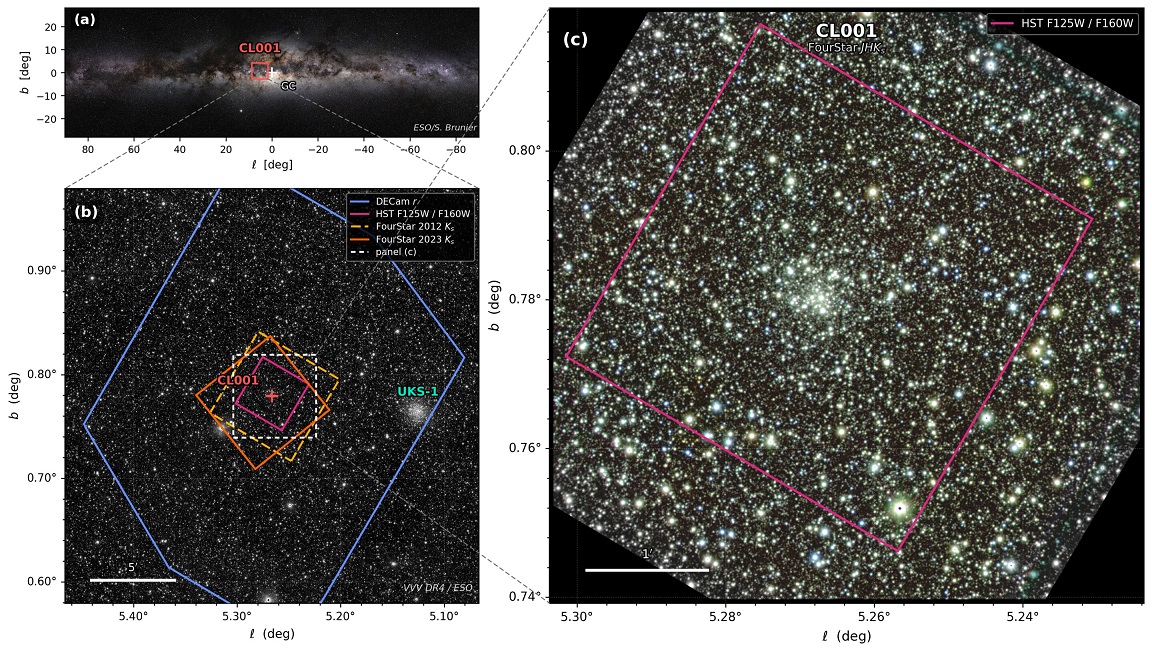
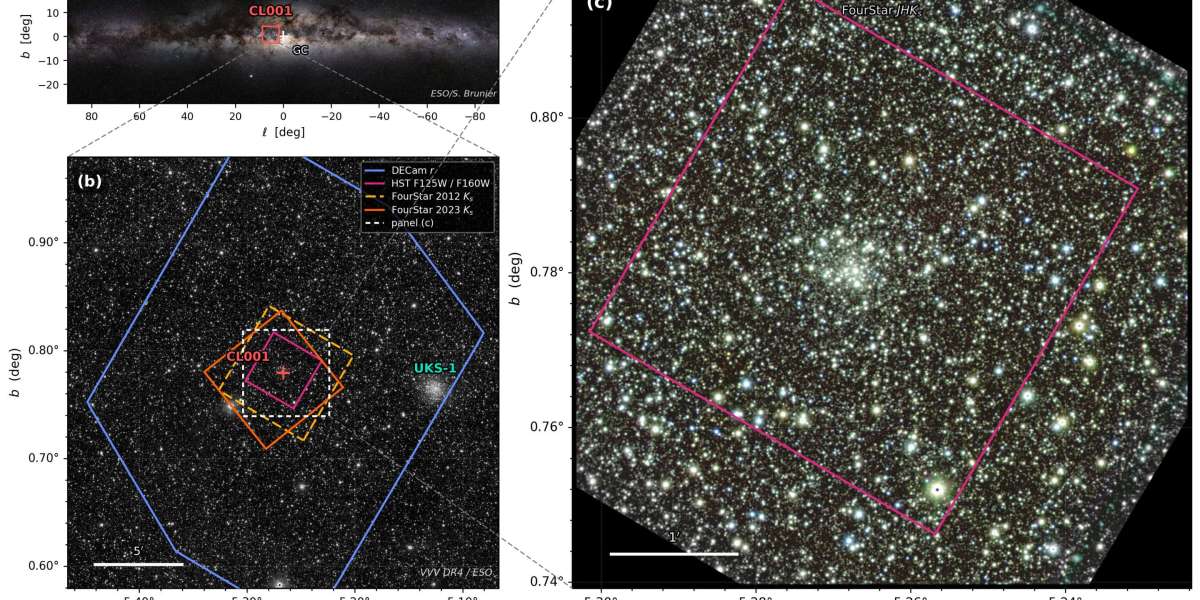
Location of CL001. (a) Optical panorama of the Milky Way (ESO/S. Brunier) in galactic coordinates. The box marks CL001. (b) VVV DR4 H-band field centered on CL001, with the neighboring massive cluster UKS-1. This shows the data used in this work: DECam r (blue, extending beyond the panel), FourStar Ks 2012 (gold dashed) and 2023 (red solid; the two epochs are rotated one with respect to the other), and HST/WFC3-IR (pink). (c) FourStar JHKs color composite of CL001 with the HST footprint. Credit: J. Olivares Carvajal et al., arXiv (2026).
image source: arxiv.org DOI: 10.48550/arXiv.2610.27969

Key Points
VVV CL001, a globular star cluster hidden behind thick interstellar dust near the center of the Milky Way, has an estimated age of 13.4 billion years.
The research team measured its distance at approximately 7.34 kiloparsecs (24,000 light-years), improving on previous estimates.
Astronomers identified 155 probable cluster members using observations from multiple telescopes and sophisticated data-analysis techniques.
Its extremely low iron abundance, estimated at [Fe/H] = −2.2, makes it one of the most metal-poor globular clusters in the Galactic bulge.
Researchers believe the cluster could preserve evidence of the Milky Way's earliest formation, although further observations and chemical analysis are needed to establish its origin and age more firmly.
advertisement
A Hidden Stellar Relic Emerges From the Milky Way's Dust
Astronomers have obtained a new estimate of the age and distance of VVV CL001, a faint globular star cluster concealed behind thick clouds of interstellar dust near the center of the Milky Way. The findings suggest that the cluster formed approximately 13.4 billion years ago, placing it among the oldest known globular clusters in our galaxy and potentially making it an important surviving record of the Milky Way's earliest development.
The research, led by J. Olivares Carvajal and colleagues, provides a more detailed examination of a stellar system whose physical properties have remained difficult to establish. Using observations from several major astronomical facilities, the team identified additional cluster members, refined its distance and examined the stars' evolutionary stages to estimate its age.
The study, titled VVV CL001: A strong candidate for the most ancient star cluster in the Galaxy, was accepted for publication in Astronomy & Astrophysics on October 20, 2026. It reports an estimated age of 13.4 ± 0.4 billion years and a distance of 7.34 ± 0.46 kiloparsecs, equivalent to approximately 24,000 light-years.
Why VVV CL001 Is Difficult to Observe
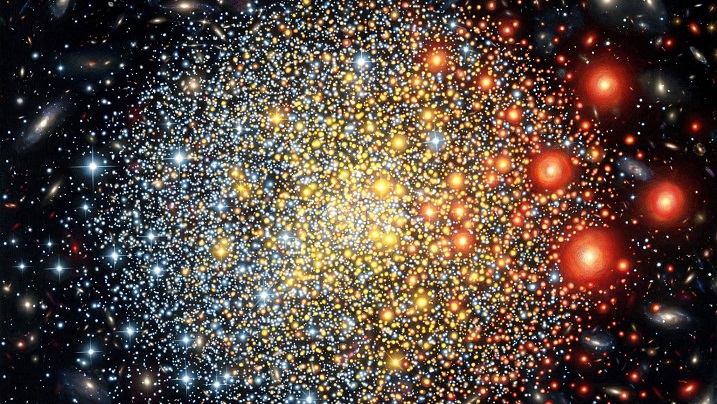
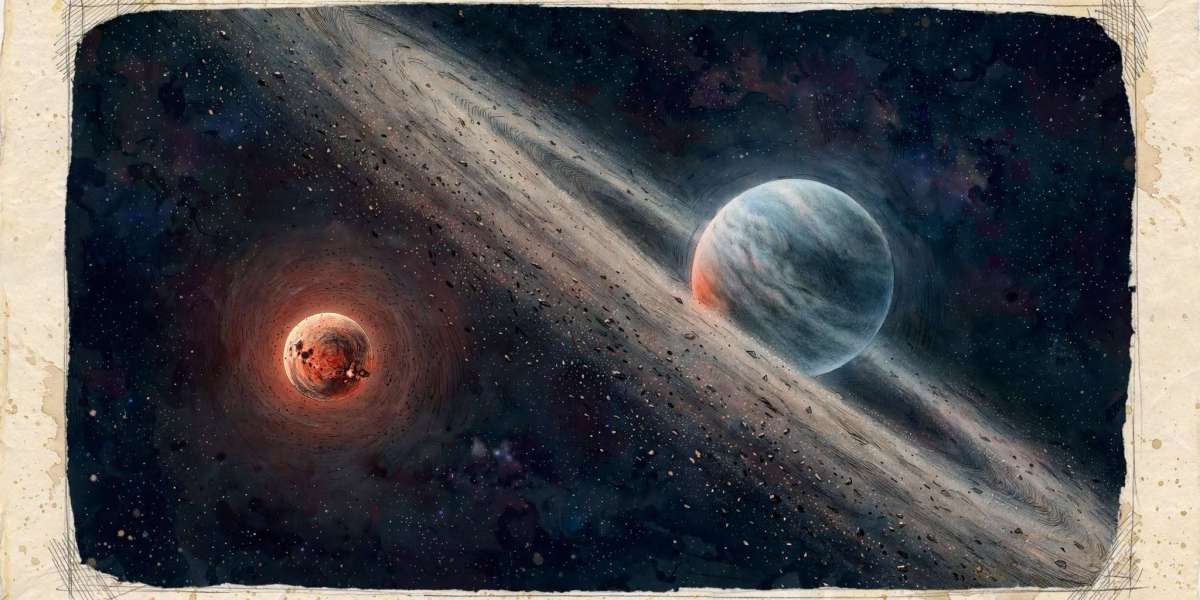
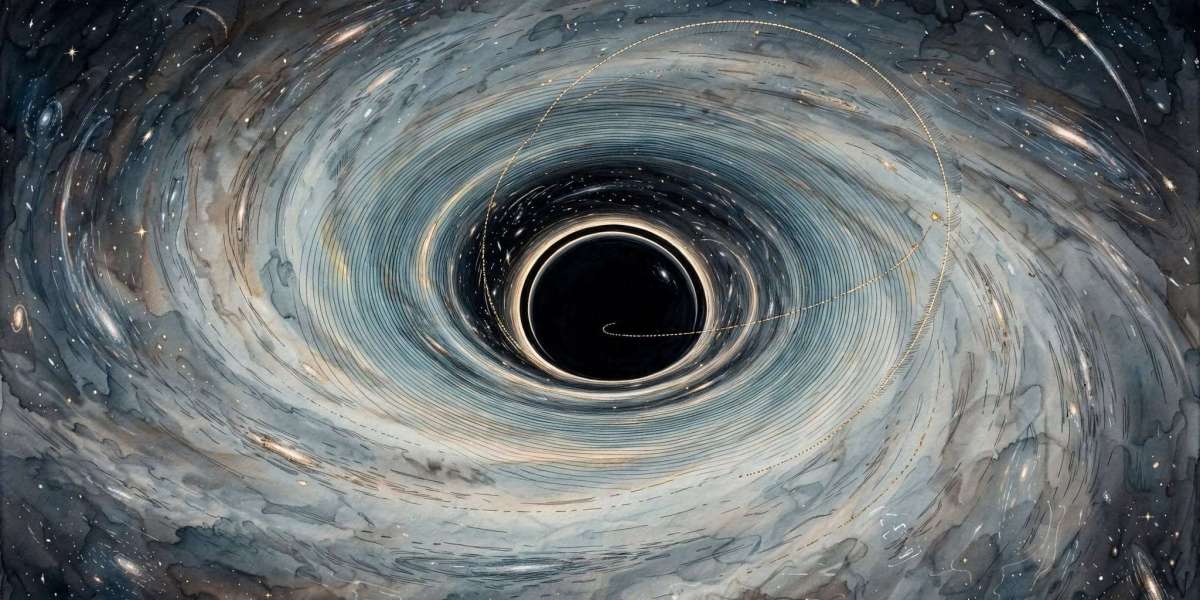
image generated through AI, the images of next paragraphs are made with AI for clarifications
A cluster hidden behind interstellar dust: VVV CL001 is located in the crowded inner region of the Milky Way, within the Galactic bulge, where dense concentrations of stars and interstellar material complicate astronomical observations. Dust absorbs and scatters visible light, making distant objects appear much fainter and changing their observed colors.
These conditions have made it particularly challenging to distinguish the cluster's stars from unrelated foreground and background objects. Its relatively low luminosity and small apparent size have added to the difficulty, while earlier observations did not reach sufficiently faint stars to establish a reliable age measurement.
The cluster was discovered through the VISTA Variables in the Vía Láctea (VVV) Survey, which observes the inner regions of the Milky Way using infrared wavelengths. Infrared observations are particularly useful in dusty environments because they can penetrate interstellar material more effectively than visible light. However, identifying the cluster was only the first step: astronomers still needed to establish which stars belonged to it, how far away it was and when its members formed.
How Astronomers Identified the Cluster's Members

Combining observations from multiple telescopes: To investigate VVV CL001 more accurately, the researchers combined near-infrared observations from the FourStar camera on the 6.5-meter Magellan Baade Telescope with data from the Hubble Space Telescope's Wide Field Camera 3 infrared instrument.
They also incorporated optical observations from the Dark Energy Camera (DECam) on the 4-meter Blanco Telescope. Each instrument contributed different information, helping researchers examine the cluster's stellar population despite the surrounding dust and crowded field.
One of the most important steps involved measuring the proper motions of stars, which describe how their positions change across the sky over time. Stars belonging to the same gravitationally bound cluster generally share a similar overall motion, whereas unrelated stars move differently.
The researchers combined measurements from different observation periods and applied the HDBSCAN clustering algorithm, together with Markov Chain Monte Carlo (MCMC) statistical methods, to evaluate potential members. This process produced a sample of 155 cluster-member stars, including stars in evolutionary stages that had not been adequately identified in earlier investigations.
The improved membership selection provided a stronger foundation for measuring the cluster's distance and age.
A More Precise Distance to the Ancient Cluster
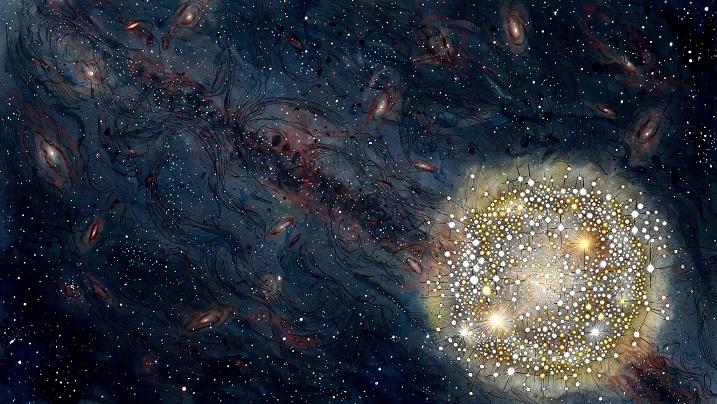
Measuring how far away VVV CL001 is: Establishing the distance was essential because the apparent brightness of a star depends partly on how far it is from Earth. Without a sufficiently accurate distance, astronomers cannot reliably determine its intrinsic brightness or compare its observed properties with theoretical stellar models.
The team used stars belonging to the horizontal branch, an evolutionary stage in which older stars burn helium in their cores. Their brightness can provide a useful reference for estimating distance.
By comparing optical and infrared observations with theoretical stellar models, the researchers obtained two independent distance estimates: approximately 7.54 ± 0.26 kiloparsecs and 7.14 ± 0.45 kiloparsecs. Combining these results produced a final estimate of 7.34 ± 0.46 kiloparsecs, or roughly 24,000 light-years.
According to the researchers, this represents the smallest distance uncertainty reported for VVV CL001 so far. The improved measurement places the cluster within the Milky Way's central bulge and helps resolve earlier uncertainty about its orbital path and Galactic origin.
The Stellar Clock Reveals an Age of 13.4 Billion Years
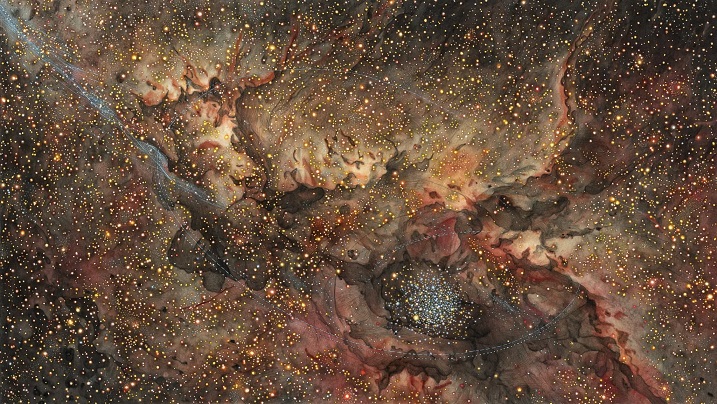
Finding the main-sequence turnoff: One of the most important advances in the study was the researchers' ability to identify stars near the main-sequence turnoff, a key feature used to estimate the age of a globular cluster.
Stars spend much of their lives on the main sequence, generating energy by converting hydrogen into helium in their cores. More massive stars consume their nuclear fuel faster than less massive stars. As a cluster ages, progressively lower-mass stars reach the end of this stage.
The main-sequence turnoff therefore provides an astronomical clock. By determining where this transition occurs on a color-magnitude diagram and comparing the observations with theoretical stellar-evolution models, researchers can estimate how long ago the cluster formed.
Deep observations from Hubble's infrared instruments allowed the team to examine this region more effectively than previous studies. The researchers applied two independent sets of stellar models, known as BaSTI and PARSEC, to test the consistency of their measurements.
The BaSTI models produced an estimated age of 13.47 billion years, while the PARSEC models indicated approximately 13.39 billion years. Combining the results, the researchers obtained a final estimate of 13.4 ± 0.4 billion years.
This is substantially older than previous estimates of approximately 12 billion years, which were based on observations that did not reach the main-sequence turnoff sufficiently well to provide an equally reliable measurement.
Why Its Extremely Low Metal Content Matters
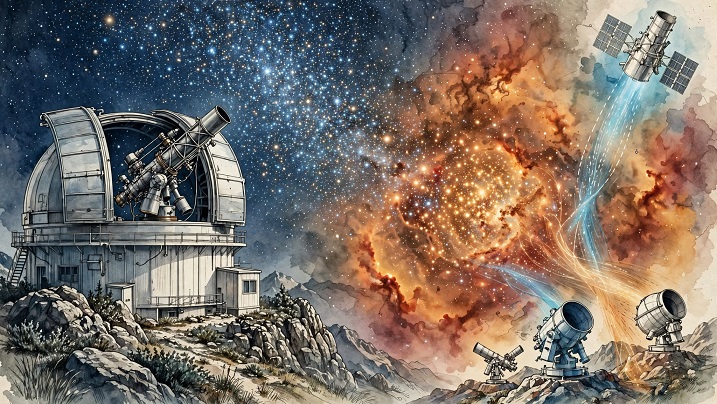
A chemical record of the early universe: Age is not the only characteristic that makes VVV CL001 scientifically interesting. The cluster also has an exceptionally low abundance of iron relative to hydrogen, with a measured metallicity of approximately [Fe/H] = −2.2 ± 0.2.
In astronomy, the term metallicity refers to the abundance of elements heavier than helium. These elements are produced through stellar processes and distributed into surrounding space through events such as stellar winds and supernova explosions.
The earliest generations of stars formed from gas containing very little of these heavier elements because relatively few generations of stars had existed to produce and distribute them.
Consequently, metal-poor globular clusters can preserve information about the chemical conditions that existed during the early stages of galaxy formation.
The researchers identify VVV CL001 as one of the most metal-poor globular clusters in the Galactic bulge. Its combination of very low metallicity and an estimated age of 13.4 billion years strengthens its importance as a possible remnant of the Milky Way's early stellar population.
However, metallicity alone cannot establish exactly when or where a cluster formed. More detailed chemical measurements are needed to understand its history.
What the Cluster's Orbit Reveals About the Milky Way
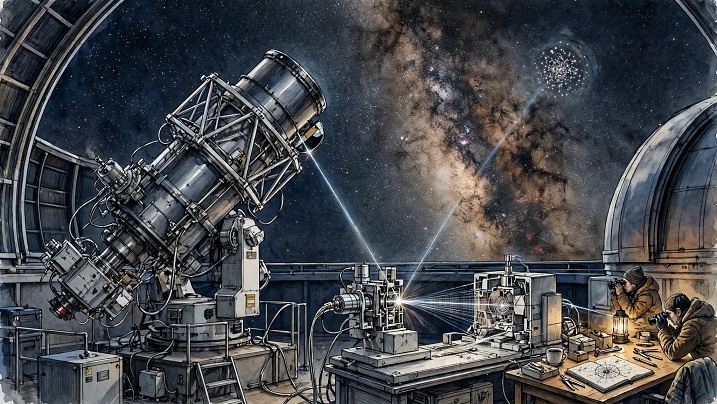
Evidence of an ancient Galactic population: The research team also updated VVV CL001's orbital parameters using the improved distance and stellar-motion measurements.
The calculations indicate that the cluster follows a relatively radial orbit within the Galactic bulge. Its estimated orbital parameters include a pericenter of approximately 0.65 kiloparsecs and an apocenter of approximately 2.24 kiloparsecs.
These measurements support its classification as a member of the Milky Way's central bulge rather than a distant halo cluster.
The orbital evidence is important because globular clusters can originate in different environments. Some form within the early Milky Way, while others may have developed in smaller galaxies that were later absorbed by our galaxy.
The researchers associate VVV CL001 with the metal-poor spheroidal population of the Galactic bulge. Its age, metallicity and orbital properties make an early connection with the formation of the Milky Way plausible.
Nevertheless, its precise birthplace has not yet been conclusively established. The researchers emphasize that additional chemical evidence will be needed to distinguish a genuinely in-situ origin from a possible ancient accretion event.
How Close Is the Cluster to the Age of the Universe?
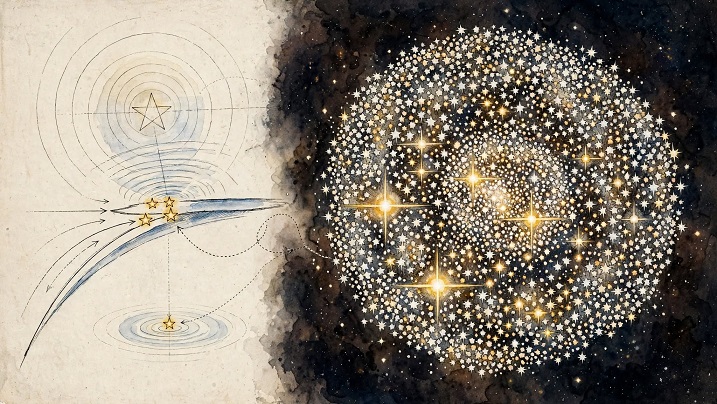
A potentially important cosmic time marker: The estimated age of VVV CL001 is particularly interesting because it approaches the estimated age of the universe, generally placed at approximately 13.8 billion years.
If the cluster formed around 13.4 billion years ago, its stars would have originated during the universe's earliest billion years, when the first generations of galaxies and stellar systems were developing.
The comparison is scientifically important because the oldest reliably dated stars and star clusters help astronomers establish lower limits on the age of the Milky Way. An object cannot be older than the universe itself, so accurate measurements of ancient stellar populations provide an important consistency check for cosmological models.
The researchers also discuss the wider implications for the ongoing debate over the universe's expansion rate, known as the Hubble tension. Different methods of measuring the expansion rate have produced conflicting results, raising questions about whether current cosmological models fully explain the observations.
However, VVV CL001 does not independently resolve this debate or establish a new age for the universe. Its age estimate is still affected by measurement uncertainties, and further confirmation is necessary before stronger conclusions can be drawn.
Important Limitations and What Comes Next
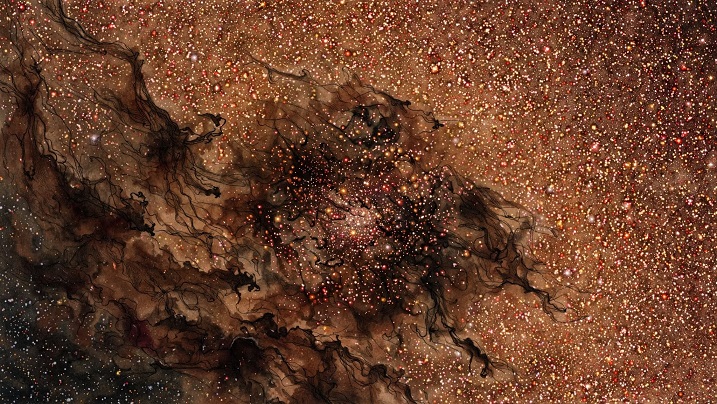
Further observations are needed: Despite the improved measurements, the study identifies several limitations that researchers must address.
The reported statistical age uncertainty is 0.4 billion years, but the authors also identify an additional systematic uncertainty of approximately 1 billion years, associated with the propagation of distance errors into the age calculation.
Furthermore, even the deep Hubble observations did not completely cover the main-sequence turnoff. The researchers explain that deeper observations reaching fainter stars would help strengthen the age estimate.
Only two horizontal-branch members were confirmed, limiting the number of stars available for distance calibration. The region also contains patchy interstellar extinction, meaning the amount of light absorbed varies across the field.
The team is preparing further observations, including deeper optical data and high-resolution spectroscopy. Spectroscopy will allow astronomers to examine the chemical abundances of individual elements in the cluster's stars, providing additional evidence about its formation environment and possible origin.
These investigations will be important in determining whether VVV CL001 formed within the early Milky Way or arrived through an ancient merger with another stellar system.
For now, the researchers' conclusion is measured but significant: VVV CL001 is one of the oldest known globular clusters in the Milky Way and a strong candidate for the oldest, although its exact ranking and origin require further investigation.
Key Points Summary
VVV CL001 has an estimated age of 13.4 billion years, placing it among the oldest known globular clusters in the Milky Way.
Its location behind dense interstellar dust previously made accurate measurements difficult.
Observations from Magellan, Hubble and Blanco telescopes helped researchers identify 155 probable cluster members.
Two independent stellar-evolution models produced consistent age estimates.
Its low metallicity provides clues about the chemical environment in which the earliest Milky Way stars formed.
Further observations and high-resolution spectroscopy will help establish its origin and refine its age.
What This Means
Why this discovery matters
VVV CL001 provides astronomers with another important opportunity to investigate the earliest stages of the Milky Way's formation. Its age, chemical composition and orbital properties could help researchers understand how the galaxy's central stellar population developed.
Who may benefit
Astronomers studying globular clusters and stellar evolution.
Researchers investigating the formation and assembly of the Milky Way.
Cosmologists examining the relationship between the ages of ancient stars and the age of the universe.
What readers should watch next
The most important developments will be deeper observations of the cluster's faint stars and high-resolution spectroscopic measurements. These could help establish its chemical history and determine whether it formed within the early Milky Way or originated elsewhere.
advertisement
Frequently Asked Questions (FAQ)
1. What is VVV CL001?
VVV CL001 is a metal-poor globular star cluster located in the central bulge of the Milky Way. It is particularly interesting because of its estimated age and extremely low iron abundance.
2. How old is VVV CL001?
The researchers estimate its age at 13.4 ± 0.4 billion years. An additional systematic uncertainty of approximately 1 billion years is associated with distance errors.
3. How far away is the cluster?
It is approximately 7.34 kiloparsecs, or around 24,000 light-years, from Earth.
4. Why was the cluster difficult to study?
It is located behind thick, uneven clouds of interstellar dust in a crowded region of the Milky Way. These conditions make it difficult to distinguish its stars from unrelated objects and accurately measure their brightness.
5. How did astronomers determine its age?
They identified stars near the main-sequence turnoff and compared their observed properties with theoretical stellar-evolution models. Two independent model sets produced consistent estimates.
6. What makes VVV CL001 chemically unusual?
Its iron abundance relative to hydrogen is approximately [Fe/H] = −2.2, indicating an extremely low metallicity. This suggests that its stars formed from gas that had undergone relatively little enrichment by earlier stellar generations.
7. Is VVV CL001 definitely the oldest star cluster in the Milky Way?
No. It is a strong candidate, but researchers have not established a definitive ranking. Other Galactic globular clusters also have estimated ages close to 13 billion years, and measurement uncertainties overlap.
8. Could the discovery change our understanding of the universe's age?
Potentially, it could contribute to discussions about the ages of ancient stellar populations and cosmological models. However, the current measurement does not establish a new age for the universe or resolve the Hubble tension.
9. What will researchers investigate next?
They plan deeper optical observations and high-resolution spectroscopy to examine the cluster's chemical composition and investigate its formation history.
Sources
1. Olivares Carvajal, J. et al. (2026). VVV CL001: A strong candidate for the most ancient star cluster in the Galaxy. arXiv:2610.27969.
2. Shreejaya Karantha (November 2, 2026). Dust-shrouded Milky Way star cluster may be nearly as old as the universe. Phys.org.
Additional Verified Sources
No additional sources used.
Thank you !