
(What will be mentioned in this article is for advice and is not a substitute for consulting a doctor)
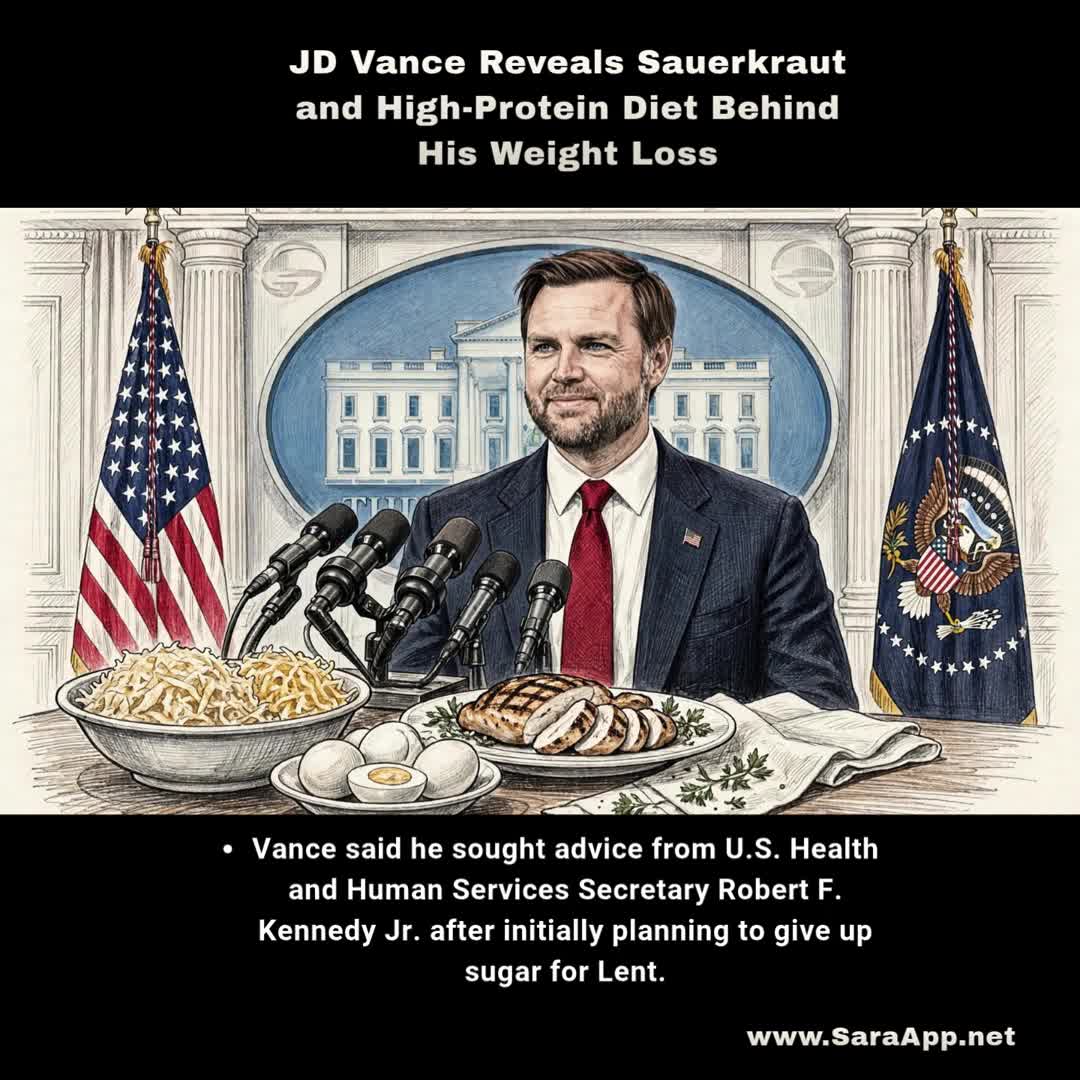
JD Vance Reveals Sauerkraut and High-Protein Diet Behind His Weight Loss
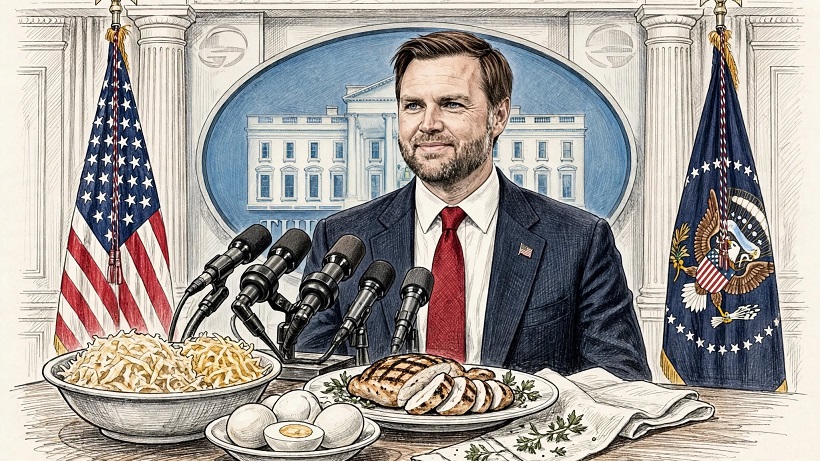
Photo by AI (Credits: saraapp.net)
Key Points
U.S. Vice President JD Vance says a diet featuring high-protein foods and plenty of sauerkraut helped him lose weight.
Vance said he sought advice from U.S. Health and Human Services Secretary Robert F. Kennedy Jr. after initially planning to give up sugar for Lent.
The revelation came during a White House press briefing on September 3, 2026, after Fox News correspondent Peter Doocy asked Vance about his weight loss.
Vance joked that “Fat Wednesday never came” after Kennedy suggested the more intensive diet.
Vance's experience does not establish that sauerkraut itself causes weight loss; established guidance emphasizes an overall healthy eating pattern, calorie balance and physical activity.
advertisement
WASHINGTON — U.S. Vice President JD Vance has revealed that a diet emphasizing high-protein foods and sauerkraut has been part of his recent weight-loss effort, saying the approach followed advice from U.S. Health and Human Services Secretary Robert F. Kennedy Jr.
Vance made the disclosure during a White House press briefing on September 3, 2026, after Fox News senior White House correspondent Peter Doocy asked him about his weight loss over the previous several months. Fox News reported that the briefing was Vance's first White House press briefing since July and that it also covered issues including Iran, oil and gas prices, inflation and Republican messaging ahead of the midterm elections.
The question prompted a lighthearted response from Vance, who suggested that the fact that his weight had become a question at a White House briefing meant he must previously have been considerably heavier.
Vance then explained how his dietary changes began.
He said that around Fat Tuesday, or Mardi Gras, in February, he had been discussing his plans with his wife, Usha Vance, as he prepared for Lent. His initial idea was to give up sugar, along with social media, during the period of religious observance.
Instead, Vance said he contacted Robert F. Kennedy Jr., asking for advice.
Kennedy's recommendation, according to Vance, went beyond simply eliminating sugar. The vice president said Kennedy advised him to eat a lot of high-protein foods and a lot of sauerkraut.
Vance summed up the outcome with a joke: “Fat Wednesday never came.” Fox News separately reported Vance telling reporters that anyone seeking to lose weight could call Kennedy, while joking that people who wanted to enjoy their food should not.
The dietary revelation has attracted attention because of the prominent role given to sauerkraut, a fermented cabbage dish traditionally made with salt. But Vance's comments do not provide evidence that sauerkraut alone was responsible for his weight loss.
Instead, his description points to an overall change in his eating pattern that included both high-protein foods and sauerkraut, following his original plan to reduce or eliminate sugar.
That distinction is important when interpreting the story from a health perspective.
The Centers for Disease Control and Prevention says healthy weight management involves a combination of healthy eating, physical activity, adequate sleep and stress management. Its current guidance also emphasizes a variety of nutrient-dense foods rather than relying on the elimination of a single food category.
The CDC says healthy eating patterns can include vegetables, fruits, protein foods, whole grains and healthy fats while keeping added sugars, sodium and certain other nutrients within appropriate limits.
The agency also explains that weight loss generally involves creating a calorie deficit, meaning the body uses more energy than it receives from food and drink. Physical activity can increase the amount of energy the body uses, while changes in eating patterns can reduce calorie intake.
That does not mean that every high-protein or sauerkraut-heavy diet will produce the same result.
Vance did not provide a detailed daily meal plan, calorie target or specific quantity of sauerkraut during the exchange. He also did not describe a particular exercise routine as part of his weight-loss explanation.
As a result, the available information does not allow a precise assessment of how much weight Vance lost, how quickly he lost it, or which individual component of his dietary change contributed most to the result.
The comments instead provide a glimpse into a personal dietary strategy that Vance says began around Lent in February 2026.
Sauerkraut itself is a familiar fermented food made from cabbage. Fermentation can produce microorganisms and compounds that have attracted scientific interest, but evidence about specific health effects varies according to the food, preparation method and research question.
For people considering sauerkraut as part of their diet, another issue is sodium. Because salt is traditionally used in sauerkraut production, the sodium content can vary considerably between products. The CDC recommends paying attention to sodium as part of an overall healthy eating pattern.
That makes it misleading to describe sauerkraut as a universal weight-loss food.
The same principle applies to protein.
Protein is an important part of a balanced diet, and the CDC's healthy-eating guidance includes a variety of protein sources such as meat, poultry, seafood, eggs, beans, peas, lentils, nuts, seeds and soy products.
But a diet being high in protein does not automatically make it appropriate for every individual. Overall calorie intake, food quality, portion sizes, activity levels and personal health circumstances can all influence weight management.
The episode also highlights the public influence of Robert F. Kennedy Jr., who is currently the U.S. Secretary of Health and Human Services.
Federal records and current Department of Health and Human Services materials identify Kennedy as the department's secretary. HHS publications in September 2026 continue to identify him as Secretary Robert F. Kennedy Jr.
That official position makes the dietary discussion particularly noteworthy, but Vance was describing personal advice he received from Kennedy, not announcing a new federal dietary recommendation.
There is no indication in Vance's comments that the Department of Health and Human Services has formally adopted a “sauerkraut diet” or that the federal government recommends the vice president's specific eating pattern.
The political dimension of the story has also generated speculation.
The Times of India report highlighted comments from Fox News host Brian Kilmeade, who speculated that Vance's weight loss could be connected to a potential 2028 presidential campaign.
That possibility, however, remains speculation. Vance's remarks about his diet did not amount to an announcement that he intends to seek the presidency in 2028.
The distinction matters because the weight-loss story itself is based on Vance's own comments, while the suggested connection to a future presidential campaign comes from outside commentary.
For now, the confirmed story is simpler.
Vance says he changed his diet during Lent, sought advice from Kennedy, and adopted an approach emphasizing high-protein foods and plenty of sauerkraut. He says the approach helped him lose weight.
The revelation came during an otherwise serious White House briefing, turning a question about Vance's appearance into a brief discussion of nutrition, dieting and the unusual role of sauerkraut in his eating routine.
The broader health lesson is more conventional than the headline may suggest.
The CDC recommends a sustainable approach based on healthy eating patterns and regular physical activity, while noting that many factors — including age, genes, medications, medical conditions, sleep and stress — can affect weight management.
The agency also cautions against approaches that unnecessarily restrict food variety. Its guidance says consuming a variety of healthy foods is preferable to eliminating an entire category of foods simply because it is associated with dieting.
For that reason, Vance's experience should be understood as a personal account rather than a scientifically established weight-loss prescription.
There is also no evidence from the reported exchange that Vance attributed his results exclusively to sauerkraut. His description involved multiple dietary changes, and the available reports do not provide enough information to isolate the effect of any single food.
That distinction is particularly important as the story spreads online, where a personal account can quickly become simplified into a claim that one particular food is responsible for weight loss.
For readers interested in weight management, established public-health guidance remains more useful than attempting to reproduce a public figure's diet without knowing the full circumstances behind it.
The CDC recommends developing sustainable habits involving nutrition, physical activity, sleep and stress management, with individual needs varying from person to person.
Vance's comments nevertheless offer an unusual look at how dietary choices can become part of the public conversation surrounding senior political figures.
His description of high-protein foods and sauerkraut, along with his joke that “Fat Wednesday never came,” has ensured that an otherwise routine question at a White House briefing became one of the more memorable moments of the event.
What remains clear is that JD Vance credits a diet change, influenced by advice from Robert F. Kennedy Jr., with helping him lose weight. What remains unproven is whether any particular component — including sauerkraut — was responsible for the change.
Conclusion
JD Vance says a diet built around high-protein foods and plenty of sauerkraut helped him lose weight, after he initially considered giving up sugar during Lent. He revealed the approach during a September 3, 2026 White House press briefing, following a question from Fox News correspondent Peter Doocy.
Vance said the dietary advice came from Robert F. Kennedy Jr., the U.S. Secretary of Health and Human Services, whose official title is confirmed by current HHS records.
The story has generated interest in sauerkraut and high-protein eating, but Vance's experience should not be mistaken for evidence that sauerkraut is a weight-loss treatment. Current public-health guidance emphasizes overall diet quality, calorie balance, physical activity and sustainable lifestyle habits.
Key Points Summary
JD Vance says his recent weight loss followed a dietary change.
The diet includes high-protein foods and plenty of sauerkraut.
Robert F. Kennedy Jr., the U.S. Health and Human Services Secretary, gave Vance the dietary advice.
Vance discussed the change during a September 3, 2026 White House briefing.
There is no evidence that sauerkraut alone causes weight loss.
What This Means
Why it matters: Vance's comments have put an unusual food — sauerkraut — at the center of a political news story while also highlighting Kennedy's influence on health-related discussions.
Who may be affected: The story is relevant to people following U.S. politics as well as readers interested in nutrition and weight management.
What readers should watch next: Any additional details from Vance about his overall diet, exercise or lifestyle could provide more context. For the public, established nutritional guidance remains more reliable than copying an individual public figure's personal routine.
advertisement
Frequently Asked Questions [FAQ]
What diet did JD Vance say helped him lose weight?
Vance said he adopted a diet emphasizing high-protein foods and plenty of sauerkraut.
Who recommended the diet to JD Vance?
Vance said he contacted Robert F. Kennedy Jr., the U.S. Secretary of Health and Human Services, for advice.
When did Vance's weight-loss effort begin?
Vance said the effort began around Lent in February 2026, after he had initially considered giving up sugar.
What did Vance originally plan to give up?
He said he had initially planned to give up sugar and social media during Lent.
Does sauerkraut cause weight loss?
There is no evidence from Vance's comments that sauerkraut itself caused his weight loss. His description involved a broader dietary change, including high-protein foods.
Is sauerkraut a healthy food?
Sauerkraut is a fermented cabbage product that can be part of a varied diet. However, its sodium content can be significant because salt is commonly used in its preparation.
Is JD Vance's diet an official U.S. government recommendation?
No. Vance was describing personal dietary advice from Kennedy, not announcing an official HHS nutrition policy.
Has JD Vance announced a 2028 presidential campaign?
No. Commentary has linked his weight loss to speculation about a possible 2028 presidential run, but the weight-loss comments themselves were not an announcement of a campaign.
Did Vance reveal a complete meal plan?
No. He described the approach generally as eating high-protein foods and plenty of sauerkraut. He did not provide a complete daily menu or calorie target in the reported exchange.
What does the CDC recommend for healthy weight management?
The CDC recommends a combination of healthy eating, physical activity, adequate sleep and stress management. It also emphasizes sustainable eating patterns rather than relying on a single food or restrictive diet.
Sources
Additional Verified Sources
U.S. Department of Health and Human Services — confirms Robert F. Kennedy Jr. as HHS Secretary.
Fox News — Vance reveals who's behind his recent weight loss — contemporaneous report on the September 3 briefing and Peter Doocy's question.
CDC — Steps for Losing Weight — current guidance on sustainable weight management.
CDC — Tips for Healthy Eating for a Healthy Weight — current guidance on healthy eating patterns.
CDC — Physical Activity and Your Weight and Health — current guidance on calorie balance and physical activity.
Disclaimer:
What is mentioned in this article is for advice and is not a substitute for consulting a doctor
Thank you !