
(The information in this article is strictly for general educational and informational purposes and is not a substitute for professional medical advice, diagnosis, or consultation with a doctor.)
Experimental Antibody Therapy [MMP-9] Helps Restore Damaged Nerves in Diabetic Mice

Key Points
Researchers at UTHealth Houston developed monoclonal antibodies that specifically target the enzyme MMP-9, which is linked to diabetic peripheral neuropathy.
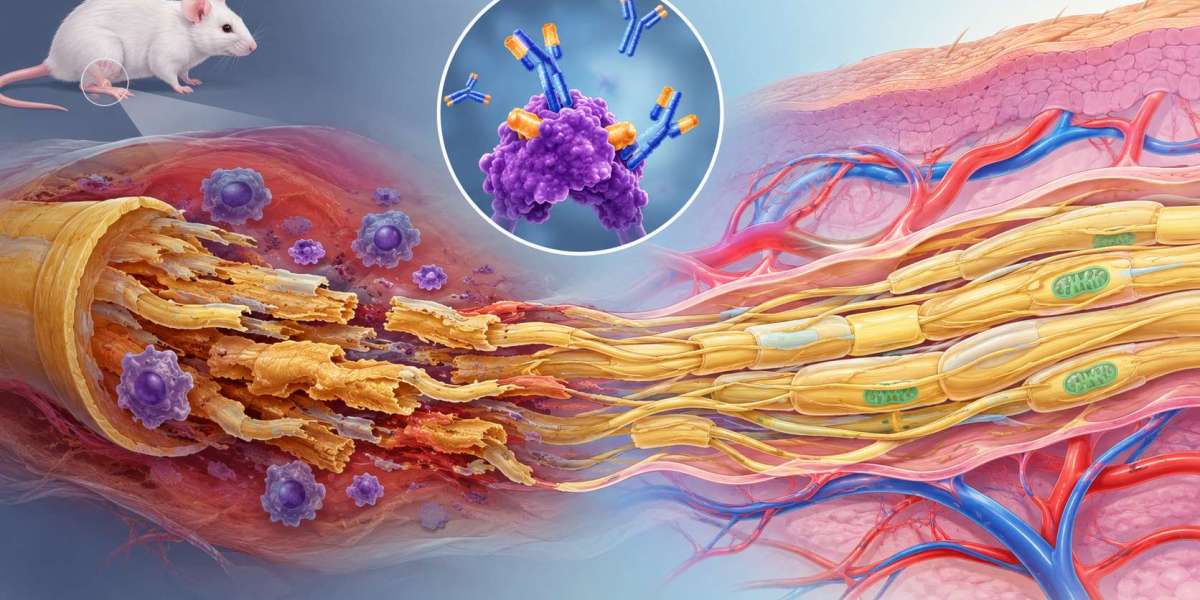
In mouse models of both type 1 and type 2 diabetes, the antibodies slowed and even reversed signs of peripheral nerve damage.
Treated mice showed regeneration of nerve fibers and improved wound healing in their paws.
The researchers reported that blocking MMP-9 also improved nerve mitochondrial function and promoted skin angiogenesis.
The findings are preclinical: the treatment has been tested in mice, not established as a treatment for people with diabetic neuropathy.
advertisement
Researchers have reported a potential new approach to diabetic peripheral neuropathy, using targeted monoclonal antibodies to block an enzyme involved in nerve damage and inflammation.
In a study published in Science Translational Medicine, a team from UTHealth Houston developed antibodies designed to specifically inhibit matrix metalloproteinase-9, or MMP-9. In mouse models of both type 1 diabetes and type 2 diabetes, the treatment slowed and, in some measures, reversed damage to peripheral nerves. Treated animals also showed improved wound healing in their paws.
The research focuses on diabetic peripheral neuropathy (DPN), a complication of diabetes in which peripheral nerves become damaged. These nerves carry signals between the brain and spinal cord and the rest of the body, including the hands, legs and feet.
The condition can produce symptoms such as numbness, tingling, burning sensations, pain, muscle weakness and cramps. Diabetic nerve damage can also contribute to problems such as poor wound healing and foot ulcers.
The researchers' approach differs from treatments that primarily attempt to control the symptoms of neuropathy.
According to Xin (Alex) Ge, Ph.D., professor in the Texas Therapeutics Institute at the Brown Foundation Institute of Molecular Medicine within McGovern Medical School at UTHealth Houston, available drugs can help manage symptoms such as pain but do not directly reverse the underlying nerve damage.
The team therefore focused on a biological mechanism that appears to contribute directly to the progression of the disease.
At the center of the research is MMP-9, an enzyme capable of breaking down proteins in the spaces between tissues. The researchers describe MMP-9 as an important contributor to excessive immune activity in the peripheral nervous system and to disease progression associated with impaired wound healing.
The study's researchers proposed that MMP-9 plays a role in the development of diabetic neuropathy by regulating neuroinflammation. This made the enzyme an attractive target for a treatment designed not merely to manage symptoms, but potentially to interfere with the disease process itself.
The challenge was finding a way to inhibit MMP-9 without unnecessarily affecting closely related enzymes.
The researchers developed monoclonal antibodies, laboratory-designed proteins that can recognize a specific molecular target. According to first author Kibaek Lee, Ph.D., selectively targeting MMP-9 has been difficult because the enzyme belongs to a closely related group of enzymes.
To overcome that problem, the researchers combined a camelid-inspired antibody library design with a functional selection process. This allowed them to identify antibodies capable of specifically inhibiting MMP-9 activity.
The resulting antibodies were then tested in diabetic mice.
The experiments included mouse models representing both type 1 and type 2 diabetes, providing evidence that the approach was not limited to a single experimental form of diabetes.
The results were notable at the level of peripheral nerve structure and tissue repair.
Mice that received the antibodies showed regeneration of nerve fibers. They also experienced improved wound healing in their paws, suggesting that the treatment affected processes beyond nerve signaling alone.
The researchers reported additional biological effects that may help explain those findings.
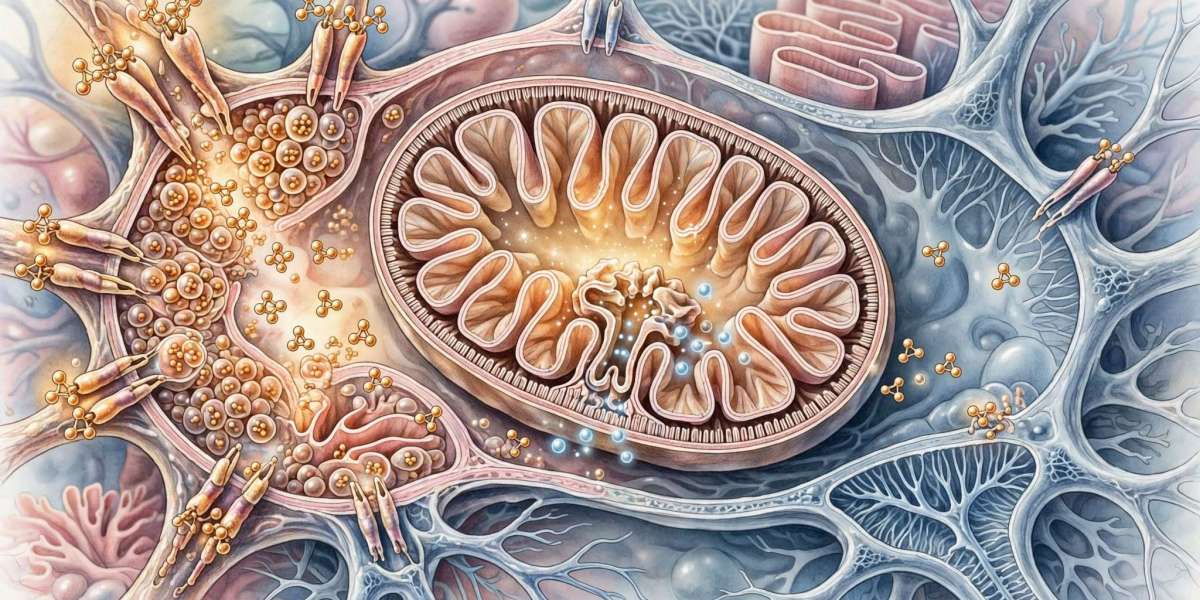
According to the study report, MMP-9-targeting antibodies reduced epidermal nerve fiber degeneration in diabetic mice while enhancing nerve mitochondrial function and promoting skin angiogenesis. Angiogenesis refers to the formation of new blood vessels, which can contribute to tissue repair.
The findings are important because diabetic peripheral neuropathy involves more than the sensation of pain or numbness. Damage to peripheral nerves can affect the health and function of tissues, while impaired wound healing can create additional complications in the extremities.
The researchers' results therefore point toward a possible disease-modifying strategy—one intended to address mechanisms contributing to nerve damage rather than simply suppressing symptoms.
However, the distinction between the experimental results and an established medical treatment is critical.
The reported treatment was tested in diabetic mice. The study does not establish that MMP-9-targeting antibodies can reverse diabetic neuropathy in human patients, nor does it establish a human dose, safety profile or clinical effectiveness.
The researchers did, however, include findings involving human tissue and genetic data that they say strengthen the potential relevance of the MMP-9 pathway.
The study reported increased MMP-9 expression in human dorsal root ganglia (DRG) among patients with diabetes. The dorsal root ganglia contain nerve-cell bodies associated with sensory information. The researchers also reported that both rare and common coding variants in the MMP9 gene were associated with neuropathic pain phenotypes.
The researchers further reported increased MMP-9 expression in satellite glial cells and macrophages in the dorsal root ganglia of people with type 2 diabetes. These observations provide human biological evidence connected to the pathway being investigated, but they do not amount to evidence that the antibody treatment itself has been shown to work in people.
That distinction is particularly important when interpreting the study's implications.
The researchers describe their findings as supporting the potential of MMP-9-specific monoclonal antibodies as disease-modifying therapies for peripheral neuropathy and as a possible way of reducing lower-extremity complications associated with diabetes.
Ge said the findings raise the possibility of doing more than relieving symptoms: the goal could eventually be to reverse the progression of nerve disease.
For now, however, that possibility remains at the preclinical research stage.
The significance of the work lies in the biological strategy. Rather than approaching diabetic neuropathy solely as a condition requiring pain management, the researchers are attempting to identify and block a molecular mechanism that contributes to nerve degeneration, inflammation and impaired tissue repair.
The mouse results suggest that this strategy can produce measurable structural and functional improvements, including nerve-fiber regeneration and better wound healing.
The next question is whether the same biological effects can ultimately be reproduced safely and effectively in humans. The sources provided for this article do not report human clinical trials of these MMP-9-targeting antibodies, so no conclusion can yet be drawn about their effectiveness as a treatment for patients.
For people living with diabetes, the research is therefore best understood as an experimental development in the search for disease-modifying treatments for diabetic peripheral neuropathy, rather than as an available therapy.
The study nevertheless provides researchers with a specific molecular target and a potential therapeutic strategy. Its combination of results from diabetic mouse models with observations involving human nerve tissue and MMP9 genetic variants gives the researchers a basis for further investigation.
Whether MMP-9-specific antibodies can progress from promising laboratory findings to a safe and effective human treatment remains to be determined.
Key Points Summary
UTHealth Houston researchers developed monoclonal antibodies designed to inhibit MMP-9.
The antibodies were tested in mice with type 1 and type 2 diabetes.
Treatment resulted in nerve-fiber regeneration and improved paw wound healing.
Researchers linked the effects to improved mitochondrial function and increased skin angiogenesis.
Human tissue and genetic findings provided additional evidence that MMP-9 is relevant to diabetic neuropathy.
The antibody treatment remains experimental and preclinical and has not been established as a human therapy in the supplied sources.
What This Means
Why it matters:
The research targets a mechanism associated with diabetic nerve damage rather than focusing only on symptoms. The mouse results suggest that selectively blocking MMP-9 may allow damaged peripheral nerves and surrounding tissues to recover.
Who may be affected:
The research could eventually be relevant to people living with diabetes who develop peripheral neuropathy, particularly if the approach can eventually be shown to be safe and effective in humans.
What to watch next:
The major question is whether the findings can progress beyond mouse models toward human therapeutic development. The supplied sources do not report clinical testing of these antibodies in people.
advertisement
Frequently Asked Questions (FAQ)
What is diabetic peripheral neuropathy?
Diabetic peripheral neuropathy is nerve damage associated with diabetes that commonly affects the hands, legs and feet. Symptoms can include numbness, tingling, burning sensations, pain, muscle weakness and cramps.
What is MMP-9?
Matrix metalloproteinase-9 (MMP-9) is an enzyme that can break down proteins between tissues. The researchers identified it as a contributor to processes associated with neuroinflammation and diabetic nerve damage.
How did the experimental treatment work?
The researchers developed monoclonal antibodies specifically designed to inhibit MMP-9 activity. The antibodies were tested in diabetic mouse models.
Did the treatment reverse nerve damage?
The researchers reported that treated diabetic mice regenerated nerve fibers and showed improved wound healing. The study therefore provides evidence of reversal or repair of several measured aspects of nerve damage in the mouse models.
Was the treatment tested in humans?
Not according to the sources provided for this article. The reported therapeutic experiments were conducted in diabetic mice. The study also included observations involving human tissue and genetic data, but those findings are not equivalent to a clinical treatment trial.
Did the antibodies work in both types of diabetes?
The reported preclinical experiments included mouse models of type 1 and type 2 diabetes.
Why use antibodies instead of small-molecule drugs?
The researchers wanted to target MMP-9 selectively because it is closely related to other enzymes. They developed antibodies intended to specifically inhibit MMP-9 rather than broadly affecting related enzymes.
Could this become a treatment for diabetic neuropathy?
The researchers believe the findings support the potential of MMP-9-specific antibodies as disease-modifying therapies, but whether they can become a safe and effective treatment for humans remains to be established.
Sources
GEN — “Monoclonal Antibodies Targeting MMP-9 Alleviate Peripheral Neuropathy in Diabetic Mice”
MedicalXpress — “Targeted antibody treatment reverses diabetic nerve damage in mouse models”
Disclaimer:
What is mentioned in this article is intended strictly for general educational and informational purposes. It does not provide personalized medical advice, diagnosis, or clinical treatment options. Readers experiencing persistent, painful, or severe health changes should always consult a qualified healthcare provider or specialist to evaluate their symptoms.
Thank you !