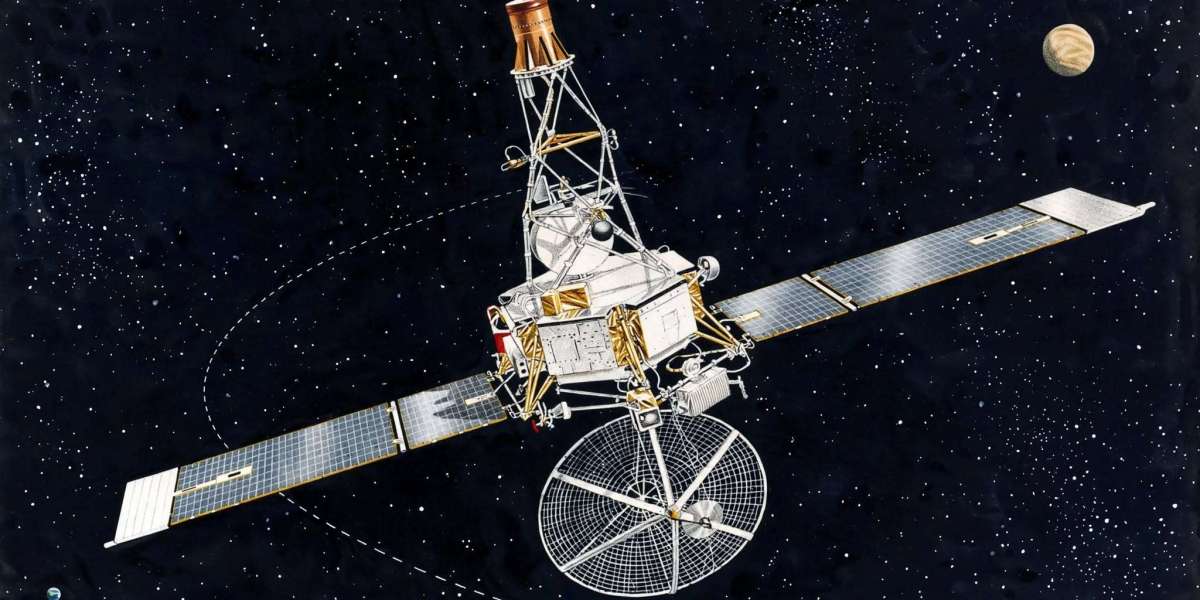

On This Day in Space: How Mariner 2 Made the First Deep-Space Maneuver and Reached Venus
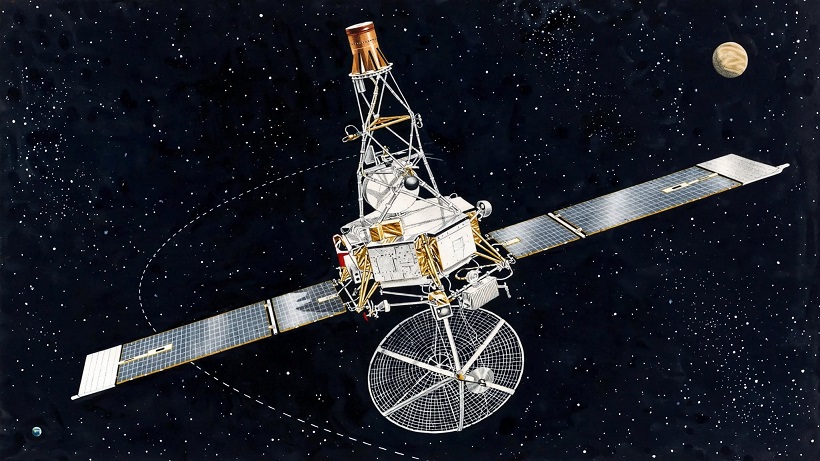
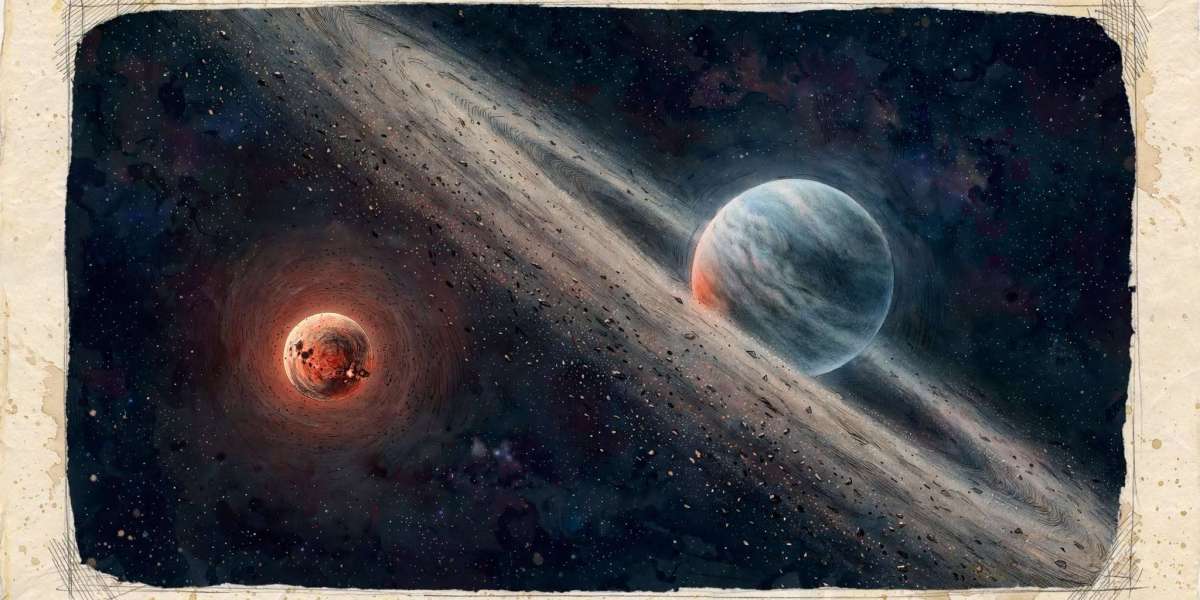
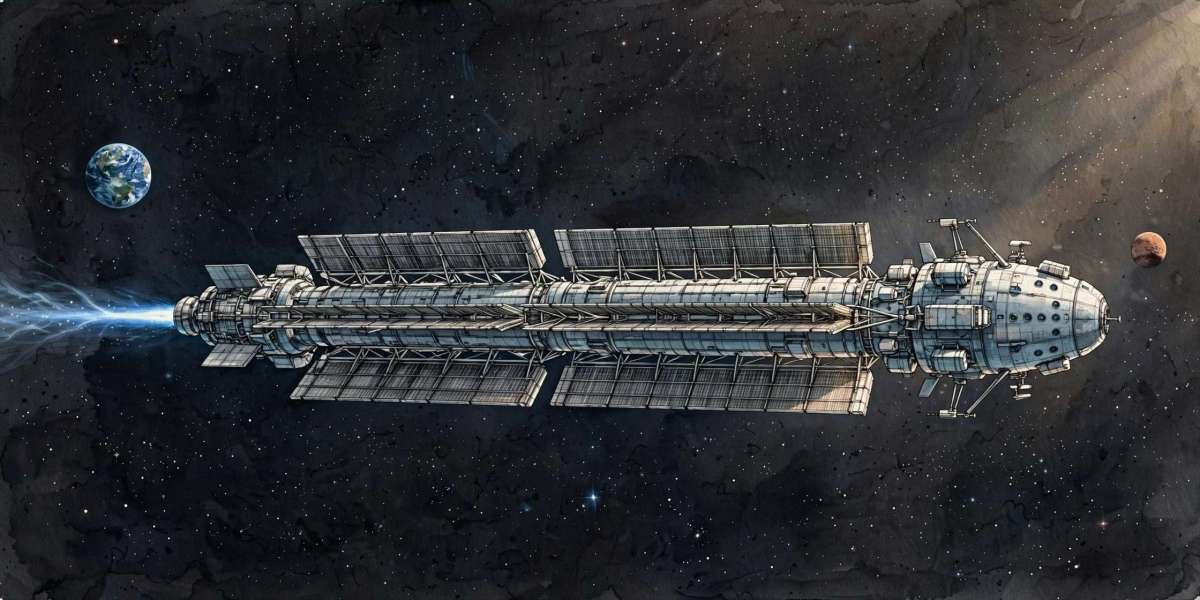
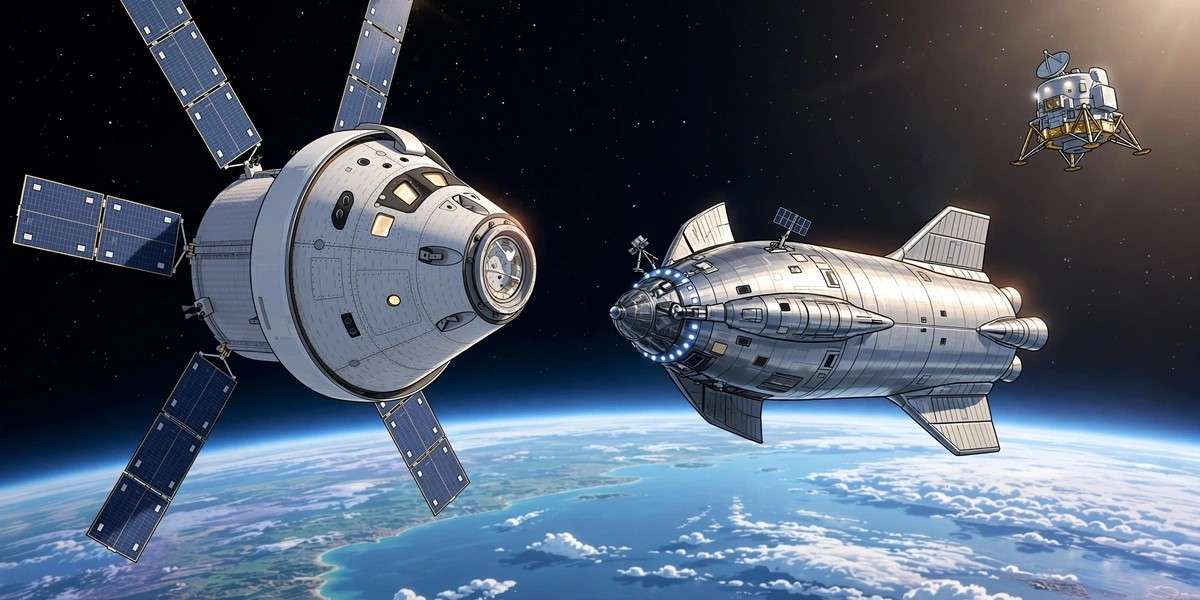
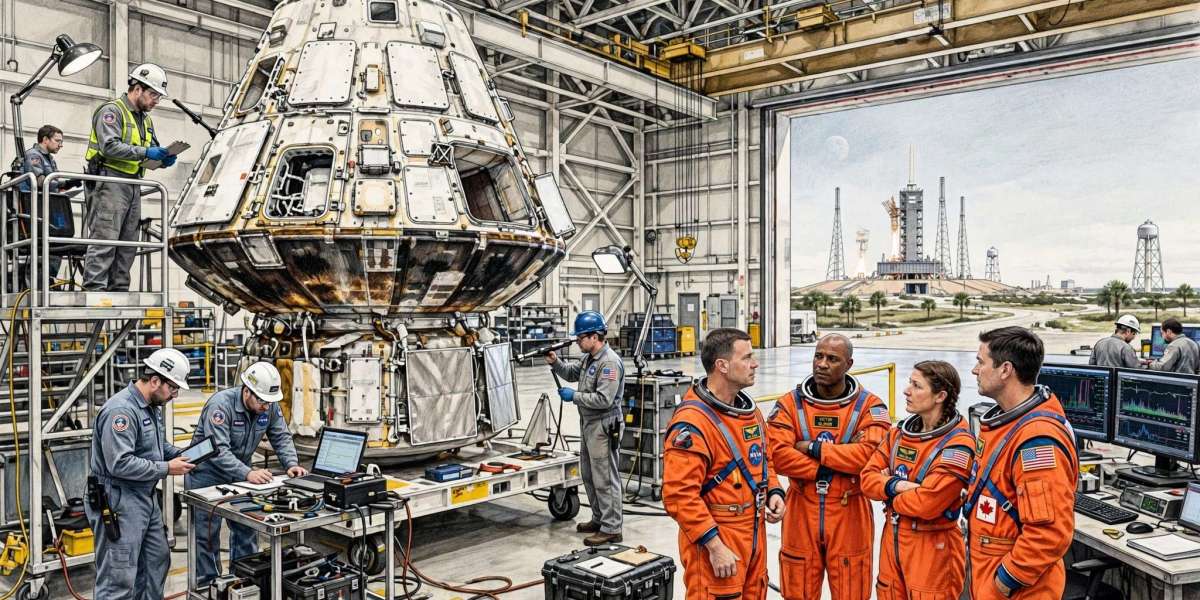
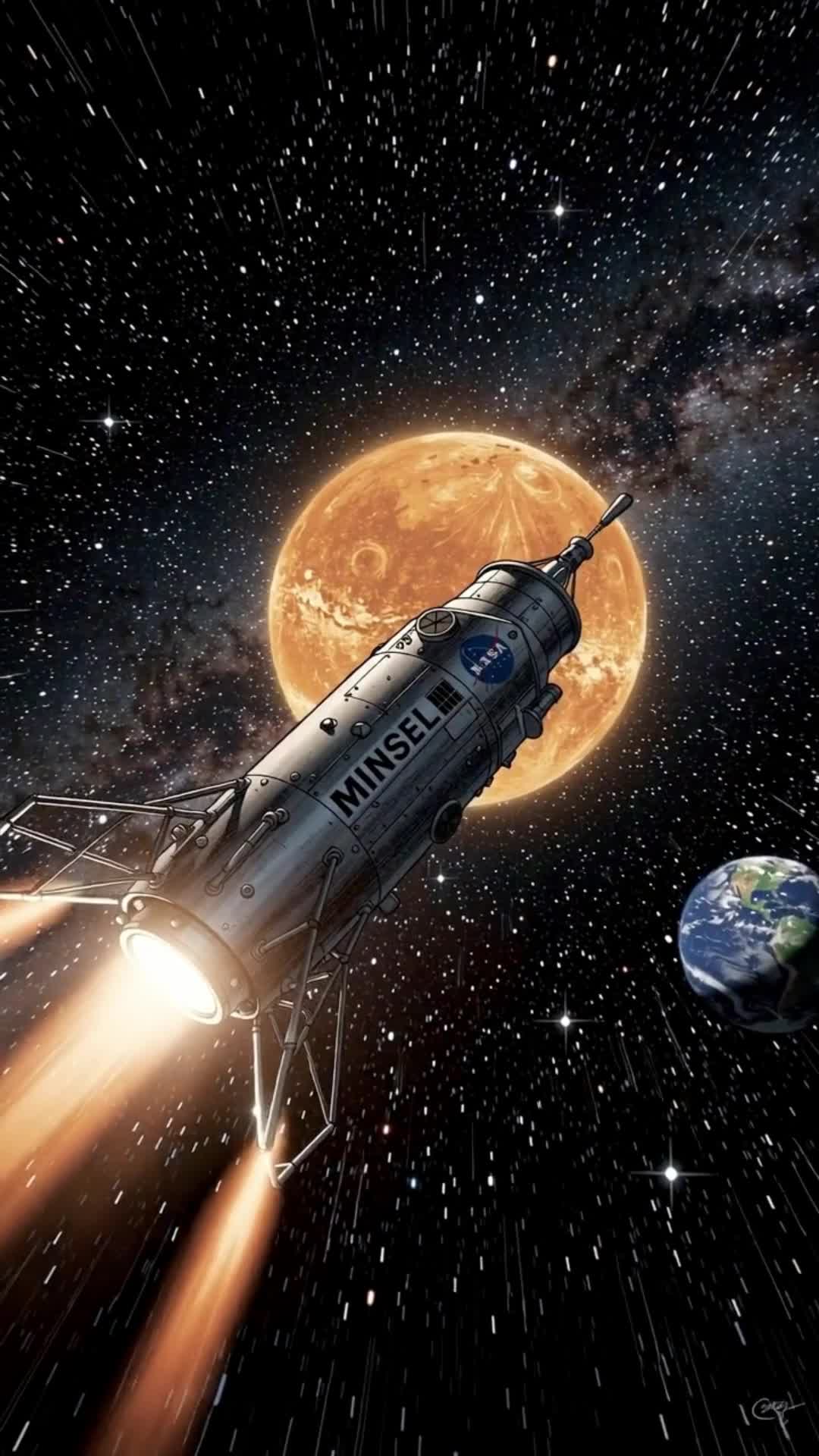
Photo by AI (Credits: saraapp.net)
Key Points
On Sept. 4, 1962, NASA's Mariner 2 carried out the first rocket maneuver in deep space, correcting its trajectory toward Venus.
The spacecraft was about 1.5 million miles (2.4 million kilometers) from Earth when it performed the maneuver.
Without the correction, Mariner 2 was projected to miss Venus by about 233,000 miles.
The maneuver initially appeared to place Mariner 2 on course to pass about 9,000 miles from Venus, but an extra 2 mph of velocity later shifted the expected flyby to more than 20,000 miles.
Mariner 2 flew past Venus on Dec. 14, 1962, becoming the first successful spacecraft mission to another planet.
advertisement
On Sept. 4, 1962, just over a week after leaving Earth, NASA's Mariner 2 spacecraft carried out a maneuver that helped establish a capability now central to planetary exploration: changing a spacecraft's course after it has entered deep space. The carefully calculated correction put the probe on a trajectory toward Venus, where it would arrive about three months later and complete the first successful spacecraft mission to another planet.
The event is remembered in historical accounts as the first rocket maneuver in deep space. At the time, sending a spacecraft beyond Earth and accurately guiding it toward another planet remained an enormous technical challenge. Mariner 2 demonstrated that mission controllers could track an interplanetary spacecraft, identify errors in its trajectory and command it to change course millions of miles from Earth.
Mariner 2 launched on Aug. 27, 1962, from Cape Canaveral, Florida, aboard an Atlas-Agena B rocket. The spacecraft was heading for Venus, but tracking data soon showed that its initial trajectory required correction. According to historical accounts from NASA's Jet Propulsion Laboratory, without a midcourse maneuver Mariner 2 would have passed about 233,000 miles from Venus. That launch dispersion was within the capability of the spacecraft's onboard correction system, but a precise maneuver was essential if the mission was to carry out its planned scientific observations.
By Sept. 4, Mariner 2 was about 1.5 million miles, or 2.4 million kilometers, from Earth. The spacecraft had to be carefully reoriented before its rocket motor could fire. Historical accounts describe a complex sequence of commands that controlled the probe's movements and engine firing. Space.com reported that the operation involved five separate commands, including instructions that caused Mariner 2 to roll and pitch into the required position.
The maneuver required remarkable precision for the technology available in the early 1960s. According to the historical account cited by Space.com, the spacecraft rolled about 9.33 degrees and pitched about 139.83 degrees, with the overall maneuver sequence taking up to 36 minutes. During the operation, Mariner 2 temporarily passed through a weak area in the pattern of its low-gain antenna, causing its signal to drop below the receiving threshold for a short period. The signal was reacquired, and tracking at Goldstone detected the Doppler change showing that the rocket motor had fired.
The purpose of the maneuver was straightforward but critical: correct a trajectory that would otherwise have taken Mariner 2 far past its intended target. Soon after the burn, calculations indicated that the spacecraft was on course to pass about 9,000 miles from the surface of Venus, a distance well within the mission's target area for effective scientific observations.
But the maneuver contained an unexpected complication. The small correction rocket was supposed to change Mariner 2's velocity by about 45 mph relative to its solar-orbit speed. Later, more precise tracking showed that it had instead imparted a change of about 47 mph—an extra 2 mph.
At interplanetary distances, that apparently small difference had a major consequence. Historical calculations showed that the extra velocity shifted Mariner 2's trajectory by more than 10,000 miles. Instead of the initially predicted 9,000-mile pass, the spacecraft was later expected to fly more than 20,000 miles from Venus. A contemporary JPL/Caltech account estimated a distance of about 20,900 miles, while NASA's modern mission summary gives the actual closest approach as 21,660 miles (34,854 kilometers). Despite the overcorrection, the spacecraft remained within the mission's scientific target region and was still able to successfully study the planet.
The sequence makes clear why the Sept. 4 maneuver was so important. Without the correction, Mariner 2 would have missed Venus by roughly 233,000 miles. The maneuver initially brought the spacecraft toward a much closer 9,000-mile target, and the unplanned extra 2 mph later resulted in the wider 20,000-plus-mile flyby. Although the spacecraft passed farther from Venus than initially intended after the burn, the mission remained a success and ultimately returned significant scientific data.
The mission came after the loss of Mariner 1, which had launched on July 22, 1962, but failed shortly after liftoff when its Atlas-Agena rocket veered off course and was destroyed by the range safety system. Engineers investigated the problem before preparing Mariner 2 for another attempt. Just 36 days after the loss of Mariner 1, its successor launched successfully and began its journey toward Venus.
Mariner 2's voyage lasted about 110 days, during which the spacecraft returned valuable information about the space between Earth and Venus. Among its important findings, the mission helped establish that the solar wind is a continuous stream of charged particles flowing outward from the Sun. This was scientifically significant because it helped settle a major question about whether such solar particles moved through interplanetary space as a continuing flow rather than appearing only as isolated events.
The spacecraft also observed the changing conditions of interplanetary space during its journey, including solar activity, cosmic dust and charged particles. NASA's Jet Propulsion Laboratory describes the solar wind measured by Mariner 2 as a constant stream of charged particles flying outward from the Sun, while NASA historical material notes that the mission confirmed its existence.
Mariner 2 carried a suite of seven scientific instruments to study Venus and the environment between the planets. They included a microwave radiometer, infrared radiometer, fluxgate magnetometer, cosmic dust detector, solar plasma spectrometer and particle-detection instruments. The spacecraft carried no camera, so its exploration of Venus depended on direct scientific measurements rather than photographs.
Its destination remained a world filled with unanswered questions. Venus, despite being similar to Earth in size, was hidden beneath thick clouds that prevented scientists from directly seeing its surface. Mariner 2 was sent to investigate the planet's temperatures and atmosphere, search for evidence of a magnetic field and measure conditions in the space surrounding the planet.
The Sept. 4 correction ensured that the spacecraft continued toward its destination. On Dec. 14, 1962, Mariner 2 flew past Venus. NASA's current mission page lists its closest approach at 21,660 miles (34,854 kilometers). Other historical NASA records give closely related figures, including 34,762 kilometers (21,600 miles). The small differences reflect the use of different historical trajectory summaries and measurement conventions, but the central fact is consistent: Mariner 2 completed a successful close flyby of Venus.
During a 42-minute scan of the planet, Mariner 2's radiometers examined Venus 18 times in total. The instruments completed five scans of the night side, eight scans across the terminator—the boundary between day and night—and five scans of the daylight side. These measurements gave scientists information from different regions of the planet during the brief flyby.
The data helped reveal the extreme temperatures of Venus. NASA's mission summary says Mariner 2's microwave radiometer recorded temperatures ranging from about 421 degrees Fahrenheit (216 degrees Celsius) on the dark side to 459 degrees Fahrenheit (237 degrees Celsius) on the dayside. NASA's historical summaries also concluded that Venus had a far hotter surface than many scientists had expected, helping transform scientific understanding of Earth's neighboring planet.
Mariner 2 also found no detectable significant magnetic field around Venus, according to NASA's historical summaries, while its observations contributed to a broader picture of a planet hidden beneath continuous clouds and surrounded by an extremely harsh environment. The mission's findings provided some of the first direct measurements gathered during a successful encounter with another planet.
The achievement extended beyond the science returned from Venus. Mariner 2 became the first successful mission to another planet when it flew past Venus on Dec. 14, 1962. Its success depended on a chain of difficult operations: a successful launch, precise tracking across interplanetary distances, the deep-space course correction, continued communications and the spacecraft's ability to survive technical problems during its journey.
Those problems were substantial. Mariner 2 experienced attitude-control issues, equipment anomalies and the failure of one of its solar panels during the trip. As it approached Venus, the spacecraft also faced increasingly serious heating problems. Yet it remained operational long enough to complete its encounter sequence and return its scientific measurements.
After passing Venus, Mariner 2 continued in orbit around the Sun and kept transmitting data to Earth. NASA maintained contact until Jan. 3, 1963, when the spacecraft was about 53.9 million miles (86.7 million kilometers) from Earth. That marked a new distance record for a deep-space probe at the time.
Today, trajectory-correction maneuvers are a routine part of missions traveling through the solar system. Space agencies plan such maneuvers to compensate for small differences in launch performance and refine a spacecraft's route as new tracking data becomes available. But in 1962, successfully commanding a spacecraft to change its trajectory across interplanetary distances was a major test of navigation and communications technology.
The Mariner 2 story also demonstrates a basic principle of spaceflight that remains true today: a very small change in velocity can produce a major change in position over millions of miles of travel. In this case, the extra 2 mph imparted during the maneuver was enough to shift the spacecraft's projected Venus flyby by more than 10,000 miles.
Sept. 4, 1962, therefore remains an important date in the development of deep-space navigation. The maneuver prevented a distant miss of Venus, initially aimed the spacecraft toward a close 9,000-mile pass and, despite the later discovery of the 2 mph overcorrection, still placed Mariner 2 within the range needed to complete its scientific mission.
Just over three months later, Mariner 2 reached Venus and became the first spacecraft to successfully complete a mission to another planet. Its success helped demonstrate that planetary exploration required more than a powerful launch: it depended on precise tracking, communications, navigation and the ability to make corrections far from Earth.
As spacecraft continue traveling to planets, moons, asteroids and destinations beyond the solar system's inner worlds, the principle demonstrated by Mariner 2 remains fundamental. Small adjustments made early in a long journey can determine where a spacecraft arrives millions of miles later. On Sept. 4, 1962, NASA and JPL demonstrated that capability in deep space—and Mariner 2 went on to show what could happen when a spacecraft successfully navigated its way to another world.
Key Points Summary
Mariner 2 launched on Aug. 27, 1962, aboard an Atlas-Agena B rocket bound for Venus.
On Sept. 4, 1962, about 1.5 million miles from Earth, it performed the first rocket maneuver in deep space.
Without the maneuver, the spacecraft was projected to miss Venus by about 233,000 miles.
The correction initially targeted a pass of about 9,000 miles, but an extra 2 mph of velocity shifted the expected flyby to more than 20,000 miles.
Mariner 2 flew past Venus on Dec. 14, 1962, at about 21,660 miles (34,854 kilometers) according to NASA's current mission summary.
During its 42-minute planetary scan, its instruments examined Venus 18 times: five night-side scans, eight across the terminator and five on the daylight side.
The mission helped establish that the solar wind is a continuous stream of charged particles flowing outward from the Sun.
Contact ended on Jan. 3, 1963, when Mariner 2 was about 53.9 million miles (86.7 million kilometers) from Earth.
What This Means
The anniversary of Mariner 2's Sept. 4 maneuver shows why precision navigation is essential in space exploration. Launching a spacecraft toward another planet is only the beginning; tracking and carefully calculated corrections can determine whether it reaches its target.
The mission also illustrates how small differences become magnified over enormous distances. An extra 2 mph of velocity changed Mariner 2's projected Venus flyby by more than 10,000 miles, while the original course correction prevented a projected miss of about 233,000 miles.
For today's readers, Mariner 2 provides important historical context for modern missions, where trajectory-correction maneuvers have become a standard part of traveling through deep space. What should be watched next is how future spacecraft continue to rely on increasingly precise navigation as missions target more distant and complex destinations.
advertisement
Frequently Asked Questions [FAQ]
What happened to Mariner 2 on Sept. 4, 1962?
Mariner 2 performed a midcourse rocket maneuver in deep space, correcting its path toward Venus while it was about 1.5 million miles (2.4 million kilometers) from Earth.
Why did Mariner 2 need a course correction?
Tracking showed that without a correction, the spacecraft would have passed about 233,000 miles from Venus. The maneuver was designed to bring it close enough to carry out its scientific observations.
What was the 2 mph error during Mariner 2's maneuver?
The correction rocket was intended to change the spacecraft's velocity by about 45 mph, but later tracking indicated a change of about 47 mph. That extra 2 mph shifted the projected flyby by more than 10,000 miles, changing the expected pass from about 9,000 miles to more than 20,000 miles from Venus.
Was the 2 mph overcorrection a mission failure?
No. Although the spacecraft passed farther from Venus than initially expected after the correction, it remained within the mission's scientific target region and successfully completed its flyby and observations.
When did Mariner 2 reach Venus?
Mariner 2 flew past Venus on Dec. 14, 1962. NASA's current mission summary lists its closest approach at 21,660 miles (34,854 kilometers).
How many times did Mariner 2 scan Venus?
During its 42-minute planetary scan, the spacecraft's radiometers completed 18 scans: five on the night side, eight across the terminator and five on the daylight side.
Did Mariner 2 take pictures of Venus?
No. Mariner 2 carried no camera. Its instruments studied Venus through scientific measurements, including radiometer observations.
What did Mariner 2 discover about the solar wind?
The mission helped establish that the solar wind is a continuous or constant stream of charged particles flowing outward from the Sun, providing important information about conditions in interplanetary space.
Why was Mariner 2 important?
Mariner 2 became the first successful spacecraft mission to another planet when it flew past Venus. It also returned major scientific data about Venus and helped demonstrate techniques that became fundamental to deep-space navigation and planetary exploration.
Sources
Additional Verified Sources
- NASA Science — Mariner 2 Mission Overview
- NASA History — 60 Years Ago: Mariner 2 Launches to Explore Venus
- NASA JPL — Venus Encounter
- NASA History — 60 Years Ago: Mariner 2 First to Explore Venus
Thank you !