
(What will be mentioned in this article is for advice and is not a substitute for consulting a doctor)
Just One Drink a Day May Raise Cancer Risk as Alcohol-Related Deaths More Than Double in U.S. Study
Key Points
Alcohol-attributable cancer deaths in the United States rose from 11,361 in 1990 to 23,126 in 2023, according to new research.
The study found the burden extends far beyond liver cancer, affecting cancers including breast, colorectal, esophageal, pancreatic and prostate cancer.
Men and adults aged 55 and older experienced the greatest burden, although increases were seen across most cancer types, age groups and regions.
Research cited alongside the findings indicates that cancer risk can increase at relatively low levels of alcohol consumption, including amounts around one U.S. standard drink per day.
Alcohol is a potentially modifiable cancer risk factor, although the research does not mean that every person who drinks will develop cancer.
advertisement
Alcohol-related cancer deaths in the United States more than doubled over three decades, rising from 11,361 in 1990 to 23,126 in 2023, according to newly published research that is drawing renewed attention to the cancer risks associated with even relatively low levels of alcohol consumption. The findings come as scientists and public health authorities continue to examine how alcohol affects cancer risk and whether consumers have a clear enough understanding of the potential consequences. The research, led by investigators at Sylvester Comprehensive Cancer Center, part of the University of Miami Miller School of Medicine, analyzed more than three decades of Global Burden of Disease data and was published in The Lancet Regional Health—Americas.
The central finding is not simply that the number of alcohol-attributable cancer deaths increased. The research also found that alcohol's impact extends across a broad range of cancers rather than being confined to the liver, the disease most commonly associated with long-term heavy drinking. Researchers identified alcohol-related mortality involving cancers of the breast, prostate, colon, rectum, stomach, pancreas and liver, as well as cancers affecting the head and neck. Lead researcher Dr. Chinmay Jani said the breadth of alcohol's potential impact across cancer types was among the study's notable findings.
The relative burden of alcohol is rising even as age-standardized cancer death rates across the United States have generally seen downward trends over recent decades. The new analysis therefore highlights the growing importance of alcohol as a cancer risk factor. The University of Miami researchers said men and adults aged 55 and older experienced the greatest burden, although increases were observed across most cancer types, age groups and regions examined.
Among men aged 55 and older, liver cancer accounted for the highest alcohol-attributable mortality rates, followed by esophageal and colorectal cancers. Among women, breast cancer was the leading source of alcohol-attributable cancer mortality. The research also identified a different pattern among younger adults. For men aged 20 to 54, colorectal cancer was the leading alcohol-attributable cause of cancer death. Among women aged 20 to 54, breast cancer ranked first, followed by colorectal cancer, according to the University of Miami's report on the study.
The geographic differences were also notable. In 2023, Washington, D.C. recorded the highest alcohol-attributable cancer mortality rates, while Utah had the lowest, according to the researchers. The study was designed to examine long-term national trends, meaning these differences do not by themselves establish why one location had a higher or lower rate than another.
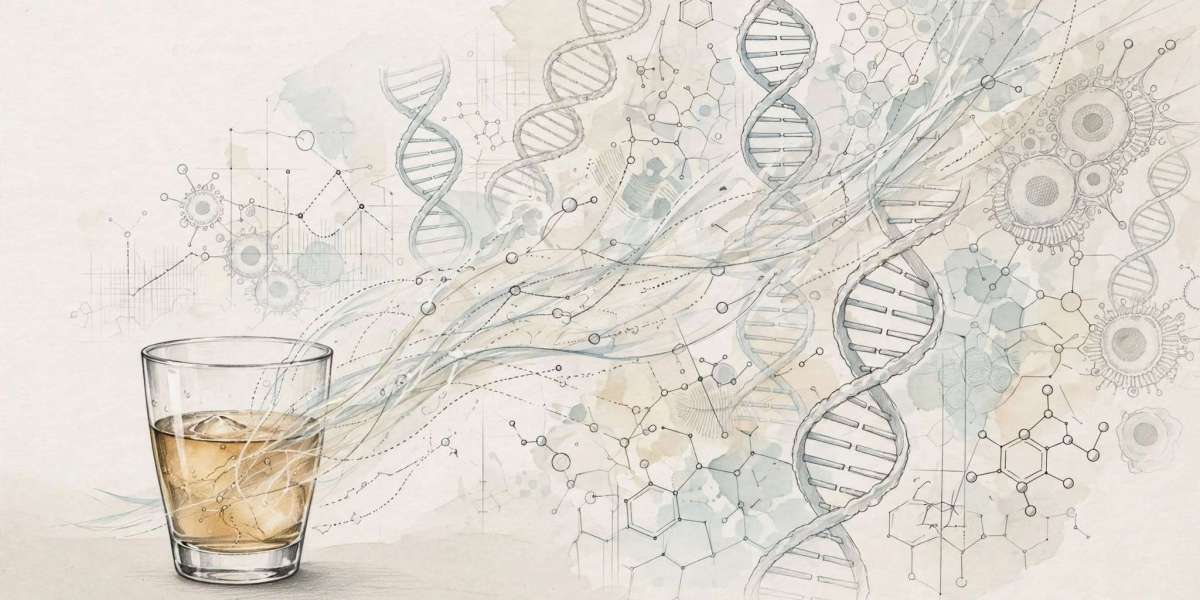
One of the most important questions raised by the findings is how much alcohol is required before cancer risk begins to rise. The answer is more complicated than suggesting there is a single threshold that applies equally to every person and every cancer. However, the evidence summarized in recent reporting indicates that elevated cancer risk has been linked to alcohol intake of approximately 5 to 15 grams per day. A standard alcoholic drink in the United States contains 14 grams, or 0.6 ounces, of pure alcohol, meaning that amount falls within this range.
That distinction is important. The new findings do not mean that every person who drinks one alcoholic beverage a day will develop cancer or die from cancer. Cancer risk depends on many factors, and population-level research cannot predict an individual's outcome. Instead, the evidence means that even levels of drinking many people may regard as modest can contribute to a measurable increase in the risk of certain cancers. The National Cancer Institute says there is strong scientific evidence that drinking alcohol can cause cancer and notes that alcohol has been classified by the International Agency for Research on Cancer as a Group 1 carcinogen, a category used for agents with sufficient evidence that they cause cancer in humans.
The classification should also be understood carefully. Group 1 refers to the strength of evidence that an agent can cause cancer, not a claim that alcohol presents the same level of individual risk as every other substance in the category. The level of risk can vary according to the substance, the amount of exposure and other factors. What the classification establishes is that the carcinogenic connection itself is supported by sufficient evidence.
The National Cancer Institute identifies several cancers for which alcohol consumption is known to increase risk, including cancers of the oral cavity, pharynx, larynx and liver, as well as esophageal squamous cell carcinoma. Alcohol consumption is also associated with increased risks of breast and colorectal cancers. The evidence is particularly important because the relationship between alcohol and esophageal cancer is not uniform across all types: the strongest association is with esophageal squamous cell carcinoma, while the connection with esophageal adenocarcinoma is less pronounced.
The broader scientific evidence has also continued to evolve. A 2026 Burden of Proof study published in Nature Health, which reviewed hundreds of cohort and case-control studies, reported that current alcohol consumption was associated with increased risks for multiple cancers, including breast, colorectal, esophageal, laryngeal, oral cavity, pharyngeal, liver, stomach, pancreatic and prostate cancers. Its authors reported that even low consumption of less than 10 grams per day was associated with elevated risks for several cancers, although the strength of evidence and the size of the association differed by disease.
That context is particularly relevant to the headline question surrounding one drink a day. A standard drink should not be interpreted as a guaranteed cause of cancer, but neither does the available evidence support the assumption that modest drinking is automatically risk-free from a cancer perspective. The National Cancer Institute notes that a U.S. standard drink contains 14 grams of pure alcohol, though the actual amount of alcohol consumed can be higher when serving sizes exceed standard measurements.
The University of Miami researchers described alcohol as a potentially modifiable risk factor. That means, unlike factors such as age or inherited genetic characteristics, alcohol consumption is a behavior that people can potentially change. Dr. Jani said the key takeaway was greater awareness that alcohol may affect cancer risk beyond the liver, adding that the study suggests reducing consumption to the lowest amount feasible for an individual may help lessen alcohol's impact on cancer risk and overall health, while the lowest safe dose remains unknown.
Dr. Gilberto Lopes, the study's senior author and chief of medical oncology at Sylvester Comprehensive Cancer Center, said the findings show that alcohol-related cancer risk is not limited to a single disease or demographic group. He said giving people clearer information about modifiable lifestyle factors could help support broader cancer-risk reduction strategies.
The findings are also arriving amid an ongoing public health debate over alcohol guidance and warning labels. Reporting cited the earlier call by then U.S. Surgeon General Vivek Murthy for greater awareness of alcohol's cancer risks and for warning labels on alcoholic beverages. The National Cancer Institute also notes that a Surgeon General's advisory called for reconsideration of alcohol-consumption limits in U.S. dietary guidance in light of evidence linking cancer risk with alcohol consumption at or below existing guideline levels.
For consumers, the most useful interpretation of the latest study may be that the relationship between alcohol and cancer is broader than the traditional focus on liver disease. The rise from 11,361 alcohol-attributable cancer deaths in 1990 to 23,126 in 2023 underscores the scale of the public health burden identified by the researchers, while the patterns across colorectal, breast, esophageal and other cancers show why awareness cannot be limited to one disease.
The study does not establish that a single daily drink will cause cancer in a particular person, nor does it provide a guarantee that avoiding alcohol will prevent every alcohol-associated cancer. Its findings instead add to a substantial body of evidence showing that alcohol exposure contributes to cancer risk and that the risk is not restricted to heavy drinking or liver cancer alone. For researchers and public health authorities, the next focus will remain on improving public understanding, refining estimates of risk at different levels of consumption and translating the growing scientific evidence into effective prevention strategies.
Key Points Summary
Alcohol-attributable cancer deaths in the U.S. increased from 11,361 in 1990 to 23,126 in 2023.
The burden was greatest among men and people aged 55 and older.
Alcohol-related cancer deaths involved far more than liver cancer, including breast, colorectal, esophageal, pancreatic and other cancers.
One U.S. standard drink contains 14 grams of pure alcohol, an amount within the low-consumption range discussed in evidence linking alcohol to increased cancer risk.
One drink a day does not mean a person will inevitably develop cancer, but evidence shows that cancer risk can increase even at relatively low levels of alcohol consumption.
Researchers say alcohol is a potentially modifiable risk factor, making public awareness an important part of cancer prevention.
What This Means
Why it matters: The study adds new long-term evidence that alcohol's cancer burden is growing and extends across numerous cancer types.
Who may be affected: Anyone who consumes alcohol may be exposed to some degree of alcohol-related cancer risk, although risk varies according to the amount consumed, cancer type and individual factors. The study found the greatest mortality burden among men and adults aged 55 and older, while also identifying important patterns among younger adults.
What to watch next: Researchers and health authorities will continue examining alcohol risk at low levels of consumption and how the evidence could influence public health guidance, consumer awareness and alcohol warning-label policy.
advertisement
Frequently Asked Questions [FAQ]
1. Does one drink a day cause cancer?
Not necessarily. One drink a day does not mean an individual will definitely develop cancer. However, scientific evidence indicates that cancer risk can increase at relatively low levels of alcohol consumption, and a U.S. standard drink contains 14 grams of pure alcohol.
2. How much did alcohol-related cancer deaths increase?
The University of Miami study found that annual alcohol-attributable cancer deaths increased from 11,361 in 1990 to 23,126 in 2023, more than doubling over the 33-year period.
3. Which cancers were linked to alcohol in the study?
The research examined a broad range of cancers, with findings highlighting liver, colorectal, breast, esophageal, pancreatic and prostate cancers, among others.
4. Which group had the greatest burden?
Men and adults aged 55 and older experienced the greatest burden of alcohol-attributable cancer mortality, although increases were observed across most cancer types, age groups and regions.
5. What is a standard drink in the United States?
According to the National Cancer Institute, a standard U.S. alcoholic drink contains 14 grams, or 0.6 ounces, of pure alcohol. This is generally equivalent to 12 ounces of beer, 5 ounces of wine or 1.5 ounces of 80-proof distilled spirits, although real-world serving sizes can be larger.
6. Is alcohol considered a carcinogen?
Yes. The International Agency for Research on Cancer has classified alcohol as a Group 1 carcinogen, meaning there is sufficient evidence that it can cause cancer in humans.
7. What was the lowest safe dose identified by the new study?
The researchers did not establish a lowest safe dose. The study's lead researcher indicated that the lowest safe dose remains unknown and suggested that reducing consumption to the lowest amount feasible may help lessen alcohol's potential impact on cancer risk and overall health.
8. Does alcohol only increase the risk of liver cancer?
No. The evidence indicates that alcohol is associated with several cancers. These include breast, colorectal, liver, oral cavity, pharyngeal, laryngeal and esophageal squamous cell cancers, among others.
Sources
Additional Verified Sources
Disclaimer:
What is mentioned in this article is for advice and is not a substitute for consulting a doctor
Thank you !