
(What is mentioned in this article is strictly for general educational and informational purposes and is not a substitute for professional medical advice, diagnosis, or consulting a doctor.)
Here’s Why Sugar-Free Candies Make You Poop and Fart More, According to a Dietitian
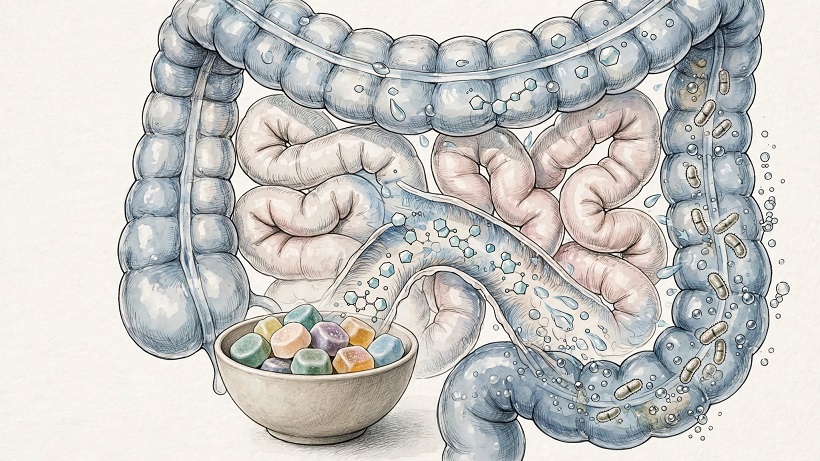

Key Points
Sugar-free candies often contain sugar alcohols, which are only partly absorbed in the small intestine.
Unabsorbed sugar alcohols can draw water into the intestine, potentially making stools softer and increasing bowel urgency.
When these compounds reach the colon, gut bacteria ferment them and produce gases, contributing to bloating and flatulence.
Sorbitol, mannitol and maltitol are generally more likely to cause digestive symptoms, while erythritol is usually better tolerated.
The amount consumed matters: larger servings are more likely to trigger symptoms, although individual sensitivity varies.
advertisement
Sugar-free candy may seem like an easy way to satisfy a sweet tooth without the added sugar, but for some people, eating too much can produce an unexpected side effect: more gas, bloating and trips to the bathroom.
A September 6, 2026 article from Verywell Health, written by registered dietitian Lauren Panoff, MPH, RD, explains that the reason is often found not in the absence of sugar itself, but in the sugar alcohols used to replace it. These sweeteners can behave very differently from ordinary table sugar once they enter the digestive system.
Sugar alcohols, also called polyols, are a group of sweet-tasting compounds used in many sugar-free candies, chewing gums, beverages and other reduced-sugar products. Common examples include sorbitol, xylitol, mannitol, erythritol and maltitol. They provide sweetness while generally contributing fewer calories than conventional sugar and tend to have a smaller effect on blood glucose than regular table sugar.
The digestive difference begins in the small intestine.
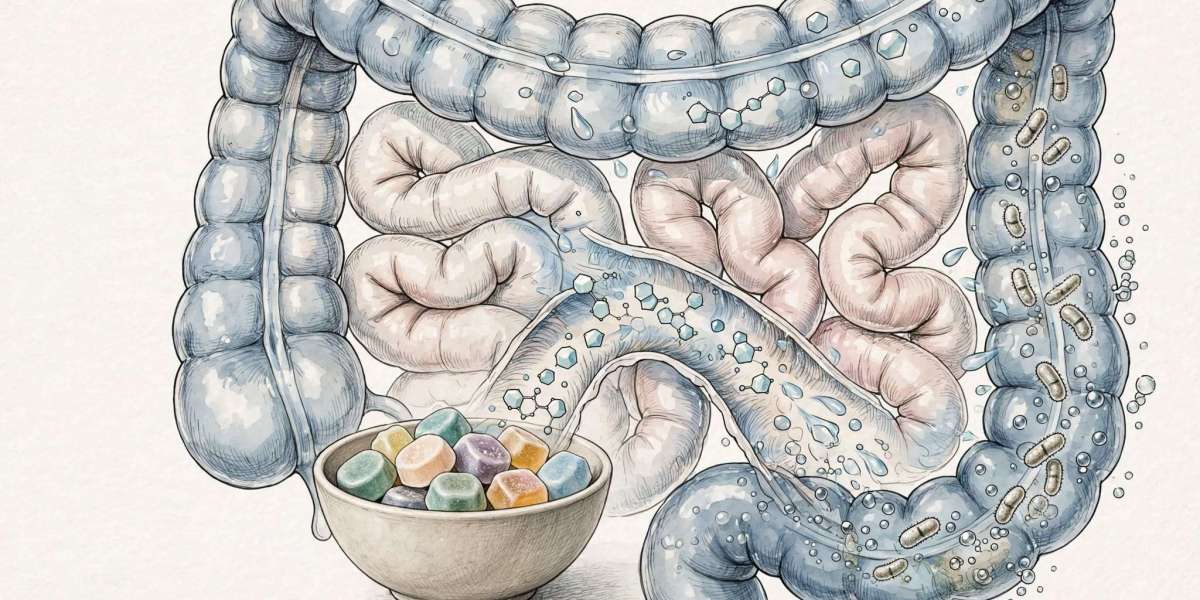
Regular table sugar is efficiently digested and absorbed, allowing its component sugars to enter the bloodstream. Sugar alcohols, by contrast, are not all absorbed completely. Their chemical structures mean that some pass through the small intestine without being fully absorbed and eventually reach the large intestine, or colon.
That partial absorption is one of the main reasons sugar-free candy can affect bowel movements.
When significant amounts of an unabsorbed sugar alcohol remain in the intestine, they can exert an osmotic effect. In simple terms, the dissolved particles encourage water to remain in or move into the intestinal contents. More water in the bowel can make stool softer and can accelerate intestinal transit, potentially resulting in looser stools or an urgent need to use the bathroom.
This mechanism is not unique to candy. Osmotic effects are also part of how certain laxatives help stimulate bowel movements. The difference is that consuming a large amount of a sugar alcohol unintentionally can produce a similar effect in someone who is sensitive to it.
But the bathroom effect is only half the story.
Some of the sugar alcohol that survives passage through the small intestine reaches the colon, where it encounters the trillions of microorganisms that make up the gut microbiota. Those bacteria can ferment unabsorbed carbohydrates and polyols, producing gases including hydrogen, methane and carbon dioxide.
The resulting fermentation can contribute to gas, bloating and abdominal discomfort, which explains why a person may experience both increased bowel movements and noticeably more flatulence after eating a large amount of sugar-free candy. A systematic review of polyols found that their gastrointestinal effects can include flatulence, abdominal discomfort, bloating and laxative effects, with symptoms generally becoming more likely as intake increases.
Importantly, however, not everyone responds to sugar alcohols in the same way.
The type of sugar alcohol matters, as does the quantity consumed. According to Verywell Health, erythritol tends to be gentler on the digestive system because most of it is absorbed in the small intestine and subsequently eliminated through urine rather than reaching the colon in large amounts. Xylitol occupies something of a middle ground, while sorbitol, mannitol and maltitol are more likely to cause digestive symptoms because of their relatively poor absorption and osmotic effects.
Research in humans helps illustrate why the different compounds can behave differently.
In a 2022 dose-ranging study, researchers administered different amounts of erythritol and xylitol to healthy participants and measured their absorption. The study found that erythritol absorption was dose-dependent and saturable, while xylitol absorption was relatively low. The researchers also found dose-dependent metabolism of erythritol into erythronate, although they emphasized that the health implications of that finding remained uncertain and required further research.
The study was relatively small, involving 17 healthy lean participants, and it should not be interpreted as establishing that erythritol is universally free of gastrointestinal effects. Some participants reported bloating or other digestive changes at certain doses. The findings instead help demonstrate that absorption differs among sugar alcohols and can change with the amount consumed.
The amount of candy eaten can therefore be just as important as the ingredient itself.
Someone who eats one or two pieces of a sugar-free candy may have no noticeable reaction, while consuming a much larger serving can overwhelm the intestine's ability to absorb certain sugar alcohols. That leaves more of the compound available to exert osmotic effects and reach the colon for bacterial fermentation. The systematic-review evidence describes these effects as dose-dependent, although there is substantial variation between individuals.
This is also why two products marketed as "sugar-free" can produce very different experiences.
The front of the package may look similar, but the ingredient list can reveal which sweetener is being used. Checking for names such as sorbitol, xylitol, mannitol, erythritol or maltitol can help consumers identify the source of potential digestive symptoms.
For people who notice a recurring connection between sugar-free products and digestive problems, a practical approach is to start with a small serving rather than eating a large quantity at once. Verywell Health also recommends avoiding the practice of stacking multiple sources of sugar alcohols — for example, consuming sugar-free candy, gum and beverages containing polyols at the same time.
The advice is particularly relevant because sugar alcohols can appear in several products during the same day without consumers necessarily realizing how much they are consuming.
Verywell Health also suggests spacing out servings and, for people who tolerate it, choosing erythritol over sugar alcohols that are more commonly associated with gastrointestinal symptoms. Drinking enough water is another practical measure mentioned by the dietitian. These strategies are aimed at reducing discomfort rather than suggesting that everyone needs to avoid sugar-free products.
There is also an important distinction between digestive side effects and toxicity.
Experiencing gas or loose stools after consuming sugar-free candy does not automatically mean the sweetener is dangerous. The available evidence shows that polyols can produce gastrointestinal symptoms, particularly at higher intakes, but the severity and threshold vary substantially among individuals. A person who repeatedly experiences significant symptoms may want to discuss them with a healthcare professional rather than simply assuming that every digestive problem is caused by sugar alcohols.
The science behind the phenomenon is ultimately fairly straightforward: some sugar alcohols are incompletely absorbed, unabsorbed material can alter the amount of water in the intestine, and gut bacteria can ferment what reaches the colon.
That combination can turn an apparently harmless handful of sugar-free sweets into an unexpectedly busy afternoon.
For consumers, the most useful lesson is not necessarily to eliminate sugar-free candy. Instead, it is to read the ingredient label, pay attention to portion size and notice how your own digestive system responds. Different people have different levels of tolerance, and the particular sugar alcohol used in a product can make a significant difference.
Sugar-free does not mean digestive-system-free. In some cases, the very ingredients that make candy sweet without conventional sugar are also the reason your gut has something to say about it.
Key Points Summary
Sugar-free candy commonly uses sugar alcohols/polyols as sweeteners.
Many sugar alcohols are only partially absorbed in the small intestine.
Unabsorbed compounds can draw water into the intestine, producing softer or looser stools.
Gut bacteria can ferment the remaining compounds and generate hydrogen, methane and carbon dioxide, contributing to gas and bloating.
Sorbitol, mannitol and maltitol are generally more likely to cause gastrointestinal symptoms than erythritol.
Portion size and individual tolerance are major factors.
What This Means
The digestive effects of sugar-free candy are primarily a consequence of how certain sugar alcohols are absorbed and processed by the gastrointestinal tract, rather than evidence that sugar-free candy is inherently dangerous.
People who experience symptoms should pay particular attention to the type and amount of sugar alcohol in the products they consume. Reducing the serving size, avoiding several polyol-containing products at the same time and monitoring individual tolerance may reduce symptoms.
Readers should also avoid assuming that every sugar-free product will produce the same response. Different polyols have different absorption characteristics, and research shows substantial variation in how people respond.
advertisement
Frequently Asked Questions [FAQ]
Why does sugar-free candy make me poop?
Many sugar-free candies contain sugar alcohols that are not completely absorbed in the small intestine. They can draw water into the intestine through an osmotic effect, potentially softening stool and increasing bowel movements or urgency.
Why does sugar-free candy cause gas?
Sugar alcohols that reach the colon can be fermented by gut bacteria. This fermentation produces gases such as hydrogen, methane and carbon dioxide, which can contribute to flatulence and bloating.
Which sugar alcohol causes the most digestive problems?
There is no single answer for everyone, but sorbitol, mannitol and maltitol are generally more likely to produce gastrointestinal symptoms than erythritol. Individual tolerance and serving size also matter.
Is erythritol easier on the stomach?
Erythritol is generally considered better tolerated because most of it is absorbed in the small intestine. However, larger amounts can still produce digestive symptoms in some people, so it should not be assumed to be completely symptom-free.
Does xylitol cause diarrhea?
Xylitol can cause gastrointestinal symptoms, particularly at higher amounts, because a relatively large proportion can remain unabsorbed and reach the colon. Human research has demonstrated relatively low absorption compared with erythritol.
Why do sugar-free candies affect some people but not others?
People differ in their ability to tolerate polyols. The specific sugar alcohol, amount consumed and individual digestive sensitivity all influence whether symptoms occur. A systematic review found substantial variation between individuals.
Should I stop eating sugar-free candy?
Not necessarily. If you tolerate it without symptoms, there may be no reason to automatically eliminate it. If it repeatedly causes gas, bloating or diarrhea, reducing the serving size or choosing products containing a more tolerable sweetener may help. Persistent or severe digestive symptoms should be discussed with a healthcare professional.
Sources
- Lauren Panoff, MPH, RD — Verywell Health article, published September 6, 2026.
Verywell Health — “Here’s Why Sugar-Free Candies Make You Poop and Fart More, According to a Dietitian”
Additional Verified Sources
Lenhart & Chey — “A Systematic Review of the Effects of Polyols on Gastrointestinal Health and Irritable Bowel Syndrome,” Advances in Nutrition (2017). PubMed
Bordier et al. — “Absorption and Metabolism of the Natural Sweeteners Erythritol and Xylitol in Humans: A Dose-Ranging Study,” International Journal of Molecular Sciences (2022). PubMed
Mäkinen — “Gastrointestinal Disturbances Associated with the Consumption of Sugar Alcohols with Special Consideration of Xylitol: Scientific Review and Instructions for Dentists and Other Health-Care Professionals,” International Journal of Dentistry (2016). PubMed
Disclaimer:
What is mentioned in this article is intended strictly for general educational and informational purposes. It does not provide personalized medical advice, diagnosis, or clinical treatment options. Readers experiencing persistent, painful, or severe digestive changes should always consult a qualified healthcare provider or gastroenterologist to verify symptoms rather than attributing them exclusively to dietary adjustments.
Thank you !