
Is AI Making Us Stupid? Scientists Say the Answer Is More Complicated
Key Points
AI does not appear to automatically make people less intelligent, but relying on it to perform tasks that require practice may weaken specific skills over time.
Researchers distinguish between learned skills, such as mathematics and problem-solving, and more fundamental cognitive abilities such as working memory and attention.
Cognitive offloading—using external tools to reduce mental effort—is not new, but generative AI can perform a much wider range of cognitive tasks than earlier technologies.
Evidence suggests that using AI as a replacement for thinking and practice may interfere with skill acquisition and contribute to skill decay, while using it as a tutor, collaborator or source of feedback may support learning.
Scientists say the long-term effects of widespread AI use remain uncertain, particularly for children and developing minds, and will require longer-term research.
advertisement
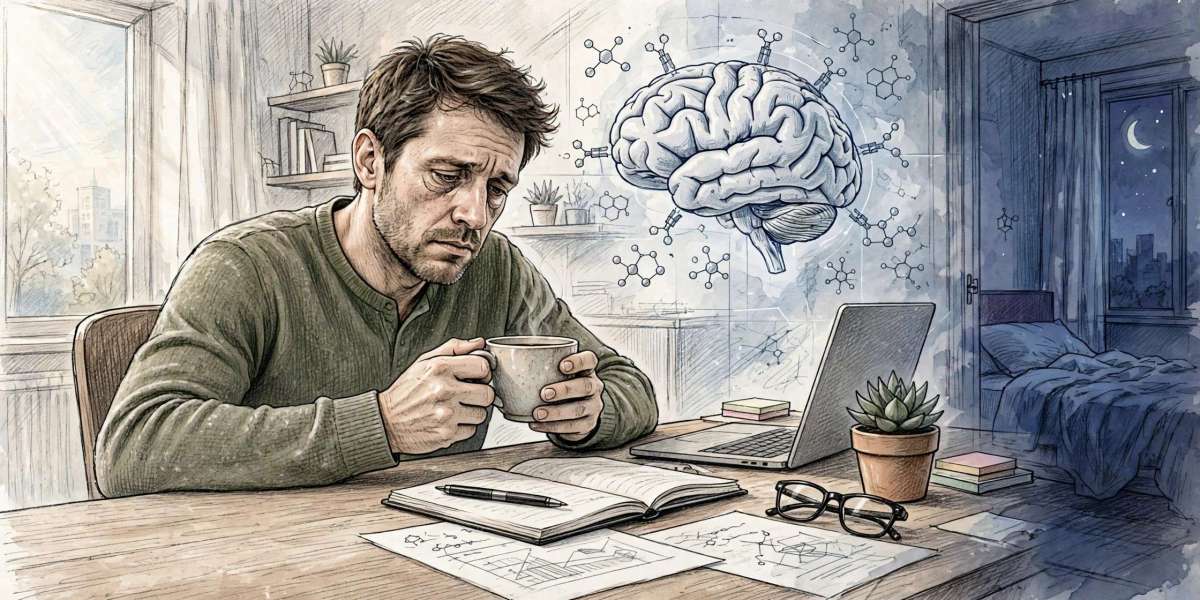
The rapid spread of generative artificial intelligence has revived an old question about technology and the human mind: Is AI making us stupid?
A new paper published in Trends in Cognitive Sciences argues that the answer is neither a simple yes nor a simple no. The researchers say the more important question is what people ask AI to do for them—and what they continue to do themselves.
The paper, titled "Is AI making us stupid?", was written by Trent N. Cash, Megan O. Kelly, Brooke N. Macnamara and Evan F. Risko and published online on July 9, 2026. The authors examine concerns that increasingly sophisticated AI systems could erode human cognition by allowing people to outsource more of their mental work to machines. Their conclusion is more nuanced: AI-assisted cognitive offloading can interfere with the acquisition and retention of particular skills, but the effects depend heavily on how the technology is used, and there is not yet enough evidence to conclude that AI will broadly diminish the brain's basic cognitive abilities.
The issue centers on a concept known as cognitive offloading. Humans have used external tools to reduce mental effort for centuries. People write information down instead of memorizing everything, use calculators instead of performing every calculation mentally, and rely on GPS navigation rather than remembering every route.
The arrival of generative AI, however, has expanded the range of tasks that can be outsourced. Modern AI systems can produce text, explain concepts, solve mathematical problems, summarize information, generate computer code and assist with complex research. That raises a new concern: if a machine repeatedly performs the difficult mental work, will people lose the skills that would otherwise have been developed through practice?
According to the researchers, skills and basic cognitive abilities should be considered separately.
Skills are learned abilities that depend on knowledge and practice. Examples include solving mathematical problems, writing, navigating, performing professional procedures or flying an aircraft. Basic cognitive abilities, by contrast, are broader mental capacities—including functions such as working memory and selective attention—that support learning and the performance of many different skills.
This distinction is central to the paper's argument.
The researchers suggest that the strongest concern is not necessarily that AI will make the human brain fundamentally less capable. Instead, the danger may be that people will fail to develop certain skills in the first place—or gradually lose skills they no longer practice.
If a student asks AI to solve a mathematics problem and simply copies the answer, the student may complete the assignment but miss the mental practice involved in solving the problem. Likewise, if someone routinely asks AI to search for, organize and summarize information, that person may spend less effort processing and remembering the material.
In this sense, AI can improve immediate performance while potentially reducing the learning that takes place behind the scenes.
The Phys.org report summarizing the research points to a similar distinction. It notes that when people use AI to perform cognitive tasks instead of working through them independently, they can lose opportunities to practice the skills those tasks are designed to build. The article also describes evidence from mathematics education suggesting that AI can be beneficial when it acts more like a tutor—helping students fill knowledge gaps and supporting their reasoning—rather than simply providing answers.
That difference may be particularly important in education.
A student who uses AI to obtain the answer to a difficult problem may finish faster, but the student may not necessarily understand how to solve a similar problem without assistance. By contrast, an AI system that provides hints, explanations, worked examples or feedback can keep the learner involved in the reasoning process.
The researchers therefore argue that the way people interact with AI can influence whether cognitive offloading becomes harmful or useful. Using AI as a replacement for thinking may reduce opportunities for practice, while using it as a collaborator can potentially support learning and skill development.
The issue is not entirely new.
Throughout history, technological advances have prompted fears that humans would lose mental abilities by relying on external tools. Socrates famously expressed concerns about the effects of writing on memory, while later generations worried that calculators, computers and GPS navigation would weaken mental arithmetic, information retention or spatial skills.
The researchers place AI within this longer history of cognitive offloading, but also emphasize that generative AI introduces important new questions because it can participate directly in tasks that once required substantial human reasoning.
Unlike a calculator, which primarily performs a defined mathematical operation, generative AI can help formulate ideas, write passages, explain concepts and propose solutions. This broader role makes it particularly important to understand whether people are using AI to extend their own abilities or to avoid developing them.
The paper does not claim that AI is already causing a widespread decline in human intelligence. Instead, it highlights a number of unanswered questions.
Scientists still do not know how years or decades of regular AI use might affect different types of skills. They also do not know whether the effects will vary according to a person's age, developmental stage, profession or previous level of expertise.
The question may be especially important for children and young people, who are still developing foundational academic and cognitive skills. If a person uses AI extensively before learning how to perform certain tasks independently, researchers want to know whether the missing practice could have lasting consequences.
At the same time, someone who has already developed a skill may also be vulnerable to losing some of it if AI consistently takes over the task. The researchers point to the broader principle that skills depend on practice and can decline when they are not regularly used.
The evidence, however, does not support the idea that every use of AI is harmful.
The researchers' argument is that negative effects are possible but not inevitable. AI could be designed and used in ways that encourage people to remain actively involved in cognitive tasks. Instead of immediately providing a complete solution, an AI tutor might offer a hint, ask a question, explain an error or guide a learner through the reasoning process.
That approach could allow people to benefit from AI's speed and flexibility without completely giving up the mental work needed to develop expertise.
The paper also raises questions about knowledge itself. If people know that AI can instantly retrieve and summarize information, they may choose not to memorize as much. That may be useful in some situations, but it also raises questions about what happens when people need to reason without access to the technology or evaluate information that AI provides.
For professionals, the issue could be equally significant. If AI becomes responsible for more routine cognitive tasks, workers may become more efficient while practicing certain skills less often. The researchers therefore ask whether refresher training or other methods could help people maintain abilities in environments where AI assistance is routine.
Another open question is whether people can learn to offload strategically—using AI for tasks where external assistance is most useful while deliberately continuing to practice the abilities they want to preserve.
That may ultimately be the central challenge.
The emerging research does not justify a simple conclusion that AI makes humans stupid. Nor does it justify assuming that AI is harmless simply because earlier technologies did not produce the catastrophic cognitive decline some critics predicted.
Instead, the evidence points toward a more complicated possibility: AI may change what people practice, what they remember and which skills they maintain.
The distinction matters because human intelligence is not a single skill that either remains intact or disappears. People possess a collection of learned abilities and broader cognitive capacities that interact with one another. AI may affect some of these more strongly than others.
The researchers say the long-term picture remains unclear. Much of the current evidence comes from related research into cognitive offloading, learning, human factors and AI-assisted tasks, while the widespread use of modern generative AI is still relatively new. The authors emphasize that longer-term research is needed to determine how sustained AI use affects different skills, different age groups and different areas of knowledge.
For now, the most defensible answer to the question "Is AI making us stupid?" is therefore more precise.
AI itself is not established as a cause of a general decline in human intelligence. But when people consistently allow AI to perform the thinking and practice required to acquire or maintain a particular skill, there is a credible risk that the skill itself may weaken.
Used differently, AI may become a learning partner rather than a replacement for learning.
The question for the coming years may therefore be less about whether humans will become "stupid" and more about which abilities people will choose to keep practicing—and which they will decide are no longer necessary to perform themselves.
Key Points Summary
Generative AI has renewed concerns about whether technology could weaken human cognitive abilities.
Researchers distinguish between learned skills and foundational abilities such as working memory and attention.
Offloading mental tasks to AI may interfere with skill acquisition and skill retention when it replaces practice.
AI can potentially support learning when used as a tutor, collaborator or source of feedback rather than as a substitute for thinking.
The long-term effects of AI use remain uncertain and require research that follows people over longer periods.
What This Means
The research suggests that the biggest immediate concern is not that AI will automatically reduce human intelligence, but that people may practice certain skills less when AI routinely performs them.
This could matter particularly in education, where learning depends heavily on practice, and in professions where expertise must be maintained over time.
For everyday AI users, the practical lesson is straightforward: using AI to support your thinking is different from using AI instead of thinking. Asking for explanations, feedback, hints or alternative approaches may preserve active engagement, while routinely outsourcing every difficult cognitive task could reduce opportunities to build or maintain specific skills.
What researchers will be watching next is the emergence of long-term studies examining AI use across different age groups, developmental stages, professions and types of cognitive work. Scientists also want to understand whether people can learn to use AI strategically in ways that maximize its benefits while minimizing the loss of practice.
advertisement
5. Frequently Asked Questions (FAQ)
Does AI make people less intelligent?
There is currently no evidence establishing that AI automatically makes people broadly less intelligent. The research instead suggests that heavy reliance on AI can affect specific learned skills when people stop practicing them.
What is cognitive offloading?
Cognitive offloading means using an external tool or resource to reduce the amount of mental work performed internally. Examples include using a calculator for arithmetic, GPS for navigation or AI to generate and organize information.
Can AI weaken skills?
It can potentially do so when AI replaces the practice required to acquire or maintain a skill. The researchers describe skill acquisition and skill decay as important risks of excessive cognitive offloading.
Can AI help people learn?
Yes. The research suggests that AI may support learning when it is used as a collaborator, tutor or source of feedback rather than simply providing answers that replace the learner's own effort.
Does AI damage working memory or attention?
The researchers distinguish basic cognitive abilities such as working memory and selective attention from specific learned skills. They suggest that these foundational abilities may be more resilient, but emphasize that the long-term effects of widespread AI use remain uncertain.
Are children more vulnerable to the effects of AI?
Researchers identify developmental stage as an important open question. More research is needed to determine whether heavy AI use during childhood or other critical periods of development could have different effects on learning and cognitive development.
Is the new paper an experiment proving that AI makes people stupid?
No. The paper in Trends in Cognitive Sciences is a scientific discussion of evidence and theory surrounding cognitive offloading, skill acquisition and skill decay. It does not present a single experiment demonstrating that AI causes a general decline in human intelligence.
Should people stop using AI?
The research does not support that conclusion. Instead, it suggests that people should consider how they use AI. Keeping humans actively involved in reasoning, learning and practice may help preserve skills while still allowing users to benefit from AI assistance.
Sources
Additional Verified Sources
Thank you !