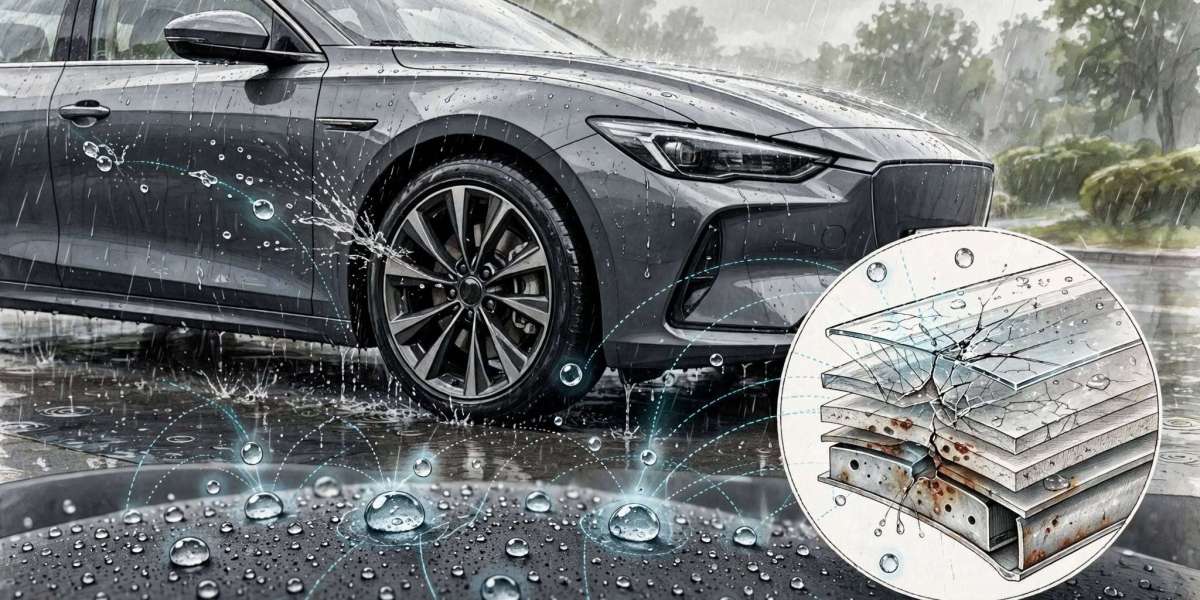

Electrically Charged Water Drops May Trigger a Previously Overlooked Form of Car Corrosion, Scientists Find
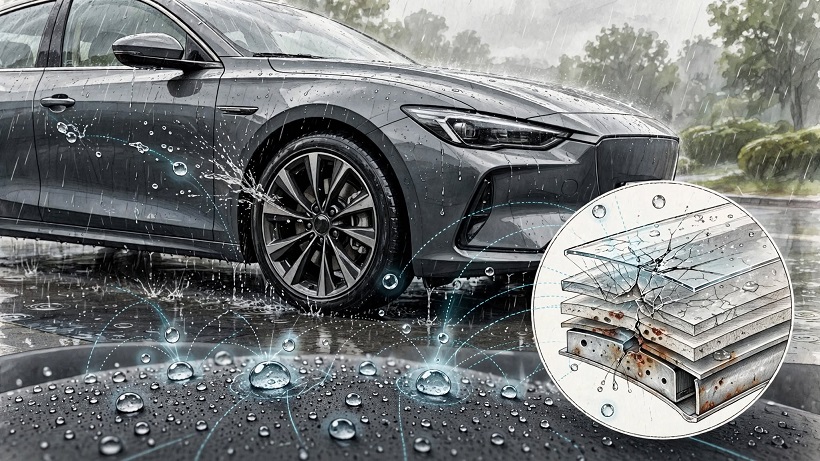
Key Points
Scientists have identified a previously overlooked mechanism by which naturally charged water droplets can damage protective coatings and promote metal corrosion.
The findings were published in Nature on August 26, 2026 by researchers including scientists at the Max Planck Institute for Polymer Research in Germany.
Water droplets can acquire an electrical charge as they slide across common surfaces, including plant leaves, plastics and water-repellent materials.
In experiments, charged droplets caused an insulating coating on copper to undergo electrical, or dielectric, breakdown, allowing the underlying metal to corrode.
The research could help scientists develop improved protection for cars, ships, buildings, cultural heritage sites and other metal structures. (Nature)
advertisement
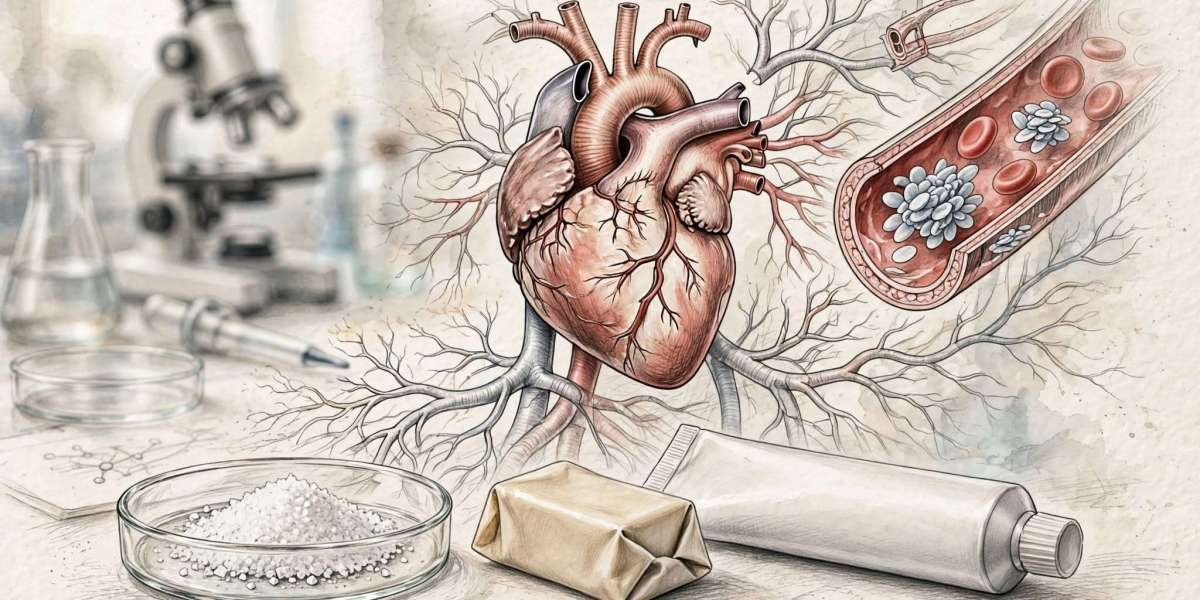
Rain and other water droplets may contribute to corrosion in a way scientists had previously overlooked: by carrying an electrical charge strong enough to damage protective coatings on metal.
A new study published in Nature on August 26, 2026 found that water droplets can spontaneously become electrically charged as they move across certain surfaces. When those charged drops later hit or move across protected metal, the resulting electric fields can cause the protective layer to break down, potentially exposing the metal beneath to corrosion. The findings suggest that the electrical behavior of water droplets could be another factor affecting the long-term durability of cars, ships, buildings and other metal components exposed to the environment. (Nature)
The research was led by Zhongyuan Ni, Xiaomei Li and colleagues, with authors affiliated primarily with the Max Planck Institute for Polymer Research in Mainz, Germany, alongside researchers from other institutions. Their paper, titled “Spontaneously charged water drops induce corrosion,” describes what the team calls a previously unrecognized corrosion mechanism involving naturally electrified droplets. (Nature)
Corrosion is already a major problem for outdoor metal products and structures. Water can contribute to the process in several established ways. Droplets can physically affect surfaces through repeated impact and movement, while chemicals dissolved in water, including pollutants and salts, can contribute to chemical degradation. Protective coatings are widely used to reduce these risks by separating metal from its surrounding environment.
But those coatings can degrade over time, and the new research suggests that electrically charged water may be another reason why they eventually fail. (Nature)
The underlying phenomenon begins with something known as contact or sliding electrification. Water droplets can gain an electrical charge when they move across different materials. Previous research has shown that this can happen on surfaces found in nature and daily life, including plant leaves, window glass and plastics. The electrical potential produced in some circumstances can become very large, even though the amount of charge carried by an individual droplet may be extremely small. (Nature)
The question addressed by the new study was whether that charge could itself play a role in corrosion.
To investigate, the researchers compared water droplets that remained electrically neutral with droplets that first moved over an insulating surface and became charged before reaching a metal sample. The metal was copper protected by a non-conductive coating. In one set of experiments, the researchers used 35-microliter droplets containing 1 millimolar sodium chloride, released at intervals of 12 seconds onto test surfaces. They examined the samples after 3,000 droplets had interacted with them. (Nature)
The results showed a clear difference between the two situations. According to the researchers, electrically neutral droplets did not produce the same observed surface damage. But droplets that had become charged before reaching the protected copper could create sufficiently strong electric fields to trigger dielectric breakdown in the coating.
Dielectric breakdown occurs when an insulating material can no longer withstand an electric field and begins to lose its ability to act as an electrical barrier. In this case, damage to the protective layer could create pathways through which the underlying metal becomes exposed to conditions that promote corrosion.
The researchers concluded that charged droplets can cause protective coatings, including polymer or oxide layers, to degrade electrically, allowing corrosion of the metal substrate to begin or worsen. (Nature)
Additional experiments examined droplets moving over several common materials before reaching protected copper. These included a plant leaf, PVC foam, polystyrene and a quartz surface treated with the water-repellent material PFOTS, according to a summary released with the research. The droplets acquired charges ranging from approximately 0.2 to 2 nanocoulombs. After 3,000 drops, the researchers observed coating breakdown and corrosion of the underlying copper, while the comparison involving uncharged droplets showed no surface damage under the reported experimental conditions. (natureasia.com)
That result is important because water does not need to be deliberately electrified in a laboratory for the phenomenon to occur. Water droplets can become charged naturally or during ordinary movement over materials. The Nature paper notes that charged droplets can arise in environments and processes involving clouds, thunderstorms, ocean waves, fountains and waterfalls, as well as when water moves across hydrophobic, or water-repelling, surfaces. (Nature)
For car owners, however, the research does not mean that every rainfall will suddenly cause a vehicle to rust or that charged raindrops have been shown to be the dominant cause of automotive corrosion. The experiments focused on controlled laboratory conditions and protected copper samples. The study instead identifies a mechanism that scientists say may contribute to the degradation of real-world metal objects, including cars.
That distinction is important. Modern vehicles use multiple materials and layers of protection, including paints, primers, metallic coatings and other engineered corrosion-control systems. The new study does not establish how much this charge-induced mechanism contributes to corrosion in any particular vehicle, climate or driving environment. Further research would be needed to determine its practical importance under real-world automotive conditions.
What the findings do show is that a familiar process—water running across a surface—can have an electrical consequence that may matter when the water later encounters protected metal.
The work could therefore influence how researchers think about long-term corrosion protection. Conventional approaches to preventing damage from rain and water exposure have focused heavily on making coatings resistant to mechanical wear and chemical attack. The new findings suggest that resistance to electrically induced breakdown from charged droplets may also deserve consideration. (Nature)
This could have implications beyond automobiles. The researchers said the mechanism may be relevant to cultural heritage sites, buildings, ships and other metal components exposed to naturally occurring water droplets. Outdoor structures can experience repeated contact with rain, dew, sea spray and melting snow, making the durability of protective coatings particularly important. (Nature)
The researchers also noted potential relevance to industrial settings. Charged droplets can occur in processes such as electrostatic spraying, inkjet printing and certain chemical and pharmaceutical production processes. In such cases, understanding whether droplet charge can damage protective materials could help engineers evaluate corrosion risks that might otherwise be missed. (Nature)
The study also helps explain why this mechanism may have remained hidden until now. Scientists have known that moving water can become electrically charged, but methods for quantifying charge separation associated with moving droplets have developed significantly in recent years. That has made it easier to investigate how the electrical charge produced by ordinary droplet motion interacts with solid surfaces. (Nature)
The practical next step is to determine how the phenomenon behaves outside carefully controlled experiments. Researchers will need to study different metals, coatings, weather conditions and water compositions, as well as repeated exposure over much longer periods. The amount of charge generated can depend on the materials involved and the conditions under which a droplet moves.
Scientists will also need to investigate how protective coatings can be improved. The research points toward materials capable of resisting charge-induced electrical damage, but it does not yet provide a finished solution for preventing this newly identified form of coating failure. A press summary accompanying the research similarly said further work is needed to investigate how such corrosion can be suppressed and how protective materials can be improved. (natureasia.com)
For now, the most significant finding is the identification of a new pathway linking naturally charged water droplets to corrosion. Water has long been recognized as a major contributor to metal degradation, but this research suggests that the damage is not solely a matter of moisture, salts, pollutants or physical droplet impact. Under certain conditions, the electrical charge acquired by moving water itself can damage the barrier designed to protect metal. (Nature)
The next question is how important that mechanism is in the real world. If future studies show that it contributes significantly to the degradation of coatings on vehicles and infrastructure, engineers may need to account for charged droplets when designing the next generation of corrosion-resistant materials. Until then, the discovery provides a new scientific explanation for one possible route by which ordinary water exposure can eventually help metal lose its protection. (Nature)
Key Points Summary
A study published in Nature on August 26, 2026 identified a previously overlooked corrosion mechanism involving electrically charged water droplets.
Water can spontaneously acquire electrical charge while moving across common surfaces.
Charged droplets damaged protective coatings on copper in laboratory experiments through dielectric breakdown.
Once the protective barrier breaks down, the underlying metal can become vulnerable to corrosion.
Cars, ships, buildings and cultural heritage sites could potentially be affected, although the real-world contribution to vehicle corrosion still requires further research. (Nature)
What This Means
Why it matters: The study expands scientific understanding of how corrosion can begin or worsen. Protective coatings may face not only physical and chemical damage from water, but also electrical damage caused by naturally charged droplets.
Who may be affected: The findings could eventually be relevant to industries and organizations responsible for vehicles, ships, buildings, infrastructure and metal cultural heritage objects.
What to watch next: Researchers will need to determine how significant this mechanism is under real-world conditions and whether new coatings can better resist charge-induced electrical breakdown. (Nature)
advertisement
Frequently Asked Questions
What did scientists discover?
Scientists found that water droplets that become electrically charged can damage protective coatings on metal, potentially allowing the underlying metal to corrode. (Nature)
How do water droplets become electrically charged?
They can acquire charge through contact or sliding electrification when moving across different surfaces, including certain natural and manufactured materials. (Nature)
Does this mean rain will immediately rust my car?
No. The research does not show that ordinary rain will immediately cause a car to rust. The experiments were conducted under controlled conditions, and more research is needed to determine how important this mechanism is for real vehicles. (Nature)
What is dielectric breakdown?
It is the failure of an insulating material when an electric field becomes strong enough that the material can no longer properly act as an electrical barrier. In the study, this breakdown damaged protective coatings and could expose the metal beneath. (Nature)
What metals and coatings were tested?
The researchers studied copper protected by non-conductive coatings, including experiments involving Teflon and polystyrene-based protective layers. (Nature)
How much charge did the droplets carry?
A press summary of the research reported charges of approximately 0.2 to 2 nanocoulombs in experiments involving droplets moving across several common surfaces before reaching protected copper. (natureasia.com)
Could this affect things besides cars?
Yes. The researchers said the mechanism may be relevant to ships, buildings, cultural heritage sites and other metal components, as well as some industrial processes involving charged droplets. (Nature)
Sources
Additional Verified Sources
Nature — “Spontaneously charged water drops induce corrosion”
Nature Portfolio press release — “Electrically charged raindrops promote corrosion”
Thank you !