
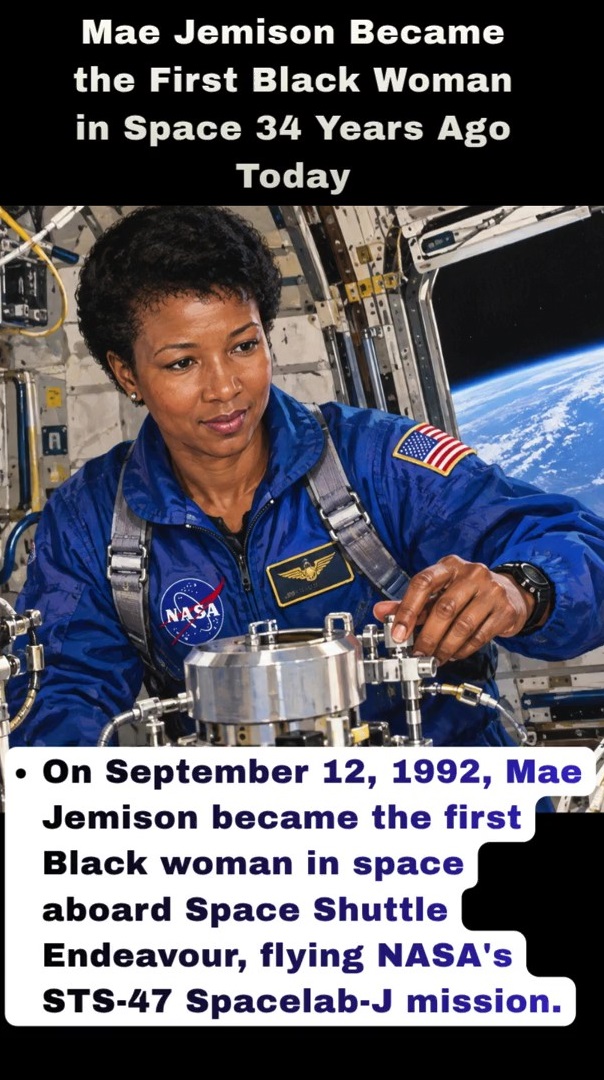
Mae Jemison Became the First Black Woman in Space 34 Years Ago Today
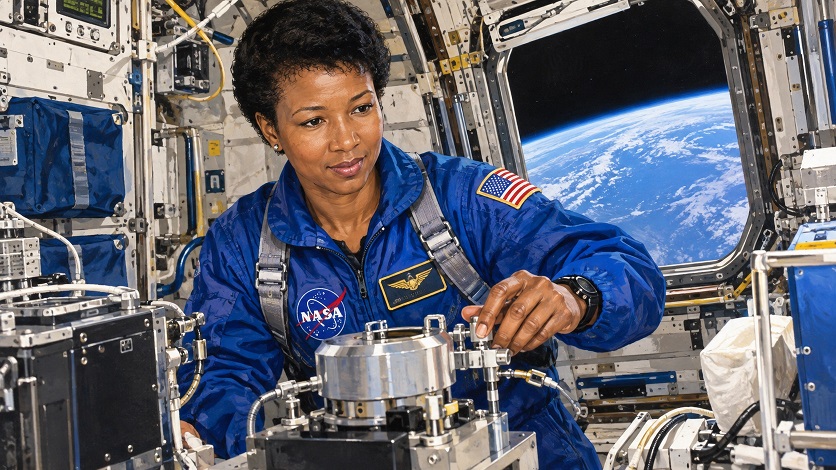
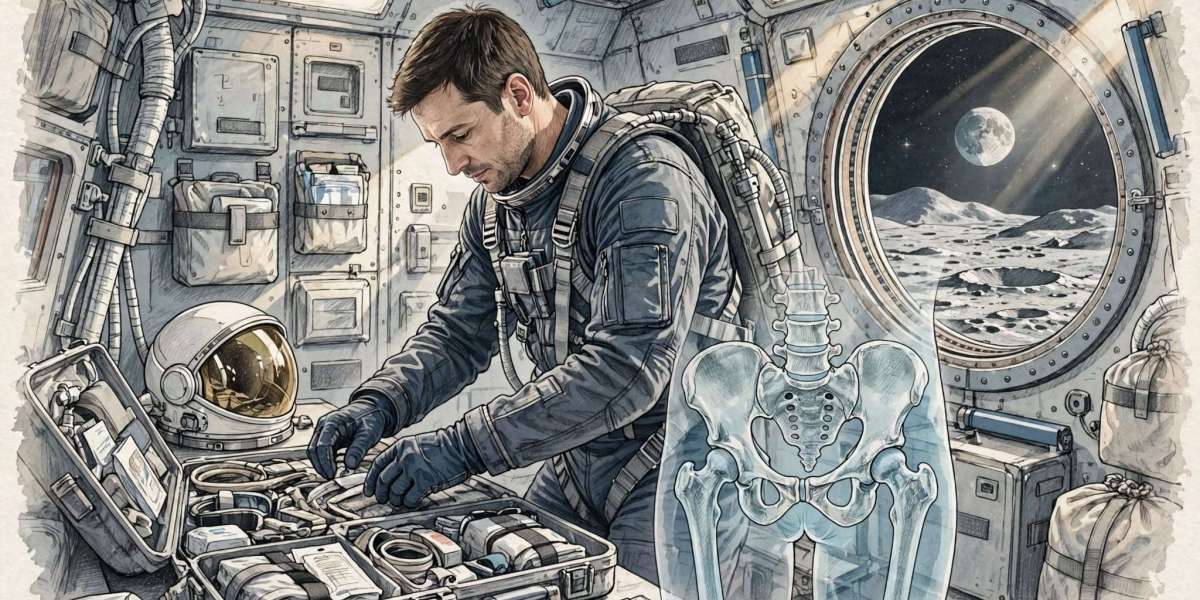
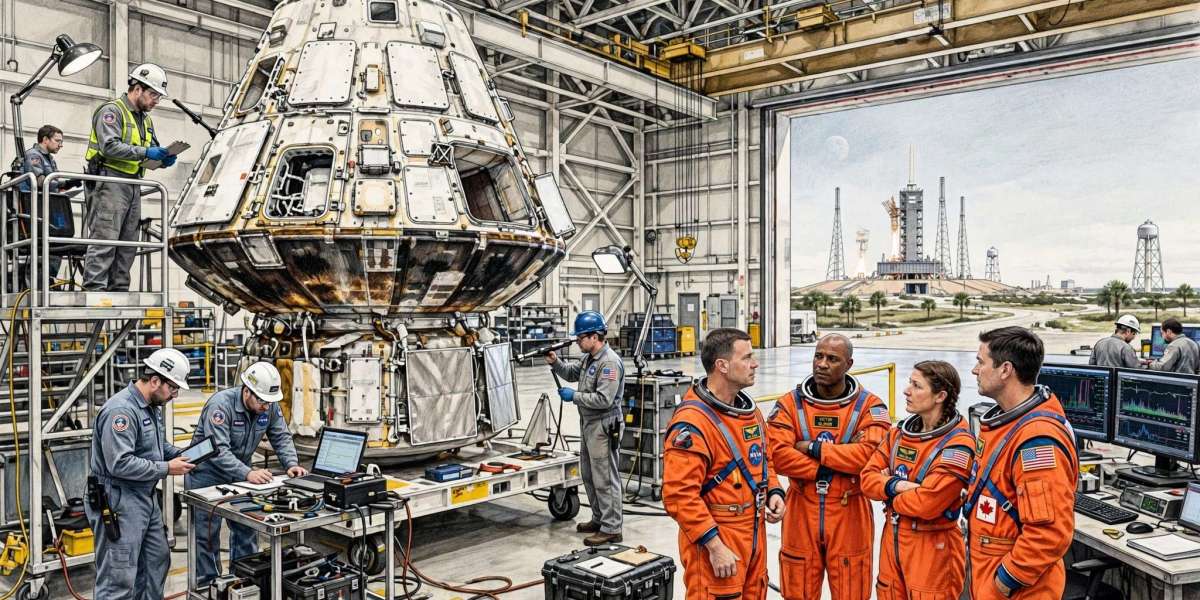
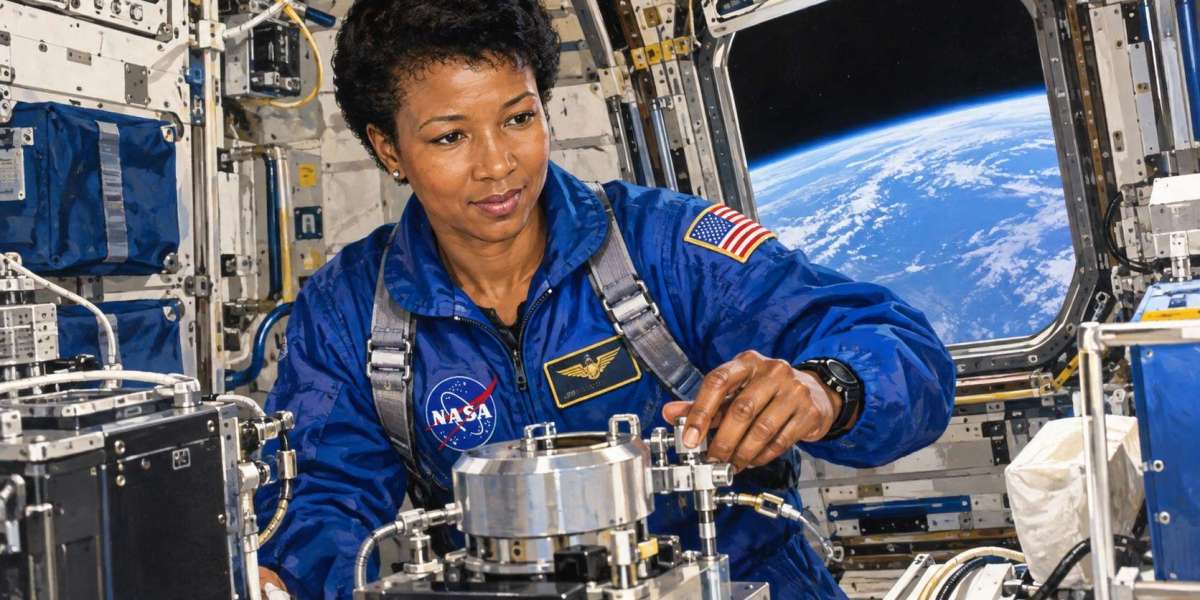
Photo by AI (Credits: saraapp.net)
Key Points
September 12, 1992, marked the launch of NASA astronaut Mae Jemison aboard Space Shuttle Endeavour on the STS-47 mission.
Jemison became the first African American woman to travel into space, joining a seven-member international crew.
The STS-47 Spacelab-J mission was a joint scientific mission involving NASA and Japan's National Space Development Agency (NASDA).
Jemison served as a science mission specialist and participated in 44 life-science and materials-processing experiments.
She spent 190 hours, 30 minutes and 23 seconds in space before returning to Earth on September 20, 1992.
advertisement
On September 12, 2026, the space community is looking back at one of the defining milestones in human spaceflight history: the day NASA astronaut Mae Jemison became the first Black woman to travel into space.
The milestone occurred on September 12, 1992, when Space Shuttle Endeavour lifted off from Kennedy Space Center in Florida carrying the seven-member crew of STS-47, also known as Spacelab-J. The launch came more than three decades after the creation of NASA and followed years in which women and people of color had been largely excluded from America's human spaceflight program.
Jemison's achievement was significant not simply because she became the first Black woman in space, but because she reached orbit as a scientist and physician whose career had already crossed several fields.
Born in Alabama and raised in Chicago, Jemison studied chemical engineering and African American studies at Stanford University before earning a medical degree from Cornell University. She subsequently worked as a physician and served as a Peace Corps medical officer in Sierra Leone and Liberia from 1983 to 1985.
She was selected for NASA's astronaut program in 1987, becoming part of an astronaut class that would eventually lead her to the Space Shuttle program. NASA records identify her as an engineer, physician and former astronaut, while Space.com notes that she was already working as a general practitioner when she applied to become an astronaut.
Her first and only spaceflight came with STS-47, a mission that combined scientific research with international cooperation.
At 10:23 a.m. EDT on September 12, 1992, Endeavour launched from Launch Pad 39B at Kennedy Space Center. The mission was the 50th Space Shuttle mission and Endeavour's second scheduled mission, according to NASA.
Jemison served as a mission specialist and worked inside the Spacelab-J laboratory module, where the crew carried out experiments designed to study how materials and living systems behave in microgravity.
The mission was a cooperative effort between NASA and Japan's National Space Development Agency of Japan (NASDA). Its crew included Mamoru Mohri, representing Japan, making the mission an important international scientific collaboration as well as a milestone in the history of representation in human spaceflight.
NASA records show that STS-47 conducted 24 materials-science experiments and 20 life-science experiments, for a total of 44 experiments. The investigations covered areas including biotechnology, electronic materials, fluid dynamics, metals and alloys, human health, cell biology, developmental biology, animal and human physiology, behavior, radiation and biological rhythms.
The experiments used a wide variety of subjects, including the crew themselves, Japanese koi fish, cultured animal and plant cells, chicken embryos, fruit flies, fungi, plant seeds, frogs and frog eggs. Jemison also served as a co-investigator on a bone-cell research experiment conducted during the mission.
For Jemison, however, the mission carried significance beyond the scientific work taking place inside the shuttle.
When NASA began sending astronauts into space, women and people of color were not selected for its early human spaceflight missions. NASA did not send a woman into space until 1983. Jemison's selection followed nine years later, when she became the first Black woman to reach space.
Her presence aboard Endeavour therefore represented another expansion of who could be seen as an American astronaut and space scientist.
Jemison had been interested in space from an early age. Space.com reports that she drew inspiration from Lieutenant Uhura, the Black communications officer portrayed by Nichelle Nichols in Star Trek. The fictional representation of a Black woman working in space helped reinforce Jemison's own interest in pursuing a career connected to space exploration.
That connection later came full circle.
In 1993, after leaving NASA, Jemison became the first astronaut to appear in a Star Trek series, making a cameo as a lieutenant in Star Trek: The Next Generation. Her appearance came after her historic spaceflight and added another link between the fictional representation that had inspired her and her own career as a real astronaut.
Jemison's time in orbit lasted just under eight days. NASA records give the precise mission duration as 7 days, 22 hours, 30 minutes and 23 seconds, with Endeavour landing at Kennedy Space Center on September 20, 1992. Jemison ultimately logged 190 hours, 30 minutes and 23 seconds in space.
STS-47 was her only spaceflight.
Jemison retired from NASA in 1993 and subsequently founded the Jemison Group, a technology consulting company. Her work after NASA continued to connect science, technology, education and long-term space exploration. Space.com also notes her involvement in the 100-Year Starship project, an initiative intended to encourage the development of technologies and capabilities for eventual interstellar travel.
Her influence also extended into popular culture and education. In 2017, Jemison was represented as a LEGO minifigure in the Women of NASA set, alongside other prominent women connected to the U.S. space program.
More than three decades after her flight, the significance of September 12 remains tied to both the science of spaceflight and the expanding diversity of the people who participate in it.
The story is also a reminder that milestones in exploration often have two dimensions. The STS-47 mission was designed to conduct scientific research in microgravity, but the presence of Mae Jemison aboard Endeavour gave the mission an additional place in the history of human spaceflight.
On September 12, 1992, a physician, engineer and former Peace Corps medical officer entered orbit as part of a seven-person international scientific crew. In doing so, Mae Jemison became the first Black woman to travel into space.
Today, September 12, 2026, marks 34 years since that flight. The mission itself lasted less than eight days, but the milestone it represented continues to be remembered as an important moment in NASA's evolution and in the broader story of human space exploration.
Key Points Summary
Mae Jemison became the first Black woman to travel into space on September 12, 1992.
She flew aboard Space Shuttle Endeavour during NASA's STS-47/Spacelab-J mission.
The mission was a joint scientific effort involving NASA and Japan's NASDA.
The crew conducted 44 life-science and materials-science experiments.
Jemison spent 190 hours, 30 minutes and 23 seconds in space during her only spaceflight.
She retired from NASA in 1993 and continued working in technology, science and education.
What This Means
Why it matters: Jemison's flight represented an important expansion in the diversity of NASA's human spaceflight program. She became the first Black woman to reach space while simultaneously contributing as a trained scientist and physician.
Who may be affected: The milestone is particularly relevant to the history of women, Black Americans, scientists and engineers in human spaceflight, while also forming part of the broader history of international scientific cooperation in space.
What to watch next: Jemison's legacy remains connected to science, technology, education and future-oriented space exploration, including her work associated with the 100-Year Starship project.
advertisement
Frequently Asked Questions
Who was Mae Jemison?
Mae Jemison is an American engineer, physician and former NASA astronaut. She became the first African American woman to travel into space during the STS-47 mission in 1992.
When did Mae Jemison go to space?
Jemison launched aboard Space Shuttle Endeavour on September 12, 1992, at 10:23 a.m. EDT, as part of the STS-47 mission.
What was the name of Mae Jemison's mission?
Her mission was STS-47, also known as Spacelab-J. It was a joint mission involving NASA and Japan's National Space Development Agency (NASDA).
How long was Mae Jemison in space?
Jemison spent 190 hours, 30 minutes and 23 seconds in space, equivalent to nearly eight days. The overall STS-47 mission lasted 7 days, 22 hours, 30 minutes and 23 seconds.
What did Mae Jemison do on STS-47?
Jemison served as a science mission specialist and worked with the mission's scientific investigations. She was also a co-investigator on a bone-cell research experiment.
How many experiments were conducted during STS-47?
NASA records say the mission included 24 materials-science experiments and 20 life-science experiments, totaling 44 experiments.
When did Mae Jemison become the first Black woman in space?
Mae Jemison became the first Black woman to travel into space on September 12, 1992, when she launched aboard Space Shuttle Endeavour as part of NASA's STS-47/Spacelab-J mission.
How many times did Mae Jemison fly into space?
Once. STS-47 was Jemison's only spaceflight. She retired from NASA in 1993.
Sources
Additional Verified Sources
Thank you !