
NASA’s Roman Telescope Will See 100 Times More Sky Than Hubble
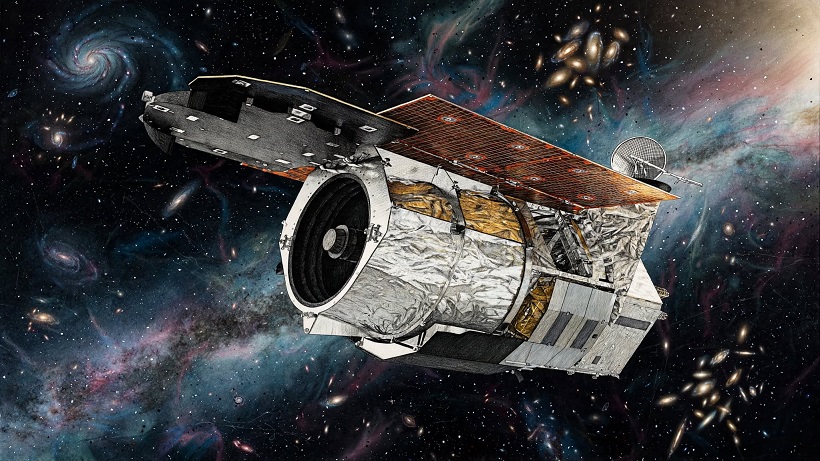
Photo by AI (saraapp.net)
Key Points
NASA's Nancy Grace Roman Space Telescope was days away from launch, with liftoff scheduled for Sunday, August 30, 2026, before science operations are expected to begin in January 2027.
Roman's Wide Field Instrument will combine sensitivity comparable to Hubble's cameras with an imaging area 100 times larger.
While Hubble has observed roughly 0.1% of the night sky over more than 30 years, Roman could potentially survey the entire sky at the same resolution.
The telescope will investigate dark matter, dark energy, galaxies, rare cosmic objects and planets beyond the solar system.
Its Coronagraph Instrument is designed to demonstrate technology capable of detecting planets 100 million times fainter than their host stars, with performance described as 100 to 1,000 times better than existing space-based coronagraphs. (ScienceDaily)
advertisement
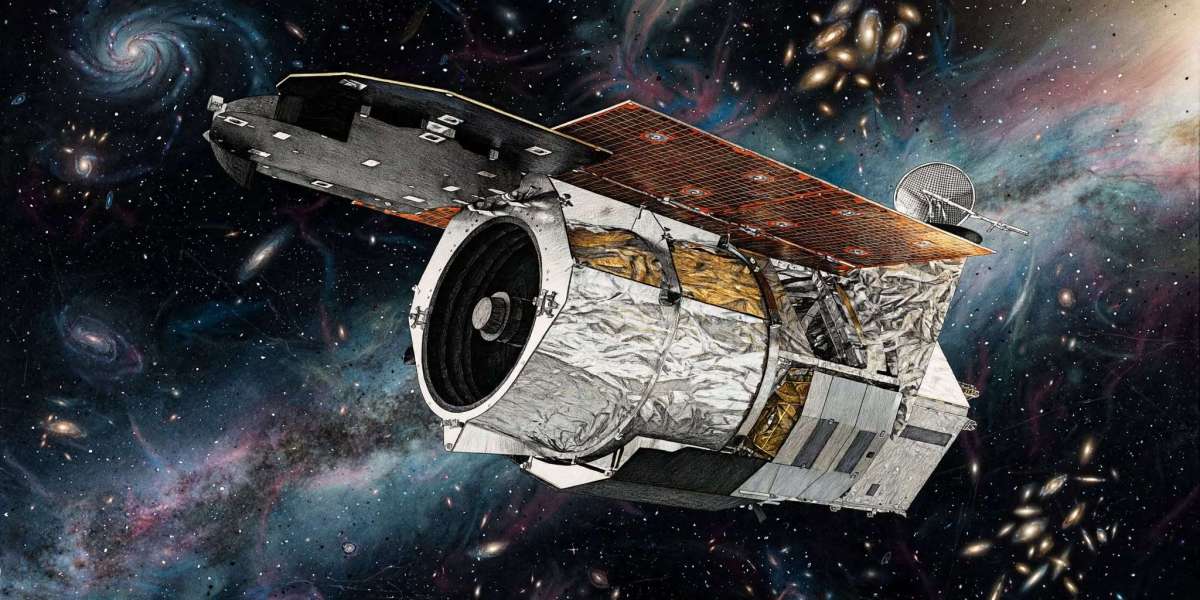
NASA's Nancy Grace Roman Space Telescope, days away from its scheduled launch on Sunday, August 30, 2026, is designed to give astronomers a far wider view of the universe than they have had with the Hubble Space Telescope, combining a primary mirror the same size as Hubble's with an instrument capable of imaging an area 100 times larger.
According to the University of Arizona, Roman is NASA's next flagship astrophysics mission after the James Webb Space Telescope and was days away from its scheduled launch on Sunday, August 30, 2026. Several university faculty members and students were preparing to watch the launch from Cape Canaveral, while science operations were expected to begin in January 2027. (ScienceDaily)
The difference between Roman and some of NASA's other major observatories lies largely in how it will observe the cosmos. Webb was designed to see far and study relatively small regions in extraordinary depth, while Roman is designed to see wide, carrying out rapid surveys across vast areas of the sky. Both observatories can collect infrared light, allowing astronomers to compare and combine their observations. The sources say the two missions working alongside each other could reveal more about the universe than either telescope could accomplish alone. (ScienceDaily)
Roman's primary mirror measures 7.9 feet across, the same diameter as the mirror aboard Hubble. But the new telescope will carry two major scientific instruments with very different roles. Its Wide Field Instrument was designed to have sensitivity comparable to Hubble's cameras while capturing an area of sky 100 times larger. Its Coronagraph Instrument, meanwhile, will block and filter starlight to help astronomers study planets and disks around other stars. (ScienceDaily)
The scale of Roman's planned surveys illustrates why its wide field of view is central to the mission. Over more than 30 years, Hubble has observed roughly 0.1% of the night sky, according to the University of Arizona report. Roman, by comparison, has the potential to survey the entire sky at the same resolution. That capability could allow scientists to find rare objects across enormous distances as well as closer to Earth, including dying stars, newly discovered worlds, galaxy clusters and other cosmic targets. (ScienceDaily)
One of Roman's main scientific objectives will be to investigate dark matter and dark energy, two poorly understood components that the sources describe as making up nearly all of the universe. Dark matter exerts gravitational influence but does not emit light, while dark energy is associated with the universe's accelerating expansion. Roman's ability to observe large areas of the sky could give researchers extensive data for studying how these phenomena affect the structure and evolution of the universe. (ScienceDaily)
The University of Arizona's Arizona Cosmology Lab was selected by NASA to support two efforts related to these questions: one involving a wide-field science team and another focused on project infrastructure. Elisabeth Krause, a professor of astronomy and physics, leads the wide-field science team called “Kinematic Lensing with the Roman Space Telescope,” which received $2 million to develop a cosmological measurement technique known as kinematic lensing. By combining Roman images with spectroscopic measurements, the researchers aim to study dark matter and dark energy with greater precision. (ScienceDaily)
Another University of Arizona group will play a leading role in the multi-institutional project infrastructure effort “Maximizing Cosmological Science with the Roman High Latitude Imaging Survey.” Tim Eifler, also a professor of astronomy and physics, leads the working group responsible for interpreting Roman's cosmological observations.
Roman will identify galaxies across a wide range of distances, determine where they are located and measure their characteristics. Astronomers can then build large catalogs from those observations and use physical models to examine what the data reveal about the universe's structure and evolution. (ScienceDaily)
Processing and interpreting such information will require substantial computing resources. The NASA Roman Project awarded Eifler's lab $800,000 for computing resources that will become part of a new university-wide high-performance computing system scheduled to arrive in the fall. The lab will also receive another $2.4 million over five years to carry out the science.
“This infrastructure will take us from catalogs to cosmological interpretation,” Eifler said. “We'll be able to do things like determine how much dark energy and dark matter are in the universe.” Eifler also serves as co-chair of a cosmology group involving more than 1,000 scientists around the world. (ScienceDaily)
Roman will also be used to advance the study of exoplanets, particularly through its Coronagraph Instrument. The instrument will use technologies including masks, prisms, detectors, filters and self-flexing mirrors to suppress the overwhelming light from stars. This could make it possible to directly image planets and disks around other stars that would otherwise be extremely difficult to observe.
Most known exoplanets have been found through indirect methods, including observing the small drop in a star's brightness when a planet passes in front of it. Roman's coronagraph will instead demonstrate techniques designed to reduce a star's glare and make direct observations of nearby planets possible. According to the University of Arizona report, the instrument is expected to be able to detect planets 100 million times fainter than their host stars, representing performance 100 to 1,000 times better than existing space-based coronagraphs. (ScienceDaily)
Schuyler Wolff, an associate research professor of astronomy who leads the observation planning working group for the Coronagraph Instrument, said the technology demonstration would serve as an important step toward the proposed Habitable Worlds Observatory, a recommended future telescope intended to search for signs of life in other solar systems.
University of Arizona researchers have also contributed to development and future science planning for the instrument. Mark Marley, director of the Lunar and Planetary Laboratory, Ewan S. Douglas, Ramya Anche and Justin Hom helped develop the Coronagraph Instrument and will participate in future science through the observation planning working group. Marley, together with Ty Robinson and Zarah Brown, will use coronagraph data to study the atmospheres of planets beyond the solar system. (ScienceDaily)
Brown has been modeling the climates and spectra of self-luminous giant planets — worlds that are often young and hot enough to emit their own thermal infrared light. Her models predict characteristics including atmospheric temperature, composition, clouds and the infrared spectrum an object should produce. Such predictions are important because many of these planets have not previously been observed at these wavelengths.
“That predicted spectrum is critical for planning,” Brown said, explaining that the coronagraph will work with extremely faint, high-contrast targets and that observing time must be planned carefully. (ScienceDaily)
Other University of Arizona teams are preparing related work. Anche's group is examining the structure of extrasolar systems, while Hom is leading efforts to identify the best stars for calibrating the Coronagraph Instrument. Hom also leads precursor observing programs using ground-based telescopes to help validate target selection for future Roman science programs. (ScienceDaily)
Once Roman begins science operations in January 2027, its data will be made available to researchers across the scientific community. The University of Arizona is set to lead nine NASA-approved investigations using Roman data, bringing in more than $2 million in funding. Those investigations will also explore subjects including supermassive black holes, gravitational lenses, galaxy formation, reionization and cosmic dust. (ScienceDaily)
For astronomers, Roman's importance will therefore rest not only on the detail of what it sees, but also on the amount of sky it can examine at once. By pairing Hubble-like camera sensitivity with an imaging area 100 times larger, the telescope is expected to produce broad surveys that can complement the more focused observations of Hubble and Webb. The immediate next milestone was Roman's scheduled launch on Sunday, August 30, 2026, followed by preparations for the start of science operations in January 2027, when researchers will begin using its data to investigate some of the universe's most persistent unanswered questions. (ScienceDaily)
Key Points Summary
Roman's Wide Field Instrument will image an area 100 times larger than Hubble's cameras while maintaining comparable sensitivity.
Hubble has observed about 0.1% of the night sky over more than 30 years, while Roman could potentially survey the entire sky at the same resolution.
Roman will study dark matter, dark energy, galaxies, stars and other rare cosmic objects.
Its Coronagraph Instrument will demonstrate technology for directly imaging planets and disks around other stars.
Science operations are expected to begin in January 2027, with data made available to the scientific community. (ScienceDaily)
What This Means
Roman's planned 100-times-larger field of view could allow astronomers to conduct much broader surveys than those possible with Hubble while retaining comparable camera sensitivity. This matters for research into phenomena that require observations across large areas of the sky, including the distribution of galaxies and studies of dark matter and dark energy.
Scientists studying exoplanets, cosmology, galaxy evolution, black holes and other areas could also benefit from the mission's data. Researchers will next be watching for Roman to move toward its planned science phase in January 2027, when observations are expected to become available to the wider scientific community. (ScienceDaily)
advertisement
Frequently Asked Questions
1. What is NASA's Nancy Grace Roman Space Telescope?
The Nancy Grace Roman Space Telescope is NASA's next flagship astrophysics mission after the James Webb Space Telescope. It is designed to conduct rapid, wide-area surveys of the sky and study subjects including dark matter, dark energy and planets beyond the solar system. (ScienceDaily)
2. How much more sky will Roman see than Hubble?
Roman's Wide Field Instrument is designed to image an area 100 times larger than Hubble's cameras while having comparable sensitivity. (ScienceDaily)
3. Does Roman have the same-sized mirror as Hubble?
Yes. Roman's primary mirror is 7.9 feet across, the same diameter as Hubble's primary mirror. (ScienceDaily)
4. When will Roman begin science operations?
The sources say science operations are expected to begin in January 2027. (ScienceDaily)
5. What will Roman study?
Roman will investigate dark matter, dark energy, galaxies, rare cosmic objects and exoplanets, among other scientific targets. University of Arizona-led investigations will also study supermassive black holes, gravitational lenses, galaxy formation, reionization and cosmic dust. (ScienceDaily)
6. How will Roman's coronagraph help study planets?
Its Coronagraph Instrument will use technology to suppress starlight, helping astronomers directly image faint planets and disks around stars. The instrument is expected to detect planets 100 million times fainter than their host stars. (ScienceDaily)
Sources
Thank you !