
History of Labor Day: How America’s Workers Won Their National Holiday
Key Points
Labor Day is observed on the first Monday of September in the United States and honors the contributions of American workers.
The first major Labor Day celebration took place in New York City on September 5, 1882.
Matthew Maguire and Peter J. McGuire are both associated with the creation of the holiday, and historians have not established one undisputed founder.
Oregon became the first state to establish Labor Day as an official public holiday in 1887, followed by other states.
President Grover Cleveland signed Labor Day into federal law on June 28, 1894, following a period of intense labor conflict that included the Pullman Strike.
advertisement
As Americans observe Labor Day on Monday, September 7, 2026, the holiday offers more than the familiar three-day weekend, parades and end-of-summer traditions. Its origins reach back to the late 19th century, when industrialization was transforming the United States and organized workers were increasingly demanding recognition, better working conditions and a greater voice in the workplace. Today, Labor Day is a federal holiday dedicated to recognizing the social and economic contributions of American workers.
The holiday emerged during a period when trade unions and labor organizations were expanding in response to the realities of industrial work. Workers in factories, construction, transportation and other industries faced long working hours and difficult conditions, while labor organizations increasingly campaigned for reforms including the eight-hour workday, improved workplace protections, compensation for injured workers and restrictions on child labor. The Smithsonian notes that the labor movement's efforts eventually contributed to a range of changes affecting American working life.
The precise origins of Labor Day, however, are not as straightforward as the modern holiday might suggest. Two union leaders, Matthew Maguire and Peter J. McGuire, have competing claims to being the person who first proposed the holiday. The U.S. Department of Labor itself acknowledges that the question is not entirely settled.
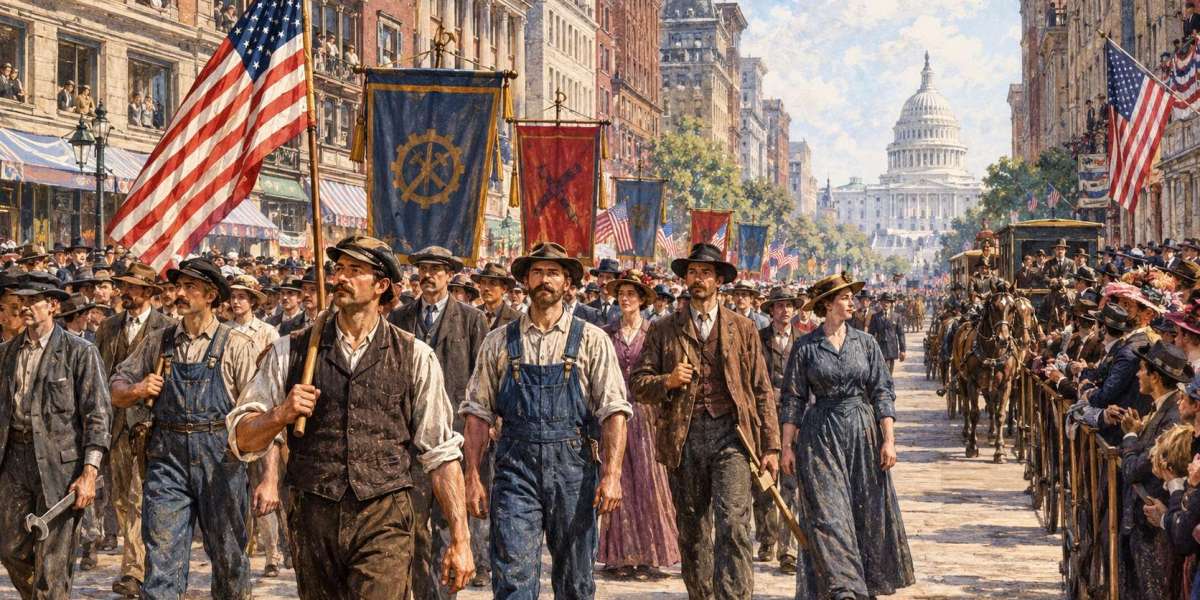
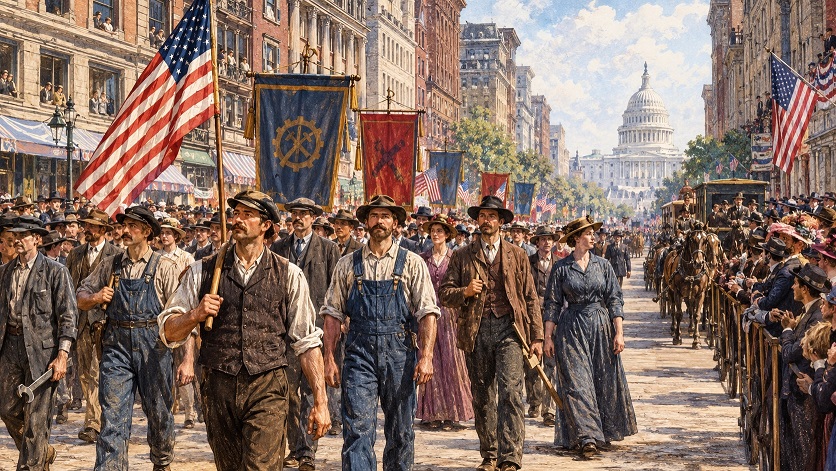
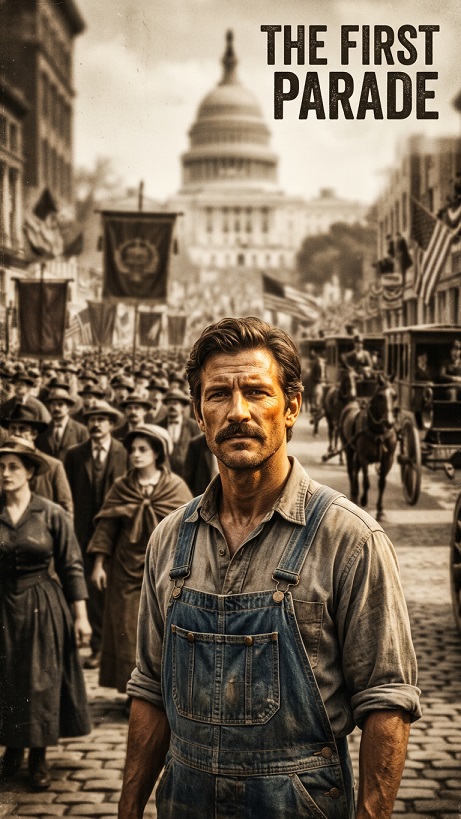
The first Labor Day celebration took place in New York City on September 5, 1882. The event was organized under the Central Labor Union, and workers from different trades took part in a public parade before gathering for a festival. The U.S. Department of Labor records the event as the first Labor Day holiday.
Contemporary accounts describe a substantial gathering. The Department of Labor's historical account says that the parade eventually included thousands of participants, while a post-parade gathering brought together workers and their families for speeches, food and recreation. The event established a pattern that would remain associated with Labor Day: a combination of public recognition of workers and a communal celebration.
One of the central figures in the origin story is Peter J. McGuire, a union leader who helped establish the United Brotherhood of Carpenters and later became an important figure in the emerging American labor movement. According to the Department of Labor, McGuire suggested setting aside a day as a general holiday for working people, with a street parade followed by a gathering for recreation.
But another figure, Matthew Maguire, has an equally important claim. Maguire was a machinist and secretary of the Central Labor Union of New York in 1882. Research highlighted by the Department of Labor suggests that Maguire may have proposed the holiday while serving in that position. A contemporary newspaper editorial after federal recognition of Labor Day even described Maguire as the holiday's author.
Because the historical record does not conclusively settle the question, it is more accurate to say that both men played important roles in the early Labor Day story rather than presenting either one as unquestionably its sole founder. This uncertainty is one of the most enduring historical questions surrounding the holiday.
The choice of September also helped distinguish the American holiday from the labor observance that eventually became known internationally as May Day or International Workers' Day. In the 1880s, labor activists in the United States were also campaigning for an eight-hour workday, and May 1, 1886, became associated with coordinated labor action and the events surrounding the Haymarket affair in Chicago. International labor organizations subsequently adopted May 1 as a workers' day.
The September celebration followed a different path. According to the historical account attributed to McGuire, the first Monday in September was considered a convenient date because it fell roughly between Independence Day and Thanksgiving. It also offered a comparatively neutral alternative to May 1, whose association with the Haymarket events gave it a more politically charged character.
The idea spread quickly beyond New York. Oregon became the first U.S. state to establish Labor Day as an official public holiday in 1887, and several other states followed. By 1894, Labor Day had gained official recognition in dozens of states. The U.S. Department of Labor says that 23 additional states adopted the holiday by that year, while other historical accounts describe 30 states as officially celebrating it by the time federal recognition arrived. The difference reflects the way historical sources count state recognition at that point.
The movement toward a national holiday came during a particularly difficult period in American labor history. The Pullman Strike of 1894, a major conflict involving railroad workers, brought national attention to tensions between labor and employers. The federal government intervened in the dispute, and the confrontation became part of the political backdrop surrounding the adoption of Labor Day as a federal holiday.
On June 28, 1894, President Grover Cleveland signed legislation establishing the first Monday in September as a legal federal holiday. The Smithsonian identifies Cleveland's signing of the legislation as the formal establishment of Labor Day at the federal level.
Federal recognition did not mean that every American worker automatically received the day off. The federal law established the holiday for federal workers, while state governments and individual employers determined how it would be observed elsewhere. Over time, all U.S. states, the District of Columbia and U.S. territories established Labor Day as a statutory holiday.
The character of the holiday also evolved. Early Labor Day celebrations emphasized parades, speeches, picnics and demonstrations of solidarity among workers and unions. The Department of Labor says that speeches gradually became more prominent as the economic and civic significance of the day received greater attention. In 1909, the American Federation of Labor designated the Sunday before Labor Day as Labor Sunday, intended to focus on the spiritual and educational dimensions of the labor movement.
The broader labor movement that Labor Day commemorates helped shape many aspects of modern employment. The Smithsonian's Labor Day collection highlights campaigns connected with the eight-hour workday, five-day workweek, workers' compensation, equal pay, limits on child labor and the right to organize. These reforms developed over many decades and involved numerous organizations, activists and workers rather than a single event or individual.
Labor Day also acquired a distinctly American cultural identity separate from its original labor-movement purpose. It became associated with parades, family gatherings, picnics and barbecues, while its position on the calendar helped establish it as the unofficial end of the American summer season. Schools, sports seasons and other autumn activities often begin around the holiday weekend.
The distinction between Labor Day in the United States and International Workers' Day on May 1 remains important. Although both holidays recognize workers and have roots in the labor movement, they developed through different historical traditions. The U.S. chose the September observance, while May 1 became the principal international workers' holiday in many countries.
More than 140 years after the first New York parade, Labor Day remains a federal holiday and an annual reminder of the role workers have played in building the American economy and society. Its history is not simply the story of a day off. It reflects the growth of organized labor, debates over working conditions, competing visions of how workers should be recognized and the gradual movement from local demonstrations to national recognition.
The history also explains why the holiday's origins cannot be reduced to a single name or moment. Matthew Maguire, Peter J. McGuire, the Central Labor Union and other labor organizations all form part of the story of how a workers' celebration emerged in the United States. What began with a New York parade in 1882 eventually became a federal holiday in 1894, and the day continues to serve as an annual recognition of American workers and their contributions.
Key Points Summary
Labor Day 2026 falls on September 7, the first Monday of September.
The first major Labor Day celebration occurred in New York City on September 5, 1882.
Matthew Maguire and Peter J. McGuire are both associated with the holiday's creation.
Oregon became the first state to officially recognize Labor Day in 1887.
Grover Cleveland signed the federal Labor Day legislation on June 28, 1894.
What This Means
Why it matters: Labor Day connects a modern federal holiday with the development of America's labor movement and the long campaign for better working conditions.
Who is represented: The holiday recognizes the contributions of American workers, while its historical roots lie particularly in organized labor and trade-union activism.
What readers should remember: The holiday's origins are more complicated than the common story suggests. There is no universally accepted single “father” of Labor Day, and responsible historical accounts recognize the competing evidence surrounding Matthew Maguire and Peter J. McGuire.
advertisement
Frequently Asked Questions [FAQ]
When is Labor Day celebrated in the United States?
Labor Day is observed on the first Monday of September. In 2026, it falls on September 7.
When was the first Labor Day celebrated?
The first Labor Day holiday took place in New York City on September 5, 1882.
Who founded Labor Day?
There is no definitive answer. Peter J. McGuire has traditionally received much of the credit, but historical research has also identified Matthew Maguire as a possible originator of the holiday.
When did Labor Day become a federal holiday?
President Grover Cleveland signed legislation on June 28, 1894, establishing the first Monday in September as a federal legal holiday.
Which state first recognized Labor Day as an official holiday?
Oregon became the first state to establish Labor Day as an official public holiday in 1887.
Why is Labor Day in September rather than May?
The September date developed from the early American labor movement and was considered a suitable point on the calendar. May 1, meanwhile, became associated with international workers' movements and the Haymarket affair of 1886.
Is Labor Day the same as International Workers' Day?
No. They share labor-movement roots, but U.S. Labor Day is celebrated in September, while International Workers' Day is generally observed on May 1 in many countries.
Why is Labor Day considered the unofficial end of summer?
Over time, the holiday became associated with the end of the traditional U.S. summer season, with schools, sports and autumn activities often beginning around the Labor Day weekend.
Sources
Additional Verified Sources
Thank you !