
AI Could Decode Animal Communication, Raising New Questions About Privacy and Consent
Key Points
Artificial intelligence is helping researchers analyze large collections of animal sounds and identify patterns that may be difficult to detect manually.
The technology could eventually help humans communicate with animals and birds, although researchers say true two-way communication remains a developing goal.
Scientists and ethics experts warn that collecting and decoding animal vocalizations and movements could raise questions about animal privacy.
A technique known as playback, which broadcasts recorded animal calls into the wild, could potentially influence animal behavior and cause stress or disrupt social relationships.
The $10 million Coller-Doolittle Challenge is encouraging the development of technology capable of communicating with an animal without the animal recognizing that it is interacting with humans.
advertisement
Artificial intelligence is bringing researchers closer to understanding the complex ways animals communicate, but the same technology is raising an unusual ethical question: could learning how animals communicate also violate their privacy?
Recent reporting from The New York Post, The Times of India and Iraq's Video Agency describes growing interest in using machine-learning systems to analyze animal sounds, identify recurring patterns and potentially reproduce signals used by animals in the wild. The goal is not simply to recognize a bark, call or cry, but eventually to determine whether machines could help establish meaningful communication between humans and other species.
The technology is still developing, and the idea of humans having genuine conversations with animals should not be confused with a demonstrated ability to translate animal language in the way humans translate between spoken languages.
Instead, researchers are using machine learning to process large collections of animal vocalizations and identify patterns that may be difficult for people to detect on their own. Such systems can sort recordings and highlight similarities between different calls, potentially helping scientists understand what particular signals mean within an animal's social environment.
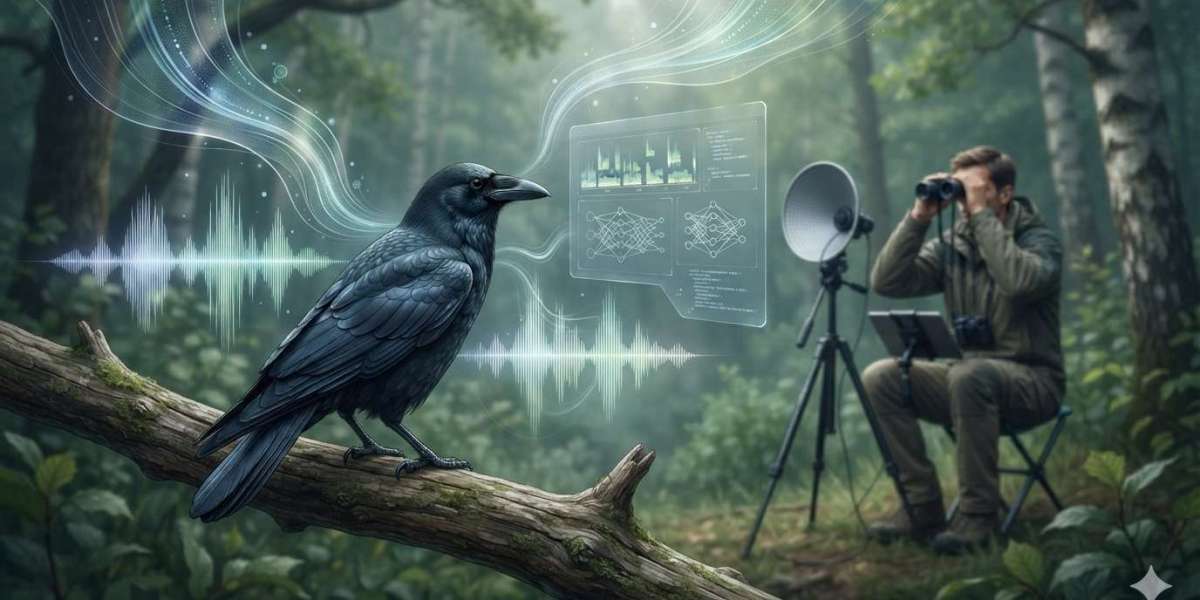
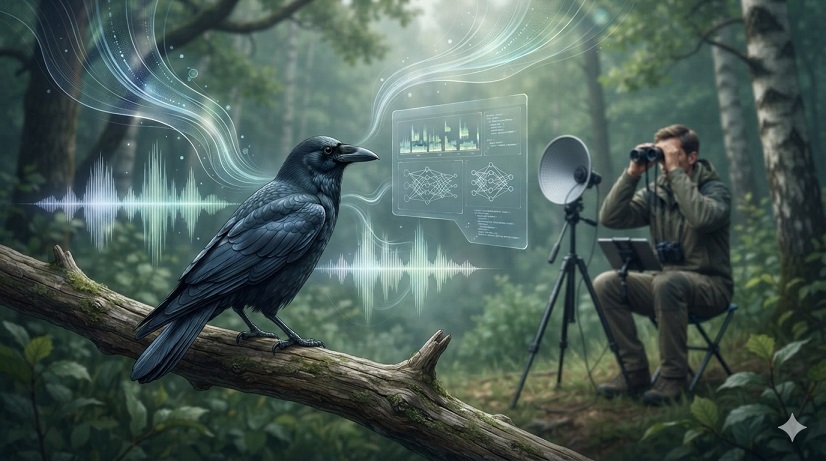
One example involves Vittorio Baglione, a biologist who has spent years studying the calls of carrion crows. According to the supplied reports, AI models have helped him organize recordings and identify patterns in particular calls.
One crow call that Baglione described as essentially “Hey! Come help!” is used to summon other crows to help defend a nest. The ability to identify such patterns demonstrates why AI could become a powerful tool for studying animal communication.
But understanding an animal's signals creates a second question: what happens when humans can respond to those signals?
The concern goes beyond whether AI can accurately identify an animal's call. Researchers cited in the supplied reports argue that collecting and decoding animal vocalizations and movements could itself raise ethical issues.
The central argument is that animals with complex social lives may have an interest in controlling how they appear to others. If their sounds, movements and interactions can be recorded, analyzed and interpreted by humans without their participation or control, researchers say this could be viewed as a form of privacy violation.
This is a relatively new dimension of research ethics because traditional discussions of privacy have generally focused on humans. The emerging debate asks whether some animals should also be considered to have a meaningful interest in keeping aspects of their social communication beyond human observation or manipulation.
The issue becomes even more complicated when researchers move from simply observing animal communication to reproducing it.
One technique highlighted in the reports is known as “playback.” It involves broadcasting recorded animal sounds into the wild. Scientists have used playback as a research tool to study how animals respond to particular calls, but the technique can also influence behavior.
If researchers can identify a call that causes a particular response, reproducing that call could potentially make an animal approach another location, react to a perceived threat or interact with other members of its group.
That creates a significant risk if the meaning of the original signal is not fully understood.
Baglione warned that AI-assisted understanding of crow calls could potentially be misused by hunters or other people with harmful intentions. A person who knows how to imitate a particular call could potentially use that knowledge to lure birds.
More broadly, Baglione warned that playback can stress animals, disrupt their social environment and create conflicts, particularly when people reproduce signals without completely understanding what those signals mean.
The concern is therefore not simply that humans might discover what animals are saying. It is that humans could acquire the ability to influence animals using information that animals evolved to use among themselves.
César Rodríguez-Garavito, director of the More-Than-Human Life (MOTH) Program at New York University, has also raised concerns about the potential consequences of animal communication technologies.
According to the supplied reports, Rodríguez-Garavito's 2025 report on AI systems aimed at animal communication warned that the technology could expose animals to large numbers of humans seeking interaction. He also raised the possibility that such technologies could be used to weaponize animals.
That concern illustrates the difference between decoding communication and controlling behavior.
A machine that recognizes a vocalization is one thing. A system capable of generating a signal that an animal interprets as meaningful is potentially much more powerful.
The distinction matters because an animal may respond to a signal without understanding that the signal was generated by a machine or deliberately produced by a human.
Past experiments have already demonstrated that playback can produce unexpected or distressing reactions. The supplied reports point to zoologist Katy Payne, who acknowledged in 2007 that playing a recording of the voice of a dead grandfather caused significant distress to an elephant.
The example serves as a warning about the gap between reproducing a sound accurately and understanding its emotional or social meaning.
A recording may sound authentic to researchers while carrying consequences they did not anticipate.
Despite these concerns, the push to develop increasingly sophisticated animal communication technology continues.
At the center of that effort is the Coller-Doolittle Challenge, which offers a $10 million prize for a project capable of establishing communication with an animal without the animal recognizing that it is communicating with humans.
The challenge's financial incentive reflects the growing interest in using artificial intelligence to decode animal communication. Jeremy Coller, the billionaire who funds the challenge, said at its latest prize event in June that he believes humans could achieve the goal within the current decade.
Coller said he has “absolute conviction” that the code will be cracked by 2030, pointing to the rapid pace of AI development.
That statement is a forecast, not evidence that such communication has already been achieved.
For now, the technology described by the supplied sources is better understood as an expanding set of tools for analyzing and reproducing animal signals, rather than a proven universal translator for animal languages.
Nevertheless, even partial success could change the relationship between humans and wildlife.
If AI systems become capable of reliably identifying the meaning of animal calls, humans could potentially gain a much deeper understanding of how animals coordinate, respond to danger, protect offspring and interact socially.
That could provide valuable scientific insight. But the same knowledge could also be exploited.
The privacy debate therefore raises a broader question about technological power: does the ability to decode information automatically give humans the right to use it?
For animals, there is no obvious way to obtain conventional consent before their calls and movements are recorded, analyzed or reproduced. That makes the ethical issue particularly difficult.
The challenge becomes even greater when the animals being studied live in complex social groups. A communication signal that appears simple to humans could have a meaning that depends on relationships, social status, territory or circumstances that AI systems do not yet fully understand.
The reports suggest that researchers are increasingly aware of this problem. The objective should not simply be to make animals respond to machines, but to understand what responsible communication would mean if such technology becomes possible.
The coming years could therefore produce two parallel developments: better AI systems for decoding animal communication and stronger debate over how that knowledge should be used.
The prospect of communicating with another species is scientifically intriguing, but the technology could force humans to confront an ethical question that has rarely been considered in this context: if animals have forms of privacy and social boundaries, should humans respect those boundaries even when technology makes them easier to penetrate?
For now, researchers are still working toward the ability to communicate meaningfully with animals. The $10 million challenge, continuing AI advances and experiments with animal vocalizations indicate that the pursuit is unlikely to disappear.
What remains uncertain is not only whether humans will eventually be able to “talk” with animals, but what rules should govern that conversation if the technology succeeds.
Key Points Summary
AI is helping researchers analyze animal communication by identifying patterns in large collections of vocal recordings.
Carrion crows provide one example in which AI has helped researchers identify recurring characteristics in calls.
Researchers warn that decoding animal vocalizations and movements could raise new privacy and ethical concerns.
Playback technology can reproduce animal calls but may also influence behavior, cause stress or disrupt social relationships.
The Coller-Doolittle Challenge offers $10 million for technology capable of communicating with an animal without the animal knowing it is communicating with humans.
Jeremy Coller believes such a breakthrough could happen by 2030, but this remains a prediction rather than an established scientific result.
What This Means
The development of AI tools for animal communication could significantly expand scientific understanding of how animals interact and organize their social lives.
The potential benefits include better interpretation of animal signals and a deeper understanding of species whose communication systems remain difficult for humans to study.
At the same time, the technology could create new risks if humans use decoded signals to manipulate, disturb, lure or exploit animals.
The key issue to watch is whether researchers and policymakers develop ethical standards alongside the technology. The central question is no longer simply whether AI can decode animal communication, but how humans should use that information once they can.
advertisement
Frequently Asked Questions (FAQ)
Can AI already translate animal languages?
Not in the sense of providing a proven universal translation system. The supplied sources describe AI being used to analyze animal sounds, identify patterns and reproduce vocalizations, with researchers pursuing more advanced communication systems.
How could AI help scientists understand animals?
Machine-learning models can process large collections of recordings and identify patterns that may be difficult for humans to detect manually. In the case of carrion crows, AI has helped researcher Vittorio Baglione identify patterns in their calls.
What is animal “privacy” in this context?
The concern is that animals with complex social lives may have an interest in controlling how they appear to others. Researchers cited by the supplied sources argue that collecting and decoding their vocalizations and movements could interfere with that interest.
What is playback technology?
Playback involves broadcasting recorded animal calls into the wild. It can be used to study animal responses, but researchers warn that it can also influence behavior and potentially cause stress or disrupt social relationships.
Could animal communication technology be misused?
According to the supplied sources, yes. Vittorio Baglione warned that knowledge of animal calls could potentially be misused by hunters or people with harmful intentions. Other experts have also warned about manipulation and exploitation.
What is the Coller-Doolittle Challenge?
It is a competition offering a $10 million prize for a project capable of establishing communication with an animal without the animal recognizing that it is communicating with humans.
When could humans communicate with animals?
There is no confirmed date. Jeremy Coller has predicted that humans could achieve the challenge's goal by 2030, but that is a forecast rather than a demonstrated scientific milestone.
Does accurately reproducing an animal call mean humans understand it?
No. The supplied reports emphasize that an AI system or researcher may reproduce a signal without completely understanding its meaning or the effect it will have on the animal.
Sources
The New York Post — AI may soon allow humans to talk with animals
The Times of India — Scientists say AI may soon help humans to talk to animals and birds
Thank you !