
Alzheimer’s Genetics study reveals 48 new Risk Regions and Clues to Brain disease
Science & Health | October 29, 2026


Key Points
A large genetic study published in Nature identified 48 newly identified Alzheimer’s disease risk loci, expanding the known genetic landscape of the disease.
Researchers analyzed data from 30 cohorts, including 109,479 diagnosed cases, 74,141 proxy cases, 2,131,799 controls and 499,708 proxy controls.
The findings highlight microglia, the brain’s immune cells, and certain neuronal populations as important areas for investigating Alzheimer’s genetic risk.
Researchers estimated that common genetic variants accounted for approximately 16% of Alzheimer’s disease liability under a specified statistical model.
The findings may help guide future research into disease mechanisms and potential drug targets, but they do not establish new effective treatments or definitively predict an individual’s risk.
advertisement
A Major Expansion of Alzheimer’s Genetic Research

A large-scale international study published in Nature on October 28, 2026, has identified 48 previously unreported genetic risk loci associated with Alzheimer’s disease, providing new clues to the biological processes that may contribute to the condition.
Researchers identified 127 associated loci across their analyses. Of these, 118 were identified in the multi-ancestry analysis, while nine additional loci were identified in the European-ancestry-only analysis. The results also point to biological activity involving brain immune cells and neurons, helping scientists investigate how inherited genetic variation may influence susceptibility to the disease.
The study, titled “Alzheimer’s disease genetics converges on microglial and neuronal dysregulation,” addresses a longstanding challenge in Alzheimer’s research: identifying the genetic factors and biological mechanisms underlying disease risk. By combining a large dataset with several analytical approaches, the researchers identified additional genetic signals and prioritized genes that may help explain the disease’s underlying biology.
How Researchers Analyzed the Genetic Data

The study combined information from 30 cohorts, including 109,479 people diagnosed with Alzheimer’s disease, 74,141 proxy cases, 2,131,799 controls and 499,708 proxy controls. Proxy cases and controls were participants whose genetic data were available and who reported whether their parents had Alzheimer’s disease or did not have the condition, respectively.
This distinction matters because not every participant in the analysis had a directly established personal diagnosis. Combining information from diagnosed cases and family-history-based proxy participants allowed researchers to increase the effective sample size available for genetic analysis.
The team conducted a genome-wide association study, or GWAS, a method that compares genetic variants across large groups of people to identify variants statistically associated with a condition. The analysis covered five broad ancestry groups: European, African, East Asian, admixed American and South Asian.
The combined dataset had an effective sample size of 416,493, a statistical measure that accounts for the different contributions of cases and controls. However, approximately 91% of the effective sample size came from people of European ancestry. The researchers therefore highlighted the importance of interpreting ancestry-specific results carefully and improving population representation in future studies.
What the 48 Newly Identified Genetic Risk Loci Mean

The researchers identified 48 new loci among the 127 loci found across their analyses. A genetic locus is a particular region of DNA associated with a trait or disease. It may contain one or more genes, and identifying a risk locus does not automatically establish which gene is responsible or how it affects disease biology.
The distinction between a locus and a gene is important. Genetic variants can be located near a gene without directly changing its function, and their biological effects may depend on how they influence gene activity. The researchers therefore combined association results with additional methods to prioritize likely effector genes.
Among the newly identified loci, the study highlighted genes including SNX2, DOK3, SYK, GGA2 and CEBPA. These genes interact with known Alzheimer’s-associated genes across two important biological pathways: amyloid processing and the microglial response to amyloid-beta. The researchers also identified other candidate genes linked to processes such as immune responses and protein processing. However, identifying a risk locus or prioritizing an effector gene does not automatically establish the precise biological mechanism through which it influences disease risk. Further experiments will be needed to validate these relationships.
Microglia Emerge as a Central Part of the Findings
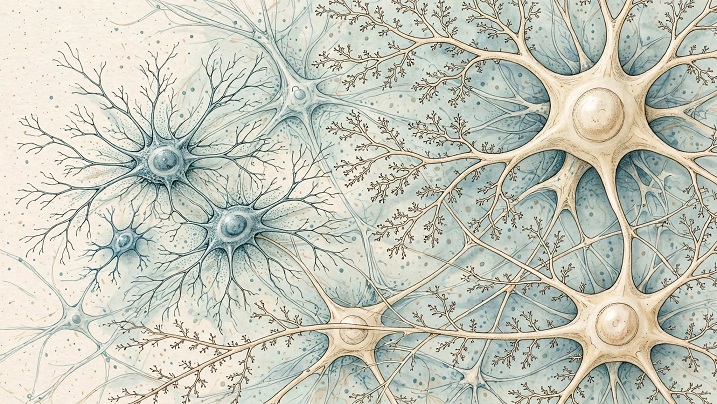
One of the study’s important findings concerns microglia, specialized immune cells that help maintain the brain, respond to injury and clear unwanted material. These cells participate in inflammatory responses and the handling of substances associated with neurodegeneration.
The researchers found that genes showing increased expression in microglia in Alzheimer’s cases compared with controls were enriched for genetic signals associated with the disease. In other words, the genetic findings were disproportionately connected to genes whose activity was elevated in these brain immune cells.
The analysis also examined different microglial states. Inflammatory states showed the strongest association among those tested, but no specific microglial state reached statistical significance in that particular analysis. This qualification is important: the results support a role for microglia in Alzheimer’s biology without proving that one specific inflammatory state causes the disease.
The findings reinforce the view that Alzheimer’s involves more than the accumulation of abnormal proteins. How brain immune cells respond to disease-related changes may also help explain why certain genetic variants are associated with increased susceptibility. The study provides additional directions for investigating these interactions, rather than a definitive answer about which immune processes should be altered in patients.
Neuronal Changes Provide Another Clue

The study also found enrichment of Alzheimer’s-associated genetic signals among genes that were less active in certain neuronal populations in people with the disease than in controls.
The researchers identified associations involving three neuronal groups: Sncg-expressing neurons, Sst-expressing inhibitory interneurons and layer 6 intratelencephalic projection neurons known as L6 IT Car3. These cell populations perform different functions within brain circuits, making the findings relevant to future work on cellular changes associated with Alzheimer’s.
However, the strength of this evidence requires careful interpretation. After the researchers adjusted for average differences in gene expression across cell types, the microglial association remained statistically significant, while the neuronal associations became only nominally significant. This suggests that the neuronal results may partly reflect a broader pattern of reduced gene expression in neurons rather than a mechanism unique to those particular cell types.
The study therefore provides particularly robust evidence for enrichment in microglial genes, alongside suggestive evidence connecting neuronal gene-expression changes with genetic risk. Both findings can help guide further investigation into how inherited variation relates to the cellular dysfunction observed in Alzheimer’s disease.
Immune Activity, Lipids and Amyloid Processing
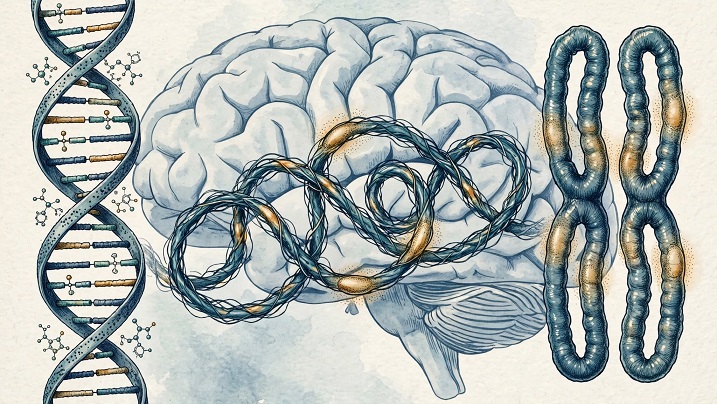
Beyond individual genes and cell types, the researchers examined broader biological pathways. Their gene-set analyses identified 72 statistically significant gene sets, which were grouped into clusters representing several major biological processes.
Four prominent groups involved lipid binding, immune activation, amyloid catabolism and cell adhesion. These processes have featured in previous Alzheimer’s genetic research, and the new results provide further evidence that they are relevant to the disease’s underlying biology.
Lipids are fats and fat-like molecules that help maintain cell membranes and perform other functions. Their metabolism is important in the brain, where cells depend on tightly regulated lipid handling. Immune activation concerns how cells respond to threats or damage, while amyloid catabolism refers to the breakdown and processing of amyloid-related proteins.
The researchers also identified gene sets connected to processes including EphrinB reverse signalling, glutathione metabolism, RAS signalling, sphingolipid metabolism and synapse endocytosis. These findings extend the range of biological mechanisms that can be examined in future studies.
Importantly, pathway enrichment does not prove that every process identified is directly responsible for Alzheimer’s disease. Rather, it indicates that the genetic associations are concentrated in genes connected to those biological functions, providing researchers with evidence-based directions for further investigation.
Potential Drug Targets: Promising Leads, Not Proven Treatments
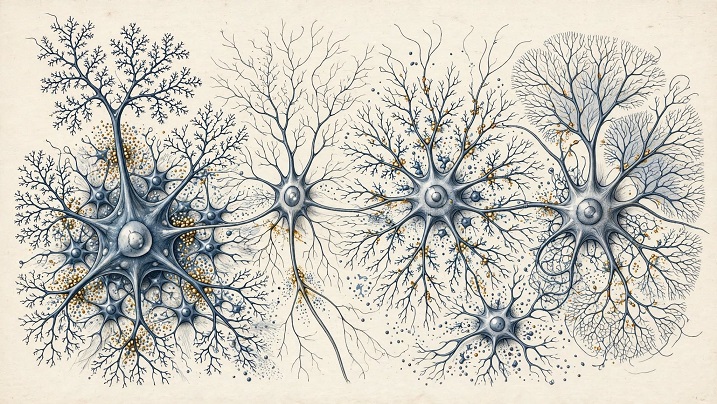
The study’s genetic findings could help researchers prioritize possible targets for future drug development. By combining genetic associations with evidence from gene-expression analyses and other methods, the team identified candidate genes that may help connect inherited risk with biological mechanisms.
Among the 48 newly identified loci, the researchers found 17 genes that interacted with drugs not approved for Alzheimer’s disease. This does not mean that 17 effective Alzheimer’s medicines have been discovered. Drug interactions, previous experiments and genetic associations are starting points for evaluating whether a target can be safely and effectively modified to benefit patients.
The paper discusses candidates with different levels of supporting evidence. RRM2B, SYK and KEAP1 have shown promise as potential Alzheimer’s drug targets in animal models. By contrast, nilvadipine, evaluated in a human trial involving people with mild to moderate Alzheimer’s disease, did not demonstrate the expected clinical benefit. Separately, an inhibitor targeting AXL was unsuccessful in a mouse model of Alzheimer’s disease. These findings illustrate why genetic evidence and promising biological targets do not necessarily translate into effective treatments. Further research is needed to establish whether targeting these pathways can provide meaningful benefits to patients.
The researchers also highlighted QPCT, a gene prioritized at a previously known risk locus. QPCT is involved in the formation of a modified form of amyloid-beta, a protein associated with Alzheimer’s pathology. This makes it a potential research target, although its identification does not establish that inhibiting it will provide clinical benefit.
The study’s contribution is therefore to help prioritize candidates and mechanisms for laboratory testing, experimental validation and eventual therapeutic research. Any future medicine would still require rigorous assessment of safety and effectiveness.
Genetic Heritability Estimates Rise to 16%
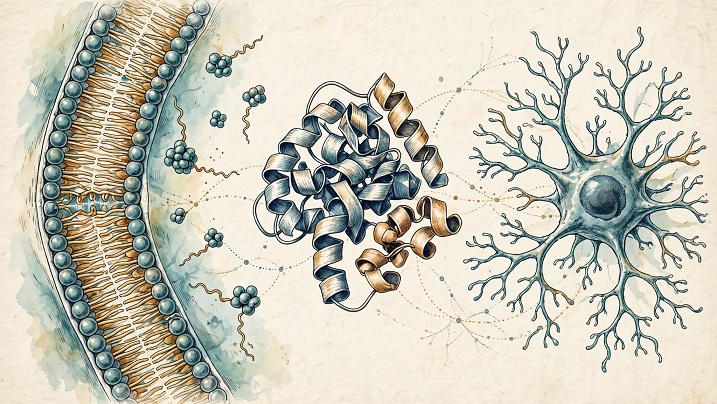
Another major result concerns single-nucleotide polymorphism (SNP) heritability. SNPs are positions in DNA where individuals can carry different genetic letters. SNP heritability estimates how much variation in a population’s liability to a condition is statistically attributable to the effects of genetic variants captured by the analysis.
Using the SBayesRC method and the European-ancestry case-control analysis, excluding proxy cases, the researchers estimated Alzheimer’s SNP heritability at 16%, assuming a population prevalence of 5%. This is nearly three times the approximately 5% estimates reported in earlier analyses using other methods.
The distinction between SNP heritability and overall heritability is essential. The paper cites twin-based heritability estimates of 60–80%, which reflect a broader estimate of genetic contributions under particular assumptions. The 16% figure refers to the contribution captured by common genetic variants under the study’s specified model; it does not mean that 16% of an individual’s disease is genetic or that a person has a 16% chance of developing Alzheimer’s.
The revised estimate suggests that earlier analyses may have underestimated the contribution of common genetic variation. It also helps explain why larger datasets and improved statistical methods can uncover genetic signals that were difficult to detect in previous studies.
Polygenic Prediction Improves, but Important Gaps Remain
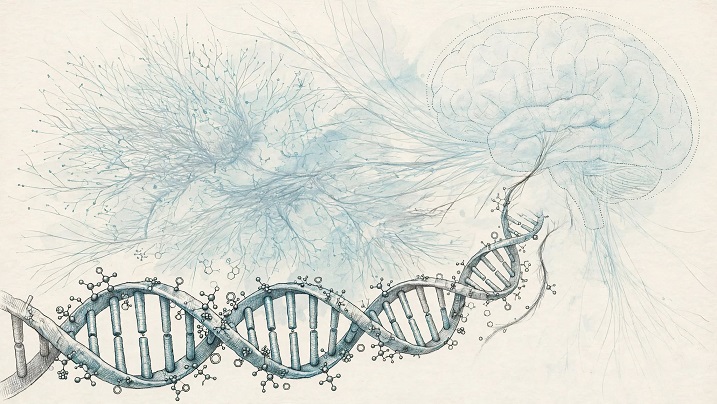
The researchers also evaluated polygenic scores, which combine information from many genetic variants to estimate a person’s inherited predisposition to a condition. The team reported improved prediction performance using the expanded genetic findings.
Such scores may eventually contribute to research into risk stratification and disease mechanisms. However, a polygenic score is not a diagnosis, and its performance in one population does not guarantee comparable accuracy in another.
The study found that both European-only and multi-ancestry scores performed worse in non-European cohorts than in European-ancestry cohorts. The authors also noted that combining ancestry groups did not consistently improve prediction for every population. In particular, the inclusion of data from ancestry groups with different estimated effects at the APOE region could reduce prediction performance in the African-ancestry sample.
These results underline a central challenge in genetic medicine: a study can include multiple ancestry groups while still lacking enough participants from some populations to develop equally reliable predictions. Broader representation and larger validation datasets will be needed before such tools can be considered dependable across diverse populations.
For now, the findings are most useful as a research advance. They demonstrate that more comprehensive genetic analyses can improve understanding of inherited risk, but they do not establish a ready-to-use clinical test for predicting who will develop Alzheimer’s disease.
Study Limitations and the Next Research Steps
Despite its scale, the research has limitations. Most of the study’s effective sample size came from people of European ancestry, limiting the strength of conclusions that can be drawn for some other populations. Proxy cases, based on reported parental diagnoses, also differ from directly diagnosed cases, even though the researchers found a high genetic correlation between their results.
The analysis identifies associations and prioritizes likely effector genes, but these methods cannot establish every causal chain between a DNA variant, a biological change and Alzheimer’s disease. Some of the newly identified loci could not be linked to a significantly associated gene set, indicating that their underlying mechanisms remain unresolved.
The researchers made summary statistics from the principal and several stratified analyses publicly available, providing a resource for further work. Next steps include investigating the function of candidate genes, validating biological mechanisms in experimental systems, and improving the representation of underrepresented ancestry groups in genetic research.
Ultimately, the findings expand the scientific basis for studying Alzheimer’s disease, but translating genetic discoveries into prevention strategies, reliable prediction tools or effective medicines will require further evidence.
Key Points Summary
A Nature study published October 28, 2026, identified 48 new Alzheimer’s-associated genetic risk loci.
Researchers identified 127 loci across the multi-ancestry and ancestry-specific analyses.
The dataset covered 30 cohorts and included diagnosed cases, proxy cases, controls and proxy controls.
Genetic signals were enriched in genes associated with microglia and certain neuronal populations.
Biological pathways included immune activation, lipid binding, amyloid catabolism and cell adhesion.
The estimated SNP heritability was 16%, using a specified model and a 5% assumed population prevalence.
The research identified potential drug targets but did not establish any new effective Alzheimer’s treatment.
Most of the effective sample size came from European-ancestry participants, limiting the generalizability of some results.
What This Means
Why it matters: The study expands the number of genetic regions associated with Alzheimer’s disease and strengthens evidence connecting inherited risk with immune-cell activity, neuronal changes and several biological pathways.
Who may be affected: The findings are relevant to Alzheimer’s researchers, drug developers and scientists working on genetic risk prediction. They do not currently change diagnosis or treatment recommendations for patients.
What to watch next: Follow-up research will need to establish which newly prioritized genes directly influence disease biology, whether candidate drug targets can produce clinical benefits, and how genetic prediction can be improved across ancestry groups.
advertisement
Frequently Asked Questions (FAQ)
1. How many new Alzheimer’s genetic risk loci were identified?
The study identified 48 new loci among 127 loci found across its analyses. A locus is a region of DNA associated with the disease, not necessarily a single proven causal gene.
2. How many people were included in the study?
The analysis covered 109,479 diagnosed cases, 74,141 proxy cases, 2,131,799 controls and 499,708 proxy controls across 30 cohorts.
3. What are microglia, and why do they matter?
Microglia are immune cells in the brain. The study found that genes with increased expression in microglia in Alzheimer’s cases were enriched for genetic risk signals, supporting their importance in the disease’s biology.
4. Does the study prove that inflammation causes Alzheimer’s disease?
No. The results support an association between genetic risk and microglial activity. Although inflammatory microglial states showed the strongest association among those tested, no specific state reached statistical significance in that analysis.
5. What does the 16% heritability estimate mean?
It estimates the contribution of common genetic variants to Alzheimer’s disease liability under the study’s statistical model and assumptions. It is not an individual’s probability of developing the disease and does not represent total genetic heritability.
6. Did the researchers discover a new Alzheimer’s treatment?
No. The study identified potential drug targets and biological mechanisms for future investigation. Nilvadipine did not demonstrate the expected clinical benefit in a human Alzheimer’s trial, while an AXL inhibitor was unsuccessful in a mouse model. Neither result establishes a new effective treatment.
7. Can the findings predict who will develop Alzheimer’s disease?
Not definitively. Polygenic scores showed improved prediction performance, but accuracy was lower in non-European cohorts. Further validation is needed before these findings can support reliable individual risk prediction across populations.
8. Why is the study’s ancestry composition important?
Approximately 91% of the effective sample size came from European-ancestry participants. Larger and more representative datasets are needed to strengthen findings and improve genetic prediction in populations that remain underrepresented.
Sources
- 1. Nature — Primary research paper: Alzheimer’s disease genetics converges on microglial and neuronal dysregulation. Published online October 28, 2026.
https://www.nature.com/articles/s41586-026-11206-y - 2. MedicalXpress — Supporting report: Large-scale genetic study on Alzheimer's identifies new DNA risks. October 2026.
https://medicalxpress.com/news/2026-10-large-scale-genetic-alzheimer-dna.html
Additional Verified Sources
No additional sources were used.
Thank you !