
Could Black Holes explain Dark Matter? New research points to two very Different Possibilities
video here-loading
Key Points
A October 23, 2026 report on new research finds that stupendously large black holes cannot make up a major fraction of dark matter.
These hypothetical black holes would have masses exceeding 100 billion times that of the Sun, with the largest proposed examples potentially outweighing entire galaxies.
A separate cosmological-bounce model proposes that some black holes could have survived from a cosmic phase that existed before the Big Bang.
Researchers suggest those ancient relic black holes could potentially account for a substantial share — or even all — of dark matter if enough were produced.
The black-hole dark-matter idea remains unproven. Future observations of gravitational waves and the cosmic microwave background could help test whether relics from an earlier cosmic phase exist.
advertisement
A New Look at Black Holes and the Dark Matter Mystery
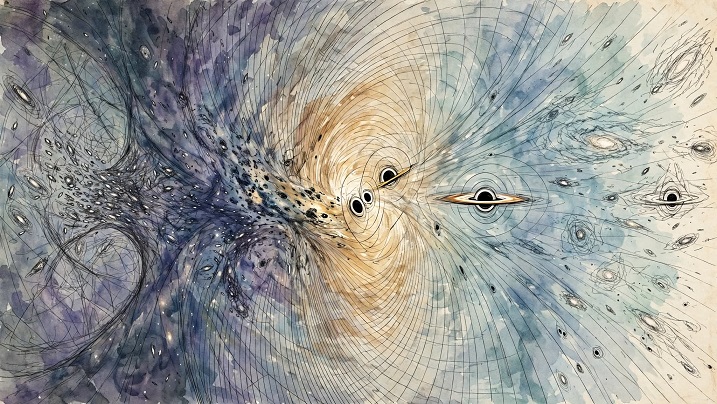
The search for the nature of dark matter has taken researchers toward an unusual possibility: perhaps some of the invisible mass shaping galaxies is made of black holes. But recent research points to an important distinction. Extremely enormous black holes cannot account for a major fraction of dark matter, while a separate theoretical model suggests that much older, smaller or otherwise different relic black holes could potentially have survived from a cosmic phase before the Big Bang.
The distinction matters because dark matter itself has not been directly identified as a particular particle or object. NASA estimates that ordinary matter accounts for about 5% of the universe, while dark matter represents about 27% and dark energy about 68%. Dark matter does not appear to absorb, reflect or emit light, but its gravitational influence can be detected through the way it affects galaxies, galaxy clusters and light traveling through space.
The latest discussion therefore does not establish that black holes are dark matter. Instead, it illustrates how scientists are testing different possibilities for one of cosmology's most persistent unanswered questions.
Why Scientists Think Dark Matter Exists
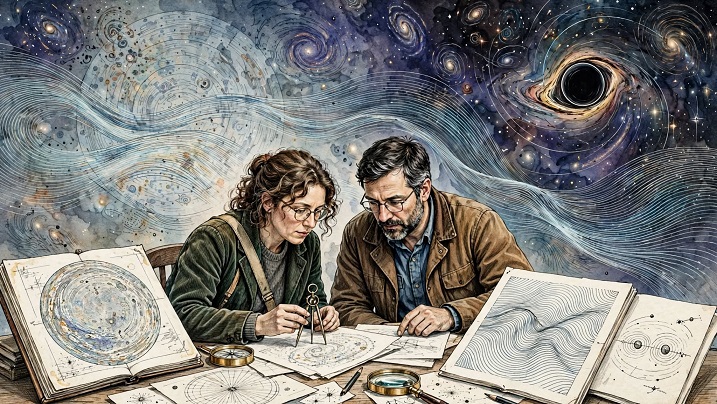
Dark matter cannot be observed directly with ordinary light, but its gravitational effects provide evidence for its presence. NASA notes that dark matter helps determine how galaxies form and how matter is distributed across the universe.
One important method is gravitational lensing. The gravity of massive structures bends spacetime and can distort or magnify light from objects farther away. By measuring those distortions, astronomers can map the distribution of unseen mass. The Bullet Cluster, a collision between two galaxy clusters, provides one of the clearest examples: observations show the distribution associated with dark matter separated from the hot gas that makes up much of the ordinary matter in the collision.
NASA says scientists have proposed several possible explanations for dark matter, including hypothetical particles such as WIMPs and axions, but no candidate has yet been confirmed. Current evidence also favors dark matter that is relatively cold or slow-moving, because simulations with cold dark matter better reproduce the observed formation and distribution of cosmic structures.
That leaves room for other possibilities, including black holes.
The Case for Extremely Large Black Holes
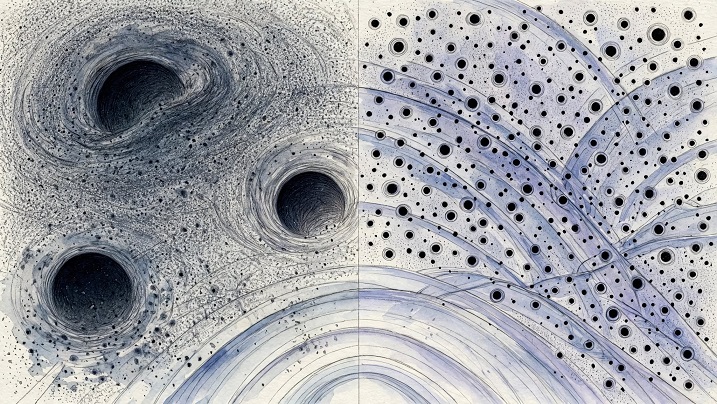
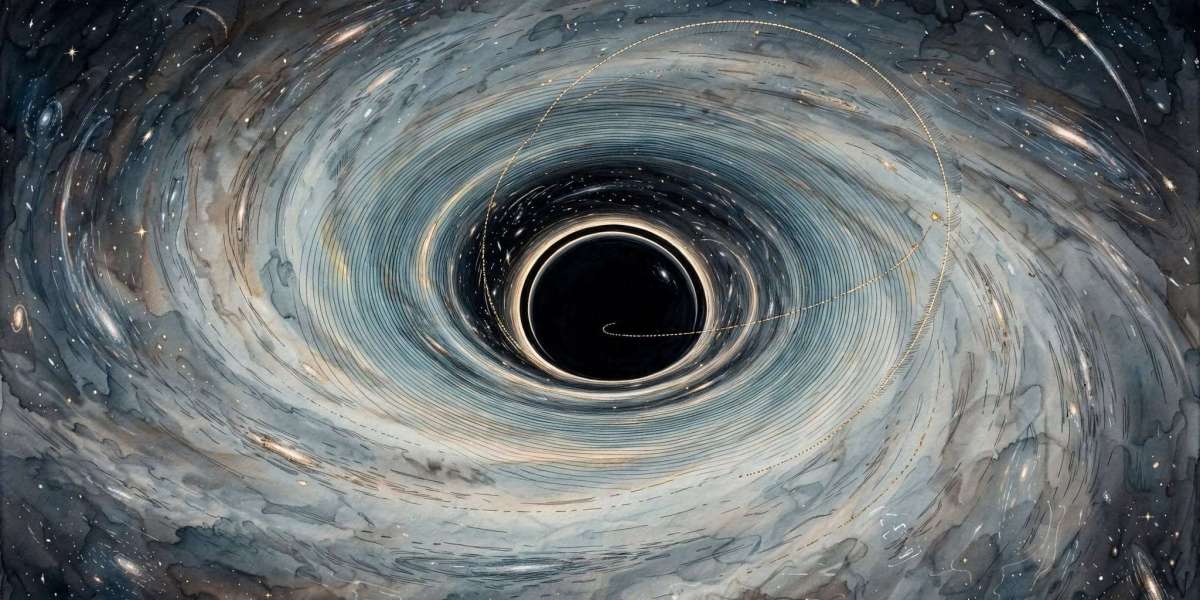
Black holes are attractive as a possible dark-matter candidate because they can contain enormous amounts of mass while producing no ordinary visible light from within their event horizons. But a new study reported by Space.com examined a particularly extreme possibility: “stupendously large black holes.”
The study considered black holes with masses greater than 100 billion solar masses. At the most extreme end described in the report, objects weighing roughly 1 million billion to 10 million billion Suns would be more massive than entire galaxies. Yet astronomers have not detected any black holes in that enormous range. The largest known black hole mentioned in the report may have a mass of about 36 billion Suns.
The researchers asked whether these hypothetical objects could nevertheless be sufficiently numerous to constitute a significant portion of dark matter. Their approach relied on an important prediction: if dark matter were concentrated into a relatively small number of gigantic black holes rather than distributed more smoothly, the universe would appear “grainy” on very large scales.
To test that idea, the researchers examined the cosmic microwave background, the ancient light released when the early universe became transparent. The temperature of this background varies from place to place by roughly one part in 100,000, and the pattern preserves information about how matter was distributed in the early cosmos. According to the study reported by Space.com, the observed pattern does not show the large-scale graininess expected if stupendously large black holes made up a major component of dark matter.
The study therefore does not rule out black holes as a dark-matter candidate in general. Instead, it finds that stupendously large black holes cannot make up a major fraction of dark matter, based on the cosmic microwave background analysis.
A Different Possibility: Black Holes Older Than the Big Bang
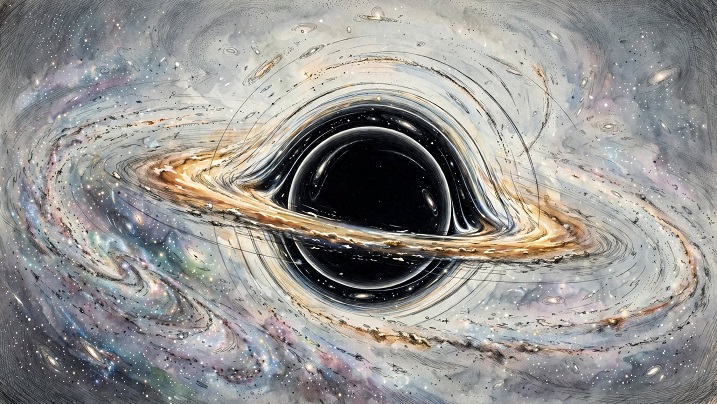
While the new observational analysis constrains one extreme black-hole scenario, another proposal takes the idea in a very different direction.
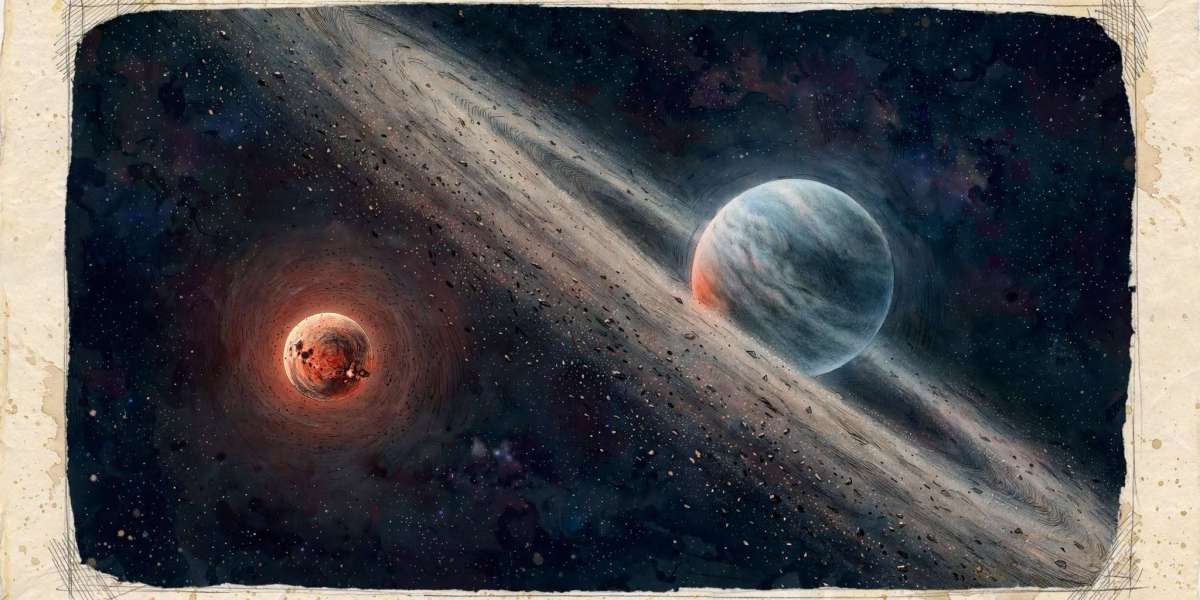
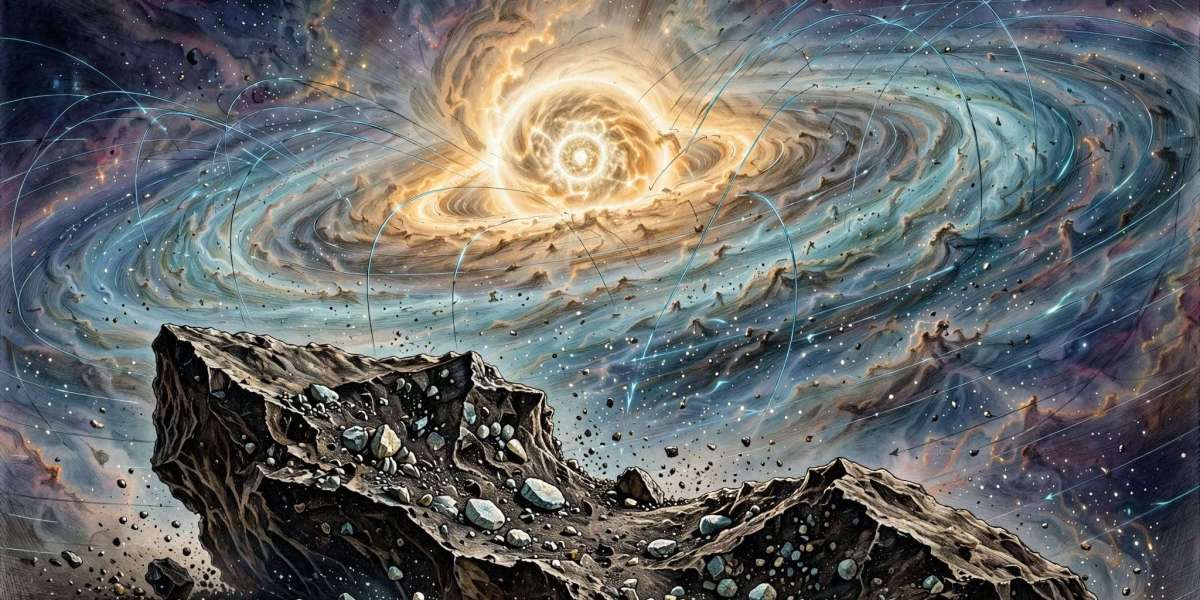
Research reported by ScienceDaily and described in the full The Conversation article supplied for this report explores a universe that may have experienced a cosmic bounce rather than beginning with an absolute singularity. In this model, an earlier universe would have undergone contraction before reaching an extremely dense but finite state and then reversing into an expanding phase.
The standard Big Bang model has been highly successful at describing observations such as the cosmic microwave background and the large-scale distribution of galaxies. But when Einstein's general relativity is extrapolated all the way backward, it leads to a singularity in which density becomes infinite and the known equations cease to provide a complete description. The bounce proposal attempts to replace that singular endpoint with a transition between contraction and expansion.
The researchers propose that quantum effects at extremely high densities could generate enough pressure to prevent the universe from collapsing indefinitely. In their model, this quantum pressure could allow the contracting universe to reach a finite maximum density before expanding again.
One of the model's particularly unusual predictions is that objects larger than roughly 90 meters could potentially survive the transition from contraction to expansion. Possible surviving relics include black holes, gravitational waves and density fluctuations.
How Relic Black Holes Could Become Dark Matter
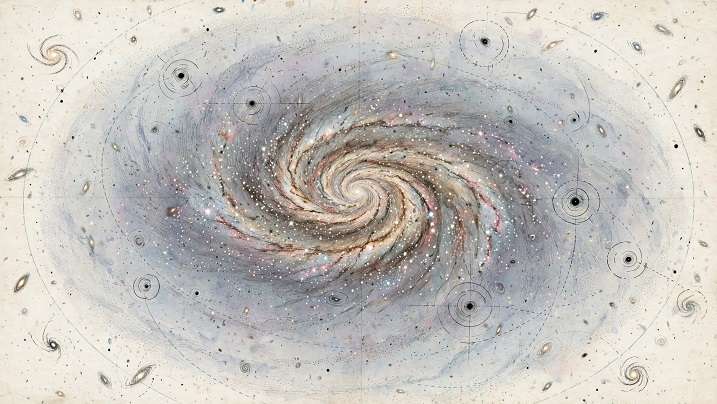
The proposed relic-black-hole scenario offers two possible routes for black holes to appear in the post-bounce universe.
The first is direct survival. Compact objects or gravitational and density fluctuations produced during the earlier contracting phase could persist through the bounce rather than being completely erased.
The second involves the way matter behaves during contraction. As gravity causes matter to clump, structures resembling the halos associated with galaxies today could form. After the bounce, some of these dense structures could collapse efficiently into black holes. According to the proposal, material from stars and galaxies in the contracting phase could ultimately collapse into black holes, preserving much of their mass while losing their earlier detailed structure.
If the bounce produced enough of these relic black holes, the researchers propose that they could account for a substantial share of dark matter and, in principle, potentially all of it. This remains a theoretical possibility that has not been established by observation.
Could Ancient Black Holes Help Explain Early Galaxies?
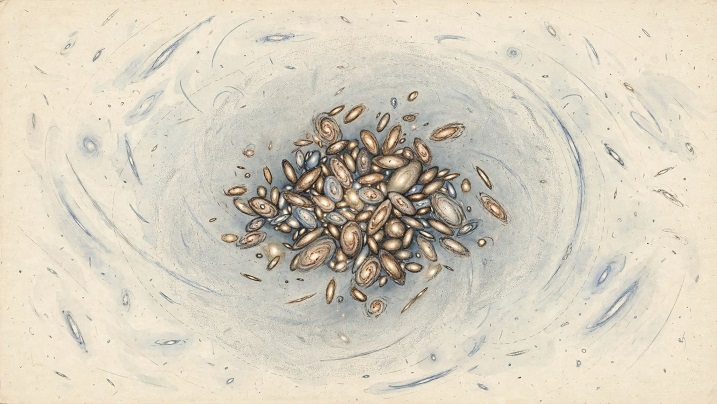
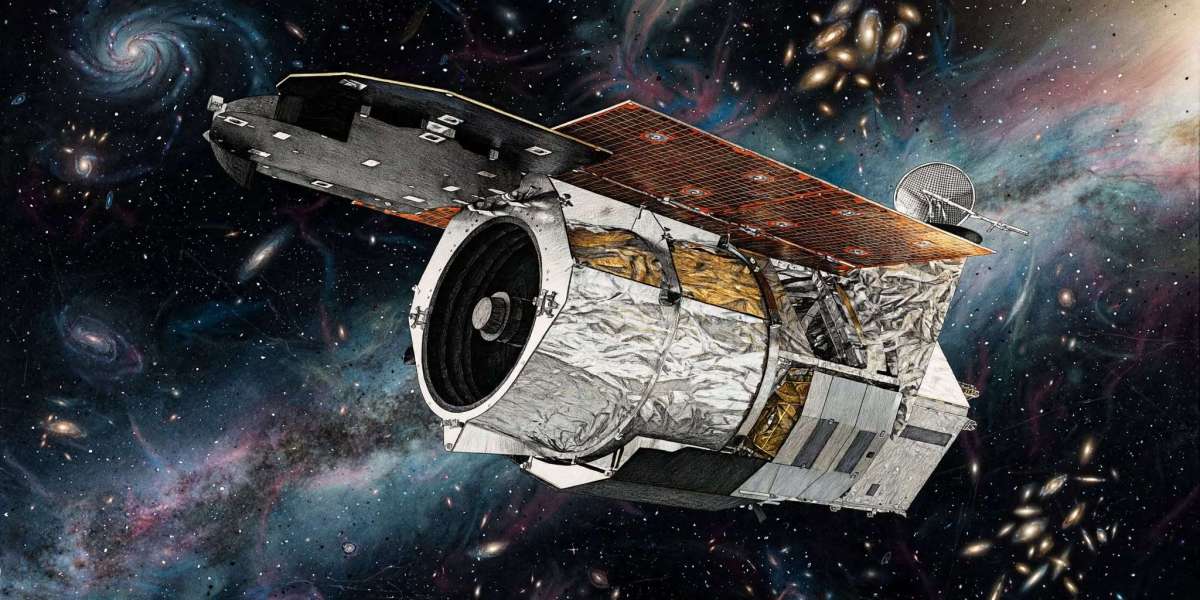
The proposal also offers a possible connection to observations made by the James Webb Space Telescope (JWST).
Webb has revealed compact, extremely red sources in the early universe that are sometimes called “little red dots.” The sources appear unexpectedly massive and luminous for such an early period of cosmic history. The research discussed by ScienceDaily and The Conversation considers the possibility that some are associated with rapidly growing black holes.
The bounce model offers a potential explanation for why very massive black-hole seeds could appear so early. If massive black holes had already survived from the earlier contracting phase, the young expanding universe would not have needed to build every massive black-hole seed from scratch. In that scenario, some early black holes could be relics inherited from the cosmic phase before the bounce.
That does not mean JWST has discovered black holes from before the Big Bang. Rather, the observations provide a phenomenon that the theoretical model may be able to address. Establishing whether the two are actually connected will require further testing.
What the Two Black-Hole Ideas Tell Us
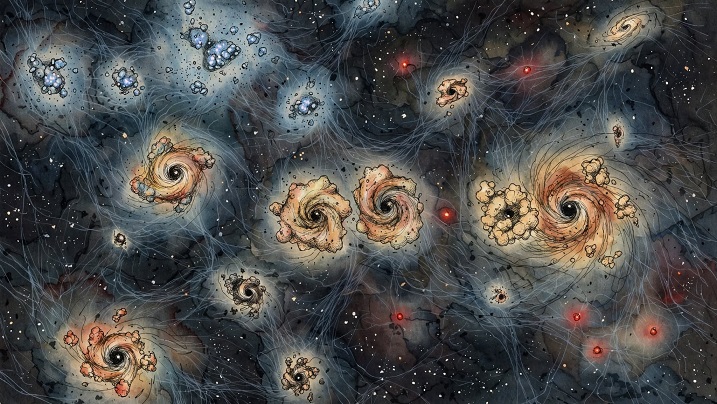
The two research directions highlight why the phrase “black holes as dark matter” can be misleading without additional explanation.
The Space.com report concerns extraordinarily large black holes and finds that their expected effects on the cosmic microwave background are inconsistent with their making up a major fraction of dark matter.
The cosmological-bounce proposal concerns relic black holes associated with an earlier cosmic phase. It suggests that these objects could survive a transition from contraction to expansion and potentially become a substantial component of the dark matter that influences galaxies today.
These are therefore not contradictory conclusions. They address different black-hole populations and different physical scenarios. One constrains an extremely massive hypothetical population using observations of the early universe; the other proposes a theoretical mechanism through which ancient black holes could survive into the universe we observe today.
The Evidence Scientists Still Need
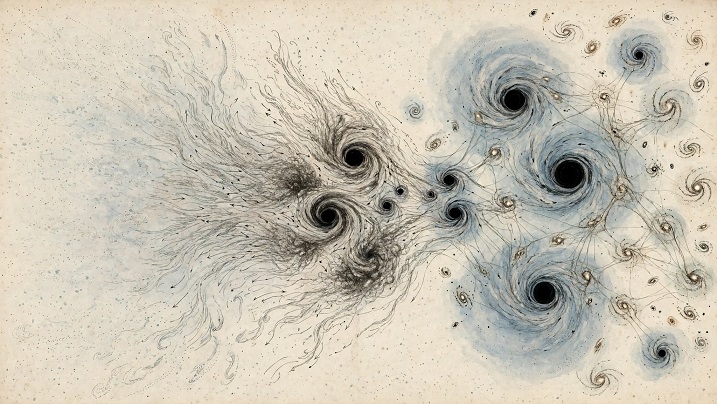
The relic-black-hole proposal remains to be tested. The researchers identify several possible observational avenues, including searches for relic gravitational waves produced during an earlier cosmic phase.
Scientists could also examine the cosmic microwave background for subtle patterns that might preserve information from before the Big Bang. Such observations could potentially provide evidence supporting or challenging the idea that the universe passed through a contraction-to-expansion transition.
The broader dark-matter mystery remains open. NASA says the existence of dark matter is widely accepted based on extensive gravitational evidence, but scientists have not yet determined what dark matter is made of. Proposed candidates include hypothetical particles as well as primordial black holes.
For now, the most accurate conclusion is that black holes remain a possibility in some dark-matter models, but no black-hole explanation has been confirmed. The latest research instead narrows one extreme possibility while keeping attention on a much more speculative idea: that some of the invisible mass shaping galaxies could be remnants of a cosmic history that began before the Big Bang.
Key Points Summary
Dark matter makes up about 27% of the universe, according to NASA, compared with about 5% for ordinary matter.
A new study reported on October 23, 2026, finds that stupendously large black holes cannot account for a major fraction of dark matter.
The study examined hypothetical black holes exceeding 100 billion solar masses and used the cosmic microwave background to test their predicted large-scale effects.
A separate cosmological-bounce model proposes that ancient black holes could have survived from a contracting phase before the Big Bang.
The relic-black-hole hypothesis remains theoretical and could be tested through future observations of gravitational waves and the cosmic microwave background.
What This Means
The research does not show that black holes are the missing dark matter. Instead, it demonstrates how scientists can use observations of the early universe to rule out particular versions of that idea while investigating others.
For researchers, the next challenge is to determine whether the proposed relic black holes leave measurable signatures. Gravitational-wave backgrounds and subtle patterns in the cosmic microwave background are among the observations identified by the research as potential tests.
For the wider public, the key point is straightforward: scientists know a great deal about what dark matter does, but not yet what it is. Black holes are one possible route, but the evidence currently supports neither a confirmed black-hole identity for dark matter nor the existence of a pre-Big-Bang universe.
advertisement
Frequently Asked Questions [FAQ]
Could dark matter be made of black holes?
Possibly, but this has not been established. The sources describe black holes as one possible dark-matter explanation, while NASA says that no proposed dark-matter candidate has yet been confirmed.
Did the new study rule out black holes as dark matter?
No. The study reported by Space.com specifically finds that stupendously large black holes cannot make up a major fraction of dark matter. It does not rule out every possible type or mass range of black hole.
What are stupendously large black holes?
They are hypothetical black holes with masses exceeding 100 billion times the mass of the Sun. The most extreme examples considered could be heavier than entire galaxies.
What is a cosmological bounce?
It is a theoretical model in which the universe first contracts, reaches an extremely dense but finite state, and then reverses into an expanding phase rather than ending in an infinite-density singularity.
Could black holes survive from before the Big Bang?
The cosmological-bounce research proposes that some compact objects, including black holes, could potentially survive the transition from contraction to expansion. This is a theoretical prediction, not an observationally confirmed discovery.
Could relic black holes explain all dark matter?
The researchers say that, in principle, if enough relic black holes were produced during the bounce, they could account for a substantial share of dark matter or even all of it. This possibility still requires observational testing.
What evidence do we have for dark matter?
NASA points to gravitational effects including the movement of galaxies and gravitational lensing. The Bullet Cluster provides especially strong evidence because the distribution of inferred dark matter differs from that of the hot ordinary matter observed in the collision.
Has the James Webb Space Telescope discovered pre-Big-Bang black holes?
No. JWST has detected unexpectedly massive early-universe objects, including sources sometimes called little red dots, but the connection to black holes from a pre-Big-Bang phase remains a theoretical interpretation that requires further testing.
Sources
Space.com — “'Stupendously large black holes' aren't a major component of dark matter, study finds”
The Conversation — “Could dark matter be made of black holes from a different universe?”
ScienceDaily — “Black holes older than the Big Bang could explain dark matter”
Additional Verified Sources
No additional sources were used.
Thank you !