
SCIENCE AND HEALTH NEWS · OCTOBER 15, 2026
How an Aging Immune Pathway May Contribute to Bone Loss, New Study Finds
video here-loading
Key Points
STING signaling in bone marrow macrophages may contribute to age-related bone loss by promoting inflammation and disrupting the environment needed for bone formation.
Researchers identified soluble DPP4, released by aging bone marrow fat cells, as a factor involved in activating the STING pathway.
STING activation increases CD38 expression through downstream inflammatory signaling. CD38 contributes to NAD⁺ metabolism and, through its extracellular enzyme activity, can reduce local availability of NMN, a precursor used to produce NAD⁺. These changes are associated with impaired mitochondrial function and reduced bone-forming capacity in bone marrow stem cells.
In mouse experiments, reducing STING activity from middle age onward slowed bone loss. Combining a STING inhibitor with NMN supplementation also improved several measures of bone health.
The findings suggest a potential research direction for skeletal aging, but the treatment combination has not been established as safe or effective in humans.
advertisement
An Immune Signaling Pathway Emerges as a Potential Target for Skeletal Aging
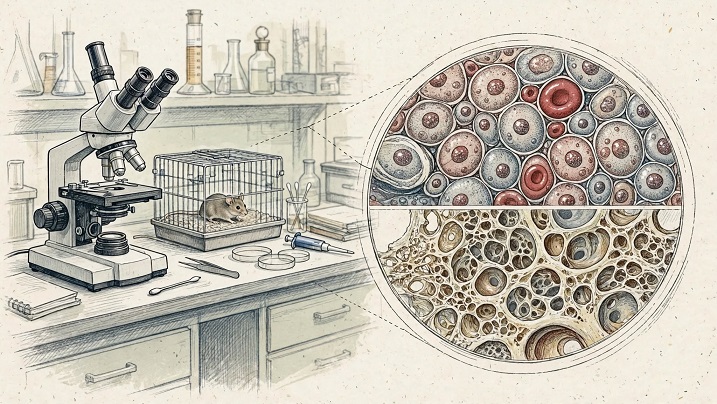
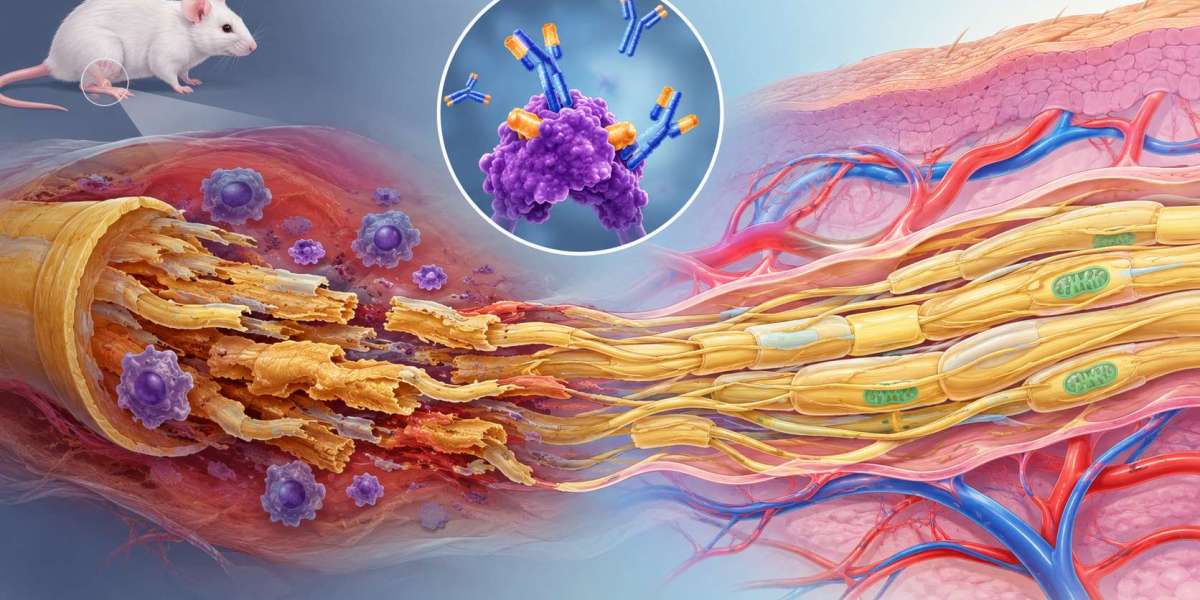
Researchers have identified an age-related inflammatory pathway that may help explain why bones gradually lose strength as the body ages, pointing to a potential strategy for slowing skeletal deterioration. The study, published on October 15, 2026, in Advanced Science, links signaling through the stimulator of interferon genes (STING) pathway in bone marrow macrophages to inflammation, changes in cellular metabolism and impaired bone formation.
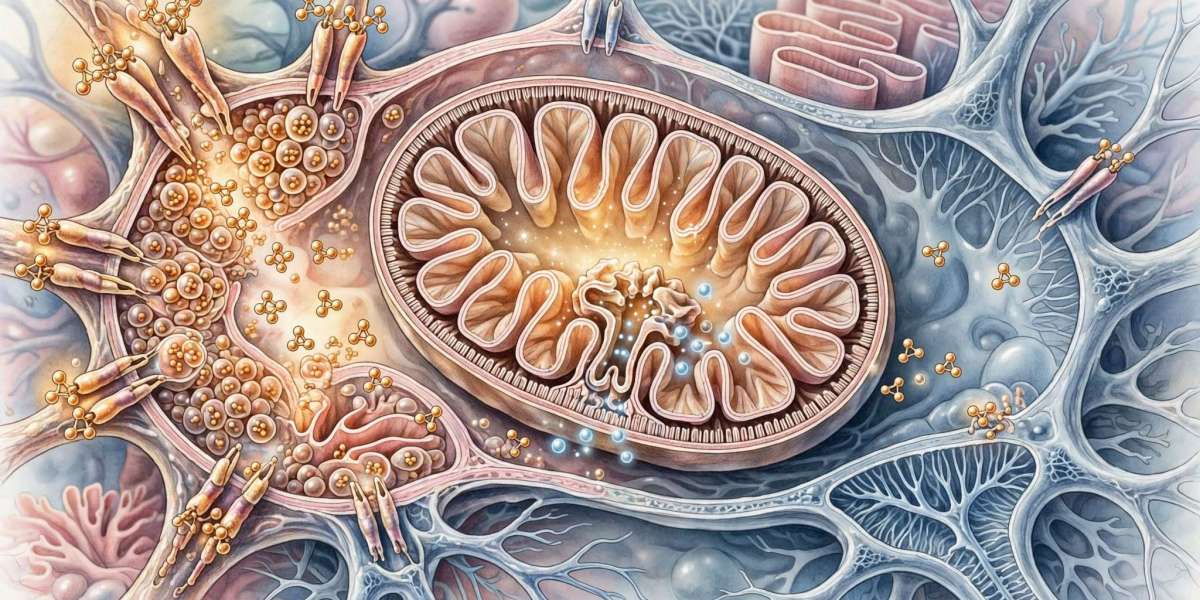
The researchers found that STING signaling increases CD38 expression through downstream transcription factors, including NF-κB and IRF3. CD38 is an enzyme involved in NAD⁺ metabolism. The study describes two related effects of increased CD38 activity: it contributes to NAD⁺ depletion and, through its extracellular enzyme activity, reduces the local availability of nicotinamide mononucleotide (NMN), a precursor that neighboring cells use to produce NAD⁺. These changes were associated with impaired mitochondrial function and a reduced ability of bone marrow mesenchymal stem cells to differentiate into bone-forming cells.
The researchers also found that combining a STING inhibitor with NMN supplementation improved several measures of bone health in mice. However, these preclinical findings do not establish that the approach is safe or effective in humans.
Why Bone Marrow Changes Matter With Age
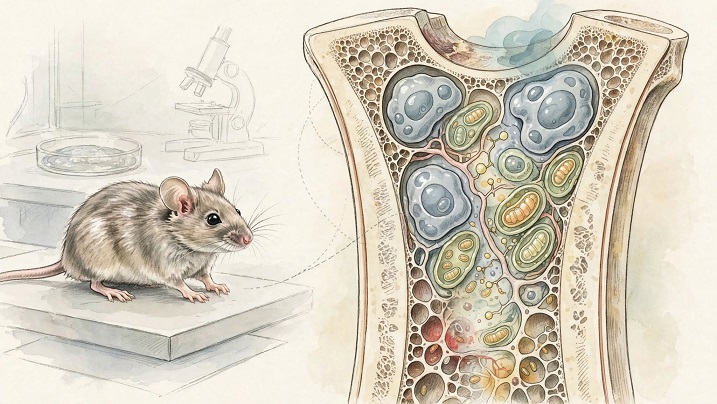
Bone is living tissue that continually undergoes remodeling, a process in which old or damaged bone is removed and new bone is formed. This balance depends on interactions among several cell types in the bone marrow, including immune cells, mesenchymal stem cells, bone-forming cells and fat cells.
With aging, this environment changes. Fat cells accumulate, inflammatory signals increase, and the capacity to maintain and rebuild bone can decline. These changes are associated with skeletal aging and conditions such as osteoporosis, in which bones become less dense and more vulnerable to fractures.
The new research focuses on how these changes may be connected rather than treating bone loss as a problem involving only one type of cell. In particular, it examines whether interactions between bone marrow fat cells and immune cells contribute to changes that make the marrow less supportive of bone formation.
STING Has Different Effects at Different Stages of Life
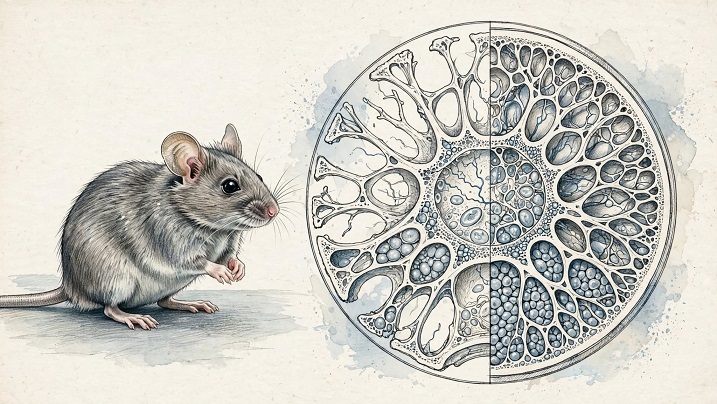
The STING pathway is part of the innate immune system, which helps cells respond to infection, cellular stress and other threats. In bone marrow macrophages, immune cells that help regulate the marrow environment, STING signaling increased with age in the researchers’ experiments.
The study also uncovered an important complication: STING does not have the same effect on bone throughout life. In a genetic mouse model, animals lacking STING in targeted immune-cell populations showed trends toward lower bone-mass measurements earlier in life, although these early differences were not statistically significant.
The pattern changed as the animals aged. A comparison of bone-mass changes between 10 and 24 months showed a significantly slower rate of bone loss in mice with reduced STING activity than in control animals. In a separate experiment, researchers used a viral vector to knock down STING in targeted macrophages in 18-month-old mice and observed delayed bone loss.
These findings suggest that the effects of STING inhibition may depend on the stage of life and the cells being targeted. They do not establish that broadly suppressing the pathway at every age would be beneficial.
Aging Bone Marrow Fat Cells Help Trigger Inflammation
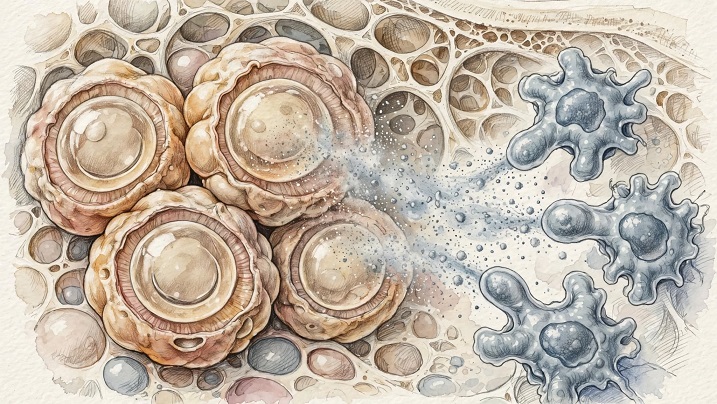
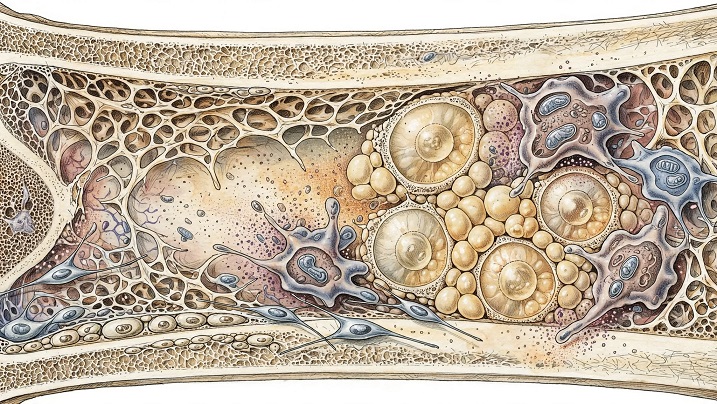
To investigate what drives STING activation, the researchers examined bone marrow adipocytes, the fat cells that live within the marrow. These cells can accumulate as the skeleton ages and may develop features associated with cellular senescence, a state linked to altered cell function and the release of substances that affect nearby tissues.
The study identified soluble dipeptidyl peptidase 4 (sDPP4) as a factor secreted by aging bone marrow fat cells that contributes to inflammatory signaling. The researchers found that sDPP4 acts as an extracellular ligand for Toll-like receptor 4 (TLR4) on bone marrow macrophages. In their model, this interaction works alongside mitochondrial DNA to promote STING activation.
Experiments involving cells and mice supported a role for this interaction in the aging-related changes observed in the bone marrow. The results connect an expanding population of marrow fat cells with immune activation, providing a possible explanation for how changes in one cell population can influence the behavior of another.
The findings do not mean that marrow fat alone causes osteoporosis. Instead, they suggest that signals released by aging fat cells may be one part of a broader network of changes affecting bone maintenance.
How STING Activity Can Disrupt NAD⁺ Availability
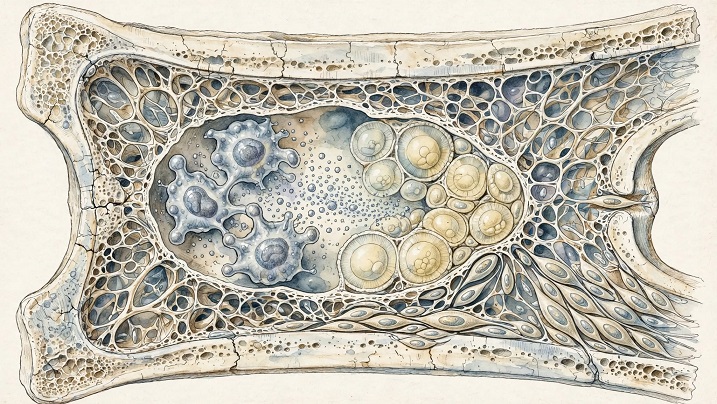
The researchers found that STING signaling increases CD38 expression through downstream transcription factors, including NF-κB and IRF3. CD38 is an enzyme involved in NAD⁺ metabolism, and its activity can contribute to the depletion of NAD⁺, a molecule essential for cellular metabolism and normal cell function.
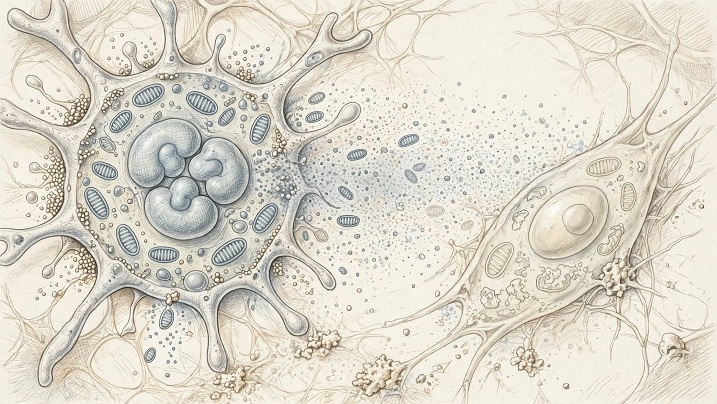
The study also describes a related mechanism involving NMN. Through its extracellular, or ecto-NADase, activity, increased CD38 reduces the local availability of NMN needed for NAD⁺ salvage synthesis in neighboring bone marrow mesenchymal stem cells. In other words, the proposed mechanism involves both changes in NAD⁺ metabolism and reduced availability of a precursor that nearby cells use to produce NAD⁺.
These changes were associated with impaired mitochondrial function and a diminished ability of bone marrow mesenchymal stem cells to differentiate into bone-forming cells. The findings suggest that inflammatory signaling may undermine bone maintenance by affecting the metabolic resources and cellular functions needed for new bone formation.
The distinction between NAD⁺ depletion and reduced local NMN availability matters: they are related parts of the mechanism described in the paper, not interchangeable claims. The experiments support this pathway in the models studied, but they do not establish that the same process drives bone loss in humans to the same extent.
Experiments Suggest That Targeted STING Inhibition Can Slow Bone Loss
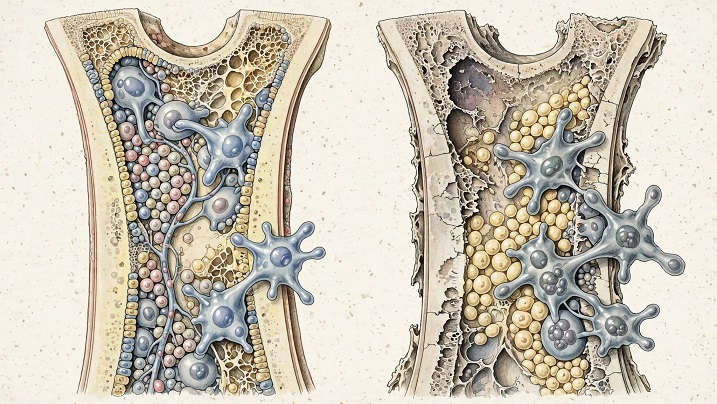
To test whether the pathway could be targeted, the researchers used genetic approaches to reduce STING activity in bone marrow macrophages and examined bone changes in mice at different ages. Their findings indicated that reducing STING activity from middle age onward slowed bone loss, although not every individual bone measurement showed a statistically significant difference.
In a separate approach, the researchers used an adeno-associated viral vector to knock down STING in targeted macrophages in older mice. These animals showed improvements in several measurements of bone structure and bone formation compared with control animals.
Together, the experiments strengthened the case that STING activity contributes to skeletal deterioration during aging in these models. However, genetic modification and targeted gene knockdown in mice are experimental techniques, and their effects do not automatically establish the benefits or safety of a comparable intervention in humans.
The distinction is important because the study points to a potential biological target, not a ready-to-use treatment for people with osteoporosis.
Combining a STING Inhibitor With NMN Shows Promise in Mice
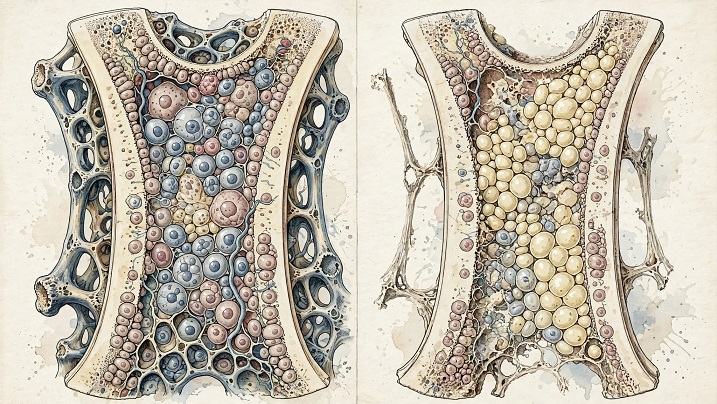
The researchers then tested a combined approach intended to address inflammatory signaling and NAD⁺ metabolism. They administered the STING inhibitor H-151 alongside oral NMN supplementation to mice beginning in middle age.
The combination was associated with improvements in bone mineral density and several measures of trabecular bone structure, as well as changes in inflammatory markers, mitochondrial function and NAD⁺ levels. The researchers reported bone-protective effects comparable to those of alendronate, a medication used to treat osteoporosis, in their mouse experiments.
That comparison is limited to the experimental model. It does not demonstrate that the combination matches or outperforms an established osteoporosis medicine in human patients.
The study also did not include separate treatment groups receiving only H-151 or only NMN in the final combination experiment. As a result, the researchers could not formally determine how much each intervention contributed independently to the observed benefits.
Although the findings support further investigation, they do not establish an appropriate dose, treatment schedule or safety profile for people. Nor do they show that taking NMN supplements on their own would prevent or reverse age-related bone loss.
Important Limitations Remain Before Human Treatment Is Possible
Despite the encouraging findings, the study does not establish a new treatment for people with osteoporosis or age-related bone loss. The central experiments were conducted in mice and laboratory cell systems, and further work is needed to determine whether the same mechanisms operate in humans and whether the proposed intervention can be used safely and effectively.
The study's animal experiments included male mice, so additional research would be needed to determine how well the findings apply across sexes and to human populations. The authors also noted limitations in the specificity of some genetic models, which could affect immune cells beyond the macrophages of primary interest.
In addition, the study did not establish the optimal timing for treatment or fully separate the individual effects of STING inhibition and NMN supplementation. The reported comparison with alendronate also remains a preclinical finding rather than evidence of equivalent efficacy in people.
The authors further noted that the observed benefits could reflect both local changes in bone marrow and broader effects on metabolism or inflammation elsewhere in the body. These uncertainties will need to be addressed before the approach can be considered for clinical use.
What the Findings Could Mean for Future Osteoporosis Research
The research presents skeletal aging as a process shaped by interactions among bone marrow fat cells, immune signaling and the ability of stem cells to form new bone. By identifying STING as a point where these processes converge, the study suggests a potential way to intervene in several connected mechanisms rather than targeting only one symptom of bone deterioration.
Future research will need to establish whether these findings translate to human biology, identify the most appropriate treatment window, and evaluate the safety and effectiveness of selective STING inhibition and NMN supplementation. Researchers will also need to determine whether the individual components of the combined treatment provide distinct benefits and whether similar effects can be achieved without unintended consequences.
For now, the study offers a mechanistic explanation and a possible direction for drug development—not evidence that people should use STING inhibitors or NMN supplements to prevent or treat osteoporosis.
Key Points Summary
A study published in Advanced Science on October 15, 2026, identified STING signaling in bone marrow macrophages as a potential contributor to skeletal aging.
Aging bone marrow fat cells release sDPP4, which helps activate inflammatory signaling involving TLR4, mitochondrial DNA and STING.
Increased STING signaling raises CD38 expression. CD38 activity contributes to NAD⁺ depletion and, through its extracellular enzyme activity, reduces local NMN availability to neighboring bone marrow stem cells. These changes are associated with impaired mitochondrial function and bone-forming activity.
In mice, reducing STING activity from middle age onward slowed bone loss, although not all individual bone measurements were statistically significant.
Combining H-151 with NMN improved bone-related measurements in mice, but further research is necessary before the strategy can be evaluated as a treatment for humans.
What This Means
Why it matters: The study links age-related inflammation to changes in cellular metabolism and reduced bone formation, potentially opening a new direction for osteoporosis research.
Who may be affected: The findings are relevant to researchers studying osteoporosis, skeletal aging, inflammation and bone marrow biology. Older adults could potentially benefit from future treatments developed from this research, but no direct clinical benefit has been demonstrated.
What to watch next: Important next steps include testing the findings in additional models, determining the individual contributions of STING inhibition and NMN supplementation, establishing an appropriate treatment window, and evaluating safety and effectiveness before human clinical use.
advertisement
Frequently Asked Questions (FAQ)
1. What is STING, and why is it important for bone health?
STING is a signaling protein involved in the innate immune response. The study found that increased STING activity in bone marrow macrophages contributed to inflammation and changes associated with impaired bone formation in aging mice.
2. What is the connection between bone marrow fat and bone loss?
The researchers found that aging bone marrow fat cells release sDPP4, a protein that helps activate inflammatory signaling in nearby macrophages. This process may contribute to deterioration of the bone marrow environment and reduced bone-forming capacity.
3. How does NAD⁺ affect bone formation?
NAD⁺ supports essential cellular processes, including metabolism and mitochondrial function. The study links increased STING–CD38 signaling to NAD⁺ depletion. It also describes how CD38's extracellular enzyme activity can reduce local NMN availability to neighboring bone marrow mesenchymal stem cells. These related changes were associated with impaired mitochondrial function and a reduced ability of the stem cells to develop into bone-forming cells in the experimental models.
4. Did the researchers reverse osteoporosis in humans?
No. The research used mice and laboratory cell experiments. It did not establish that the treatment combination prevents or reverses osteoporosis in people.
5. What are H-151 and NMN?
H-151 is a pharmacological inhibitor of STING signaling. NMN is a precursor that cells use to produce NAD⁺. The researchers combined the two in mouse experiments to target inflammatory signaling and address changes in NAD⁺ metabolism.
6. Was the combination more effective than standard osteoporosis medication?
The researchers reported bone-protective effects comparable to alendronate in their mouse experiments. This does not establish equivalence or superiority in humans, and further studies are needed.
7. Can people use STING inhibitors or NMN supplements to treat bone loss based on this study?
The study does not support that conclusion. It did not establish the safety or effectiveness of this combination in humans. People should not replace prescribed osteoporosis treatment with an experimental approach on the basis of these findings.
Sources
1. Advanced Science — Primary research paper
Li, Z., et al. (2026). Bone Marrow Macrophage STING Signaling is a Direct Nexus Linking Marrow Adipose Expansion to NAD⁺ Depletion and Osteogenic Decline in Skeletal Aging.
Read the original scientific paper: https://advanced.onlinelibrary.wiley.com/doi/10.1002/advs.77571
2. Medical Xpress — Supporting article
Can we take the STING out of bone loss? Pathway presents potential treatment target for skeletal aging. Published October 15, 2026.
Read: https://medicalxpress.com/news/2026-10-bone-loss-pathway-potential-treatment.html
Additional Verified Sources
No additional sources were used.
Thank you !