
How a 194-Year-Old Tortoise Could Help Scientists Understand Healthy Aging

Image credits and reference:
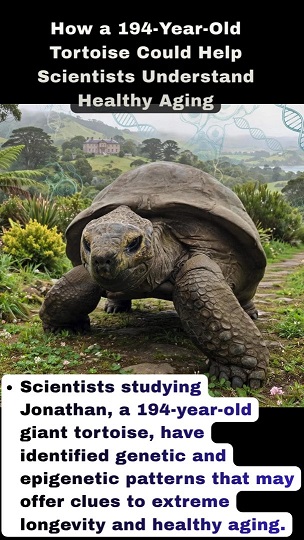
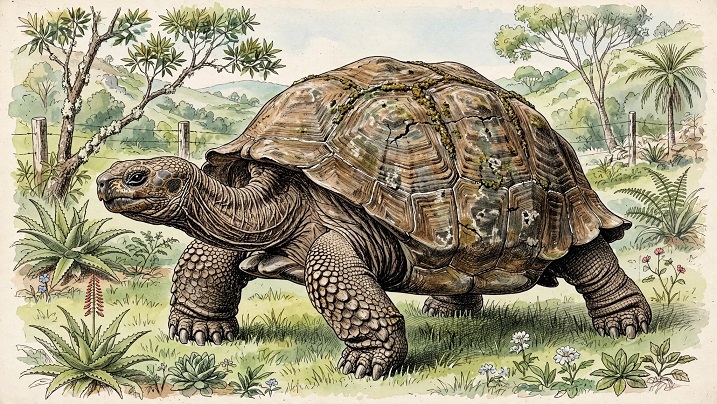
Jonathan at his home on St. Helena — Credit: St. Helena Government Communication Hub. |
This version is an edited, AI-generated illustration inspired by the original reference. Background DNA motifs added.
original image source: medicalxpress.com
Key Points
Jonathan, an Aldabra giant tortoise estimated to be 194 years old, offers researchers an unusual opportunity to investigate the genetic and epigenetic features associated with extreme longevity.
A 2026 study published in Science Advances examined Jonathan’s genome and DNA methylation patterns, identifying genetic variations and molecular pathways that may help explain his exceptional lifespan.
Researchers identified 770 genes showing evidence of positive selection and found that Jonathan’s genetic admixture was unique in an analysis considering five genetic clusters.
An analysis of DNA methylation entropy identified 272 gene promoters that retained relatively low entropy in Jonathan and two younger tortoises but showed higher entropy in two older adults.
The findings point to mitochondrial processes, RNA metabolism, and genomic maintenance as promising areas for further research, but they do not establish why Jonathan has lived so long or demonstrate a way to extend human lifespan.
advertisement
How Jonathan’s Exceptional Age Offers a Window Into Longevity

Jonathan, an Aldabra giant tortoise living on the island of St. Helena, is estimated to be approximately 194 years old. His extraordinary age makes him a valuable subject for scientists investigating the biological mechanisms that may allow some animals to survive for exceptionally long periods.
Aldabra giant tortoises (Aldabrachelys gigantea) are naturally long-lived animals. However, Jonathan’s estimated lifespan places him far beyond the typical longevity reported for the species. The research paper estimates mean life expectancy at approximately 80.47 years, with an upper estimate of 93.68 years in the lifespan analysis presented by the researchers.
Jonathan’s age is an estimate rather than a precisely documented birth date. Historical information indicates that he was brought to St. Helena in 1882, having originated in the Seychelles. His precise birth year is not known, but he is generally believed to have been born around 1832.
His longevity raises an important scientific question: what biological features might help certain animals maintain their health and survive much longer than others?
To investigate that question, researchers examined Jonathan’s genome and DNA methylation patterns. Rather than assuming that one gene explains his age, they investigated multiple genetic and epigenetic features that could contribute to long-term cellular maintenance.
Why Jonathan’s Longevity Is So Unusual

The researchers first examined Jonathan’s genetic background to understand how he relates to other giant tortoises.
They compared genomic data from Jonathan and Tank, a 36-year-old Aldabra giant tortoise, with data from other tortoises, including the Galápagos giant tortoise Lonesome George and previously sequenced animals. This comparison helped the team investigate Jonathan’s ancestry and identify genetic variations that distinguish him from other individuals.
The genetic-clustering analysis revealed an especially interesting result. When the researchers considered five genetic clusters, described as K = 5, Jonathan’s genetic admixture was unique compared with the other tortoises included in the analysis.
This finding suggests that Jonathan may carry a genetic contribution from an unknown source. However, the researchers could not determine whether this reflects historical changes in tortoise populations or Jonathan’s possible origin on a different island.
The result does not establish that an unknown ancestral population caused his longevity. Instead, it identifies an unusual aspect of his genetic background that may help scientists understand the evolutionary history of Aldabra giant tortoises.
The researchers also compared Jonathan’s genetic variants with those identified in other giant tortoises to investigate differences in genes associated with aging, DNA repair, telomere function, metabolism, and other biological processes.
How Scientists Examined Jonathan’s Genome
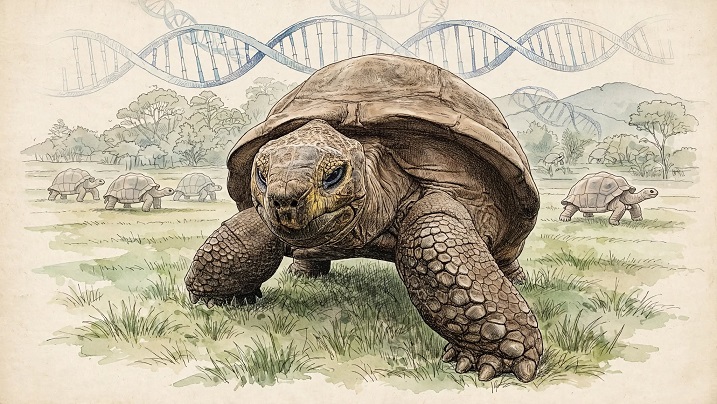
To investigate the molecular basis of Jonathan’s longevity, the researchers sequenced his genome and compared it with other tortoise genomes.
Obtaining a suitable biological sample required special consideration. Because of concerns about Jonathan’s health and the risks associated with collecting blood, the researchers used buccal tissue collected from inside his mouth. This material provided DNA for genomic analysis without requiring a blood draw.
The team also examined DNA methylation in Jonathan and four additional Aldabra giant tortoises. These animals included Hatchling, a five-year-old juvenile; Smalls, a 12-year-old tortoise; and two older adults named Toka and Poka.
The exact ages of Toka and Poka were unknown, although both were already adults in 1969.
The researchers analyzed DNA methylation patterns across the genomes of these five tortoises. DNA methylation involves the addition of chemical groups to DNA and plays an important role in regulating gene activity. Its patterns can change with age and may provide clues about cellular regulation over time.
The team also investigated gene variants and gene-family expansions that might be relevant to longevity. Some of these changes involved genes associated with DNA repair, telomere maintenance, cellular energy regulation, and other biological processes connected to aging.
By combining genomic comparisons with DNA methylation analysis, the researchers sought to identify patterns that could help explain how Jonathan’s biology differs from that of younger or less exceptionally long-lived animals.
Genetic Variations Point to Several Aging-Related Pathways
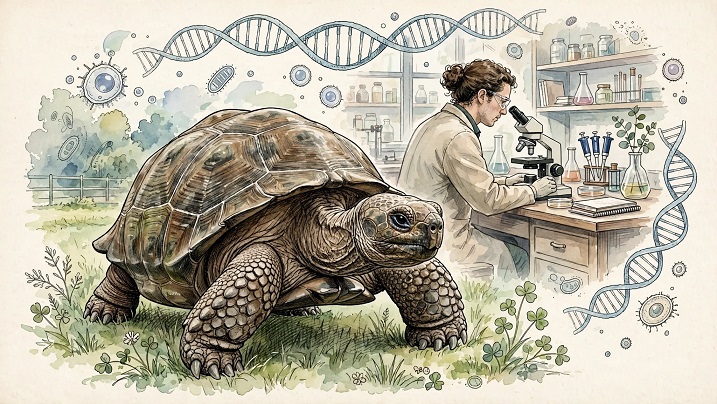
The researchers identified 770 genes showing evidence of positive selection in their analysis. Positive selection refers to an evolutionary process in which genetic changes that confer an advantage become more common within a population.
In this study, the analysis used the ratio of nonsynonymous to synonymous substitution rates, known as dN/dS. A ratio greater than 1 is generally interpreted as evidence consistent with positive selection, although the result depends on the assumptions and methods of the analysis.
The team also identified 287 genes carrying unique nonsynonymous variants in Jonathan. Nonsynonymous variants can change the amino-acid sequence of a protein, potentially affecting how it functions.
Among the variants examined, 41 were predicted to have potentially significant functional effects. The researchers further investigated a subset associated with aging-related gene sets.
These findings identified several candidates for future investigation, but predicted functional effects do not demonstrate that a variant actually improves longevity in a living animal.
Among the genes of interest were POT1, which is associated with telomere function; ERCC1, which is involved in DNA repair; and FOXO3, a gene associated with processes relevant to cellular stress responses and aging research.
The study also examined gene-family expansions, including LAMTOR4, which is involved in the Ragulator complex that regulates the mTORC1 pathway. Jonathan and the other sequenced Aldabra tortoises had two copies of LAMTOR4. The second copy identified in Jonathan, named LAMTOR4JON2, contained five variants corresponding to variants in the human gene, two of which were predicted to be potentially damaging.
The researchers distinguished this finding from examples in other species. The bowhead whale has a duplicated LAMTOR1 gene, while the African turquoise killifish shows positive selection in LAMTOR5. These are separate findings involving different genes and species.
The presence of these genetic features does not prove that they are responsible for Jonathan’s exceptional age. Instead, they provide a collection of potential clues about the biological systems that may contribute to longevity in giant tortoises.
DNA Methylation Reveals Two Different Patterns
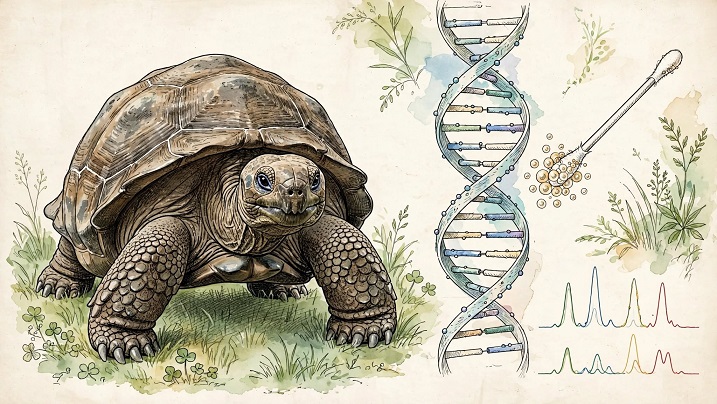
The researchers also examined DNA methylation, an epigenetic process that helps regulate gene activity without changing the underlying DNA sequence.
Their analysis found that Jonathan had lower overall DNA methylation than the five-year-old juvenile used for comparison. Of the 67,091 differentially methylated regions identified between Jonathan and Hatchling, 60,969—or 90.9%—were hypomethylated in Jonathan.
Most of these hypomethylated regions were located in intergenic regions, which lie between genes, or within introns, which are sections of genes that are generally removed from RNA during processing. Only a small proportion were located in promoters or exons.
However, the researchers also examined a different measure called DNA methylation entropy. Unlike overall methylation levels, methylation entropy measures the disorder or variability of methylation patterns across DNA.
The distinction is important. Lower overall DNA methylation does not automatically mean that methylation patterns are more organized or more youthful. Methylation level and methylation entropy describe different properties of the epigenetic landscape.
Across the five tortoises, the researchers found that whole-genome mean methylation entropy was strongly associated with age. The reported relationship had an R² value of 0.9821 and a P value of 0.01787.
The researchers also found that methylation entropy generally increased with age across genomic regions, with an important exception: gene promoters showed low methylation entropy in all five tortoises.
Promoters are DNA regions that help control when genes are activated. Maintaining organized methylation patterns in these regions may be relevant to the regulation of gene expression, although the study does not establish that this mechanism directly accounts for Jonathan’s longevity.
A Closer Look at 272 Gene Promoters
One of the study’s notable findings involved 272 gene promoters that displayed lower methylation entropy in Jonathan and the two younger tortoises, Hatchling and Smalls, but higher entropy in the two older adults, Toka and Poka.
This pattern drew the researchers’ attention because changes in promoter methylation entropy may be associated with greater variability in gene expression. The researchers therefore investigated which biological functions were represented among the 272 genes.
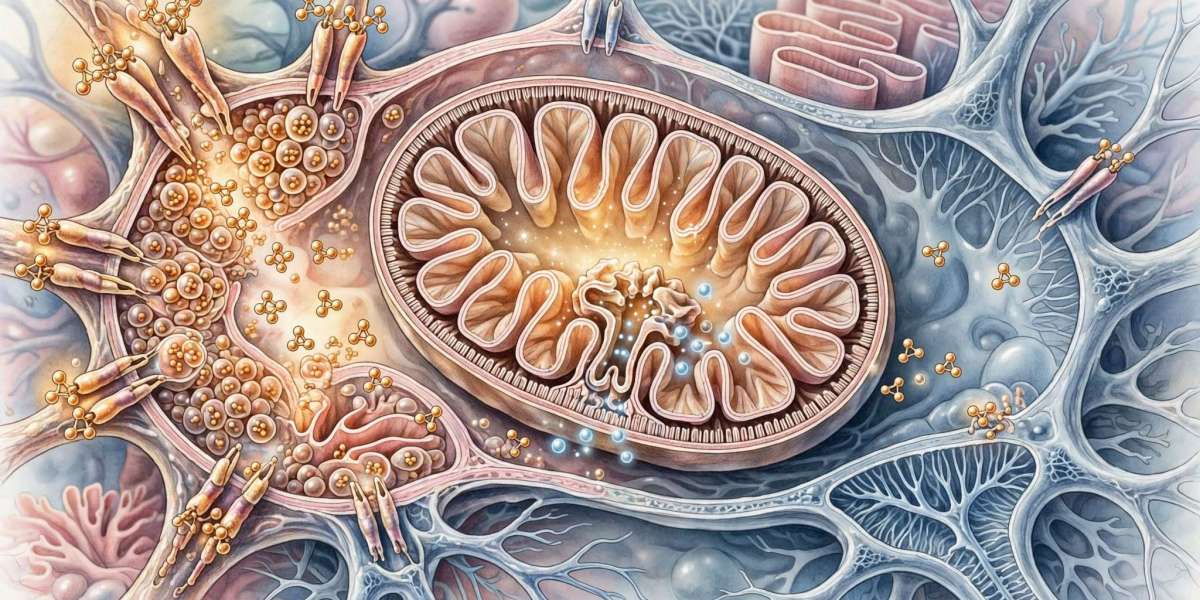
Their functional-network analysis identified mitochondrial pathways, including components associated with mitochondrial crista formation complexes, referred to in the paper as MIB and SAM.
Mitochondrial cristae are folds of the inner mitochondrial membrane that help support the processes involved in cellular energy production. The study’s broader functional categories also included protein-containing complexes and intracellular membrane-bounded organelles.
Within these broader categories, the researchers identified genes associated with mitochondrial organization, RNA processing, and chromosome organization.
Further examination found that 35 of the 272 genes—approximately 13%—were involved in mitochondrial processes. These included genes associated with electron transport chain complexes I and IV, mitochondrial crista formation, and mitophagy, a process through which cells remove damaged or unnecessary mitochondria.
The researchers also identified genes involved in RNA processing and splicing, translation, and genomic or telomere repair.
These findings suggest that the maintenance of organized gene-regulatory patterns in specific biological pathways may be relevant to longevity. However, the results do not show that Jonathan’s mitochondria necessarily function more efficiently than those of younger tortoises, nor do they prove that low promoter methylation entropy causes longer life.
Mitochondrial Function, RNA Processing, and Cellular Maintenance
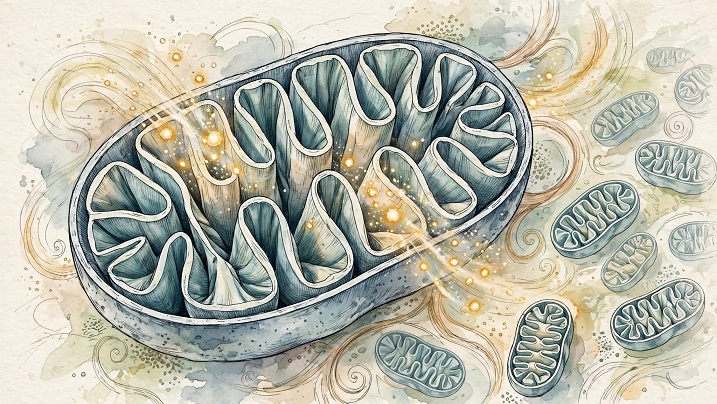
Mitochondria are important because they help cells produce usable energy. Their function depends on coordinated activity across several molecular systems, including components of the electron transport chain.
The researchers’ findings drew attention to genes involved in complexes I and IV, as well as mitochondrial crista formation and mitophagy. These processes contribute to mitochondrial organization, energy production, and the removal of damaged mitochondria.
The study also highlighted genes associated with RNA processing and splicing. RNA processing helps prepare genetic instructions for their use in producing proteins, making it essential for normal cellular function.
Another group of genes was associated with genomic and telomere repair. DNA repair systems help maintain the integrity of genetic material, while telomeres protect chromosome ends.
Taken together, these findings support a broader research hypothesis: long-term cellular maintenance may depend on the coordinated regulation of several biological systems rather than a single longevity gene.
Nevertheless, the researchers did not directly demonstrate that Jonathan has superior mitochondrial performance, more effective RNA processing, or faster DNA repair. The observed genetic and epigenetic patterns identify possible relationships that require further experimental investigation.
What the Findings Could Mean for Human Aging Research
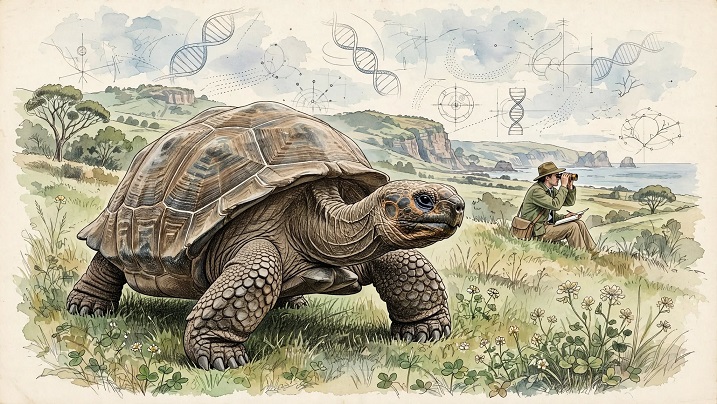
Jonathan’s genome offers researchers a way to investigate how exceptionally long-lived animals may maintain cellular function over extended periods.
The study identifies several biological pathways that could be relevant to future research, including DNA repair, telomere maintenance, mitochondrial processes, and the regulation of gene activity through DNA methylation.
Some of the genes and pathways investigated in the study also have counterparts or related functions in humans. This creates opportunities for scientists to ask whether certain biological principles are shared across species with different lifespans.
However, similarities between tortoise and human genes do not mean that the same genetic variants have the same effects in both species. Differences in physiology, metabolism, development, and evolutionary history can substantially alter how a gene functions within an organism.
The research therefore provides a starting point for identifying potential mechanisms, not a direct route to extending human life.
The findings may help researchers formulate new questions about how cells maintain mitochondrial function, regulate gene expression, and preserve DNA integrity as organisms age. Those questions would need to be tested in additional animals, cells, and appropriate experimental systems before their relevance to human aging could be established.
Why Further Research Is Necessary
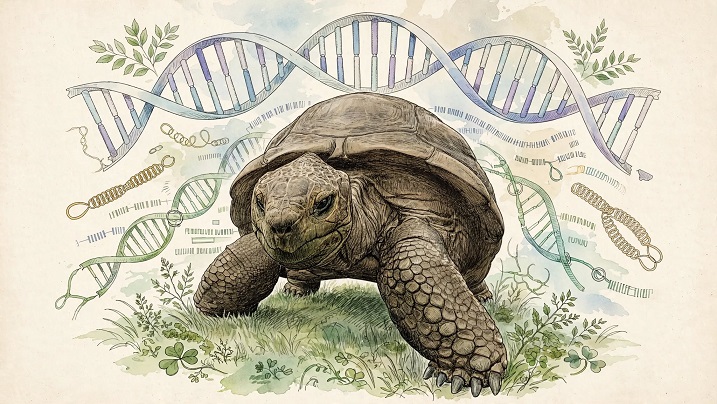
Although the study provides valuable insights, several limitations must be considered.
First, Jonathan is a single exceptionally old individual. His genome cannot establish which genetic features are common to all long-lived Aldabra tortoises or which ones are unique to him.
Second, the methylation analysis included only five tortoises. The age-related patterns identified in this small group require validation in larger samples that include animals of known ages.
Third, genetic and epigenetic associations do not establish causation. The presence of a gene variant or a particular methylation pattern does not prove that it extends lifespan.
The researchers also did not directly demonstrate that the mitochondrial pathways identified in the analysis operate more efficiently in Jonathan. Further functional studies would be needed to determine whether the observed patterns translate into measurable differences in cellular performance.
Finally, the study’s methylation analysis had technical limitations, including incomplete coverage of promoter regions. The researchers could not directly assess every relevant aspect of gene activity, and the findings need to be evaluated alongside additional molecular and physiological evidence.
Future studies involving more giant tortoises, broader genomic comparisons, and direct functional measurements could help establish whether the identified patterns are associated with exceptional longevity and clarify how they work.
For now, Jonathan’s genome offers a rare scientific resource. His remarkable age provides an opportunity to investigate how genetic variation and epigenetic regulation may be connected to long life, while the evidence remains an important starting point rather than a definitive explanation.
Key Points Summary
Jonathan, the Aldabra giant tortoise estimated to be 194 years old, is helping researchers investigate the genetic and epigenetic features associated with extreme longevity.
A 2026 Science Advances study identified 770 genes showing evidence of positive selection and 287 genes carrying unique nonsynonymous variants in Jonathan. His genetic admixture was also unique in an analysis using five genetic clusters.
The researchers found that Jonathan had lower overall DNA methylation than a five-year-old tortoise, while DNA methylation entropy generally increased with age. An analysis identified 272 gene promoters with relatively low methylation entropy in Jonathan and two younger tortoises but higher entropy in two older adults.
These promoters were associated with biological pathways involving mitochondrial organization, RNA processing, chromosome organization, and other processes related to cellular maintenance.
The results provide candidates for further research into aging, but they do not establish why Jonathan has lived so long or demonstrate that the findings can be used to extend human lifespan.
What This Means
Jonathan’s extraordinary age gives scientists a rare opportunity to investigate biological processes that may support long-term cellular maintenance. His genetic and epigenetic patterns point toward several possible areas of interest, particularly DNA repair, mitochondrial organization, RNA processing, and the regulation of gene activity.
The most important conclusion is not that researchers have discovered a single gene responsible for extreme longevity. Instead, the study suggests that multiple biological systems may deserve closer investigation.
Because the research examined one exceptionally old tortoise and a small group of animals for its methylation comparisons, the findings remain preliminary. Additional research is necessary to determine which patterns are reproducible, how they affect cellular function, and whether any of the mechanisms are relevant to human aging.
advertisement
Frequently Asked Questions (FAQ)
1. How old is Jonathan the tortoise?
Jonathan is estimated to be approximately 194 years old. His exact birth date is not known, but historical information indicates that he was brought to St. Helena in 1882.
2. What did scientists discover in Jonathan’s genome?
The researchers identified 770 genes showing evidence of positive selection and 287 genes carrying unique nonsynonymous variants. They also investigated gene-family expansions and variants associated with biological processes relevant to aging.
3. What is DNA methylation entropy?
DNA methylation entropy is a measure of the disorder or variability of DNA methylation patterns. It differs from the overall level of DNA methylation and can provide information about the organization of epigenetic patterns.
4. What did the researchers find about Jonathan’s DNA methylation?
Jonathan had lower overall DNA methylation than the five-year-old juvenile used for comparison. The researchers also found that methylation entropy generally increased with age, while identifying 272 gene promoters that retained relatively low entropy in Jonathan and two younger tortoises but showed higher entropy in two older adults.
5. Which biological pathways were highlighted by the study?
The analysis identified genes associated with mitochondrial organization, electron transport chain complexes I and IV, mitochondrial crista formation, mitophagy, RNA processing, and genomic or telomere repair.
6. Does the study explain exactly why Jonathan has lived so long?
No. The study identifies genetic and epigenetic features that may be relevant to longevity, but it does not establish that these features caused Jonathan’s exceptional lifespan.
7. Can the findings help scientists extend human lifespan?
The research may help scientists develop new questions about aging-related biological processes. However, it does not demonstrate a treatment or intervention that extends human lifespan, and further studies are needed to establish whether the findings have practical relevance to humans.
Sources
- Vaisvil, B. and colleagues. “Epigenetic insights into extreme longevity in the world’s oldest terrestrial animal, Jonathan.” Science Advances, published October 7, 2026. DOI: https://doi.org/10.1126/sciadv.adw8887
- Medical Xpress- Jonathan the tortoise and the research into his longevity.
Thank you !