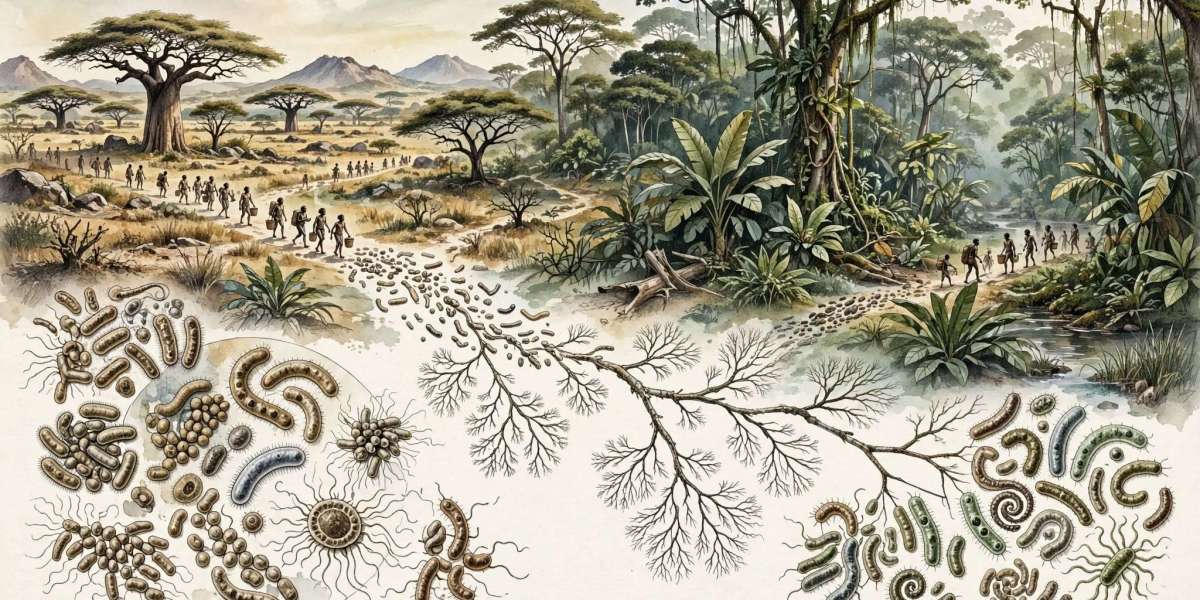

Ancient Human Journeys May Still Be Traced in the Modern Gut Microbiome
Key Points
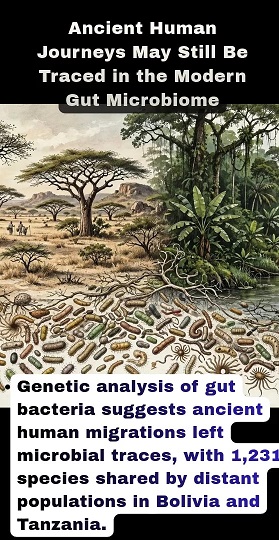
Researchers identified 1,231 microbial species shared by the Tsimane of Bolivia and the Hadza of Tanzania, despite the populations being separated geographically for thousands of years.
About 60.2%, or 848, of those shared species were rare in or absent from industrialized populations.
Genetic analyses of 636 shared microbial species revealed patterns consistent with ancient separation and long-term human-microbe co-migration.
Researchers estimated a median isolation time of about 17,090 years between the Tsimane and Hadza microbial populations.
The study suggests that some microorganisms may have accompanied human populations during ancient migrations, while industrialization may have contributed to the loss or reduction of some long-standing microbial lineages.
The researchers stress that the health consequences of losing these microorganisms remain uncertain.
advertisement
Gut Microbes Preserve Clues to Ancient Human Migration
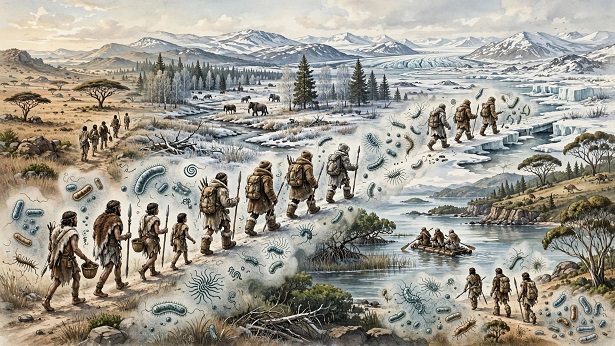
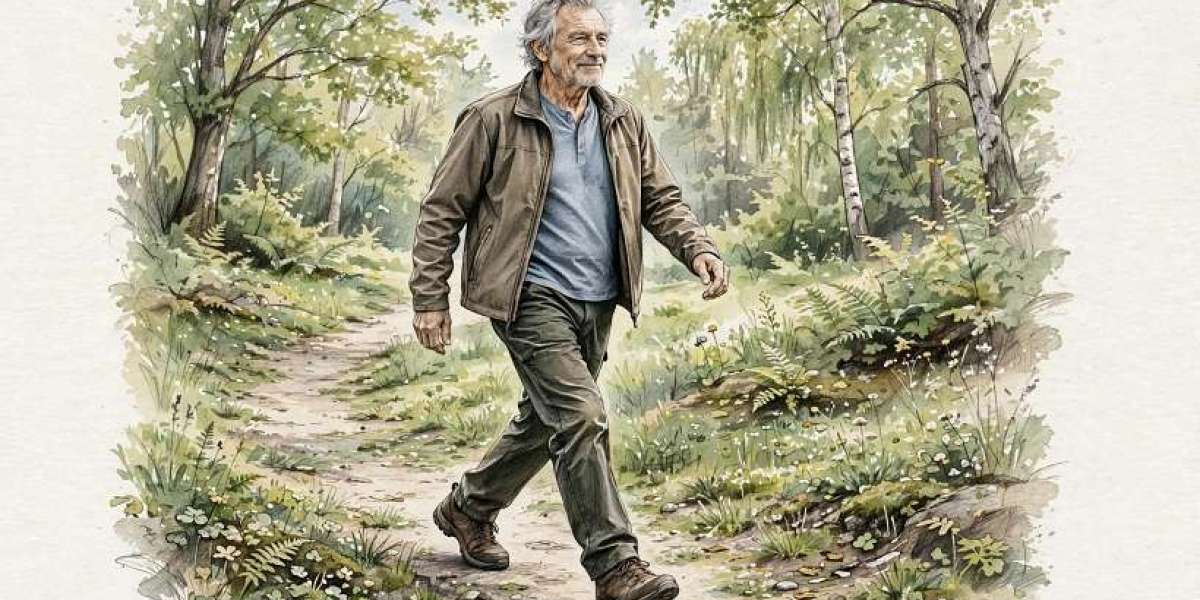
A genetic study of human gut microorganisms suggests that some bacteria living in people today may preserve clues about human migrations that occurred thousands of years ago. Researchers compared gut microbiomes from the Tsimane, an Indigenous population in the Bolivian Amazon, with those of the Hadza, a hunter-gatherer population in Tanzania.
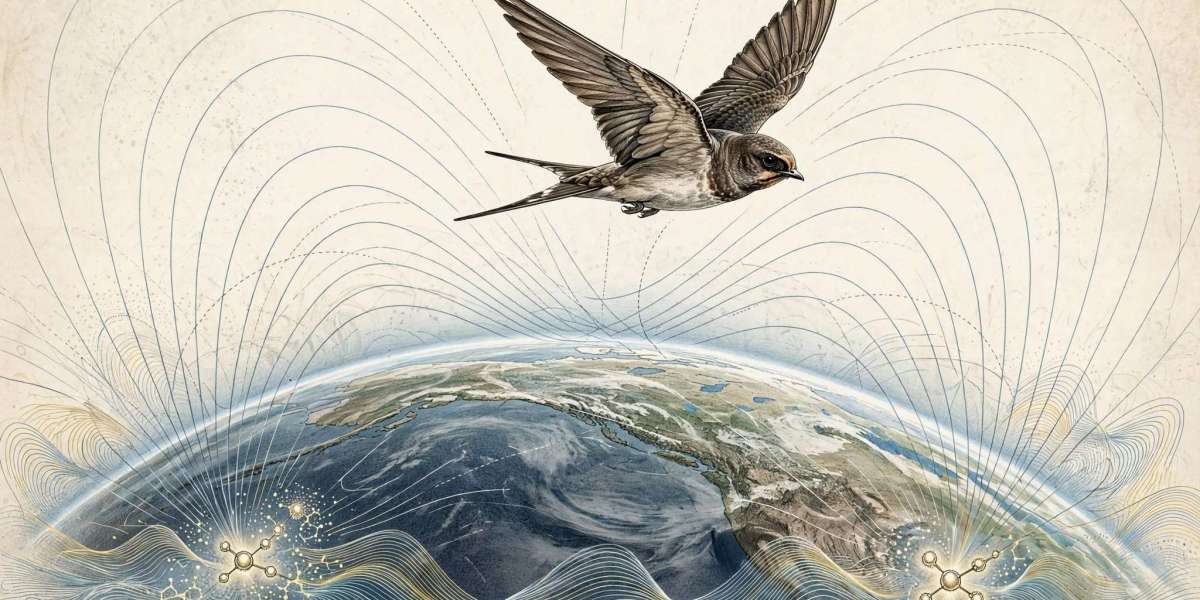
Despite the enormous geographic distance between the two populations, the researchers discovered extensive overlap in their gut microbial communities. The results suggest that some microbial lineages may have accompanied human populations during ancient migrations and remained associated with their descendants after the populations became geographically separated.
The study, published in Nature, does not mean that researchers can directly follow individual bacteria along specific prehistoric migration routes. Instead, they reconstructed microbial evolutionary histories by comparing genomes from contemporary populations. The genetic patterns provide evidence consistent with ancient co-migration between humans and their gut microorganisms.
Thousands of Microbial Species Are Shared
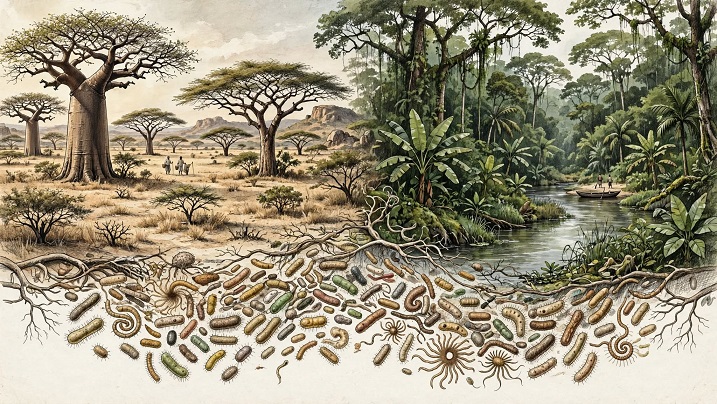
The researchers performed deep metagenomic sequencing of stool samples from the Tsimane and compared the resulting microbial genomes with those from the Hadza. The Tsimane dataset contained 1,408 bacterial and archaeal species, of which 1,231 species, or 87.4%, were also detected in the Hadza.
The overlap is notable because the two populations live in very different environments and have distinct traditional lifestyles and diets. The Hadza traditionally rely heavily on hunting and foraging, while the Tsimane combine horticulture with hunting, fishing and gathering.
The researchers found that many of the microorganisms shared by the two populations were uncommon among industrialized populations. 848 of the 1,231 shared species, or 60.2%, were rare in or absent from industrialized populations examined in the study.
This pattern led the researchers to investigate whether some of these microorganisms might represent remnants of an older human-associated microbial community that has become less common as lifestyles have changed.
Deep Metagenomic Sequencing Reveals Microbial Histories
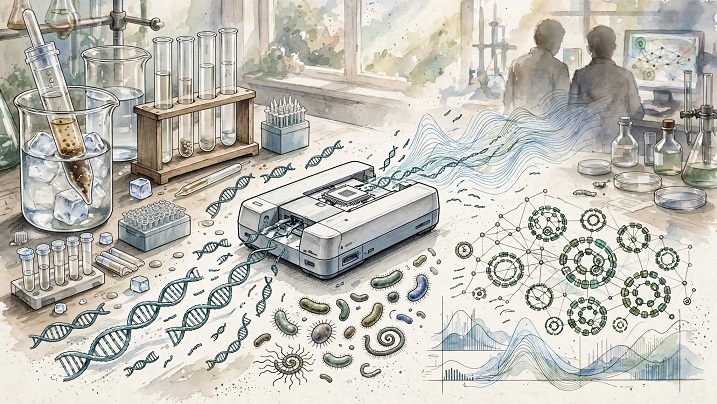
To investigate the evolutionary relationships in greater detail, the researchers used deep metagenomic sequencing, a technique that allows scientists to recover extensive genetic information from the microorganisms present in a biological sample.
The Tsimane analysis included 133 stool samples from 85 adults, collected in 2009 and 2012–2013. From these samples, the researchers recovered 12,746 metagenome-assembled genomes, representing the 1,408 bacterial and archaeal species identified in the Tsimane microbiome.
They compared these data with 32,034 metagenome-assembled genomes from 137 Hadza individuals. The researchers also incorporated an additional 8,855 metagenome-assembled genomes from industrialized populations across Europe, Asia and North America to examine how microbial strains from the Tsimane and Hadza compared with those found in industrialized societies.
This genomic approach allowed the researchers to examine much more than whether the same bacterial species occurred in two populations. They could also investigate genetic differences between microbial populations and determine whether particular strains appeared to have exchanged genetic material more recently.
Genetic Analysis Points to Ancient Separation
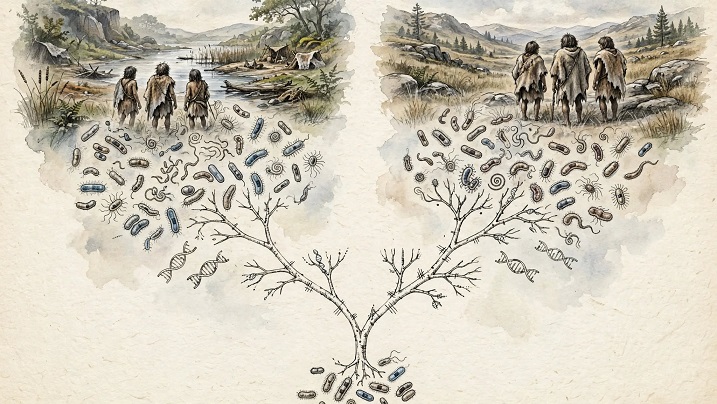
The researchers focused their detailed population-genetic analyses on 636 microbial species shared by the Tsimane and Hadza for which sufficient genomic information was available.
The analysis found that most of these shared species showed little evidence of recent strain sharing between the two populations. 545 of the 636 species, or 85.6%, showed no recent strain sharing under the criteria used by the researchers.
The team then estimated when genetic exchange between the microbial populations declined. Their analysis produced a median estimated isolation time of about 17,090 years, with an estimated standard error of approximately 863 years.
The researchers emphasized that this type of molecular-clock estimate is subject to uncertainty. Microbial genomes can contain mosaic ancestry patterns because bacteria exchange genetic material through recombination, meaning that different sections of a microbial genome can have different evolutionary histories. To account for these patterns, the researchers used an isolation-by-state tract-length model to estimate the timing of microbial population separation.
The estimated isolation period broadly overlaps the period associated with major human migrations, although it should not be interpreted as a precise date for a particular human migration event.
Some Microbes Have More Recent Histories
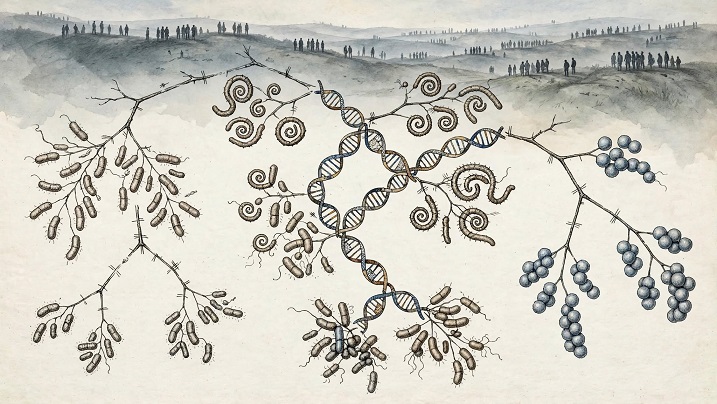
The study does not suggest that every shared microorganism has remained isolated since prehistoric human populations separated.
Several microbial species showed evidence of more recent strain sharing. Among them were Akkermansia muciniphila and Bacteroides ovatus, which displayed higher levels of recent strain sharing between the Tsimane and Hadza.
The researchers also found that these species had closely related strains present in industrialized populations. This pattern suggests that at least some microorganisms have moved between human populations more recently rather than being maintained exclusively through ancient human lineages.
Other shared species showed a different pattern. Agathobacter rectalis and Ruminococcus bromii, for example, were present across populations with different lifestyles but showed relatively limited recent strain transmission between the Tsimane and Hadza.
The findings therefore point to multiple microbial histories rather than a single explanation for how gut bacteria became distributed among human populations.
Industrialization May Have Reduced Ancient Microbial Diversity
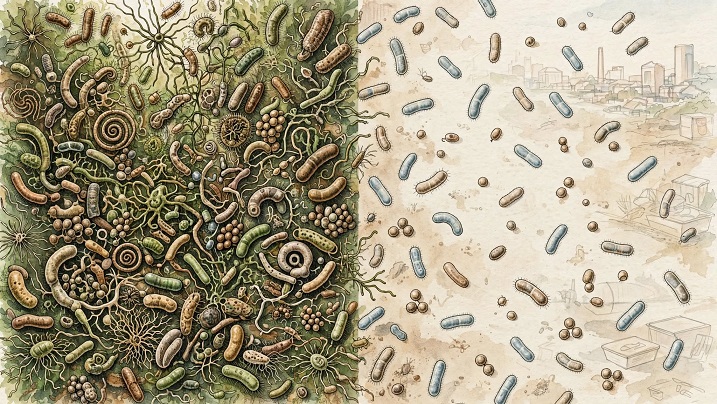
One of the broader findings concerns the microorganisms that appear to be disappearing or becoming less common in industrialized populations.
The researchers use the term VANISH, standing for “Volatile and/or Associated Negatively with Industrialized Societies of Humans,” to describe microbial species that have become less prevalent or disappeared in industrialized populations.
The high proportion of shared Tsimane-Hadza microorganisms that were rare or absent from industrialized populations provides evidence that some microbial lineages found in nonindustrialized populations may have been lost during recent changes in human lifestyles.
The researchers discuss several factors associated with industrialization that can influence gut microbial communities, including antibiotic exposure, highly processed diets that are low in fiber and high in fat and sugar, and highly sanitized living conditions.
However, the study does not establish that any one of these factors directly caused the disappearance of a particular bacterial species. Nor does the presence or absence of a microorganism by itself demonstrate that its loss causes disease.
The Human Microbiome as a Record of Evolution
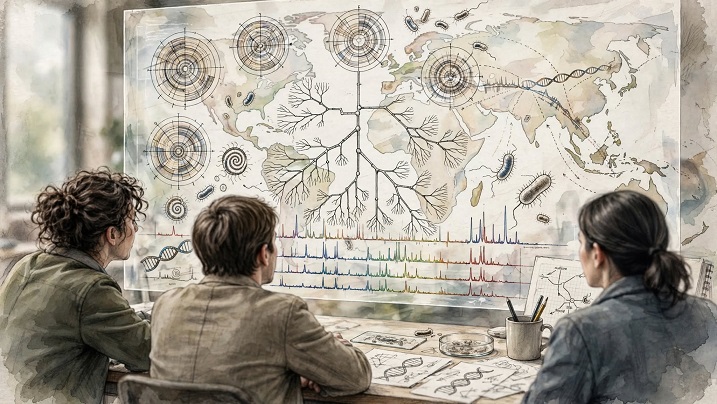
The findings demonstrate how modern microbial genomes can provide another perspective on human evolutionary history.
Unlike many human genetic markers, microorganisms can experience rapid population changes, genetic recombination and horizontal gene transfer. Their genomes therefore contain complex signals that must be interpreted carefully.
By comparing microbial populations from people living in geographically separated regions, researchers can examine whether microorganisms followed similar evolutionary paths to their human hosts.
The Tsimane and Hadza provide a particularly useful comparison because both populations retain relatively diverse gut microbiomes and have experienced less exposure to industrialized lifestyles than many populations represented in large microbiome databases.
The researchers' findings suggest that studying these microbial communities can help reconstruct aspects of the relationship between humans and their microorganisms over long periods of evolutionary history.
What the Findings Do — and Do Not — Tell Us About Health
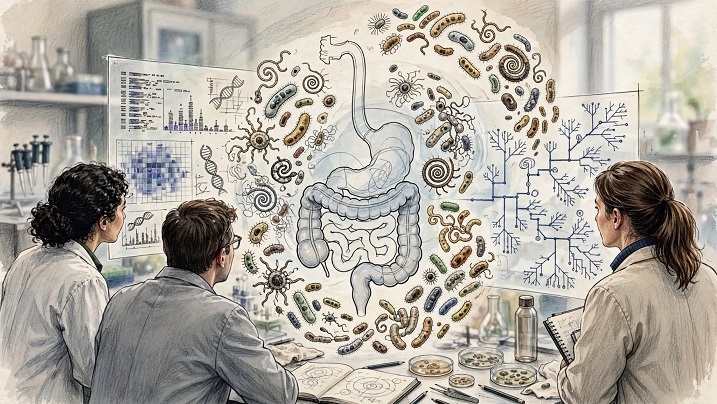
The discovery of ancient microbial lineages raises an important question: does losing microorganisms that accompanied humans for thousands of years affect human health?
The current study does not answer that question. Although some microbial species are rare or absent in industrialized populations, the researchers do not establish that their disappearance causes a particular disease or that restoring them would improve health.
Instead, the results provide a foundation for future research into the biological functions of these microorganisms and the potential consequences of changes in human microbial diversity.
This distinction is important because a microorganism's evolutionary history does not automatically determine whether it is beneficial, harmful or essential to human health.
A Deeper View of Human-Microbe Coevolution
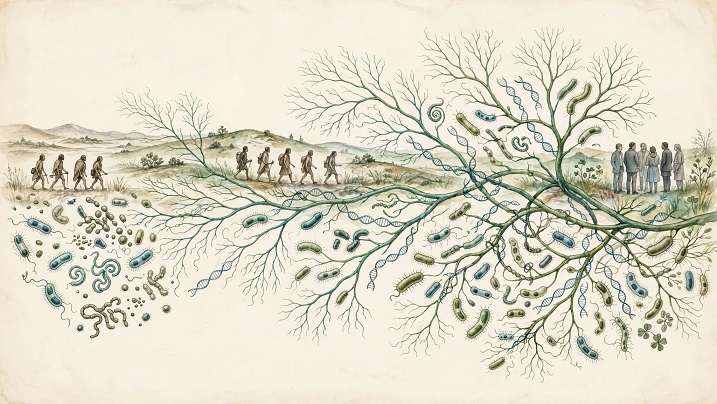
The study ultimately suggests that human migration may have shaped not only the distribution of people around the world but also the distribution of their microbial companions.
Some microorganisms living in contemporary populations may have histories extending back to ancient human movements, while others have been exchanged more recently between populations or have followed independent evolutionary paths.
By combining deep metagenomic sequencing with population-genetic models, the researchers were able to identify these different histories and estimate when some microbial populations became genetically separated.
The work therefore adds a microbial dimension to the study of human evolution. It also highlights how much remains to be learned about the microorganisms that accompanied humans before industrialization transformed diets, medicine and living environments.
Key Points Summary
1,408 bacterial and archaeal species were identified in the Tsimane dataset.
1,231 species, representing 87.4%, were also detected in the Hadza.
848 shared species, or 60.2%, were rare in or absent from the industrialized populations examined.
The researchers analyzed 636 shared species in detailed population-genetic analyses.
545 of those 636 species, or 85.6%, showed no recent strain sharing between the Tsimane and Hadza under the study's criteria.
The estimated median isolation time was approximately 17,090 years.
The researchers used an isolation-by-state tract-length model to account for complex microbial ancestry patterns associated with recombination.
The study also included 8,855 additional metagenome-assembled genomes from industrialized populations in Europe, Asia and North America.
The researchers use VANISH to describe microbial species that are volatile and/or associated negatively with industrialized societies of humans.
The health consequences of losing these microbial lineages remain uncertain.
What This Means
The research provides evidence that some microorganisms living in human guts today may preserve traces of ancient human population history.
The most important implication is not that individual bacteria can be mapped directly onto a specific prehistoric migration route, but that microbial genomes can retain evolutionary signals associated with long-term separation and movement of human populations.
The findings may also help researchers investigate how industrialization has changed the human microbiome. However, the study does not demonstrate that the disappearance of particular bacteria causes disease or that replacing them would necessarily improve health.
Readers should therefore view the findings primarily as evidence about human-microbe evolution and microbial biodiversity, while future research determines whether the microbial changes have measurable consequences for human health.
advertisement
Frequently Asked Questions [FAQ]
What did researchers discover about gut bacteria and human migration?
Researchers found extensive overlap between the gut microbiomes of the Tsimane of Bolivia and the Hadza of Tanzania, including 1,231 shared microbial species. Genetic analyses suggest that some of these microorganisms have evolutionary histories consistent with ancient human-microbe co-migration.
How many microbial species were found in the Tsimane samples?
The researchers identified 1,408 bacterial and archaeal species in the Tsimane dataset.
What percentage of the Tsimane microbial species were also found in the Hadza?
The study found 1,231 shared species, representing 87.4% of the Tsimane microbial species identified in the analysis.
How many shared species were rare or absent in industrialized populations?
The researchers found that 848 of the 1,231 shared species, or 60.2%, were rare in or absent from the industrialized populations examined.
How many microbial species received detailed genetic analysis?
The researchers performed detailed population-genetic analyses on 636 shared microbial species.
What did the genetic analysis reveal?
The analysis found that most of the shared microbial species showed limited evidence of recent strain sharing between the Tsimane and Hadza. 545 of 636 species, or 85.6%, showed no recent strain sharing under the study's criteria.
How old was the estimated microbial separation?
The researchers estimated a median isolation time of about 17,090 years between the Tsimane and Hadza microbial populations.
Why is the 17,090-year estimate not an exact date?
Microbial genomes can contain mosaic ancestry patterns caused by recombination and genetic exchange. The researchers therefore used an isolation-by-state tract-length model to estimate microbial population separation while accounting for these complexities.
What is VANISH?
VANISH stands for “Volatile and/or Associated Negatively with Industrialized Societies of Humans.” The term is used by the researchers to describe microbial species whose prevalence has declined or which have disappeared in association with industrialized populations.
Does the study prove that losing gut bacteria causes disease?
No. The study does not establish that losing any particular microorganism causes a specific disease. The health consequences of microbiome biodiversity loss remain uncertain.
Did all the shared microorganisms originate from ancient human migrations?
No. The study found different evolutionary histories among microbial species. Some showed evidence of more recent strain sharing, while others showed patterns consistent with much older separation.
What populations were included in the industrialized comparison?
The study included 8,855 additional metagenome-assembled genomes from industrialized populations in Europe, Asia and North America, allowing the researchers to compare microbial lineages across different population and lifestyle contexts.
Sources
- Phys.org — “Gut bacteria reveal ancient ties to human migrations across continents, genetic analysis suggests” — October 2026."
- Nature — “Prehistoric global migration of vanishing gut microbes with humans” — Nature, DOI: 10.1038/s41586-026-11106-1."
Additional Verified Sources
None. This article uses only the two sources in main sources section.
Thank you !