
article image source: techxplore.com (Link)
Wireless Energy Networks Could Deliver Light, Heat and Motion Without Batteries
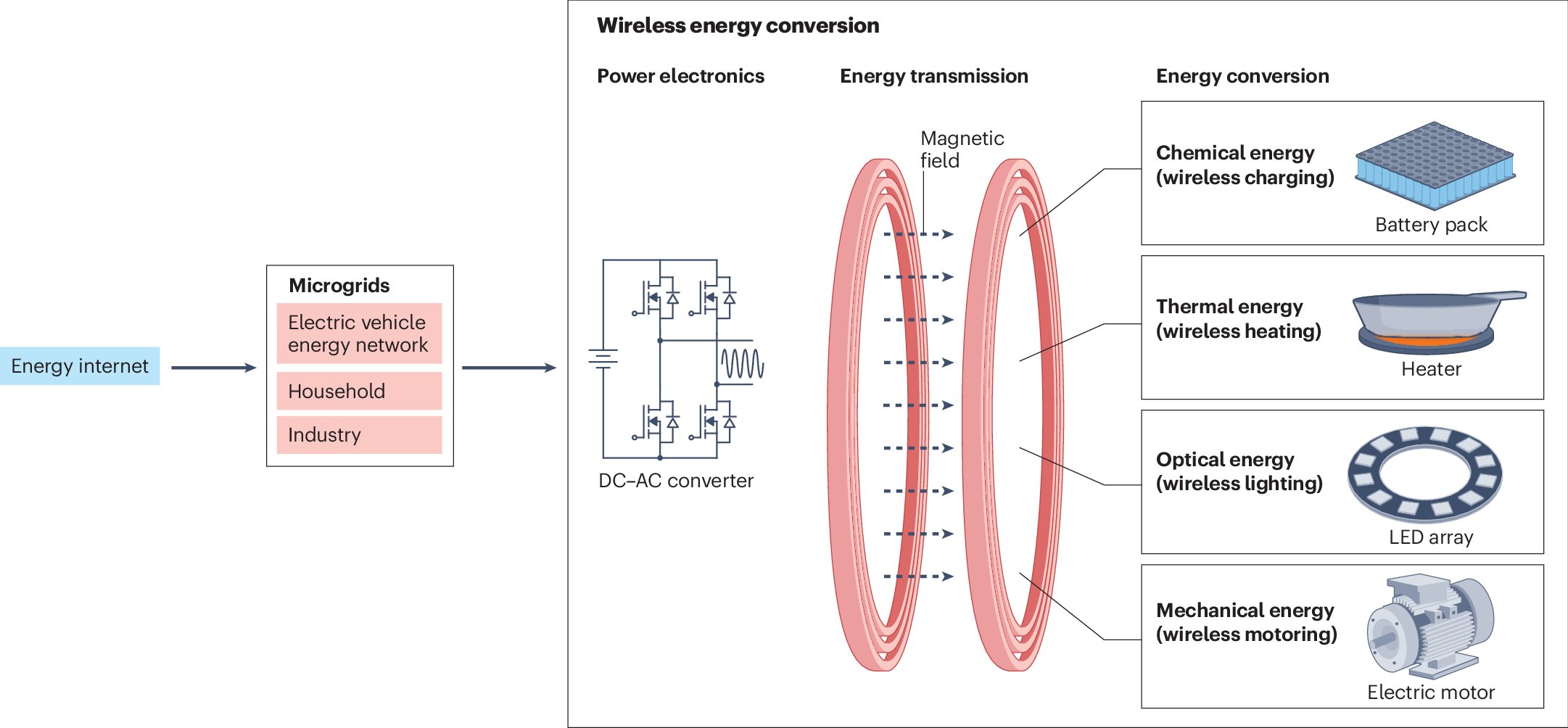
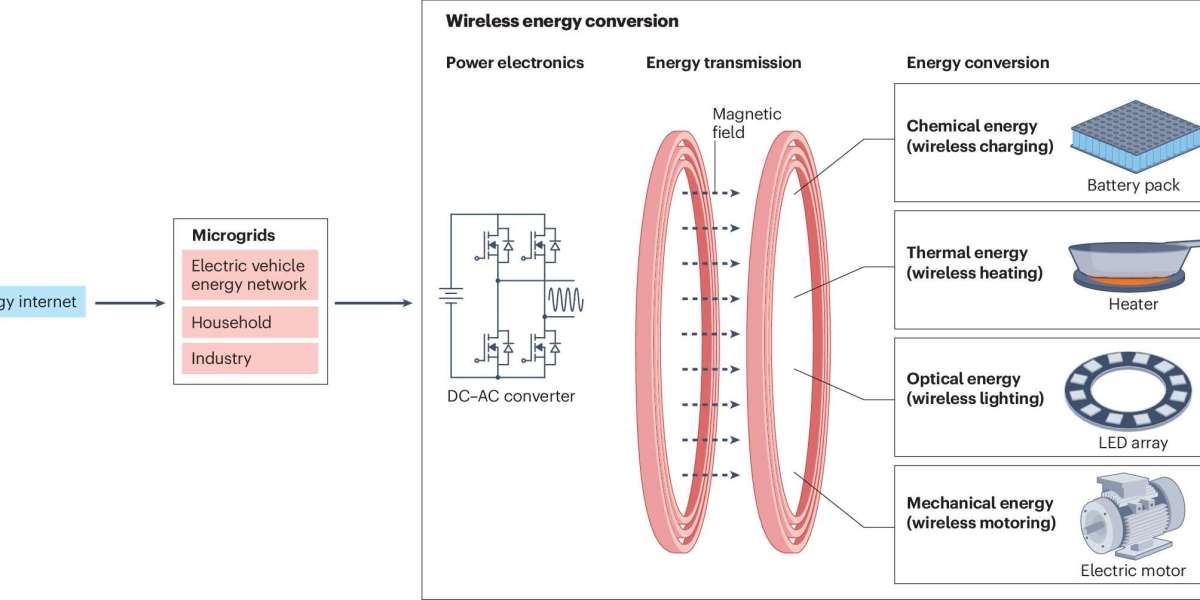
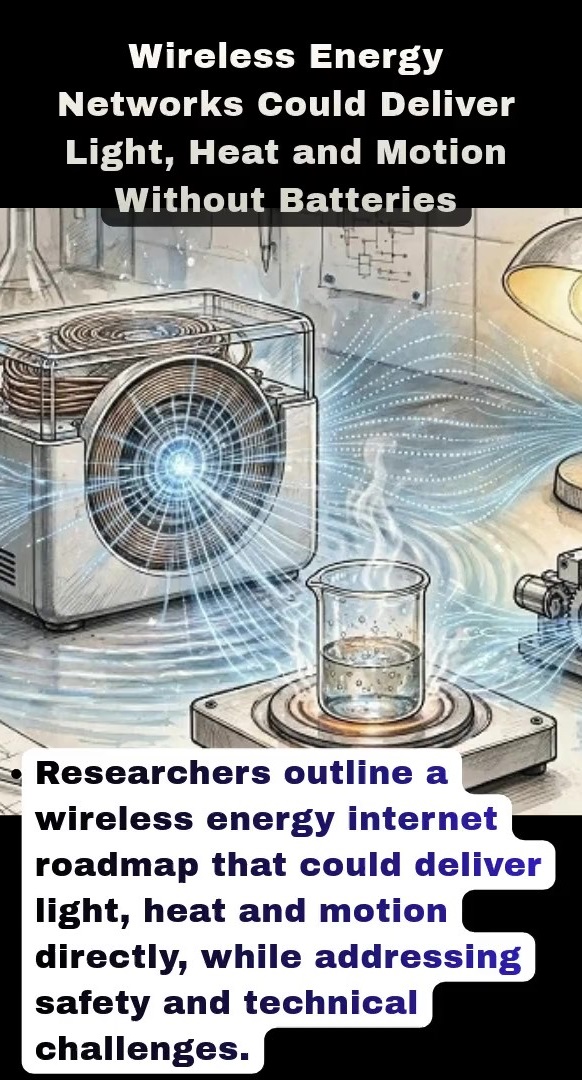
Wireless energy conversion in a wireless energy internet.
Credit: Nature Reviews Electrical Engineering (2026). DOI: 10.1038/s44287-026-00279-6
image source: techxplore.com
Key Points
Researchers at The Hong Kong Polytechnic University (PolyU) have proposed a technical roadmap for a “wireless energy internet” that could transmit energy directly for lighting, heating and mechanical motion without first storing it in batteries.
The approach moves beyond conventional wireless power transfer by converting transmitted electrical energy directly into chemical, optical, thermal or mechanical energy.
The proposed framework combines near-field and far-field wireless transmission and covers applications ranging from charging and lighting to heating, motors, biomedical systems and extreme environments.
Major obstacles include transmission safety, scalability, system complexity, performance limitations, cybersecurity and incomplete standards for broader wireless energy applications.
The researchers envision networks that could recognize what type of energy a device needs and dynamically adjust transmission frequency, field distribution and power level.
advertisement
A Roadmap Beyond Conventional Wireless Charging
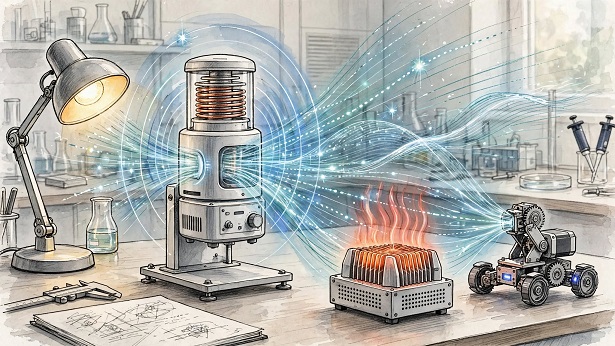
Wireless charging has already become a familiar way to transfer electrical energy without a physical cable. The new research looks further ahead, proposing a broader wireless energy internet in which wireless systems could deliver different forms of usable energy directly to devices.
Researchers at The Hong Kong Polytechnic University have developed a technical roadmap aimed at moving the field from conventional wireless power transfer toward direct wireless energy conversion. The work was published in Nature Reviews Electrical Engineering and examines how wireless systems could deliver energy for applications involving charging, lighting, heating and mechanical motion.
The central idea is to make wireless energy delivery more flexible. Instead of treating electricity as something that must always be transferred to a battery before a device can use it, the proposed approach considers systems capable of converting transmitted electrical energy directly into the form required by the application.
How Direct Wireless Energy Conversion Works
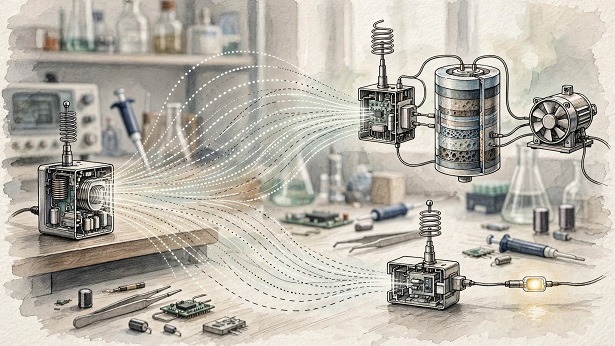
In a conventional wireless power system, electricity is transmitted wirelessly to a receiver, where it may be stored in a battery or supercapacitor before being converted into another useful form. That intermediate storage and conversion can add hardware and introduce additional energy losses.
The researchers describe a different approach: direct wireless energy conversion. In this model, transmitted electrical power can be converted directly into chemical, optical, thermal or mechanical energy. In practical terms, wireless energy could be used directly to produce light for illumination, heat for warming or mechanical force for motion, without first charging an onboard battery.
The study brings these different applications into a unified framework that includes both near-field and far-field transmission. Rather than developing each application in isolation, the researchers identify common design principles and technical directions that could apply across wireless charging, lighting, heating and motoring.
Four Forms of Wireless Energy
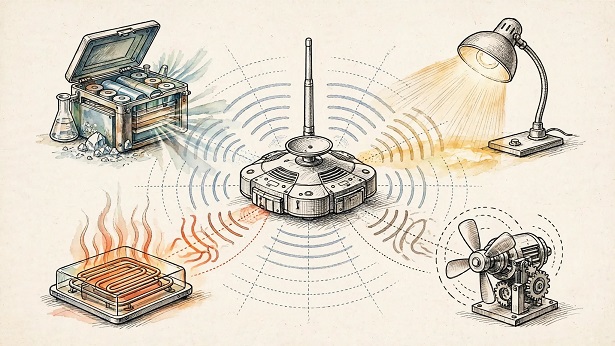
The roadmap divides wireless energy conversion into four broad categories.
The first is chemical energy, corresponding to wireless charging and energy storage. The second is optical energy, which can be used for lighting. The third is thermal energy, intended for heating applications. The fourth is mechanical energy, which can provide the energy needed for motion or motoring.
According to the research, these four categories could cover a wide range of applications in homes, industry and biomedical settings, while also extending to demanding environments such as deep-sea and deep-space exploration.
The concept therefore goes beyond eliminating charging cables. Its broader objective is to create an energy-delivery system in which the type of energy delivered can be matched to the needs of different devices.
Where Battery-Free Energy Delivery Could Help
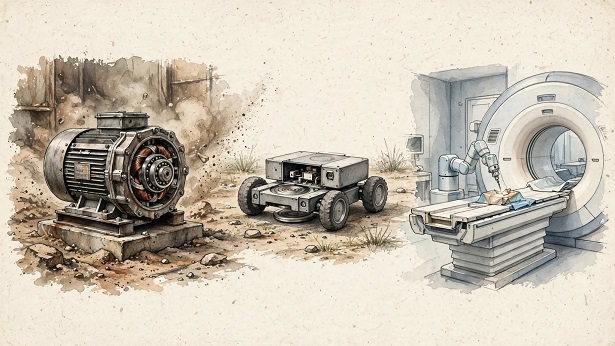
The researchers point to several specialized situations where wireless delivery of energy could be particularly useful.
Wireless lighting, heating and mechanical systems could have advantages in environments where conventional cables, batteries or receiver electronics are difficult to maintain or undesirable. Examples discussed in the research include sealed motors for harsh environments, mobile robots designed with less onboard energy storage, and capacitive ultrasonic motors for robots compatible with magnetic-resonance environments.
Reducing onboard energy storage could also affect the design of vehicles and other mobile systems. The researchers note that wireless energy conversion has the potential to reduce battery-pack sizes or, in some applications, eliminate the need for onboard storage.
The potential safety benefit is also linked to battery chemistry. Batteries can experience problems including cell defects, internal short circuits, overcharging and inadequate thermal management. The researchers argue that reducing the amount of chemical energy stored onboard could reduce some of the risks associated with energy storage.
Commercialization Still Faces Major Obstacles
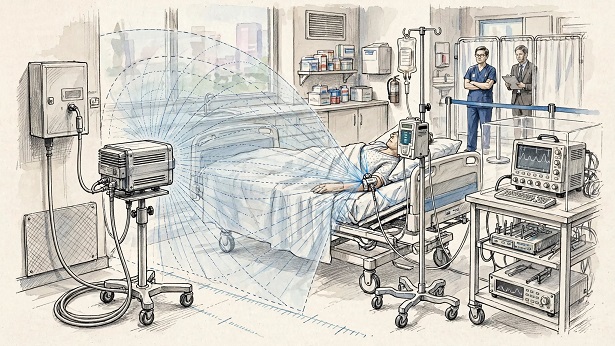
The roadmap does not present a battery-free wireless energy network as a technology ready for universal deployment. Significant engineering and safety challenges remain.
One of the most important issues is the safety of wireless energy transmission itself. The research highlights concerns about prolonged human exposure to electromagnetic fields and possible electromagnetic interference with nearby electronic equipment. These issues become particularly important in places such as public spaces and medical facilities, where wireless energy systems could operate near people and sensitive devices.
The study also identifies system complexity and performance limitations, particularly for high-power wireless charging and wireless motoring, as barriers to wider application.
Standards are another obstacle. Existing standards generally address particular applications rather than providing a comprehensive framework for a wider wireless energy ecosystem. The researchers specifically highlight the need for broader approaches covering safety, emissions and interoperability.
Building a More Adaptive Wireless Energy Network
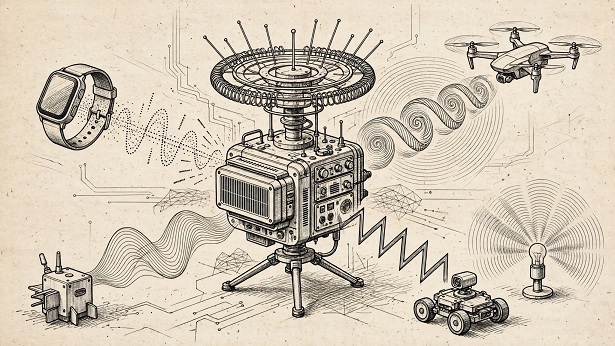
A longer-term vision described by the researchers is a wireless network capable of recognizing what a device actually needs.
Such a system could potentially determine whether a device requires chemical, optical, thermal or mechanical energy and then adjust characteristics such as transmission frequency, field distribution and power level. This would make wireless energy delivery more adaptive instead of relying on one fixed transmission approach.
The roadmap identifies four major engineering challenges: safety, scalability, complexity and performance. It then proposes several development priorities intended to address them.
One priority is the development of standard interfaces through which devices could negotiate power requirements, identify receivers, exchange data, control systems, manage faults and achieve interoperability. Another is stronger energy encryption and physical-layer security for wireless energy systems.
From Earth-Based Devices to Space Systems
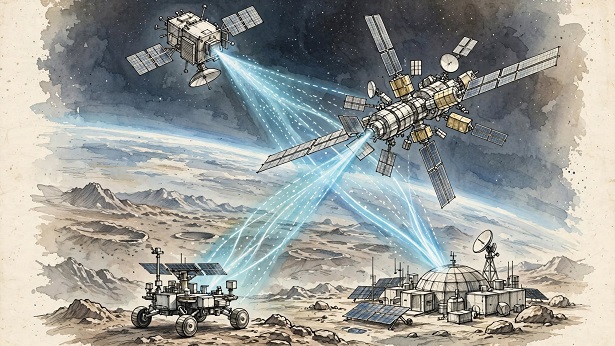
The proposed roadmap also extends beyond conventional consumer electronics.
For aerospace applications, the researchers call for lightweight, sealed and radiation-tolerant components, including couplers, converters and relay transmitters. Such systems could eventually be used to connect satellites, stations, rovers and planetary bases within wireless energy networks.
Another research priority is electromagnetic energy harvesting. The roadmap calls for more sensitive receivers, ultra-low-power rectification and hybrid systems that combine ambient energy harvesting with dedicated wireless power.
These proposals illustrate the researchers' broader view of wireless energy: rather than simply replacing a charging cable, future systems could combine multiple methods of energy transfer and harvesting according to the requirements of the environment and the device.
What Comes Next

The study provides a roadmap rather than a claim that a universal wireless energy internet is already available. Its focus is on identifying common engineering principles, development routes and obstacles that need to be addressed before broader deployment becomes practical.
Researchers led by Chau Kwok Tong and Liu Wei at PolyU highlight areas including primary-side control, multi-frequency compensation networks, secure transmission and field-directed transmission as part of the technical routes toward commercialization. The roadmap also emphasizes the importance of standards, security and application priorities.
The overall direction is therefore toward wireless systems that do more than transfer electricity. The proposed wireless energy internet would allow energy to move without physical connections while potentially being converted directly into the form a device needs—whether that is light, heat, motion or stored chemical energy. Turning that concept into broadly deployable infrastructure, however, will depend on solving the safety, scalability, complexity, performance and standardization challenges identified by the researchers.
Key Points Summary
PolyU researchers have proposed a roadmap for a wireless energy internet.
The concept aims to move from wireless power transfer to direct wireless energy conversion.
Energy could be converted wirelessly into chemical, optical, thermal or mechanical forms.
Potential applications include lighting, heating, motors, robots, biomedical systems and aerospace.
Safety, interoperability, cybersecurity, scalability and performance remain important challenges.
Future networks could potentially adapt energy transmission to the requirements of individual devices.
What This Means
The research suggests that the future of wireless energy may extend well beyond replacing charging cables. If the proposed technologies mature, some devices could receive energy in a form they can use directly, potentially reducing their dependence on onboard batteries or other intermediate storage.
For consumers, the most important development to watch is whether direct wireless energy conversion can move from specialized applications toward practical, standardized systems. For industry and researchers, safety, interoperability, cybersecurity, efficient transmission and scalable system design are among the key issues that will determine how far the concept can progress.
The study does not establish that a universal wireless energy internet is already commercially available. Instead, it provides a technical roadmap for research and development toward that broader goal.
advertisement
Frequently Asked Questions (FAQ)
What is a wireless energy internet?
A wireless energy internet is a proposed network in which energy could be transmitted wirelessly between sources, storage systems and devices, with the energy potentially being converted into the form required by the receiving application.
How is it different from wireless charging?
Traditional wireless power transfer generally delivers electrical energy to a receiver, which can then store it in a battery or supercapacitor. Direct wireless energy conversion aims to convert transmitted energy directly into forms such as light, heat or mechanical motion.
Could devices operate without batteries?
The research identifies applications where wireless energy conversion could reduce onboard energy storage or potentially eliminate the need for it. However, the study presents this as a development direction rather than evidence that all devices can already operate without batteries.
What types of energy does the roadmap identify?
The researchers classify wireless energy conversion into four categories: chemical, optical, thermal and mechanical energy.
Where could the technology be used?
Potential applications discussed in the study include homes, industrial systems, biomedical devices, mobile robots, sealed motors, magnetic-resonance-compatible robots, deep-sea systems and aerospace applications.
What are the biggest challenges?
The roadmap identifies safety, scalability, complexity and performance as four major engineering challenges. Broader safety, emissions and interoperability standards, as well as cybersecurity, are also important issues.
Could wireless energy be used in space?
The research specifically discusses aerospace applications and calls for lightweight, sealed and radiation-tolerant wireless energy components capable of connecting systems such as satellites, stations, rovers and planetary bases.
Sources
Additional Verified Sources
None. This article uses only the two sources provided.
Thank you !