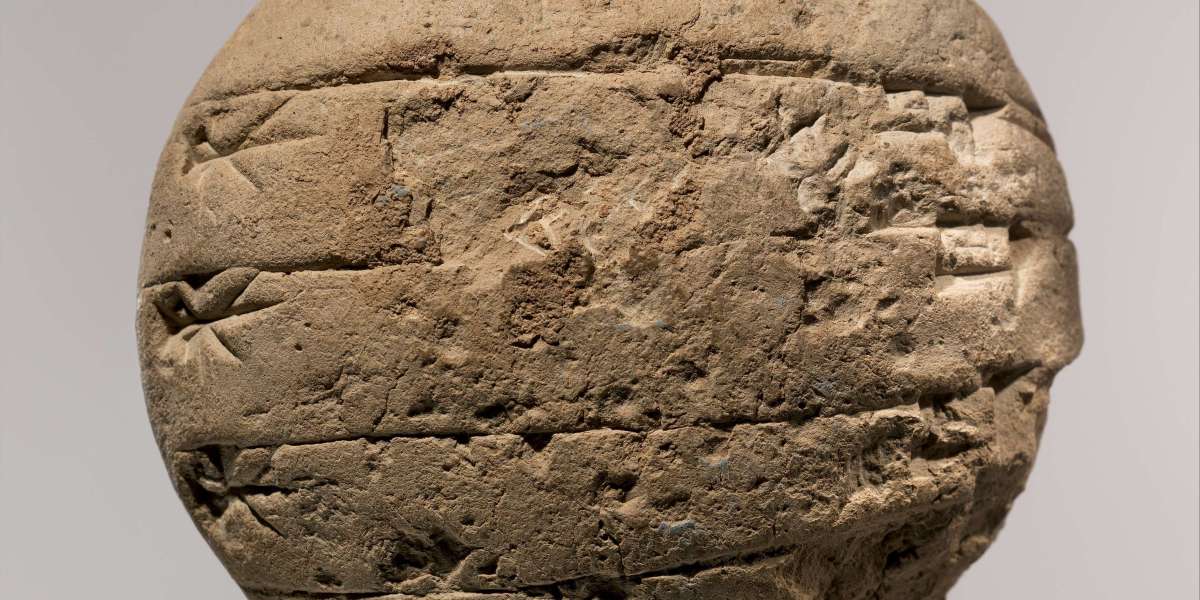

article image source: The Metropolitan Museum of Art (Link)
How Babylonian Students Learned About Gods, Temples and Sacred Traditions
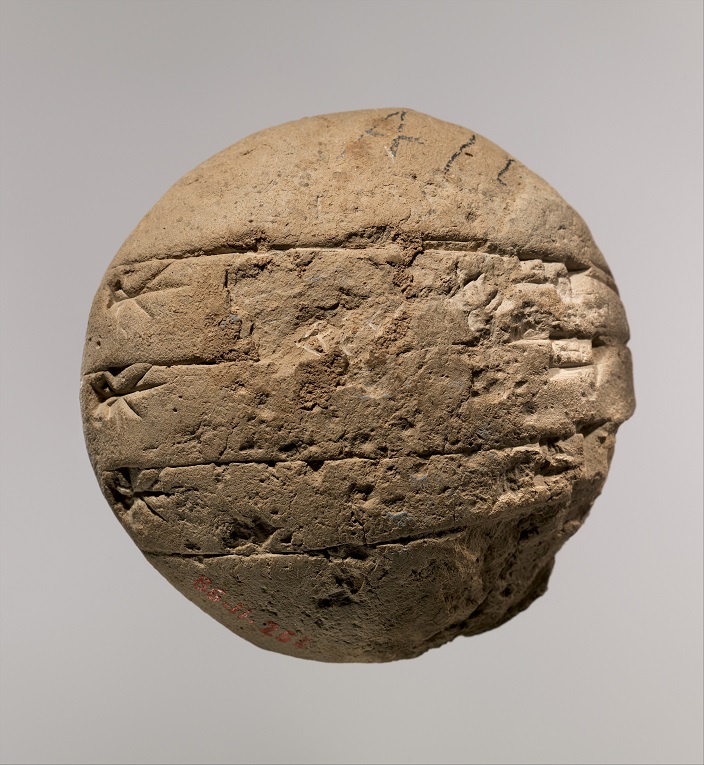
Cuneiform tablet: student exercise tablet.
Image Credit and Source: The Metropolitan Museum of Art
video here-loading
Key Points
A 2026 study by Shana Zaia examines how religious knowledge was incorporated into scribal education in first-millennium BCE Babylonia.
Babylonian students did not study religion as a separate school subject or follow a single sacred book; religious ideas were woven into the wider scribal curriculum.
Students copied god-lists, prayers, hymns, myths and other texts that taught them divine names, characteristics, relationships and religious traditions.
Educational traditions differed between regions: Babylon-centered education emphasized Marduk, while schools at Nippur maintained traditions associated with the god Ninurta.
Some students also prepared clay tablets as votive offerings and took them to temples, linking classroom exercises with practical religious activity.
advertisement
Clay tablets from ancient Babylonia are giving historians a clearer picture of how young scribes learned about gods, temples and religious traditions, showing that religious knowledge was not taught as a separate subject but was woven into the broader education of Babylonian elites.
The findings come from a study by Shana Zaia of Vrije Universiteit Amsterdam, published online by Cambridge University Press on September 24, 2026, in the journal Iraq. The research examines surviving cuneiform school texts from first-millennium BCE Babylonia and considers what students were expected to learn about the divine world alongside writing and other professional skills.
The study focuses particularly on the Neo-Babylonian and Late Babylonian periods, when scribal education operated within societies in which religion, politics, professional life and cultural traditions were closely connected. Zaia argues that although there was no formal subject equivalent to modern “religious education,” students still acquired a substantial body of religious knowledge through the texts selected for their training.
For Babylonian students, learning about the gods could begin with something as basic as learning how to write their names.
Students worked with specialized god-lists, some of which contained hundreds of divine names. The simpler An list was introduced at an earlier stage, while the more complex An = Anum list was taught later. The lists could provide Sumerian and Akkadian forms of divine names and, in some cases, pronunciations, epithets and other information about the gods.
The scale of these lists was considerable. The An list contained more than 200 entries, while the much longer An = Anum list contained almost 2,000 names across seven tablets. Zaia notes that many of the deities included in these lists no longer had active cults by the first millennium BCE.
This suggests that the purpose was not simply to teach students which gods were actively worshipped in their own communities. Instead, the lists helped preserve a large body of inherited knowledge about the divine world. Students learned how names were written and how different gods were related within the traditional pantheon.
Religious education also became more detailed as students progressed.
After elementary exercises involving signs, lexical lists and other basic material, students encountered increasingly complex texts, including prayers, hymns, incantations and literary works. Students who continued into specialized training studied texts connected with their future professions.
These texts provided information about the personalities, powers and roles attributed to individual deities. The gods receiving more extensive treatment included Marduk, Nabû, Ninurta and Šamaš. Prayers and hymns contained descriptions and epithets that helped students understand the characteristics associated with these gods and their relationships with other deities.
One important example was Marduk, the patron god of Babylon. School tablets preserve excerpts from works that emphasized his powers, his position within the pantheon and his relationship with Babylon.
Students also encountered Enūma eliš, the Babylonian creation epic. Numerous student exercise tablets contain excerpts from the work, including material from all seven tablets. The text presents Marduk's rise to divine kingship and his association with Esagil, his major temple in Babylon.
The emphasis on Marduk was not universal across Babylonia, however.
The surviving evidence reveals important regional differences in education. In northern Babylonia, particularly around Babylon and Borsippa, the curriculum was strongly oriented toward Babylon and Marduk. In southern Babylonia, particularly at Nippur, educational traditions placed greater emphasis on the city's own religious heritage and the god Ninurta.
The distinction was not completely rigid. Northern Babylonian schools could sometimes incorporate texts and traditions originating in the south. At Nippur, however, the evidence indicates a stronger effort to maintain a distinctive local identity and avoid the northern Marduk-centered syllabus.
Nippur's curriculum instead emphasized Ninurta-related mythology, including works such as Angim, Anzû and Lugale. The difference provides evidence that Babylonian education was not completely uniform and that local religious identities remained important.
One of the clearest examples of the Babylon-centered curriculum was Tintir, a text describing Babylon through its sacred places, temples, shrines, gates and other religiously significant locations.
Students learned names and epithets associated with the city as well as information about its temples, particularly those connected with Marduk. Rather than functioning simply as a guide to the physical layout of Babylon, the text helped construct an understanding of the city as a major religious center.
The research therefore suggests that students were being taught more than vocabulary and writing skills. Their education helped transmit ideas about which cities were religiously important, which gods held particular positions, how temples functioned and how people were expected to relate to the divine.
That education also extended into the relationship between gods and ordinary people.
Literary works such as Ludlul bēl nēmeqi, sometimes known as the “Tale of the Righteous Sufferer,” presented students with stories about illness, suffering, divine judgment and recovery. The work explores what happens when a person experiences hardship despite believing that he has behaved properly toward the gods.
The text was particularly relevant to students who might later become specialists in āšipūtu, a field associated with exorcism. It contains descriptions of illness and references to the work of specialists, providing students with a literary and religious framework for understanding suffering and its treatment rather than serving as a straightforward medical manual.
Another important work, the Counsels of Wisdom, presented lessons about proper behavior toward gods and other people. Its teaching format is explicitly directed toward a student and combines religious devotion with broader expectations about personal conduct.
The work discusses practices such as prayer, offerings and daily veneration, while also warning against behaviors such as excessive drinking, gossip and mistreating vulnerable people. In this way, religious learning was connected with the moral and social expectations placed on future scribes, administrators and other members of the elite.
The clay tablets themselves provide another important window into this educational system.
Surviving school tablets can often be recognized through their content, handwriting, mistakes, physical characteristics or other evidence. Some contain excerpts from several texts on the same tablet. Together, these surviving exercises allow researchers to reconstruct aspects of the curriculum and see how the material changed as students advanced.
But the evidence has limits. What survives is primarily what was written down. Oral explanations given by teachers are generally lost, meaning modern researchers cannot reconstruct every part of classroom instruction from the tablets alone. Zaia therefore treats the surviving curriculum as evidence of specific learning objectives rather than a complete record of everything students were taught.
Religious learning also moved beyond the classroom.
Some students prepared clay tablets containing their school exercises and dedicated them to particular gods. These tablets could be taken to temples as votive offerings, providing students with practical experience connected with religious life.
The tablets typically combined ordinary school exercises with prayers or requests for divine blessings. Nabû, the patron of scribal arts, was a frequent recipient, and such votive school tablets have been found in temples associated with Babylon, Sippar, Borsippa, Nippur and Uruk. The temple of Nabû ša ḫarê in Babylon, for example, has produced thousands of fragments of such school tablets.
There is no evidence from this material that these temples themselves functioned as conventional schools. Instead, students appear to have visited temples to deposit their prepared offerings. The activity gave them experience with sacred spaces and the practices associated with making offerings.
In some cases, even the process of obtaining the clay was connected with ritual activity. The study discusses evidence that teachers or specialists guided students through procedures for obtaining and consecrating clay, including material collected from special locations. Students could then use the clay to make their tablets, inscribe their exercises and dedicate the finished objects to a deity.
This helps explain why religious education was so closely intertwined with scribal training. Students were preparing for professional lives in which knowledge of writing, administration, ritual, temples and religious traditions could overlap.
The educational system itself was largely aimed at boys and young men from elite or aspirational families, and scribal training generally took place in household-based settings rather than purpose-built academies. Adult professionals served as instructors, often teaching their own sons while also educating boys from other prominent or upwardly mobile families.
Students followed a broadly shared curriculum before moving into more specialized training. Their education served two purposes: preparing them for careers requiring literacy while also transmitting cultural values, social expectations and ideas about their place in society.
The study also shows why this mattered beyond individual students.
Scribes and other educated specialists were responsible for preserving, interpreting and sometimes adapting written traditions. Religious education therefore helped carry ideas about gods, temples and political-religious relationships from one generation to another.
Zaia argues that trained specialists could play an active role in maintaining or modifying religious traditions. Their knowledge gave them the ability to work with inherited texts and practices, meaning education was not simply about memorizing an unchanging body of information. It also equipped specialists to apply traditional knowledge in changing political and religious circumstances.
This becomes particularly visible in the changing political environment of the first millennium BCE. The period included the Neo-Assyrian Empire, the Neo-Babylonian Empire, and later the Achaemenid and Seleucid empires. As political control changed, Babylonian scribal traditions continued to preserve older cultural and religious knowledge.
The continued emphasis on Marduk and Babylon in parts of the curriculum may therefore have helped maintain a shared Babylonian religious and cultural identity even as political circumstances changed. At the same time, the survival of Nippur's distinctive educational traditions demonstrates that local identities remained part of the picture.
The chronological picture also extends slightly beyond the conventional first-millennium BCE framing. The study notes that the latest datable tablet of Tintir dates to 61 BCE, showing that this scribal tradition continued into the first century BCE.
Taken together, the clay tablets show that Babylonian education was not simply an early system for teaching people how to write. For those who entered the formal scribal tradition, education also transmitted a detailed understanding of gods, sacred places, temples, rituals, morality and relationships between humans and the divine.
The tablets cannot reveal every conversation between teachers and students, but they preserve enough of the written curriculum to show how religious knowledge was embedded within everyday intellectual training. Rather than being confined to a separate religious classroom, it was built into the texts students copied, the names they learned, the stories they studied and, in some cases, the offerings they carried into temples.
Key Points Summary
Shana Zaia's 2026 study examines religious learning in first-millennium BCE Babylonia.
Babylonian scribal education had no separate religious subject or single sacred textbook.
Students learned about hundreds of deities through god-lists, hymns, prayers, myths and other literary works.
Babylon and Marduk dominated much northern Babylonian education, while Nippur and Ninurta remained important in southern traditions.
Some students connected classroom work with religious practice by creating votive clay tablets for temple offerings.
Religious education also taught ideas about proper behavior, divine-human relationships and professional responsibilities.
The surviving tablets provide valuable evidence, although oral classroom instruction is largely lost.
The tradition continued beyond the broad first-millennium BCE period, with the latest datable Tintir tablet discussed in the study dating to 61 BCE.
What This Means
The study shows that education in ancient Babylonia served more than a practical writing function. Religious traditions were part of the cultural and professional knowledge expected of many members of the literate elite.
For historians, the surviving tablets provide evidence of how knowledge was transmitted across generations and how local traditions could coexist with broader Babylonian religious ideas.
The evidence also shows that Babylonian education was regionally diverse. Northern schools could draw on a wider range of traditions, while Nippur maintained a more distinctive curriculum centered on its own religious heritage.
The most important point to watch is how continued study of surviving school tablets may further clarify regional differences in Babylonian education, the development of religious traditions and the relationship between scribal learning and professional practice.
advertisement
Frequently Asked Questions [FAQ]
Did Babylonian students have a separate religion class?
No. The research finds no distinct religious or theological subject comparable to a modern school course. Religious material was integrated into different parts of the scribal curriculum.
How did students learn the names of the gods?
Students copied god-lists containing divine names and, in more advanced material, information such as equivalent Sumerian and Akkadian names, pronunciations and characteristics.
How many gods appeared in Babylonian school lists?
The An list had more than 200 entries, while An = Anum contained almost 2,000 names across seven tablets.
Was Babylon the only important religious center in the curriculum?
No. Nippur maintained its own distinctive educational and religious traditions, with a strong emphasis on Ninurta rather than the Marduk-centered material common in northern Babylonia.
What was Marduk's role in education?
Marduk was central to much of the northern Babylonian curriculum. Students studied works emphasizing his powers, his position among the gods and his connection with Babylon and the Esagil temple.
Did students actually visit temples?
Some did. Certain school exercises were prepared as votive tablets and deposited at temples as offerings to deities.
Were Babylonian temples also schools?
The study does not find evidence that the temples containing these votive school tablets were themselves conventional schools. Students could visit them specifically to deposit their tablets and participate in religious activities.
What kinds of careers did educated students enter?
Formal scribal education prepared people for literate professions including scribes, officials and various religious and specialist roles, including exorcism, divination, cultic singing and healing.
Can the tablets tell historians everything students learned?
No. The surviving evidence mainly records written assignments. Oral teaching and explanations have generally not survived, so the written tablets provide only part of the educational picture.
Did Babylonian scribal traditions end at the start of the first century BCE?
No. The study notes that the latest datable Tintir tablet dates to 61 BCE, showing that at least some of these scribal traditions continued into the first century BCE.
Sources
Additional Verified Sources
None. Only the two primary sources were used.
Thank you !