
(The information in this article is strictly for general educational and informational purposes and is not a substitute for professional medical advice, diagnosis, or consultation with a doctor.)
Study Finds Mitochondrial “Energy Switch” May Separate Drug Reward From Natural Pleasure
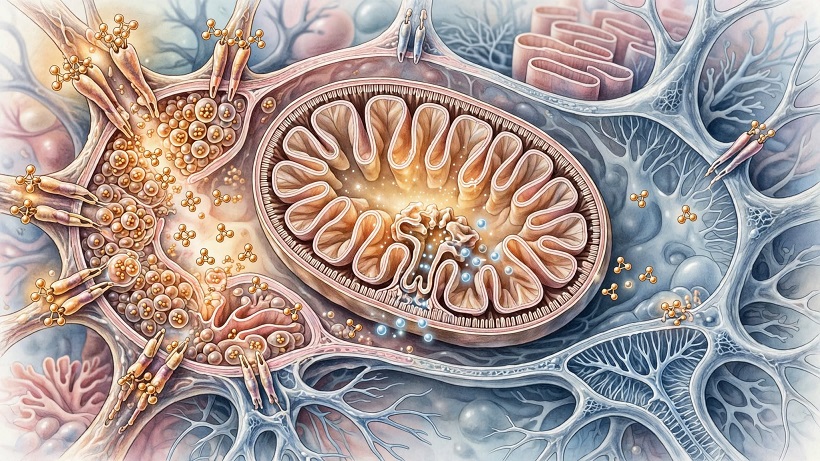
Photo by AI (Credits: saraapp.net)
Key Points
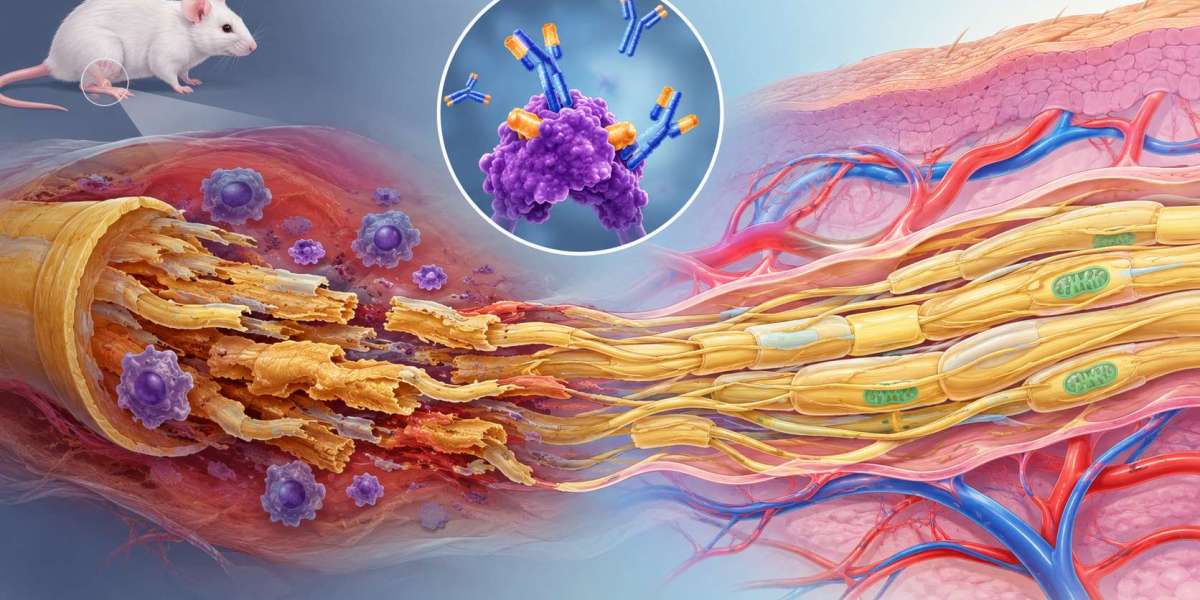
Researchers have identified a cellular energy mechanism that appears to selectively support drug-related dopamine release in mice.
The mechanism involves the mitochondrial calcium uniporter (MCU), a channel involved in calcium movement into mitochondria.
Opioids and methamphetamine activated this mechanism in dopamine-producing nerve terminals, while natural rewards did not produce the same response.
Disrupting MCU reduced drug-induced dopamine release and addiction-related behaviors without producing the same effect on responses to natural rewards.
The findings could point toward a more selective approach to addiction research, although the work has so far been conducted in mouse models.
advertisement
Researchers have identified a cellular mechanism that may help explain how the brain distinguishes the effects of addictive drugs from those of natural rewards.
The study, published in Nature Neuroscience, focuses on mitochondria inside dopamine-producing nerve terminals and a protein channel called the mitochondrial calcium uniporter (MCU).
The researchers found that exposure to opioids and methamphetamine activated MCU-dependent mitochondrial calcium signaling in dopamine-producing nerve terminals. Natural rewards, by contrast, did not trigger the same response.
The findings suggest that this cellular energy mechanism may be particularly important for the unusually strong dopamine signaling associated with addictive drugs, while remaining largely unnecessary for the brain's response to natural rewards.
The research was conducted in mice, with experiments focused on dopamine signaling in the nucleus accumbens, a brain region involved in reward and motivated behavior.
Dopamine is a chemical messenger that plays an important role in motivation, learning and reward. Addictive drugs can produce powerful changes in dopamine signaling, contributing to drug-related reward and behaviors associated with repeated drug exposure.
At the same time, dopamine is also involved in normal responses to natural rewards. That creates a challenge for addiction research: an intervention that broadly suppresses dopamine activity could potentially interfere with normal reward-related functions as well.
The researchers therefore investigated whether the cellular mechanisms supporting drug-induced dopamine signaling could be distinguished from those involved in natural reward.
Their experiments pointed to MCU as a possible difference.
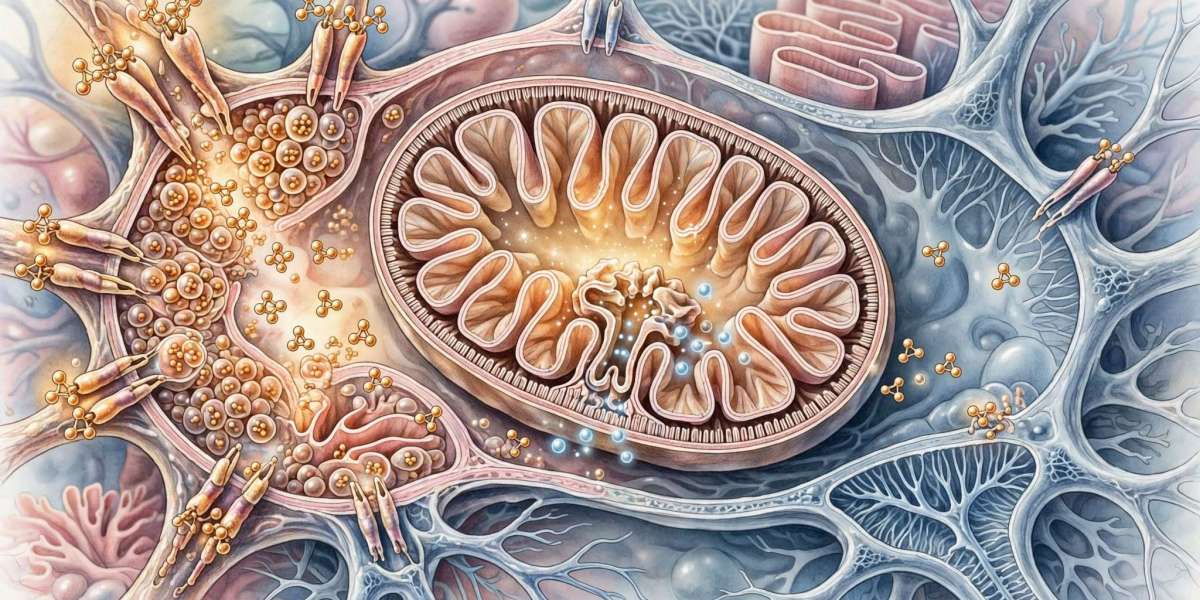
MCU is a channel located in the mitochondrial membrane that allows calcium to enter mitochondria. The researchers found that addictive drugs produced a mitochondrial calcium response in dopamine-producing nerve terminals, whereas natural rewards did not generate the same response.
The distinction was particularly notable because mitochondria are commonly associated with the energy requirements of cells. The study indicates that their activity may also be closely connected to the way dopamine-producing nerve terminals respond to intense stimulation caused by addictive substances.
The researchers used experimental approaches to examine mitochondrial calcium signaling and its relationship with dopamine release.
When MCU function was disrupted in dopamine-producing neurons, the drug-induced dopamine response was reduced.
The behavioral experiments produced a similar pattern. Interfering with MCU reduced drug-related reward and addiction-associated behaviors in the tested mice, while responses to natural rewards were not similarly disrupted.
The findings suggest that MCU-dependent mitochondrial activity may help dopamine-producing nerve terminals sustain the cellular demands associated with drug-induced signaling.
This could be significant because it points toward a mechanism that appears to distinguish between different types of reward-related activity rather than simply turning dopamine signaling on or off.
The study examined the effects of several addictive substances. The researchers reported responses involving opioids, including heroin, morphine and fentanyl, as well as methamphetamine.
The results indicated that these drugs could engage the mitochondrial calcium mechanism in dopamine-producing nerve terminals.
The researchers also investigated whether interfering with MCU could affect behavioral responses associated with drug exposure.
In the mouse experiments, disrupting the mitochondrial pathway reduced drug-related behavioral effects while leaving responses to natural rewards comparatively preserved.
This separation is one of the most important findings of the research.
Addiction treatments that directly interfere with broad reward signaling could potentially affect normal pleasurable experiences as well. A mechanism that is more closely linked to drug-induced dopamine signaling could therefore provide researchers with a different direction for developing future interventions.
However, the current findings do not establish a treatment for addiction.
The research remains at the preclinical animal-study stage, meaning that the results were obtained in mice rather than human patients.
A biological mechanism identified in mice does not automatically operate in exactly the same way in humans. Any potential therapy based on MCU would require additional laboratory research, safety testing and eventually carefully controlled human clinical trials before its effectiveness could be established.
The researchers' findings nevertheless add to understanding of how cellular energy processes interact with the brain's reward circuitry.
The study's senior author, Xin Pan, and colleagues at China's State Key Laboratory of Biomedical Analysis (SKLBA) investigated the role of MCU in dopamine-producing neurons and the effects of disrupting the pathway.
Their work suggests that mitochondria are not simply passive energy suppliers inside neurons. Instead, mitochondrial activity can be closely connected to the way nerve terminals respond to particular forms of stimulation.
The distinction between drug rewards and natural rewards is especially relevant to addiction research.
Natural rewards are essential components of normal behavior, while addictive substances can produce unusually strong reinforcement. Understanding why the brain responds differently to these experiences could help researchers identify biological mechanisms that are more specifically associated with addiction.
In this study, MCU-dependent mitochondrial calcium signaling emerged as one such mechanism.
The researchers found that disrupting MCU affected dopamine responses associated with addictive drugs but did not produce the same disruption in natural reward responses.
That does not mean that MCU is exclusively involved in addiction, nor does it establish that blocking the pathway would be safe or effective in people. Instead, the findings identify a cellular mechanism that warrants further investigation.
The research also highlights the importance of looking beyond dopamine itself when studying addiction.
Rather than focusing only on how much dopamine is released, the researchers examined the cellular machinery that allows dopamine-producing nerve terminals to respond to intense stimulation.
Mitochondria and their calcium-handling mechanisms appear to be part of that process.
The findings could therefore encourage further research into how cellular energy metabolism and dopamine signaling interact during addictive drug exposure.
For now, however, the practical implications remain limited to research.
No evidence from this study shows that an MCU-targeting treatment can prevent or reverse addiction in humans. The work also does not mean that natural pleasure is completely independent of mitochondrial mechanisms.
Instead, the results indicate that, in the mouse models studied, the specific mitochondrial calcium response involving MCU was important for drug-induced dopamine signaling and related behaviors but was not required in the same way for responses to natural rewards.
That distinction could become useful if future studies confirm the mechanism and determine how it operates in the human brain.
The next stage of research will need to establish whether the findings can be reproduced across additional models and eventually in humans, while also determining whether the pathway can be targeted safely without disrupting normal neurological functions.
For now, the study provides a new perspective on the relationship between mitochondrial energy regulation, dopamine signaling and addictive drug responses.
Rather than treating the brain's reward system as one uniform pathway, the research suggests that some of the cellular machinery involved in drug-related reward may be distinguishable from that supporting natural reward.
That possibility could guide future addiction research, but substantial work remains before the discovery could have any clinical application.
Key Points Summary
A study in Nature Neuroscience identified a mitochondrial mechanism linked to drug-induced dopamine signaling.
The mechanism involves the mitochondrial calcium uniporter (MCU).
Opioids and methamphetamine activated MCU-related mitochondrial calcium signaling in dopamine-producing nerve terminals.
Natural rewards did not produce the same mitochondrial response in the experiments.
Disrupting MCU reduced drug-related dopamine responses and addiction-associated behaviors in mice.
The research could help identify new targets for addiction studies, but it has not yet been tested as a human treatment.
What This Means
The findings suggest that some of the cellular machinery involved in drug-induced reward may be distinguishable from mechanisms supporting natural rewards.
For addiction researchers, this could provide a potential direction for investigating treatments that target drug-related signaling more selectively rather than broadly suppressing dopamine activity.
The key limitation is that the evidence comes from mouse models. Whether the same mechanism can be safely targeted in people remains unknown.
Readers should therefore view MCU as a potential research target, not an established addiction treatment.
Future studies will need to determine whether the mechanism is also relevant to human addiction and whether manipulating it can produce beneficial effects without interfering with normal reward-related brain functions.
advertisement
Frequently Asked Questions [FAQ]
What is MCU?
MCU, or the mitochondrial calcium uniporter, is a protein channel that allows calcium to enter mitochondria. The study investigated how this mitochondrial calcium pathway influences dopamine-producing nerve terminals during exposure to addictive drugs.
What did the researchers discover?
They found that opioids and methamphetamine activated MCU-dependent mitochondrial calcium signaling in dopamine-producing nerve terminals, while natural rewards did not produce the same response.
Which brain region was studied?
The research focused on dopamine signaling in the nucleus accumbens, a brain region involved in reward-related processes.
What drugs were examined?
The study examined opioids, including heroin, morphine and fentanyl, as well as methamphetamine.
Did disrupting MCU affect natural rewards?
In the mouse experiments, disrupting MCU reduced drug-related dopamine responses and addiction-associated behaviors without producing the same disruption in responses to natural rewards.
Was this tested in humans?
No. The research was conducted in mice. Additional research would be necessary before determining whether the findings have relevance to human addiction treatment.
Does the study show that MCU can treat addiction?
No. The study identifies MCU as a potential biological target for further research. It does not establish an effective or safe treatment for addiction.
Why is the distinction between drug and natural rewards important?
Dopamine is involved in both drug-related and natural reward processes. A mechanism that can influence drug-related signaling without similarly disrupting natural reward responses could potentially provide researchers with a more selective direction for future addiction research.
Sources
Medical Xpress — “Cellular 'energetic switch' could help separate drug rewards from natural pleasure”
https://medicalxpress.com/news/2026-09-cellular-energetic-drug-rewards-natural.htmlNature Neuroscience — “Mitochondrial calcium influx-driven bioenergetics selectively enable drug addiction”
https://www.nature.com/articles/s41593-026-02421-x
Additional Verified Sources
No additional sources were used. The article relies on the Medical Xpress report and the original Nature Neuroscience research paper supplied by the user.
Disclaimer:
(What is mentioned in this article is strictly for general educational and informational purposes and is not a substitute for professional medical advice, diagnosis, or consulting a doctor.)
Thank you !