
Scientists discover a planet orbiting its red dwarf star backward
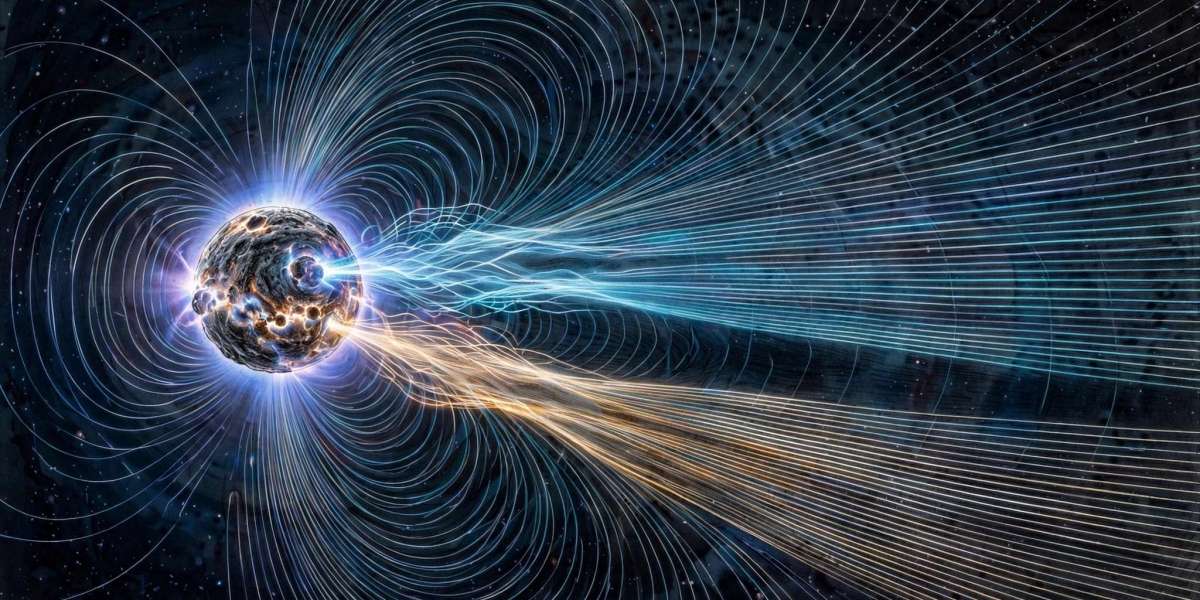
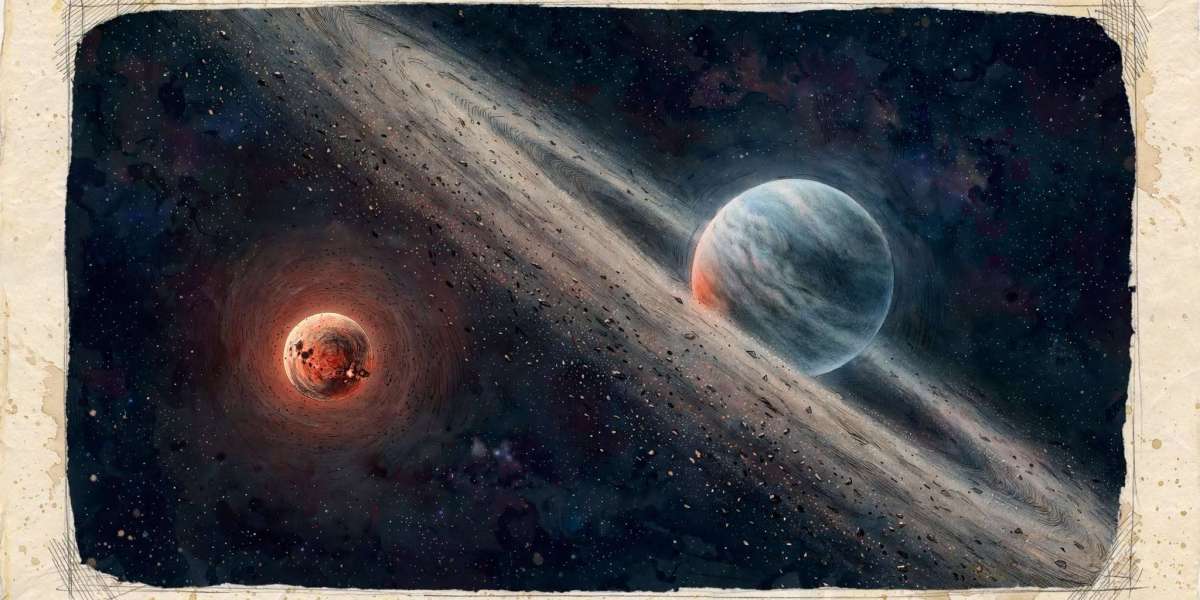
Photo by AI (Credits: saraapp.net)
Key Points
- GJ 3090 b, located about 73 light-years from Earth, is the first known planet on a retrograde orbit discovered around an M-dwarf (red dwarf) star.
- The sub-Neptune has a radius of about 2.18 times Earth's and a mass of about 4.52 times Earth's mass.
- Researchers measured its three-dimensional orbital obliquity at approximately 136 degrees, meaning it travels around its star in the opposite direction to the star's rotation.
- Scientists found no evidence of a massive outer planet or wide stellar companion capable of explaining the planet's extreme orbital configuration.
- The researchers propose that a misaligned, retrograde secondary disk may have played a role in the system's formation, although this remains a hypothesis.
advertisement
Astronomers have identified an unusual planetary system in which a small planet travels around its star in the opposite direction to the star's rotation, offering a new challenge to theories about how planets form and migrate.
The planet, GJ 3090 b, is a sub-Neptune orbiting the M-dwarf star GJ 3090, approximately 73 light-years from Earth. New observations have established that its orbit is not merely tilted relative to the star but is actually retrograde, with a three-dimensional orbital obliquity, or Psi angle, of about 136 degrees.
The finding is particularly significant because the study establishes GJ 3090 b as the first planet on a retrograde orbit discovered around an M-dwarf star. The results were published in Astronomy & Astrophysics in September 2026.
Planetary systems generally begin forming from clouds of gas and dust that collapse under gravity. As material gathers around a young star, it forms a rotating disk from which planets can eventually emerge.
Because the star and the disk originate from the same rotating material, planets are generally expected to orbit in roughly the same direction as their host star. Their orbital planes can be somewhat tilted, but a planet traveling in the opposite direction represents a much more extreme configuration.
That is what makes GJ 3090 b unusual.
The planet was first detected through observations from NASA's Transiting Exoplanet Survey Satellite (TESS) in 2022. TESS identifies potential planets by monitoring stars for tiny, repeated changes in brightness that occur when an orbiting planet passes in front of its star. The planet was subsequently characterized using additional observations.
Current data from the NASA Exoplanet Archive give GJ 3090 b a radius of 2.18 ± 0.06 Earth radii and a mass of 4.52 ± 0.47 Earth masses. It completes an orbit around its star in approximately 2.85 days.
Those measurements place the planet in the sub-Neptune category — worlds larger than Earth but smaller than Neptune.
The host star, GJ 3090, is classified as an M2 dwarf, a type of relatively small and cool star commonly called a red dwarf. NASA's current archive places the star about 22.48 parsecs, or roughly 73.3 light-years, from Earth.
To determine the planet's three-dimensional orbital orientation, the international research team used the Near Infrared Planet Searcher (NIRPS), a high-resolution infrared spectrograph installed on the 3.6-meter telescope at ESO's La Silla Observatory in Chile. The study also used observations from the HARPS instrument.
The researchers analyzed the Rossiter-McLaughlin effect, a spectroscopic phenomenon that can reveal how a planet's orbit is oriented relative to the rotation of its star.
Using the observations, the team derived a three-dimensional orbital obliquity of 136 degrees, with an uncertainty of +24 and -18 degrees. Because the measured angle is greater than 90 degrees, the planet's orbit is retrograde.
Put simply, GJ 3090 b is going around its star in the opposite direction from the star's rotation.
For comparison, the researchers note that Earth's corresponding Psi angle is only a little above 7 degrees. Earth's orbit is therefore relatively close to alignment with the Sun's equatorial plane, even though it is not perfectly aligned.
The discovery raises a difficult question: How did GJ 3090 b acquire such an unusual orbit?
One possibility would be a powerful gravitational interaction with another massive object. A sufficiently large planet, brown dwarf or companion star could potentially disturb a planet's orbit and drive it into a highly inclined or even retrograde configuration.
The observations also place quantitative limits on possible companions. The researchers found no evidence of a companion star within 3 astronomical units (AU) of GJ 3090, and the data exclude a giant planet more massive than Jupiter within 15 AU. These constraints make a nearby massive object an unlikely explanation for GJ 3090 b's extreme retrograde configuration.
The fact that GJ 3090 c does not transit does not necessarily mean that the planets cannot share a common orbital plane. Even if planets formed in the same disk and remained broadly coplanar, the entire planetary system can be oriented away from Earth's line of sight, preventing an outer planet from passing directly in front of its star from our perspective.
Importantly, this does not mean that GJ 3090 is a one-planet system.
The NASA Exoplanet Archive currently lists GJ 3090 b and GJ 3090 c as confirmed planets. GJ 3090 c is a non-transiting planet detected through radial-velocity measurements. It has a minimum mass of approximately 10 Earth masses and an orbital period of about 15.94 days.
Earlier research also identified evidence for another non-transiting planet candidate with an orbital period of about 12.7 days, although that candidate remains subject to further monitoring.
The important distinction is therefore that GJ 3090 contains other planets, but researchers have found no evidence for a massive companion capable of explaining GJ 3090 b's extreme retrograde configuration. The confirmed planets identified so far are much smaller than the kind of massive object that might be expected to produce the required gravitational disturbance.
That makes GJ 3090 particularly interesting compared with other strongly misaligned multiplanetary systems.
According to the research team, only five other known multiplanetary systems contain a planet with a misalignment angle greater than 70 degrees. Unlike GJ 3090, those systems have massive objects that could potentially play a role in producing their unusual configurations.
Without such an obvious gravitational explanation, the researchers are considering whether the unusual configuration could have originated much earlier, during the formation of the planetary system.
One proposed scenario involves secondary disk accretion. Under this hypothesis, GJ 3090 may have acquired a second disk of material that was itself misaligned and rotating in the opposite direction to the star's original disk. Planets could then have formed within or migrated through this secondary structure, preserving an unusual orbital orientation.
The researchers emphasize that this is a proposed explanation rather than a confirmed reconstruction of the system's history. The lack of a massive companion makes such alternative formation scenarios particularly relevant, but additional observations and modeling will be needed to determine how the system actually developed.
The discovery also demonstrates the value of infrared spectroscopy for studying planets around small stars.
GJ 3090 b is relatively small, and measuring the orientation of its orbit requires extremely precise observations. The researchers say the infrared performance of NIRPS made it possible to measure the relationship between the planet's orbital plane and its star's equatorial plane.
That capability could help astronomers investigate more planetary systems around M dwarfs, potentially revealing additional examples of unusual orbital architectures.
For now, GJ 3090 b stands out as the first known retrograde planet discovered around an M-dwarf star. Its approximately 136-degree orbital obliquity, combined with the absence of a known massive companion capable of explaining it, gives astronomers a rare opportunity to examine how planetary systems can develop configurations that differ dramatically from the standard picture of planets forming in a shared rotating disk.
The next challenge is to determine whether the planet's backward orbit is the product of an unusual primordial disk, later orbital migration, or another process that has not yet been identified.
Whatever the final explanation, GJ 3090 b shows that planetary systems around red dwarfs can possess orbital architectures far more complicated than a simple picture of planets moving together around their star.
Key Points Summary
- GJ 3090 b is approximately 73 light-years from Earth.
- It is a sub-Neptune with about 2.18 Earth radii and 4.52 Earth masses.
- The planet completes an orbit every 2.85 days.
- Its measured Psi angle is about 136 degrees, placing it on a retrograde orbit.
- It is the first known retrograde planet discovered around an M-dwarf star.
- The system also contains GJ 3090 c, a confirmed non-transiting planet with a minimum mass of about 10 Earth masses.
- Scientists have found no evidence of a massive companion capable of explaining GJ 3090 b's extreme orbit.
- A misaligned, retrograde secondary disk is one proposed explanation, but it has not been confirmed.
What This Means
The discovery gives astronomers a rare opportunity to study an extreme orbital configuration in a multiplanetary system without a known massive companion.
For planetary scientists, the key question is how a planet can end up orbiting backward when the star and the original planetary-forming disk would normally be expected to rotate in the same general direction.
The main things to watch are future observations of the GJ 3090 system, particularly efforts to characterize its additional planets and search for objects or evidence that could clarify how its unusual architecture developed.
advertisement
Frequently Asked Questions [FAQ]
What is GJ 3090 b?
GJ 3090 b is a confirmed sub-Neptune exoplanet orbiting the M2 dwarf star GJ 3090, about 73 light-years from Earth. It has a radius of approximately 2.18 Earth radii and a mass of about 4.52 Earth masses.
Why is GJ 3090 b unusual?
Its orbit is retrograde relative to its star's rotation. Researchers measured its three-dimensional orbital obliquity at approximately 136 degrees.
What does a 136-degree orbital angle mean?
A Psi angle greater than 90 degrees indicates that the planet's orbital motion is in the opposite direction to the star's rotation. A value of approximately 136 degrees therefore places GJ 3090 b in a retrograde configuration.
Is GJ 3090 b the first planet of its kind?
According to the study, GJ 3090 b is the first planet on a retrograde orbit discovered around an M-dwarf star.
How was its unusual orbit measured?
Researchers used NIRPS, an infrared spectrograph installed on the ESO 3.6-meter telescope at La Silla Observatory, together with observations from HARPS. They analyzed the Rossiter-McLaughlin effect to determine the planet's orbital orientation.
Does GJ 3090 have other planets?
Yes. The NASA Exoplanet Archive currently lists GJ 3090 b and GJ 3090 c as confirmed planets. GJ 3090 c has a minimum mass of about 10 Earth masses and an orbital period of approximately 15.94 days.
Is there a massive planet causing GJ 3090 b's backward orbit?
Researchers found no evidence of a massive outer planet or wide stellar companion capable of explaining the planet's extreme orbital configuration.
Do scientists know exactly how the planet got its retrograde orbit?
No. One proposed explanation is that the star may have accreted a misaligned, retrograde secondary disk from which the planets subsequently formed or through which they migrated. This remains a hypothesis requiring further investigation.
Sources
Additional Verified Sources
Thank you !