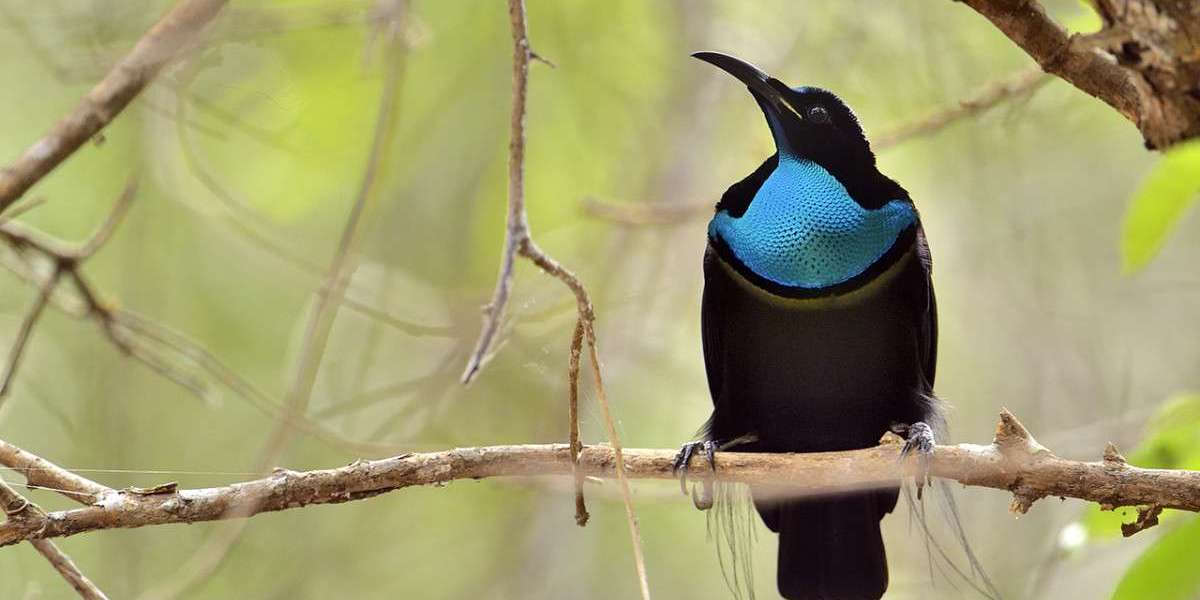

article image copyrights & info: (Magnificent Riflebird) - Paul Maury/Cornell Lab of Ornithology
- source: cornell.edu (Link)
The Darkest Fabric Ever Made: How a Bird of Paradise Rewrote the Rules of Black
The Darkest Fabric Ever Made: How a Bird of Paradise Rewrote the Rules of Black
Introduction
Black is not always simply black. Scientists and designers have long tried to recreate the extreme darkness found in nature—a kind of black that swallows almost every photon of light that hits it. Now, a breakthrough from Cornell University has produced the darkest fabric ever created, a wearable ultrablack textile inspired by an extraordinary bird from New Guinea and Australia: the magnificent riflebird.
Blending biology, materials science, fashion design, and engineering, this innovation—called Ultrablack Wool (UBW)—absorbs 99.87% of visible light, making clothing look as if it contains a void. The technology could reshape fashion, thermal applications, and even future energy systems.
advertisement
The Bird Behind the Breakthrough
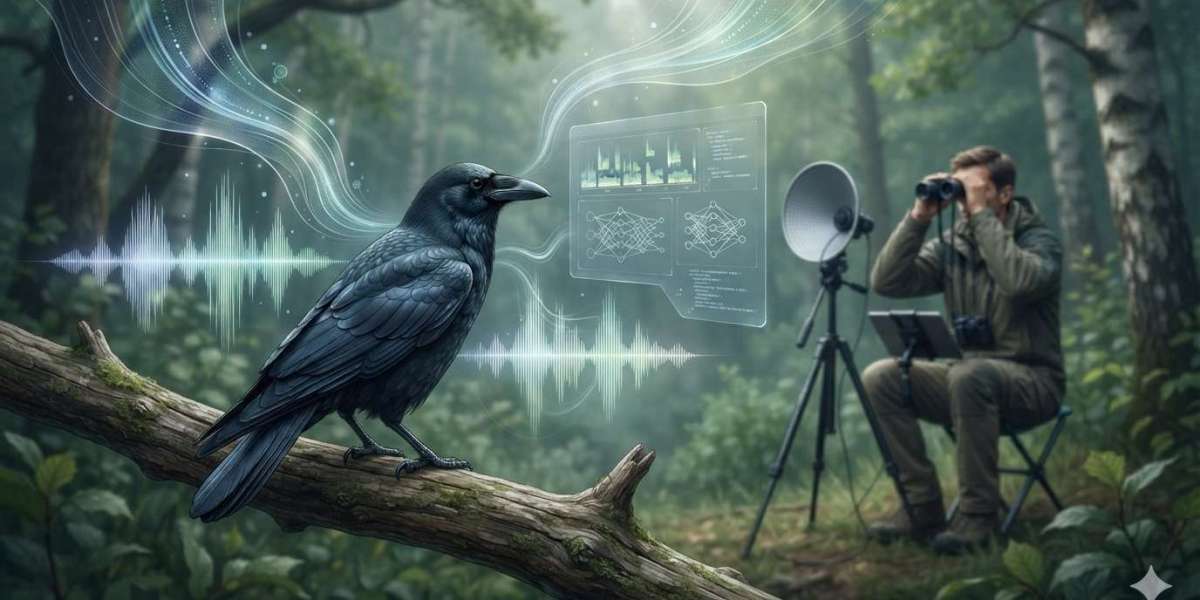
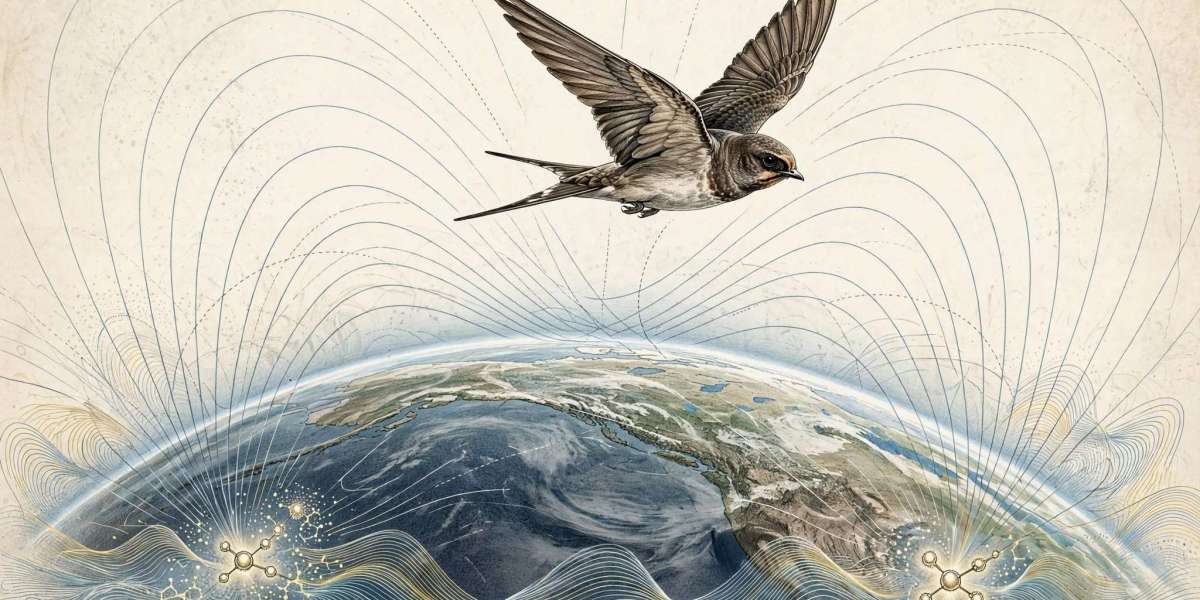
The magnificent riflebird, a member of the bird-of-paradise family, is famous for its near-supernatural plumage. Its black feathers are so dark that they seem to erase the boundaries of its body—an optical illusion enhanced by a metallic blue-green shimmer on its belly and throat.
Researchers collaborated with the Cornell Lab of Ornithology to study these feathers closely. Their extraordinary darkness comes from:
Melanin-rich pigment
Tightly packed hair-like structures called barbules that bend incoming light inward, preventing it from escaping
However, this ultrablack effect only works when viewed straight on. At an angle, the feathers can appear shiny—a detail that motivated the Cornell team to do even better.
Engineering the Darkest Fabric Ever
The new ultrablack textile began as simple white merino wool. Researchers used a two-step process:
1. Polydopamine Dyeing
Polydopamine is a synthetic version of melanin—the same pigment used by the riflebird.
It must penetrate deep into every fiber so the darkness is not just on the surface.
2. Plasma Etching
The wool is placed inside a plasma chamber, where an electrically charged gas etches the fibers. This creates:
Microscopic spiky structures called nanofibrils
A light-trapping labyrinth that causes photons to bounce around rather than reflect away
Together, these processes mimic the riflebird’s natural optical tricks—but with enhanced performance.
How Dark Is “Darkest”?
The fabric records a total reflectance of 0.13%, meaning it absorbs 99.87% of light.
Different sources emphasize this in slightly different ways:
CNN highlights the fabric as the darkest ever created and notes that it resembles “a black hole” according to researchers.
Cornell News frames it as the darkest textile ever reported, stressing the simplicity and scalability of the technique.
Popular Science also confirms the same reflectance rate, calling it “the darkest known fabric ever reported.”
All three sources agree that this textile currently outperforms any previous fabric-based ultrablack material.
Better Than Nature—and Better Than Vantablack (in Some Ways)
Unlike the riflebird’s feathers, which lose their ultrablack quality when viewed from the side, Ultrablack Wool remains intensely dark across a 120-degree viewing span.
When compared with Vantablack, the famous carbon-nanotube coating that absorbs slightly more light (up to 99.97%):
Ultrablack Wool is wearable
Cheaper to manufacture
Made from natural materials
More flexible and breathable
Less complex to produce
However, Vantablack is still superior for certain optical applications because of its micro-carbon structure.
Fashion, Function, and Future Uses
Fashion
Cornell fashion design student Zoe Alvarez created the first dress using UBW—a strapless piece inspired by the riflebird, with ultrablack material paired with a splash of iridescent blue. Remarkably, image tests showed that while every other color shifted under contrast or vibrance adjustments, the ultrablack stayed unchanged.
Thermal Applications
Because the textile absorbs so much light, it also converts it into heat. This could enable:
Thermo-regulating clothing
Camouflage technologies
Solar-thermal applications
Some researchers note that UBW could be useful in solar panels or flexible solar interfaces, though CNN reports that direct replacement of existing coatings faces technical challenges.
Commercial Potential
The team has filed for provisional patents and hopes to build a company around the dyeing technique. The process can be used on wool, silk, cotton, and potentially other natural fibers.
Challenges and Expert Perspectives
While the fabric is groundbreaking, experts mention a few limitations:
Some researchers (CNN source) warn performance may drop after washing.
Plasma etching could be challenging for mass production and scaling.
Despite being more economical than carbon nanotube coatings, further optimization is still needed to reduce cost.
Other experts outside the Cornell team praise the work as a major advancement, highlighting that the approach “democratizes high-performance nanotextures” for both artistic and technical uses.
Conclusion
The invention of Ultrablack Wool represents a rare moment when nature, engineering, and design meet to produce something entirely new. Inspired by a bird whose feathers evolved to demand attention, this fabric achieves a darkness deeper than almost anything previously worn by humans.
Its applications stretch from runways to renewable energy, from thermal camouflage to next-generation materials research. As the technology develops and becomes more accessible, ultrablack textiles may reshape how we perceive color, light, and even fashion itself—proving once again that innovation often begins by looking closely at the natural world.
Sources
CNN: ‘Darkest fabric ever made’ is inspired by a bird of paradise
https://edition.cnn.com/science/darkest-fabric-ultrablack-wool-cornell-spcCornell Chronicle: Bird-of-paradise inspires darkest fabric ever made
https://news.cornell.edu/stories/2025/12/bird-paradise-inspires-darkest-fabric-ever-madePopular Science: The darkest fabric ever made is now a dress
https://www.popsci.com/science/darkest-fabric-ever-made/
Thank you !