
Global Markets Face AI Reality Check as Anthropic Launches Record IPO and Alibaba Shares Slide
Stock Market News | November 19, 2026

Key Points
Anthropic priced its IPO at $83 per share, raising approximately $81.3 billion in what Reuters described as the largest stock-market debut on record.
Asian markets delivered mixed performances, with Japan's Nikkei gaining 0.7%, South Korea's Kospi advancing 1%, and Taiwan's Taiex falling 4.4%.
Alibaba shares lost 16.9% over five trading sessions, according to Yahoo Finance, as investors assessed AI spending, U.S. chip restrictions and declining share repurchases.
Alibaba's June-quarter capital expenditure increased 75% to RMB67.7 billion, while free cash flow recorded an outflow of RMB44.7 billion.
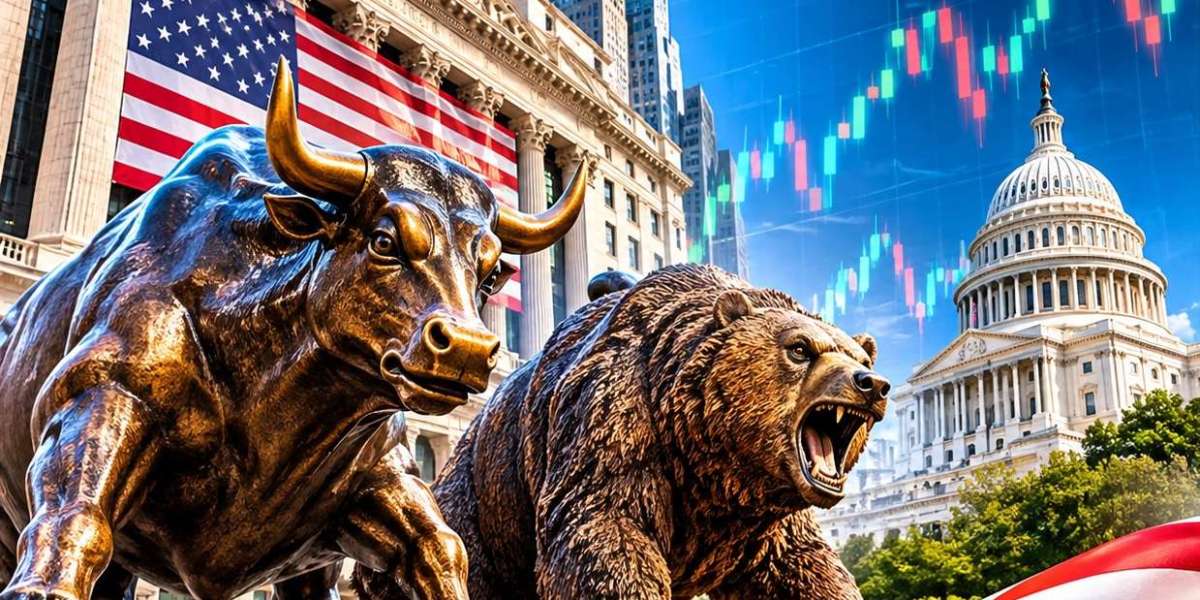
Elevated stock market valuations are raising concerns about a possible correction, while historical evidence highlighted by The Motley Fool supports a long-term investment approach focused on financially strong companies.
advertisement
Anthropic's Record IPO Puts the AI Industry Under Wall Street's Spotlight
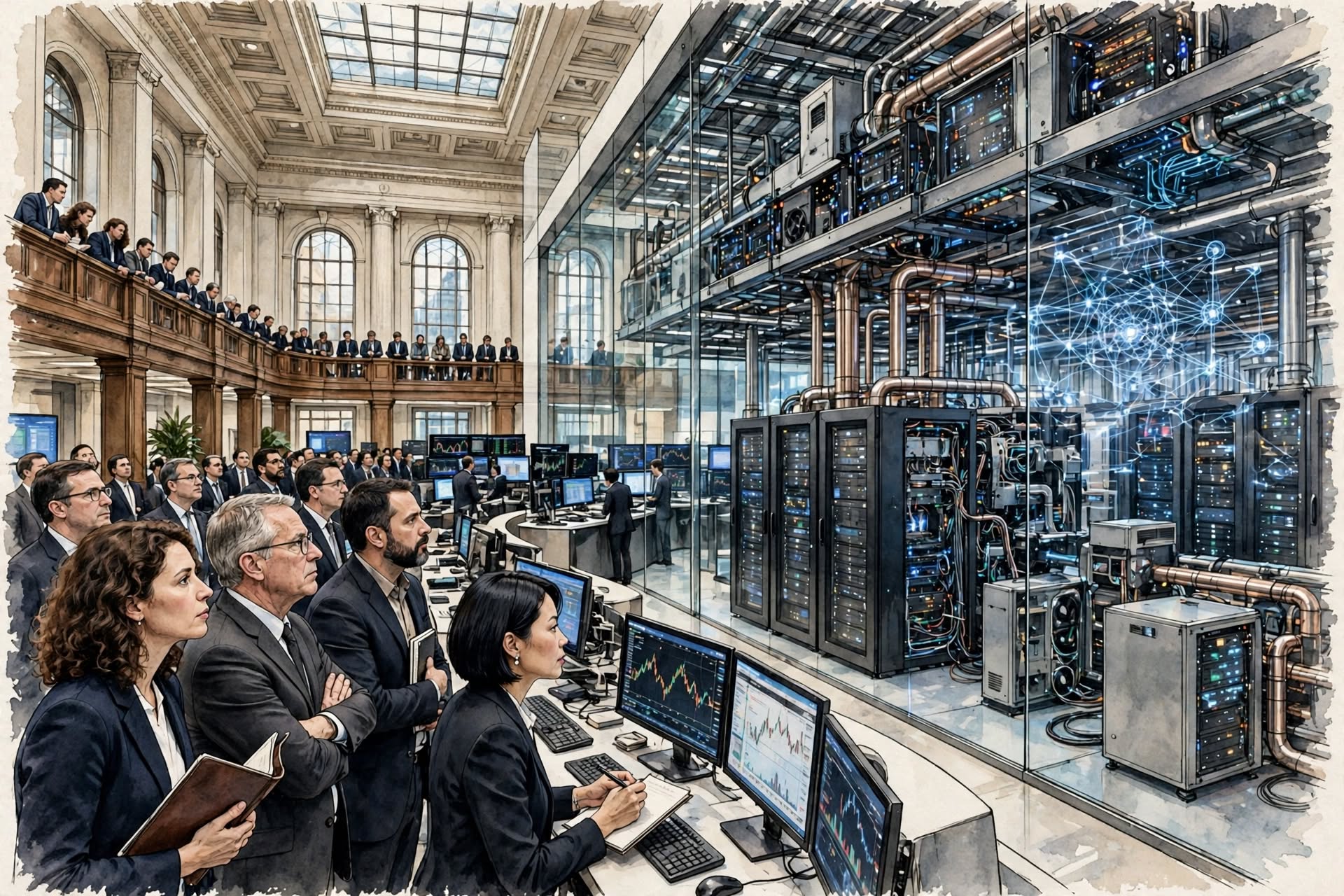
Global financial markets are confronting an important test of confidence in artificial intelligence as Anthropic prepares to begin trading on the Nasdaq on Thursday, November 19, 2026. The company behind the Claude AI assistant priced its initial public offering at $83 per share, above its previously indicated range of $70 to $78. According to Anthropic's official announcement, the offering consists of 980 million shares, including shares sold by the company and existing shareholders. Reuters reported that the IPO raised approximately $81.3 billion, making it the largest stock-market debut on record. The company is expected to trade under the ticker symbol ANT.
The offering is significant because it provides public-market investors with direct exposure to one of the leading developers of advanced AI models. However, the amount raised is only part of the story. Investors are also looking for evidence that the rapid adoption of artificial intelligence can translate into sustainable profitability. Developing and operating advanced AI systems requires substantial investment in computing infrastructure, specialized chips, research and energy. Anthropic's public-market performance could therefore offer an important indication of how investors value the industry's growth prospects and financial risks.
Asian Stock Markets Deliver Mixed Results as Technology Shares Diverge
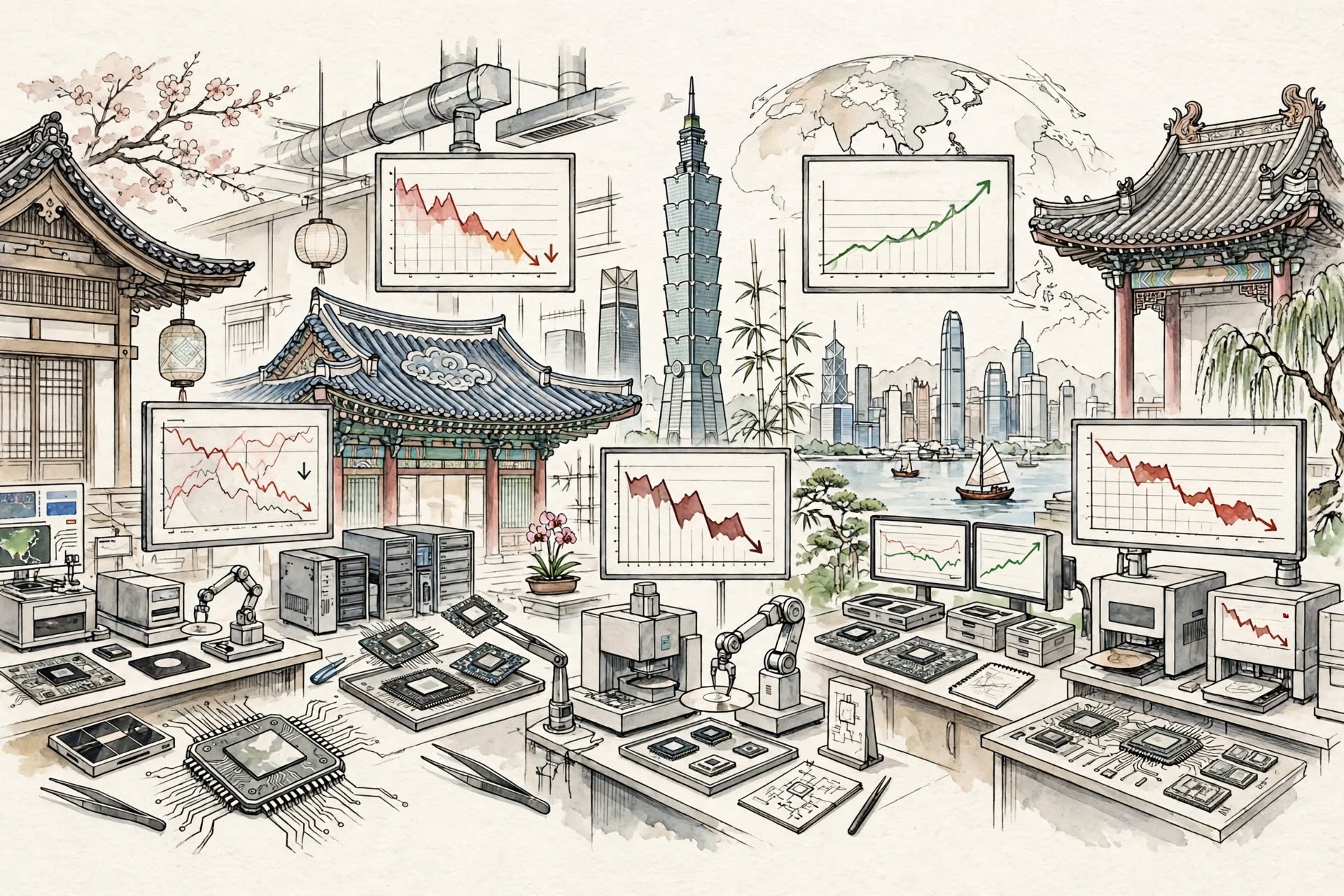
Asian markets recorded sharply different performances on Thursday, according to the updated Associated Press report. Japan's Nikkei 225 gained 0.7% to 59,444.21, while South Korea's Kospi advanced 1% to 5,118.96. Taiwan's Taiex dropped 4.4%, with its leading semiconductor manufacturer, Taiwan Semiconductor Manufacturing Co. (TSMC), falling 3.5%. In Hong Kong, the Hang Seng Index declined 1.9% to 22,851.15, while the Shanghai Composite slipped 0.3% to 3,577.62. Australia's S&P/ASX 200 fell 1% to 8,730.40, whereas India's Sensex climbed 0.6%. These figures reflect the AP market snapshot reported on November 19.
Individual technology stocks also moved in different directions. SoftBank Group gained 4.6%, while semiconductor equipment manufacturer Tokyo Electron advanced 2.8%. Memory-chip producer Kioxia Holdings rose 3.1%. In South Korea, SK Hynix jumped 3.1%, and Samsung Electronics gained 0.5%. The stronger performances in Japan and South Korea contrasted with the substantial declines in Taiwan and Hong Kong. The mixed results highlight how investor sentiment toward the AI industry can vary considerably between companies and markets, even when they are exposed to similar technology trends.
Wall Street Remains Mixed Ahead of Anthropic's Nasdaq Debut
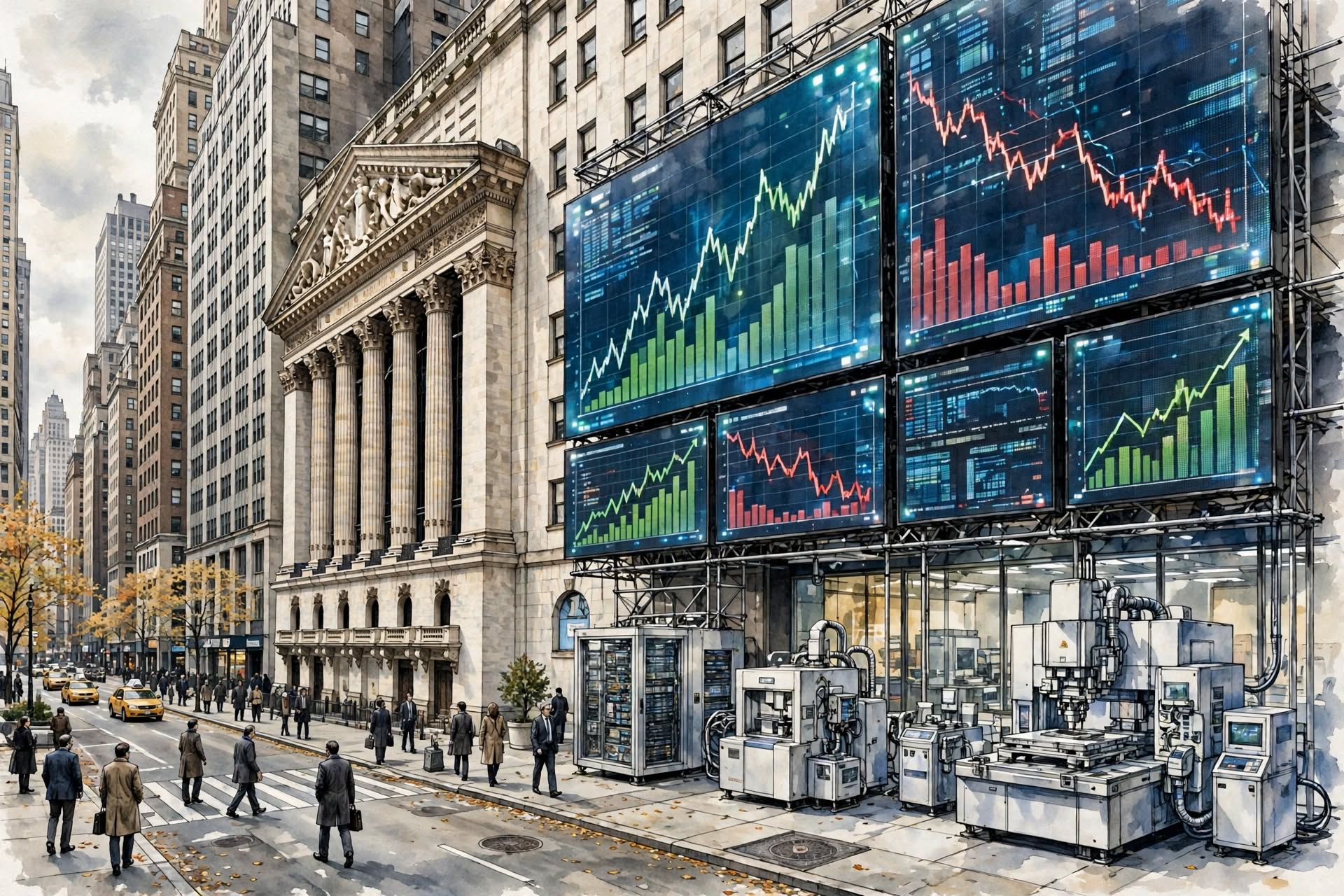
U.S. stocks also recorded contrasting movements during Wednesday's session, November 18. The S&P 500 declined 0.2%, while the Dow Jones Industrial Average dropped 1.1%. In contrast, the technology-heavy Nasdaq Composite advanced 0.4%. U.S. stock futures moved higher ahead of Anthropic's anticipated trading debut, indicating that investors were still watching the IPO as a potential catalyst for technology shares.
Nvidia attracted particular attention after its shares fell 2.9%, despite the company reporting stronger-than-expected quarterly revenue and profit, according to the AP report. The market reaction illustrates an important challenge for highly valued technology companies: strong financial results may not always be enough to satisfy investors when expectations are elevated. Concerns about AI spending, future demand and the possibility of slower growth can influence stock prices even when companies deliver positive earnings results. Anthropic's debut is therefore arriving at a time when investors are increasingly selective about the financial prospects of AI-related businesses.
U.S. Semiconductor Restrictions Create Additional Challenges for China's AI Sector
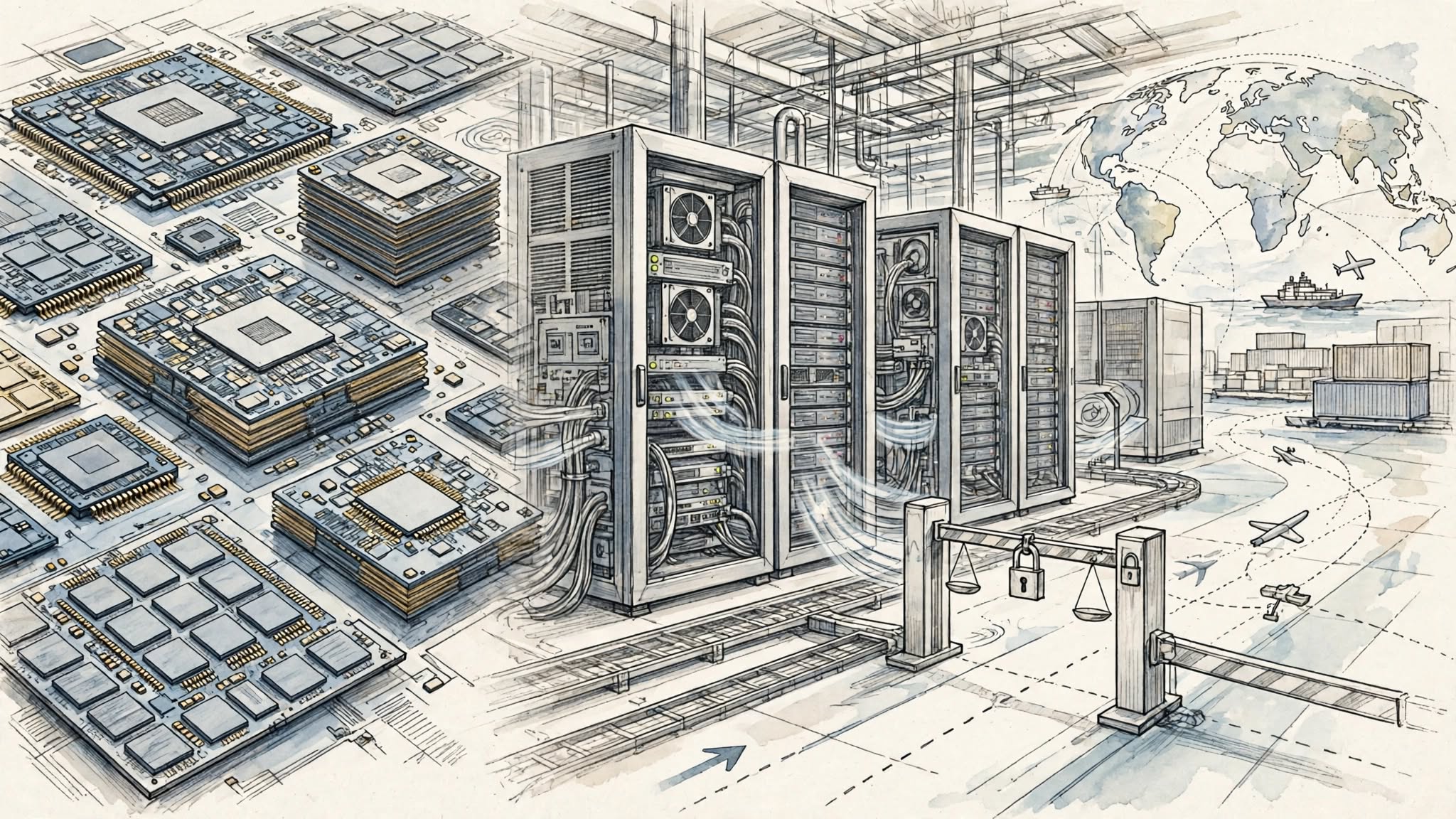
Another development affecting technology investors is a new export-control rule introduced by the U.S. Department of Commerce's Bureau of Industry and Security (BIS). Announced on November 16, 2026, the rule establishes licensing requirements for certain advanced semiconductor exports involving data centers that provide computing services to companies headquartered in countries subject to U.S. restrictions. The framework addresses the possibility of restricted customers accessing advanced computing capabilities through data centers located outside their home countries.
The Yahoo Finance article supplied for this report highlights an exemption for commercial recommender systems, including those used by online retailers. This distinction is important because the restrictions primarily raise concerns about access to advanced computing capacity for AI model training, rather than imposing a blanket prohibition on every commercial technology service. Companies affected by the rule may need to reconsider their computing arrangements, data-center operations and semiconductor supply strategies. The longer-term impact will depend on licensing decisions and how the regulations are implemented.
Alibaba Shares Fall as Investors Reassess AI Spending
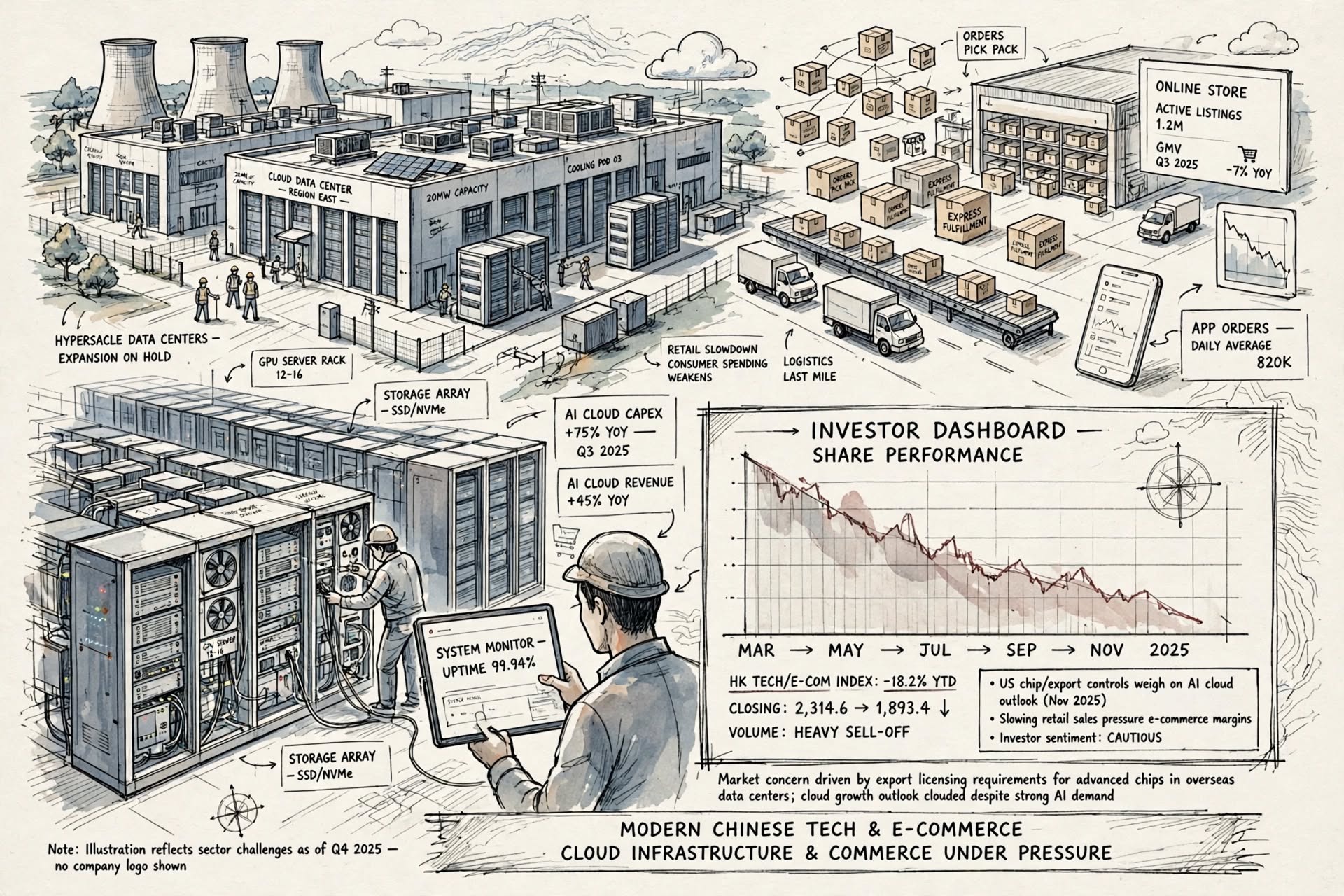
Alibaba Group has become another major focus for investors after a sharp decline in its U.S.-listed shares. According to the November 19 Yahoo Finance article, Alibaba lost 16.9% over five trading sessions, closing Wednesday at $84.37, its lowest closing level since January 2025. The article also reported that the shares had declined approximately 42% during 2026.
Several concerns are contributing to the pressure. Investors are assessing the potential impact of U.S. semiconductor restrictions, the cost of expanding AI and cloud infrastructure, weaker cash flow and a significant reduction in share repurchases. Alibaba's cloud business, however, continues to demonstrate strong growth. Its previously reported June-quarter AI Cloud and Compute Services revenue increased 45% year over year, highlighting the demand for computing and AI-related services even as the company faces substantial investment requirements.
Rising Capital Expenditure Raises Questions About Alibaba's Financial Position

Alibaba's financial results for the quarter ended June 30, 2026 provide important background to the current investor concerns. The company reported capital expenditure of approximately RMB67.7 billion ($10 billion), an increase of 75% from the previous year. Its free cash flow recorded an outflow of RMB44.7 billion, compared with an outflow of RMB18.8 billion a year earlier. Free cash flow measures the cash remaining after operating activities and capital expenditure, making it an important indicator of a company's financial flexibility.
The same quarter saw Alibaba's net income decline 75% to RMB10.4 billion, while the Yahoo Finance report identified an 8% decline in China e-commerce revenue. The company's AI-related businesses also showed different financial results. Its cloud segment generated approximately RMB5.6 billion in adjusted operating profit, while its AI Labs and Applications unit recorded an adjusted operating loss of approximately RMB13.9 billion, according to the supplied report. These figures illustrate the challenge of turning rapid AI expansion into consistent profitability. Importantly, these are June-quarter figures and should not be confused with Alibaba's September-quarter results scheduled for November 19.
Reduced Share Buybacks Add to Alibaba's Stock Market Pressure

Another factor influencing investor sentiment is the decline in Alibaba's share repurchases. According to the supplied Yahoo Finance article, quarterly buybacks reached approximately $5.8 billion in the June 2024 quarter, before falling to just $162 million in the June 2026 quarter. Share repurchases occur when a company uses available funds to purchase its own shares, potentially reducing the number of shares outstanding and returning capital to shareholders.
The report also states that Alibaba's repurchase programme runs through March 2027, with $19.1 billion unused as of September 2025. However, an authorized buyback amount does not mean that a company must spend the entire allocation. Management must balance shareholder returns against other priorities, particularly investments in AI infrastructure, cloud computing and business development. For investors, the reduction in repurchases raises questions about how Alibaba will allocate its capital while attempting to maintain its growth ambitions.
Stock Market Valuations Raise Concerns About a Possible Correction

Concerns about the broader stock market extend beyond individual technology companies. In its November 19 article, The Motley Fool highlighted two indicators that suggest U.S. equity valuations are elevated: the Shiller cyclically adjusted price-to-earnings ratio, commonly known as the CAPE ratio, and the Buffett indicator.
The Shiller CAPE ratio compares stock prices with inflation-adjusted earnings averaged over a longer period. A higher reading can suggest that the market is expensive relative to historical earnings. The Motley Fool reported that the indicator had reached its second-highest level in history, approaching levels associated with earlier market bubbles. The Buffett indicator compares the total value of the U.S. stock market with the country's gross domestic product. The article placed this measure at approximately 227%, indicating elevated valuations relative to the size of the economy.
Neither indicator can accurately predict when a stock market crash will occur. However, elevated valuations can increase the market's vulnerability to disappointing earnings, changing interest-rate expectations or other economic shocks. Investors should therefore distinguish between warning signs of expensive markets and evidence that a major decline is inevitable.
Why Long-Term Investing Remains Important During Market Volatility

The Motley Fool's central investment argument is that choosing financially strong businesses and maintaining a long-term perspective can help investors navigate periods of market uncertainty. Companies with durable competitive advantages, healthy financial positions and sustainable business models may be better equipped to withstand economic downturns than businesses whose valuations depend primarily on optimistic expectations.
The article reports that the S&P 500 generated total returns of nearly 724% between January 2000 and November 2026, despite experiencing several major downturns, including the dot-com crash, the global financial crisis, the COVID-19 market decline and the 2022 bear market. It also cites Crestmont Research analysis showing positive total returns across every rolling 20-year period in its historical series beginning in 1919. These historical observations support the importance of long-term investing, although they do not guarantee future returns. Investors can still experience losses, and holding stocks for longer periods does not eliminate the need to evaluate business fundamentals, valuations and financial risks.
What Investors Should Watch Next

Several developments could influence global markets in the coming sessions. First, investors will closely monitor Anthropic's first trading session under the Nasdaq ticker ANT. Its performance could provide insight into demand for major AI companies, particularly at a time when questions about development costs and future profitability are becoming increasingly important.
Second, Alibaba's September-quarter financial results are a key development. The company announced that it would publish the results on November 19, 2026, before the U.S. market opened. Investors will be interested in updated cloud growth, profitability, capital expenditure and cash-flow figures. The latest results are particularly important because the June-quarter figures discussed above are historical rather than a reflection of Alibaba's newest financial position.
Finally, investors will continue monitoring semiconductor stocks, U.S.-China technology restrictions, corporate earnings and broader market valuations. Oil prices and geopolitical developments also remain relevant to financial-market sentiment. The combination of these factors will help determine whether recent market weakness represents a temporary correction or a more sustained shift in investor expectations.
Oil Prices and Currency Movements Add to the Global Market Picture
Commodity and currency markets also featured in Thursday's developments. Brent crude, the international oil benchmark, rose 0.6% to $92.52 per barrel, while U.S. benchmark crude gained 0.2% to $83.43 per barrel. The recovery in global oil supply helped ease some concerns about shortages, although tensions involving the United States and Iran continued to create risks for energy shipments in the Middle East.
In foreign-exchange trading, the U.S. dollar strengthened to 159.61 Japanese yen, compared with 159.35 yen previously. The euro remained unchanged at $1.0975. These movements provide additional context for investors monitoring inflation, international trade and the potential effects of geopolitical developments on financial markets.
Key Points Summary
Anthropic's $83-per-share IPO represents a major milestone for the AI industry.
Japan's Nikkei gained 0.7%, and South Korea's Kospi advanced 1%, while Taiwan's Taiex declined 4.4%.
TSMC lost 3.5%, contrasting with gains in SoftBank, Tokyo Electron and Kioxia.
Wall Street's major indexes delivered mixed results, with Nvidia falling 2.9%.
U.S. semiconductor export restrictions could complicate access to advanced AI computing infrastructure.
Alibaba shares declined 16.9% over five trading sessions, according to Yahoo Finance.
Alibaba's June-quarter capital expenditure increased 75%, while free cash flow recorded a substantial outflow.
Reduced share repurchases have added another concern for Alibaba investors.
The Shiller CAPE ratio and Buffett indicator suggest elevated U.S. stock valuations.
Historical market returns support long-term investing, but do not guarantee future profits.
What This Means
Why these developments matter
Anthropic's IPO highlights the enormous financial interest in artificial intelligence, while Alibaba's difficulties demonstrate the substantial costs involved in developing and commercializing AI technology. The contrast raises an important question for investors: Can the AI industry convert rapid growth and heavy investment into sustainable profits?
Who may be affected
Investors holding AI and semiconductor stocks.
Shareholders in Alibaba and other Chinese technology companies.
Companies dependent on advanced semiconductor supplies.
Investors exposed to U.S. and Asian stock markets.
Businesses affected by oil prices and international trade conditions.
What readers should watch next
Anthropic's initial Nasdaq trading performance.
Alibaba's September-quarter financial results.
Changes in AI-related revenue and infrastructure spending.
The implementation of U.S. semiconductor restrictions.
Semiconductor earnings and broader stock market valuations.
advertisement
Frequently Asked Questions (FAQ)
1. Why is Anthropic's IPO attracting so much attention?
Anthropic is one of the leading developers of advanced AI models. Its approximately $81.3 billion offering represents the largest stock-market debut on record, making its public listing an important test of investor demand for AI companies.
2. What is Anthropic's stock ticker?
Anthropic is expected to trade on the Nasdaq Global Select Market under the ticker symbol ANT, beginning November 19, 2026.
3. Why did Asian stock markets move in different directions?
Investors reacted to several factors, including AI-sector valuations, semiconductor performance, concerns about technology spending and expectations surrounding Anthropic's IPO. Individual markets and technology companies experienced different trading conditions.
4. Why are Alibaba shares declining?
The Yahoo Finance report identifies several pressures, including U.S. chip restrictions, increased AI infrastructure spending, negative free cash flow and reduced share repurchases.
5. Is Alibaba's cloud business growing?
Yes. Alibaba reported 45% year-over-year growth in AI Cloud and Compute Services revenue during its June 2026 quarter. This is a historical result, not the September-quarter result.
6. What are U.S. semiconductor export restrictions?
They are regulations governing certain exports and remote access to advanced computing chips and infrastructure. The November 2026 rule introduces licensing requirements for specified data-center arrangements involving companies in restricted countries.
7. What does a high Shiller CAPE ratio mean?
It suggests that stock prices are elevated relative to long-term inflation-adjusted earnings. It can indicate expensive valuations but cannot predict the precise timing of a market correction.
8. Does the Buffett indicator predict a stock market crash?
No. It compares total stock market value with GDP and can highlight elevated valuations. It is a valuation measure, not a reliable short-term market-timing tool.
9. Is long-term investing risk-free?
No. Long-term investing can help investors navigate short-term volatility, but stocks can lose value permanently. Researching companies, assessing financial strength and managing investment risks remain essential.
Sources
Primary sources supplied for this article
KSAT / Associated Press – Asian stocks are mixed and US futures climb ahead of Anthropic's blockbuster IPO — cross-checked against the updated AP version.
Yahoo Finance – Why Is Alibaba Stock Crashing Before Earnings? — originally published by BeInCrypto.
Additional Verified Sources
Associated Press – Updated Asian markets report — Corrected Asian index, technology stock, oil and currency figures.
Anthropic – Official IPO pricing announcement, November 18, 2026 — IPO price, number of shares and Nasdaq ticker.
Reuters – Anthropic raises record $81 billion in IPO at $1.5 trillion valuation — IPO proceeds and market context.
U.S. Federal Register – Addressing Remote Access to Advanced Semiconductors — U.S. export-control rule.
Alibaba Group – June Quarter 2026 Results — Official historical financial figures, dated August 20, 2026.
Alibaba Group – September Quarter 2026 Earnings Announcement Schedule — Official confirmation of the November 19 reporting schedule.
Source qualification: Alibaba's June-quarter financial report is retained only to substantiate historical figures. The September-quarter earnings announcement has not been incorporated because its actual financial results have not been independently verified in this research.
Disclaimer:
This material may contain third-party opinions, none of the data and information on this webpage constitutes investment advice
The content shared in economics articles is solely for research and informational purposes.
We are not a financial advisory service, and the information provided should not be considered investment or trading advice.
Market quotations and forecasts are attributed to the supplied reports; figures that differ between reports have not been silently reconciled.
Thank you !