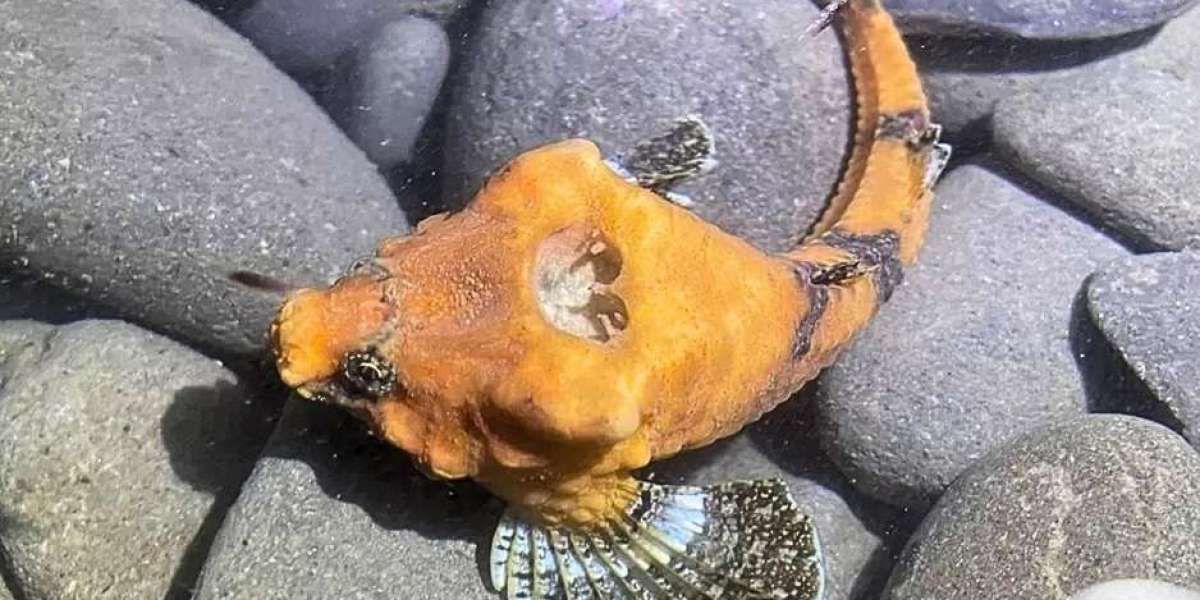

article image source: discoverwildlife.com (Link)
The Rockhead Poacher (Bothragonus swanii): Nature’s Tiny Drummer of the Pacific Intertidal
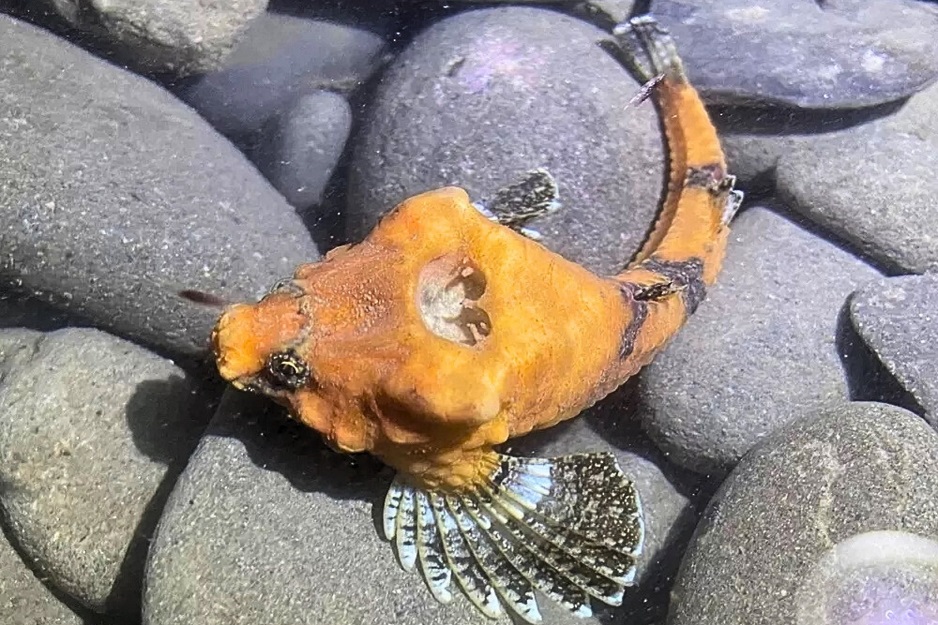
image source: discoverwildlife.com
Key Points (3 concise highlights):
Bowl-shaped cranial pit may amplify sound for communication
Heavily armored fish blends seamlessly with rocks
First ribs act like drumsticks, producing vibrations in tidal zones
advertisement
The rockhead poacher (Bothragonus swanii) is a remarkable small fish inhabiting the shallow intertidal zones of the northeastern Pacific, ranging from California to Alaska, and is famous for its bizarre, bowl-shaped cranial pit that rivals its brain in size.
This tiny armored fish, no larger than an index finger, wedges itself between rocks for camouflage, often resembling a sea sponge to avoid predators.
LSU scientists suspect this video shows the buzzing sound of this fish (but in the air while it is being held).
Credit: Vince Golder
video source: discoverwildlife.com
Beyond disguise, scientists now suggest that the cranial pit may serve as a natural percussion instrument, with the first set of unusually large and free-moving ribs striking the cavity to create subtle vibrations for communication in the noisy tidal environment.
High-resolution micro-CT scans reveal intricate internal structures, including tiny bone spines that likely detect water motion, helping the fish sense its surroundings while also potentially amplifying the buzzing sounds it produces.
Geldof explains more about the rockhead poacher's strange head hole.
Credit: Louisiana State University (LSU)
video source: discoverwildlife.com
Collecting specimens is challenging, requiring bucket brigades at tide pools like Deadman Bay, Washington, as these fish are masters of hide-and-seek.
The vibrations created by the rib-to-skull strikes may allow rockhead poachers to communicate with each other while scooching along the seafloor using their pectoral fins, avoiding interference from other sounds in open water. This tiny fish’s unique anatomy not only fascinates biologists but also provides insights into how sound can be transmitted and localized underwater, potentially informing acoustic engineering.
The rockhead poacher exemplifies the ingenuity of evolution, combining camouflage, sensory perception, and acoustic innovation in a miniature, armored form, reminding us that even the smallest creatures can hold extraordinary and unexpected secrets in nature.
Key Points Summary:
Lives in shallow intertidal zones from California to Alaska
Bowl-shaped cranial pit used for communication and sensing motion
First ribs act like drumsticks, free-moving and powered by strong muscles
Camouflages as a sea sponge for predator avoidance
High-resolution scans reveal intricate internal structures and tiny spines
Vibrations help communicate despite noisy tidal environments
Insights could inspire underwater acoustic engineering
Extremely small yet highly specialized fish
Moves along the seafloor using pectoral fins
advertisement
Frequently Asked Questions (FAQ):
Q1: Where does the rockhead poacher live?
A1: It inhabits shallow intertidal zones along the Pacific coast, from California to Alaska, often hiding among rocks and tide pools.
Q2: What is the purpose of its hole in the head?
A2: The bowl-shaped cranial pit likely serves multiple purposes: camouflage, sensing water motion, and producing vibrations for communication.
Q3: How does it produce sound?
A3: The fish strikes its first set of enlarged, free-moving ribs against the cranial pit, creating subtle buzzing vibrations that travel through the substrate.
Q4: How big is the rockhead poacher?
A4: It is roughly the size of a human index finger, yet it has a highly specialized skull for communication and sensory perception.
Q5: Have scientists recorded its sounds?
A5: Not yet, but anatomical evidence strongly suggests it produces vibrations in its tidal habitat for communication.
Sources:
Science.org – Article detailing research on the rockhead poacher’s cranial pit and percussive abilities
https://www.science.org/content/article/fish-seems-use-its-bizarre-skull-drumDiscover Wildlife – Coverage of LSU studies and anatomical findings on Bothragonus swanii
https://www.discoverwildlife.com/animal-facts/marine-animals/rockhead-poacher
Thank you !