
Storing Potatoes With an Apple: The Simple Kitchen Trick That Prevents Sprouting and Reduces Food Waste
Key Points
Potatoes sprout due to warmth, light, and time
Apples release ethylene gas, which slows potato sprouting
One apple is enough; more is not better
Proper ventilation and darkness are essential
This method can extend potato usability by weeks
Regularly replace the apple when it softens
Avoid storing potatoes with onions
advertisement
Why Potatoes Sprout Too Soon in Home Storage
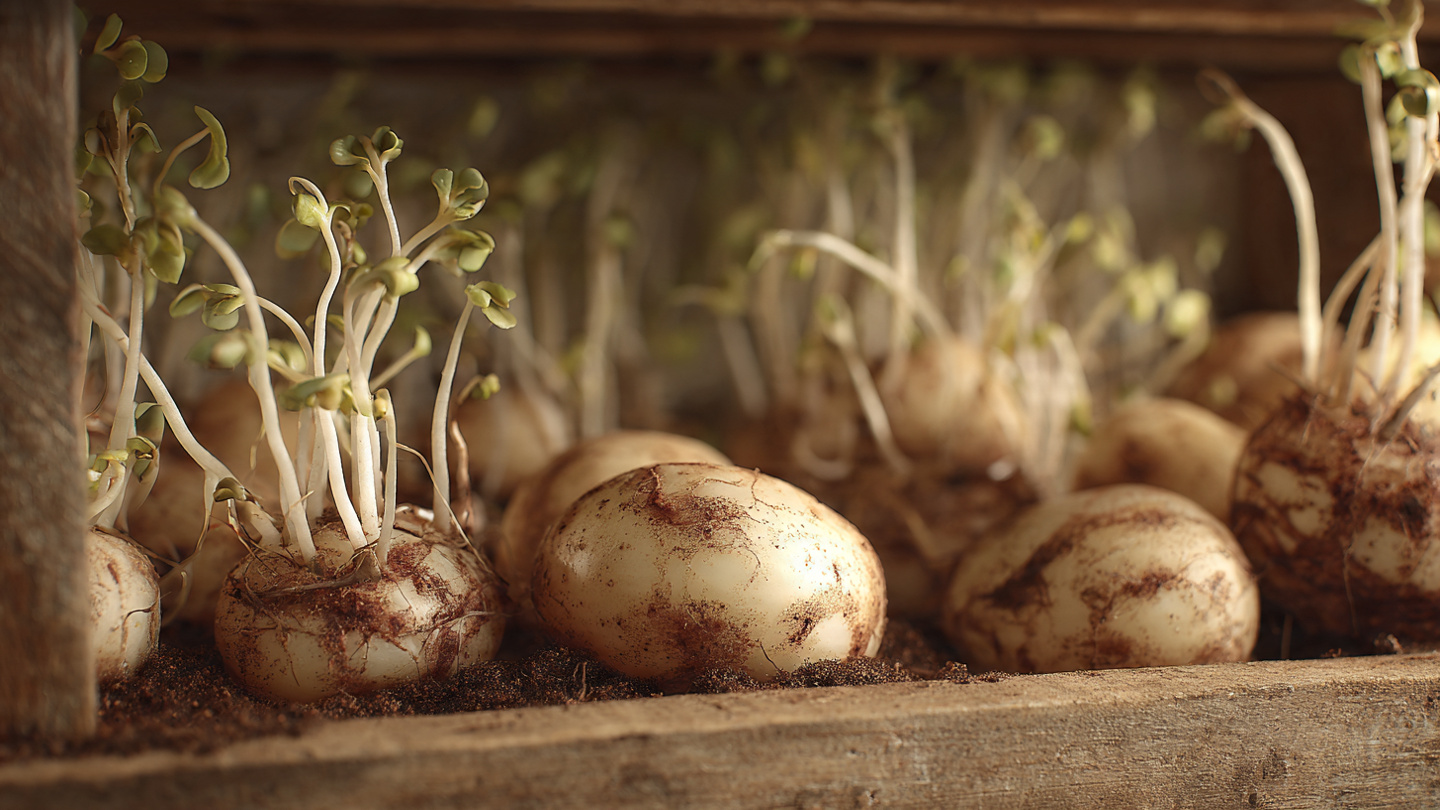
Potatoes are a kitchen staple, yet they often seem to spoil just when you need them most. One week they are firm and smooth, and the next they are covered in pale, twisting sprouts and feel soft to the touch. This happens because potatoes are living tubers. Even after harvest, they remain biologically active, waiting for the right conditions to grow.
Warm temperatures, light exposure, and time all encourage potatoes to break dormancy and begin sprouting. Once this process starts, their texture changes, moisture is lost, and many people choose to throw them away, contributing to unnecessary household food waste.
A surprisingly simple method has gained attention for slowing this process: storing potatoes with a single apple.
The Apple and Potato Storage Connection
At first glance, storing fruit with vegetables sounds like bad advice. Apples are well known for releasing ethylene gas, a natural plant hormone that accelerates ripening in many fruits and vegetables. Bananas, avocados, and tomatoes, for example, are highly sensitive to ethylene.
Potatoes behave differently. According to the source, ethylene does not encourage potatoes to ripen, because they are not fruit. Instead, the gas interferes with the biological signals that trigger sprouting. The result is a delay in shoot growth, allowing potatoes to remain firm and usable for longer.
In home storage trials referenced by the source, potatoes kept at room temperature without any intervention began sprouting within a few weeks. In contrast, potatoes stored in a cool, dark place with a single apple often remained sprout-free for six to eight weeks or more.
A Traditional Practice With Scientific Roots
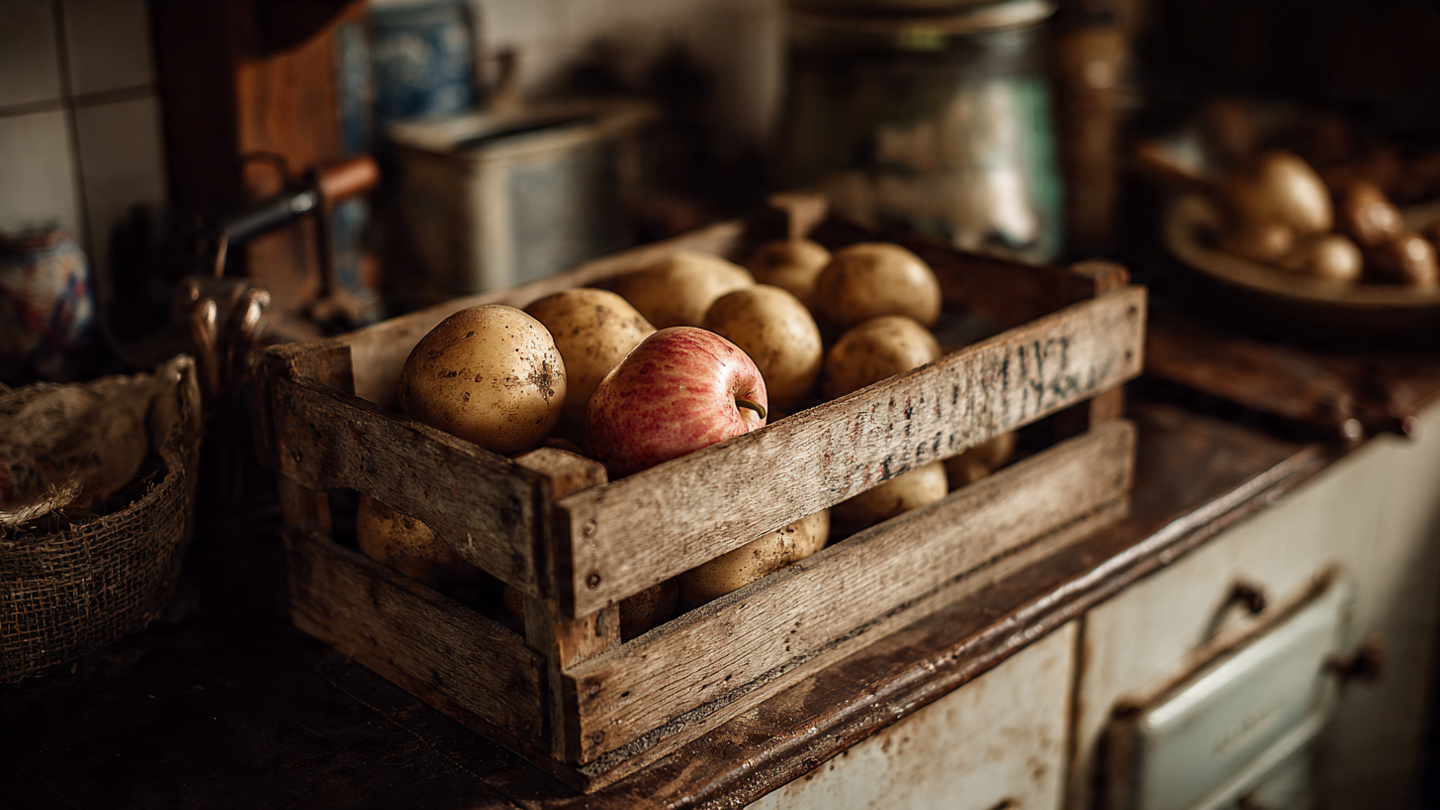
Many people discover this method not through research papers, but through family habits. Older generations often placed an apple in potato crates or sacks without knowing the precise chemistry behind it. What was once considered a folk trick is now supported by food storage science.
The apple does not preserve potatoes indefinitely. Instead, it slows the natural aging process. Think of it as pressing pause rather than stop. The potatoes will eventually sprout, but the window for cooking and eating them becomes noticeably longer.
This extended usability has practical effects. People feel more confident buying larger bags of potatoes, cooking more meals from scratch, and throwing away less food.
How to Store Potatoes With a Single Apple at Home
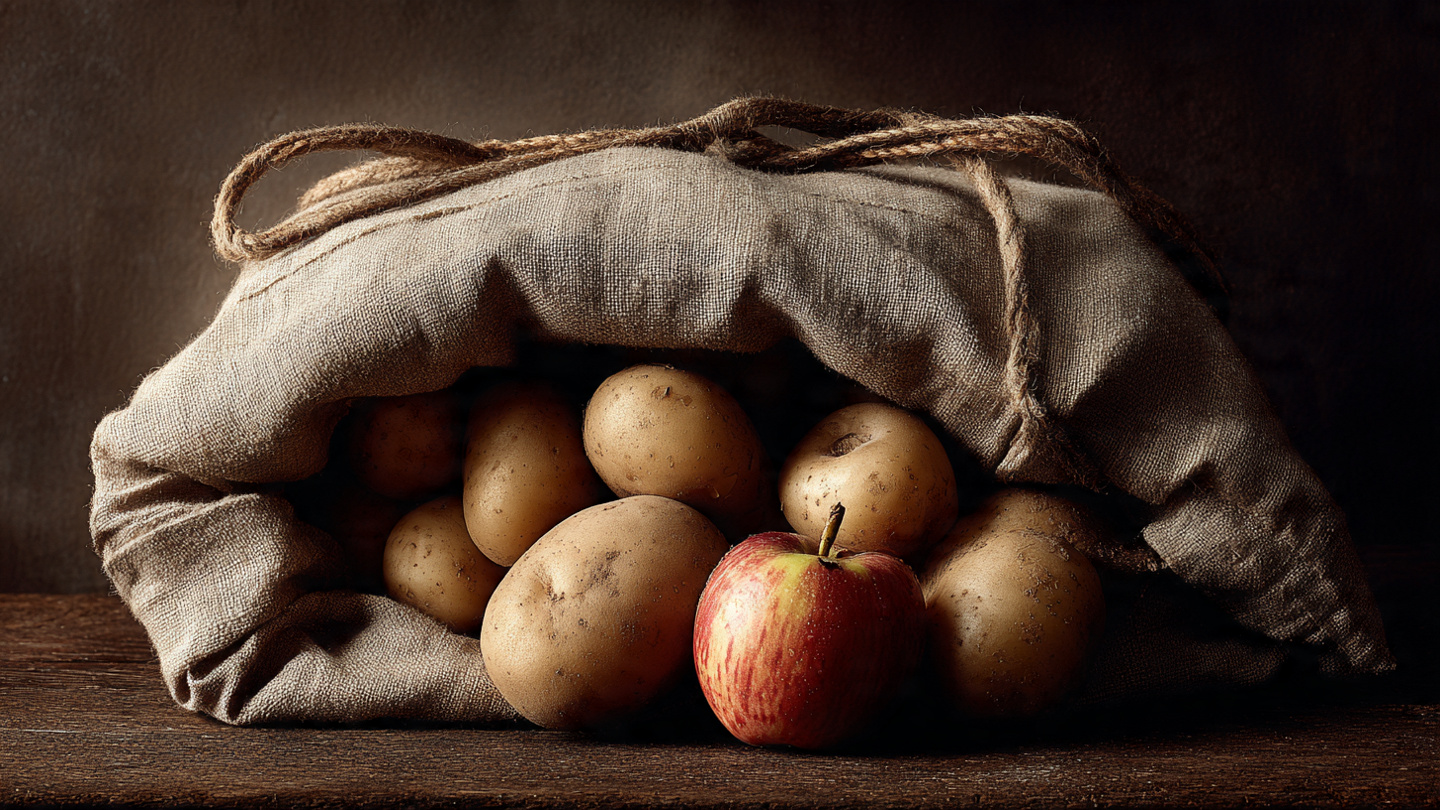
Using this method does not require special equipment or strict routines. The goal is to improve storage conditions, not to make them perfect.
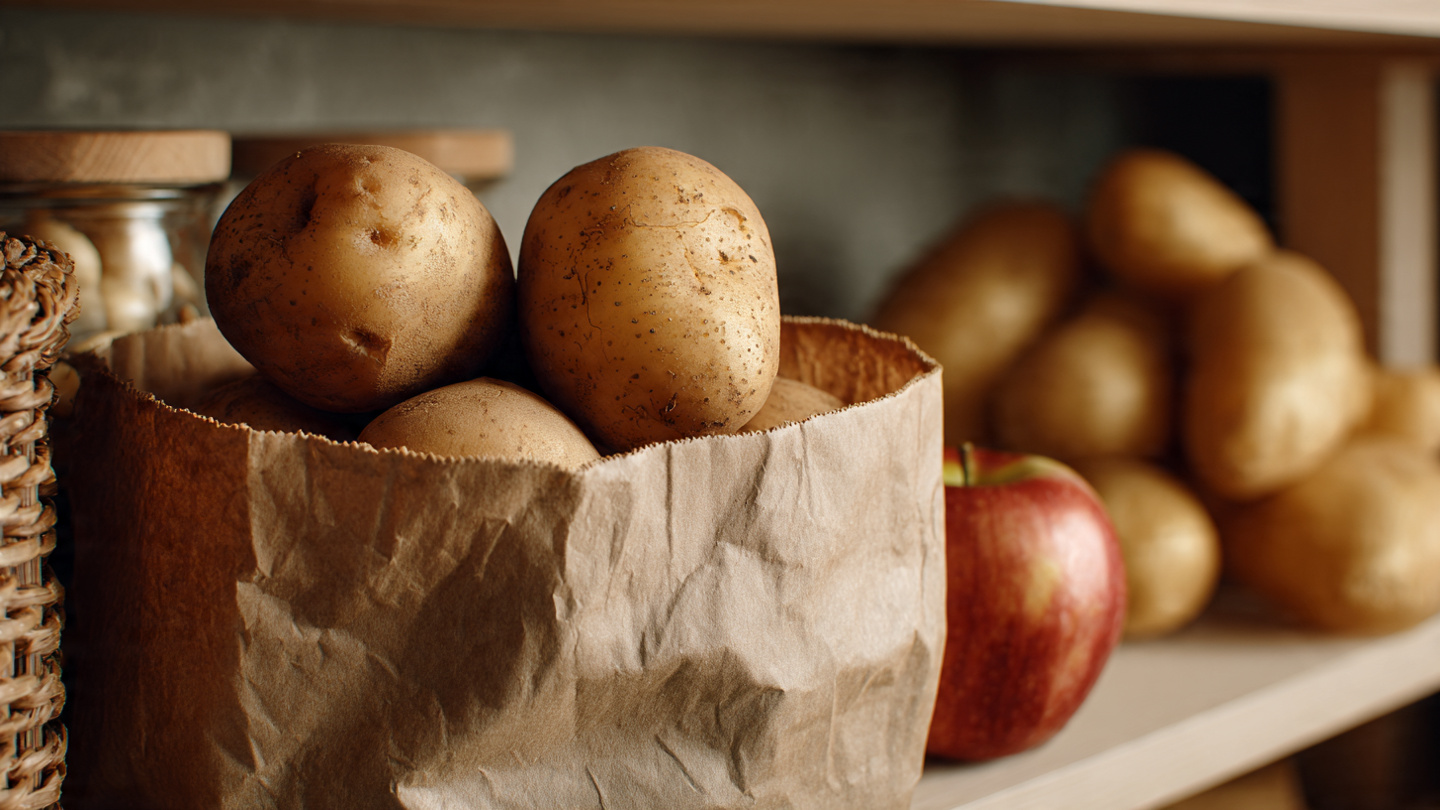
Start by choosing the right location. Potatoes last longest in a cool, dark, and well-ventilated place. A pantry, cupboard away from the oven, or shaded storage area works well. Avoid direct sunlight and heat.
Next, choose breathable storage. Paper bags, cloth sacks, baskets, or open boxes allow air circulation and reduce moisture buildup. Plastic bags should be avoided, as they trap humidity and speed decay.
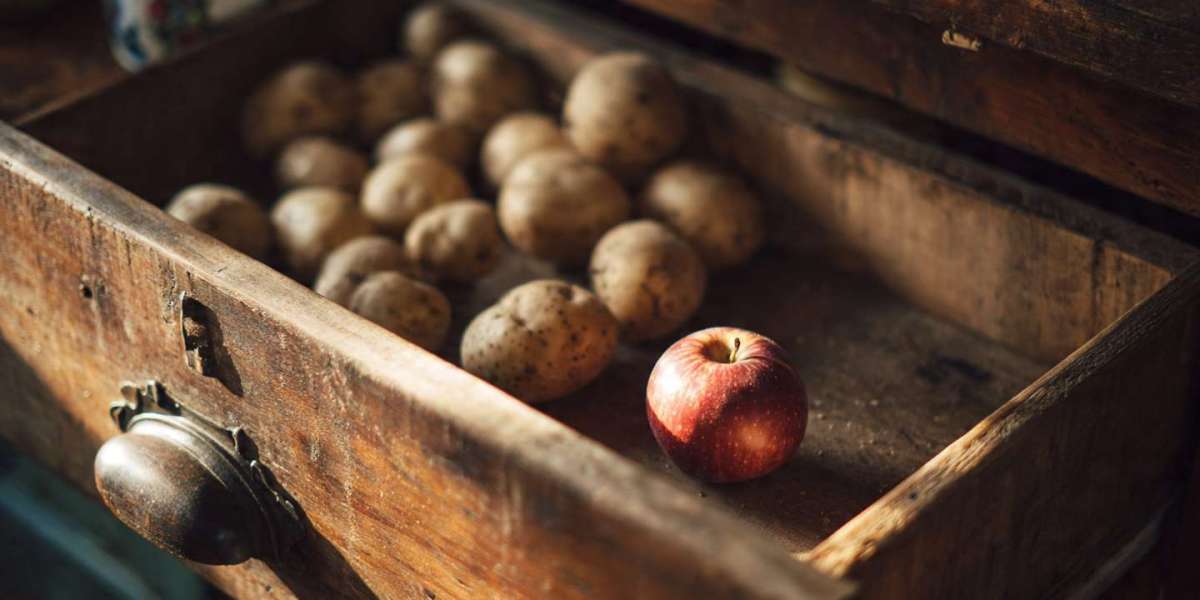
Add one fresh apple. Place a single medium apple near the potatoes, not crushed underneath them. The apple releases enough ethylene gas to slow sprouting without overwhelming the space. When the apple becomes soft or bruised, remove it and replace it with a fresh one.
Regular checks are simple but important. Each time you take potatoes for cooking, glance at the apple. If it looks tired, it has done its job.
Common Storage Mistakes to Avoid
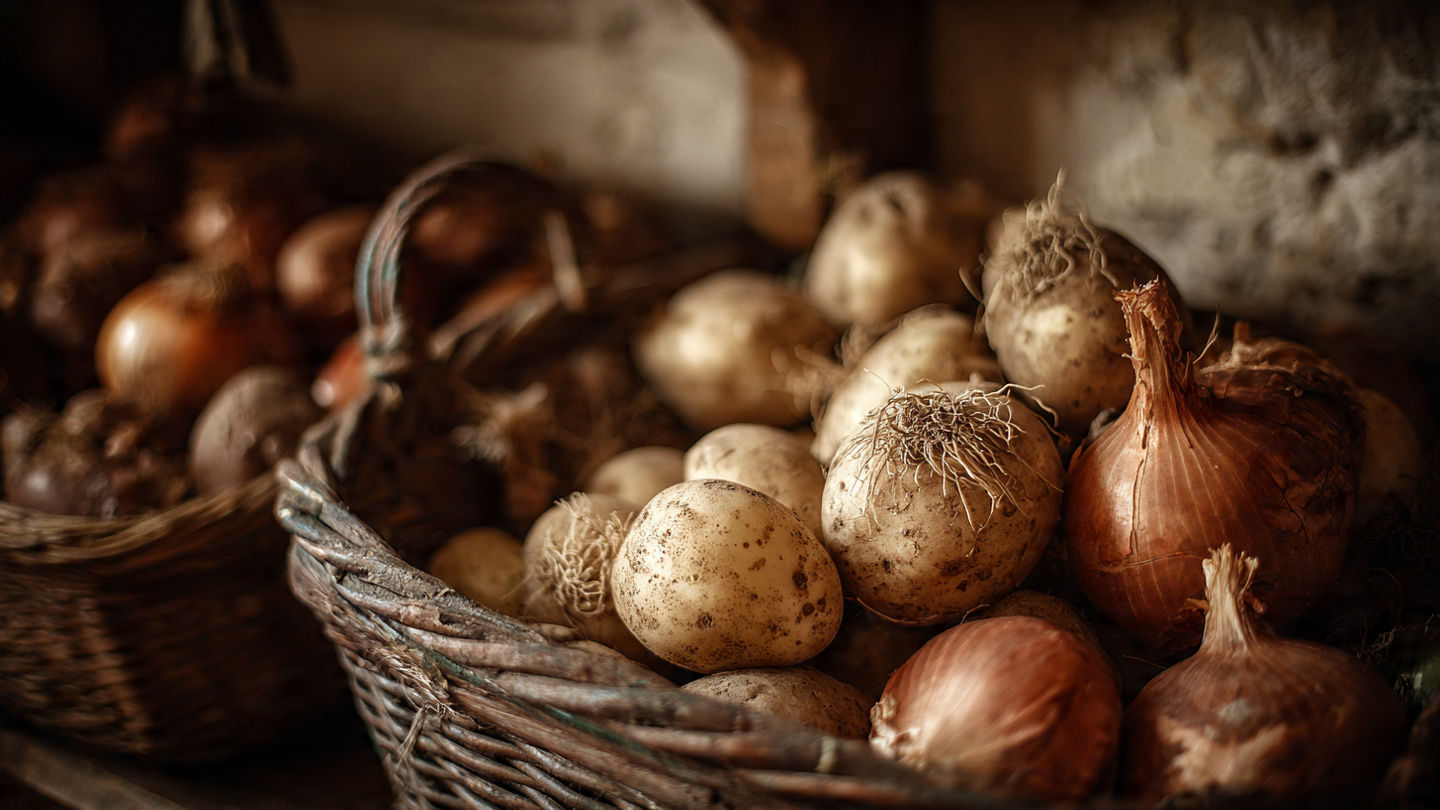
One frequent error is storing potatoes alongside onions. While both prefer cool, dark environments, they release gases that can accelerate spoilage when kept together. Separating them helps both last longer.
Another mistake is ignoring green or heavily sprouted potatoes. Green skin indicates solanine buildup, which should not be consumed. Potatoes in this condition should be discarded promptly.
Finally, forgetting the apple altogether can undo the benefits. A mouldy apple among potatoes creates more problems than it solves. Rotation is key.
What This Small Habit Says About Food Waste
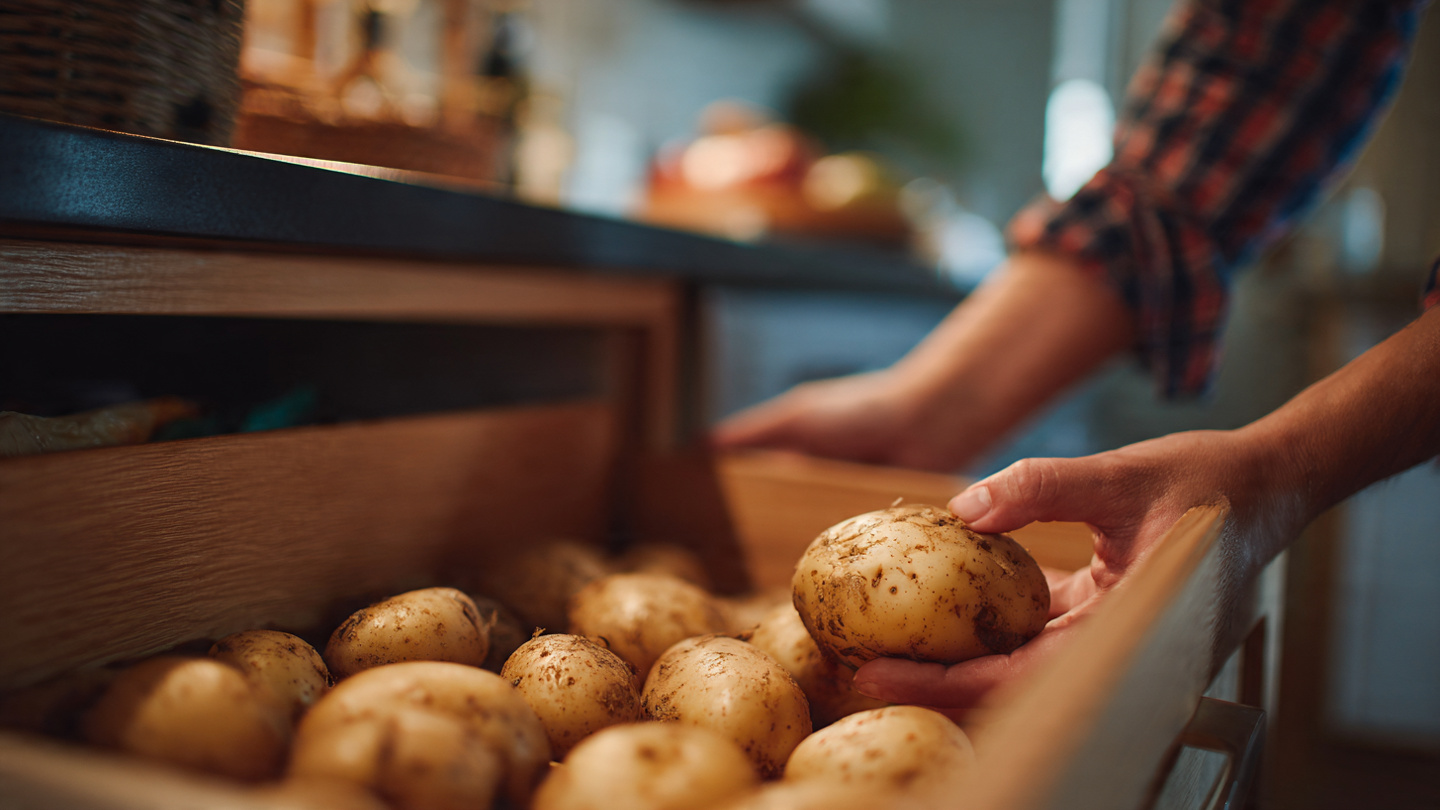
This method is not just about chemistry in a cupboard. It reflects a shift in how people relate to food. Adding an apple to a potato stash is a small act of planning and care, a signal that future meals matter.
In a time when food waste remains a global issue and grocery budgets are under pressure, simple habits like this can make a meaningful difference at home. One apple will not fix the food system, but it can change how long your groceries last and how confident you feel using them.
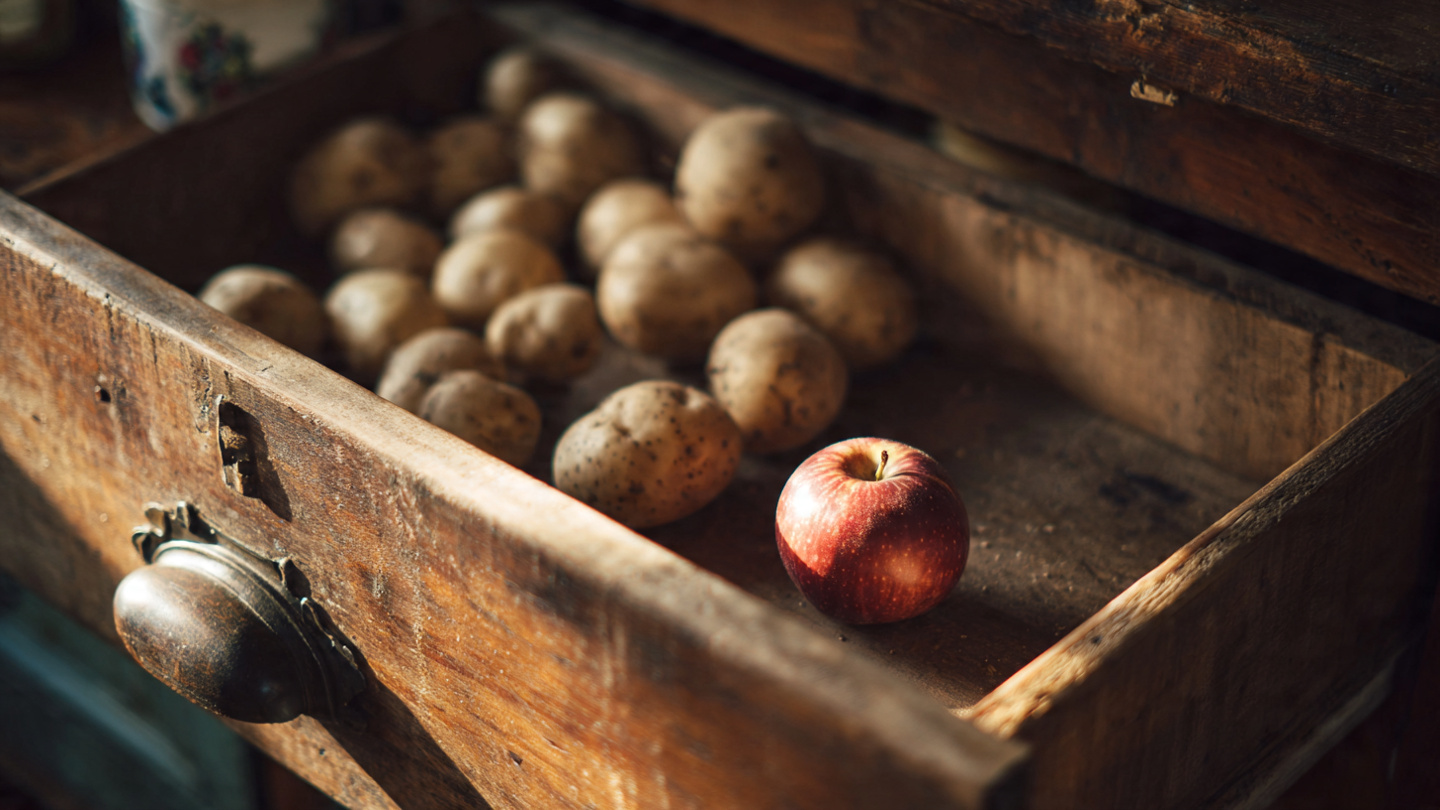
Once you open a drawer weeks later and find potatoes still firm and sprout-free, the habit tends to stick. It quietly proves that small, thoughtful changes can have lasting effects.
Conclusion: A Simple Apple, A Smarter Kitchen
Storing potatoes with a single apple is an elegant example of how traditional wisdom and modern science intersect. By using ethylene gas to delay sprouting, this easy, low-cost trick helps potatoes stay usable longer, reduces waste, and supports better meal planning.
It requires no gadgets, no strict schedules, and no special skills. Just one apple, a cool corner, and a little awareness. In a world of complicated solutions, sometimes the most effective changes are the quietest ones, waiting patiently in a kitchen drawer.
advertisement
Frequently Asked Questions (FAQ)
Does this work with all types of apples?
Most eating apples work well. There is no need for a specific variety, as long as the apple is fresh.
Can I use more than one apple?
No. One apple provides sufficient ethylene. Too many may increase moisture and spoilage risk.
Will the potatoes taste like apples?
No. Ethylene is a gas and does not transfer flavor.
Does this replace refrigeration?
No. Refrigeration can alter potato starches and flavor. A cool, dark cupboard with an apple is preferable.
How long will potatoes last using this method?
Results vary, but many households report usable potatoes for six to eight weeks or longer under good conditions.
Sources
FE Plumbing & Heating Ltd – Explanation of the apple and potato storage method and its scientific background
https://www.feplumbingheatingltd.co.uk/12-168332-why-storing-potatoes-with-a-single-apple-can-keep-them-from-sprouting-too-early-and-how-the-trick-actually-works/
Thank you !