
Mars Habitability Breakthrough: NASA’s Curiosity and Perseverance Discover Complex Organic Molecules, Quartz & Ancient Groundwater Evidence
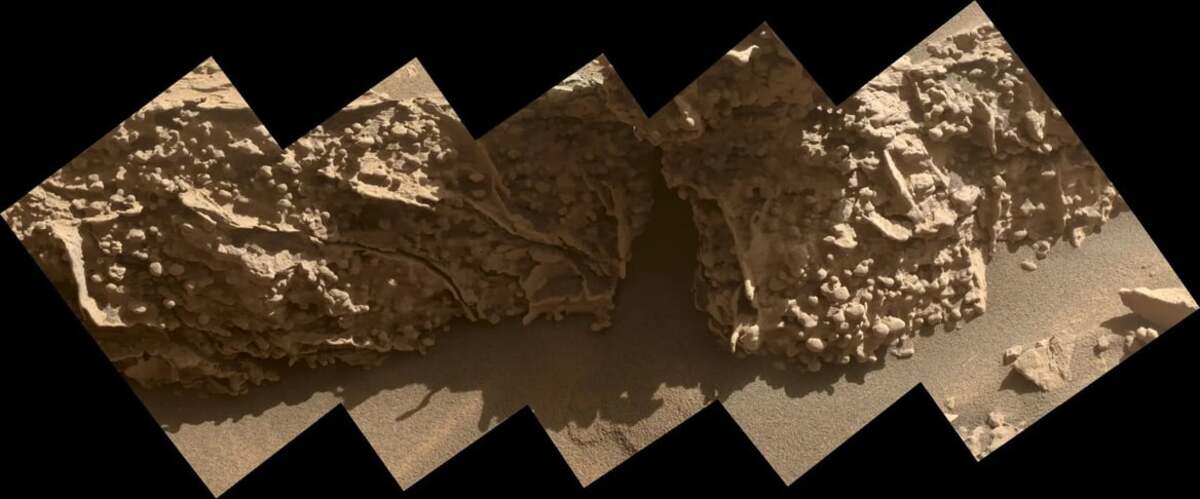
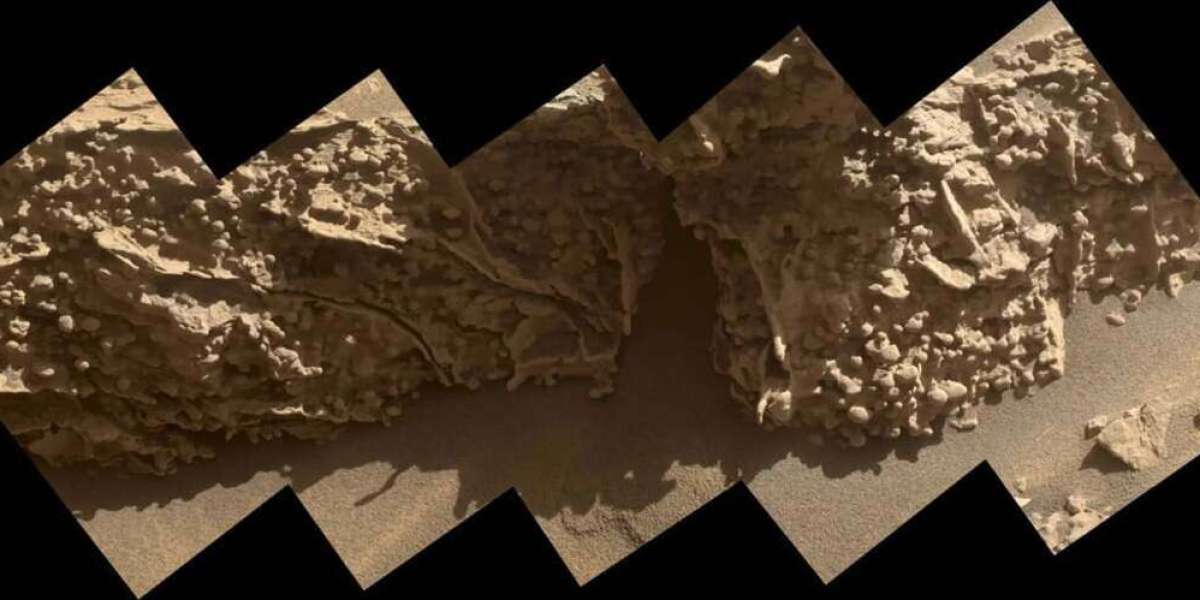
Gale crater: These pea-sized nodules were formed by minerals left behind as groundwater was drying out on Mars billions of years ago.
(Credit: NASA/JPL-Caltech/MSSS)
image source: seti.org
• NASA’s Curiosity rover detected the largest organic molecules ever found on Mars.
• Perseverance identified quartz and silica-rich rocks known on Earth for preserving biosignatures.
• New evidence suggests long-lasting groundwater and hydrothermal systems on ancient Mars.
advertisement
Mars habitability has taken a major scientific leap forward in 2026.
Two NASA rovers operating nearly 3,700 kilometers apart—Curiosity in Gale Crater and Perseverance in Jezero Crater—have uncovered compelling new evidence that ancient Mars may have supported life-friendly environments.
While no life has been discovered, the findings significantly strengthen the case that Mars once had complex organic chemistry, long-lasting water systems, and mineral environments capable of preserving biosignatures.
The discoveries were detailed by the SETI Institute and supported by NASA mission data, marking one of the most important developments in the ongoing search for life on Mars.
Complex Organic Molecules Found in Gale Crater
In Gale Crater, Curiosity detected decane, undecane, and dodecane—long carbon chains (C10–C12) discovered in the ancient Cumberland mudstone.
These are the largest organic molecules ever identified on Mars.
On Earth, similar long-chain molecules can be fragments of fatty acids, key building blocks of biological membranes and metabolic systems.
However, scientists emphasize caution.
According to NASA-supported analyses, such compounds can also form through non-biological (abiotic) processes, including hydrothermal synthesis and Fischer–Tropsch-type reactions occurring on hot mineral surfaces.
Mars possesses the necessary ingredients—rock, heat sources, carbon dioxide, hydrogen, and immense geological time—for these processes to occur without life.
What makes the discovery especially significant is the geological context.
Curiosity’s mineralogical and geochemical measurements show that the mudstones were altered by repeated episodes of groundwater circulation after burial.
Groundwater doesn’t merely wet rocks—it transports carbon, redistributes chemical energy (redox couples), and creates microenvironments where organic molecules can form, concentrate, or be shielded from destruction.
A NASA follow-on study reported that non-biological sources such as meteorite delivery could not fully explain the measured abundance of these organics.
As described in the SETI Institute report, this makes it “reasonable to hypothesize” that biology could have contributed—while clearly stating the issue remains unresolved.
This balanced scientific approach reflects the core principle of astrobiology: extraordinary claims require extraordinary evidence.
Quartz, Silica & Hydrothermal Systems in Jezero Crater
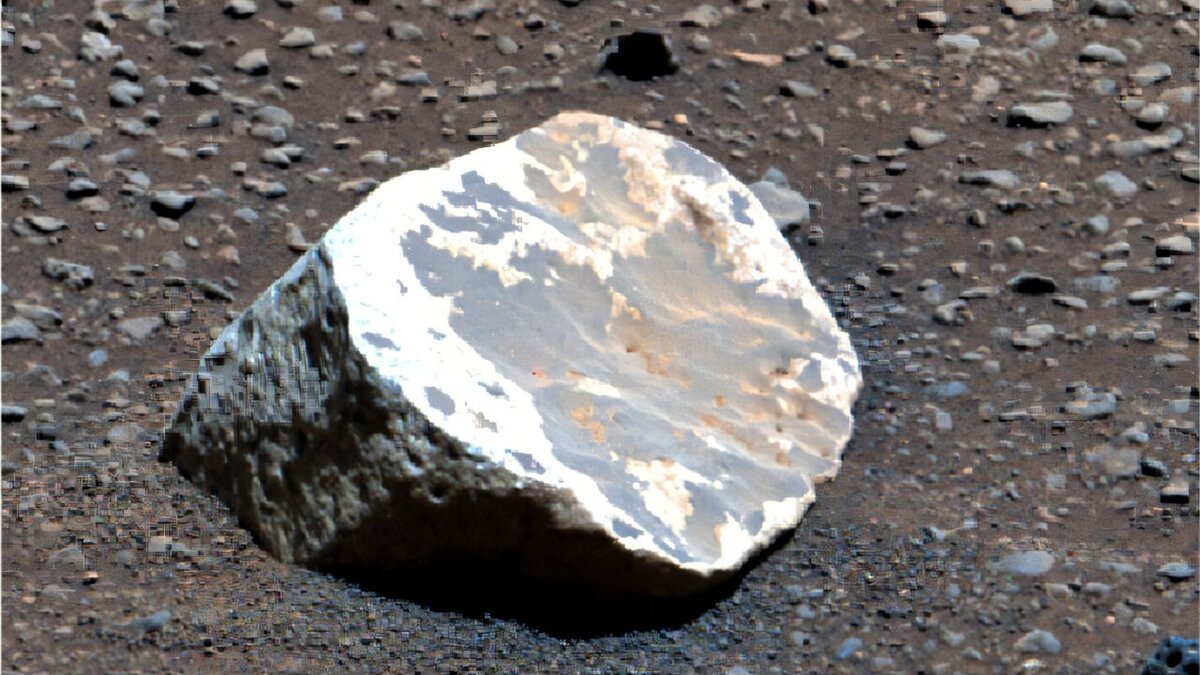
NASA's Perseverance rover discovers bleached kaolinite rocks on Mars, revealing clues of ancient climate conditions in Jezero Crater.
image source: seti.org
On the opposite side of Mars, Perseverance uncovered silica-rich rocks in Jezero Crater, including opal, chalcedony, and well-crystallized quartz identified using SuperCam spectroscopy.
On Earth, silica-rich minerals are famous for preserving biosignatures—from microscopic structures to molecular residues.
Scientists interpret these findings as evidence of an ancient hydrothermal system, possibly triggered by the impact that formed Jezero Crater.
Hydrothermal systems are considered prime environments for prebiotic chemistry and microbial ecosystems because they provide heat, chemical gradients, and catalytic mineral surfaces.
Even more recently, Perseverance identified kaolinite clay in altered igneous rocks using infrared spectroscopy and PIXL elemental chemistry.
Kaolinite typically forms when feldspar-rich rocks interact with liquid water over extended periods under moderate temperature and pH conditions.
The combination of quartz, opaline silica, and kaolinite reveals a continuum of water environments—from hydrothermal pulses to prolonged groundwater alteration.
According to the SETI Institute’s analysis, this mineralogical diversity strongly suggests sustained water–rock interaction across different geochemical regimes.
advertisement
Why These Mars Discoveries Matter for Life
Organic molecules alone do not prove life.
Quartz alone does not prove life.
Even together, they do not confirm biology.
But context is everything.
What makes these discoveries powerful is the convergence of evidence:
• A growing inventory of complex organic carbon.
• Long-lasting subsurface groundwater systems.
• Hydrothermal environments rich in chemical gradients.
• Minerals capable of preserving potential biosignatures over billions of years.
Ancient Mars now appears less like a planet that was briefly wet and more like one that sustained diverse habitable settings—at different depths, in multiple regions, and over extended geological timescales.
As emphasized by the SETI Institute, these findings do not declare that life existed on Mars—but they keep the scientific question very much alive and increasingly testable.
What Makes a True Biosignature?
Astrobiologists rely on a “ladder of life detection.”
A convincing biosignature must be something that cannot be explained by environmental chemistry alone.
The same molecule means different things in different rocks.
The same mineral means different things in different contexts.
Complicating matters further, scientists still lack a universal definition of life that can be applied cleanly to alien worlds.
On Earth, life is recognized because our planet is saturated with biology and its biochemical signatures.
On Mars, researchers must rely on converging lines of chemical, geological, and environmental evidence before drawing conclusions.
These new discoveries add crucial rungs to that ladder.
Conclusion: The Question of Life on Mars Is More Alive Than Ever
The 2026 findings from Curiosity and Perseverance represent a turning point in Mars exploration.
They do not answer the question of life—but they dramatically narrow the gap between speculation and testable science.
Mars is revealing a past rich in groundwater circulation, hydrothermal systems, complex organic chemistry, and mineral environments capable of preserving delicate traces across billions of years.
Each discovery strengthens the scientific framework needed to evaluate returned samples and future missions.
If life ever emerged on ancient Mars, the chemical and geological stage appears to have been set.
And if life never arose, understanding why could be just as revolutionary for science.
The search for life on Mars is no longer about whether the planet was once habitable in theory.
It is about whether we now have the tools—and the evidence—to finally answer one of humanity’s greatest questions: Are we alone?
The question is no longer fading.
It is growing sharper, richer, and more scientifically grounded with every rover transmission.
Key Points
Curiosity detected the largest organic molecules ever found on Mars (C10–C12 carbon chains).
Perseverance identified quartz and silica-rich rocks known for preserving biosignatures on Earth.
Evidence suggests long-term groundwater and hydrothermal systems on ancient Mars.
Findings strengthen the case for past Mars habitability but do not confirm life.
The search for Martian life is becoming increasingly testable through geological context.
advertisement
Frequently Asked Questions (FAQ)
Did NASA discover life on Mars in 2026?
No. The discoveries show that Mars had habitable conditions and complex organic chemistry, but they do not prove life existed.
What organic molecules were found?
Curiosity detected long carbon chains (decane, undecane, dodecane) consistent with fragments of fatty acids.
Why is quartz important in the search for life?
Quartz and silica-rich rocks can preserve biosignatures for billions of years, making them prime targets for study and sample return.
Could the organic molecules have formed without life?
Yes. Abiotic processes such as hydrothermal reactions could produce similar molecules. Scientists are still evaluating all possibilities.
Why is groundwater important for habitability?
Groundwater transports nutrients, supports chemical reactions, and creates stable subsurface environments where life could persist.
Sources
- SETI Institute – Official report on new Mars discoveries and habitability implications
https://www.seti.org/news/new-discoveries-on-mars-and-habitability/
Thank you !