
article image source: scitechdaily.com (Link)
Superfluid Freezes Into a Supersolid in Graphene, Breaking the Rules of Quantum Physics
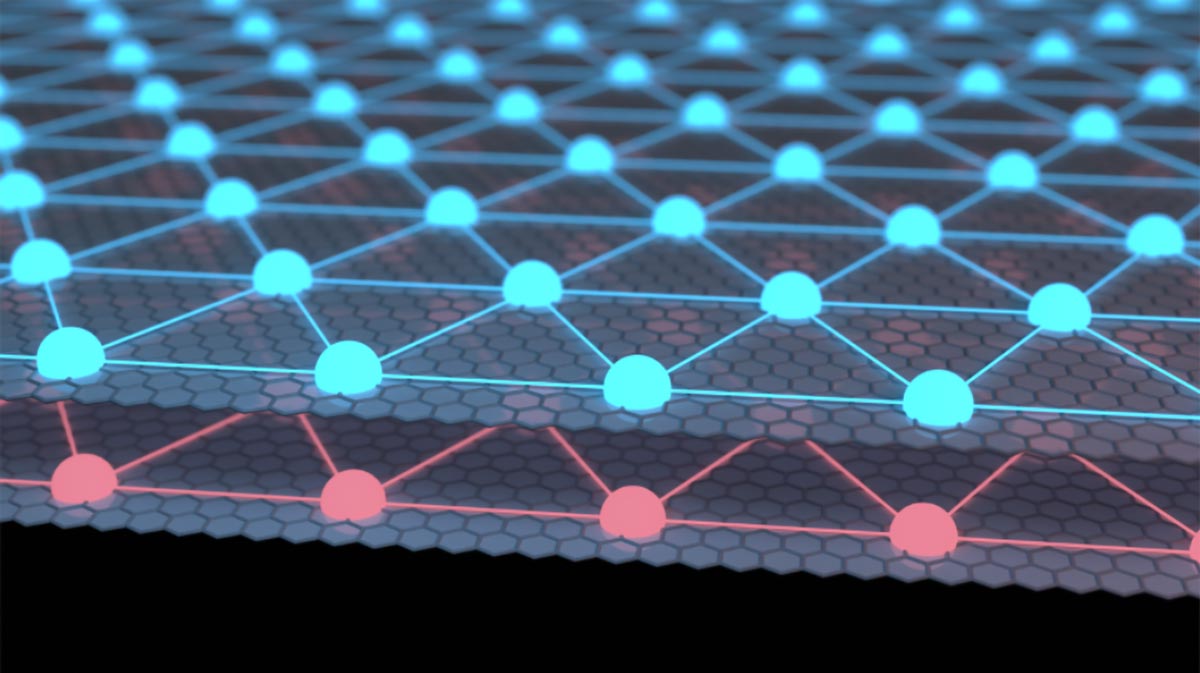
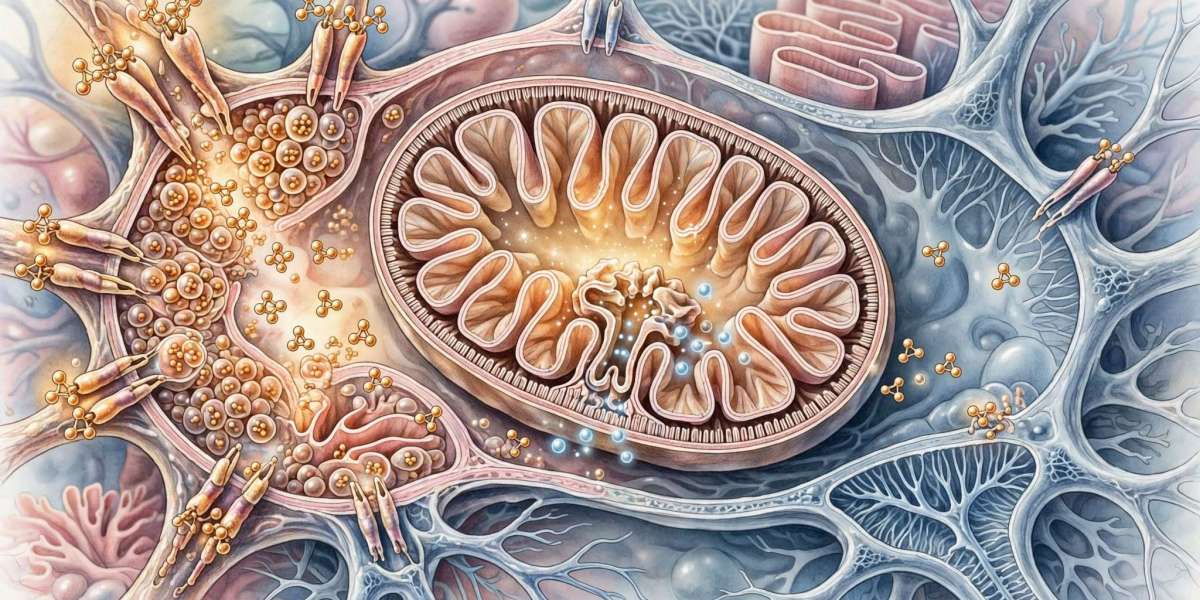
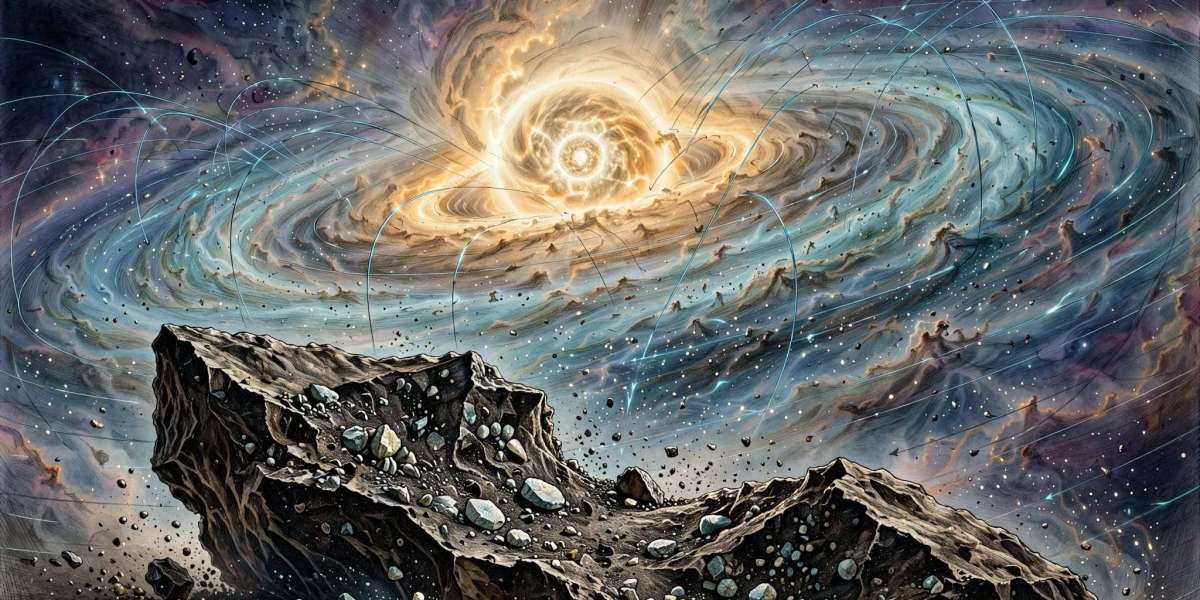
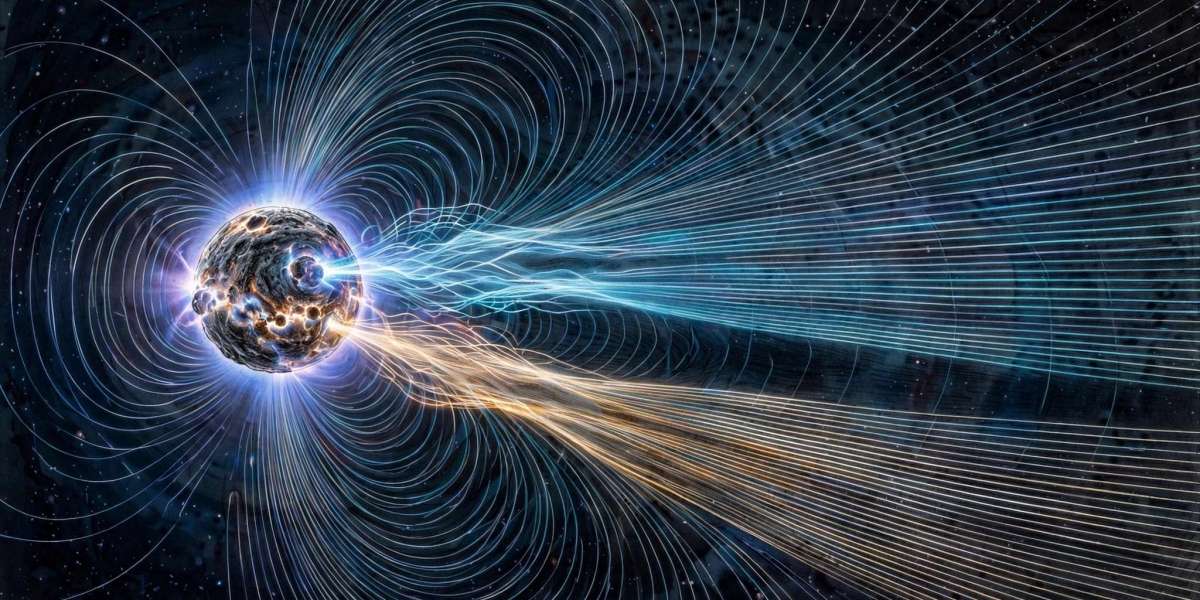
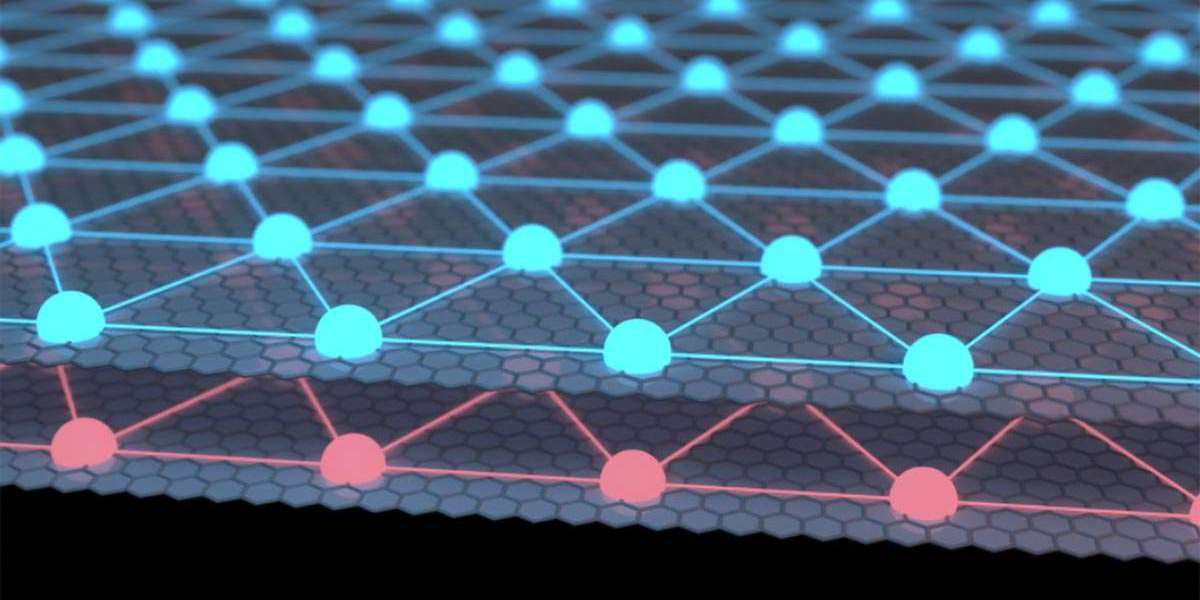
Illustration of excitons arranging into a solid pattern in bilayer graphene.
Credit: Cory Dean, Columbia University
image source: scitechdaily.com
A quantum superfluid has frozen into a solid-like state for the first time in graphene.
Physicists observed a rare superfluid-to-insulator transition under extreme conditions.
The discovery could reshape our understanding of supersolids and 2D quantum materials.
advertisement
In a breakthrough that challenges long-standing ideas about quantum matter, physicists have observed a superfluid freezing into a solid-like phase inside ultra-thin graphene.
The discovery, published in Nature, reveals what may be one of the clearest signs yet of a long-theorized but elusive state of matter known as a supersolid—a phase that appears to blur the line between liquid and solid in the quantum world.
Under normal conditions, matter follows a predictable path when cooled: gas becomes liquid, and liquid becomes solid.
But the quantum world has always played by different rules.
In the early 20th century, scientists discovered that helium does something extraordinary at extremely low temperatures—it becomes a superfluid, flowing without friction and even climbing the walls of its container.
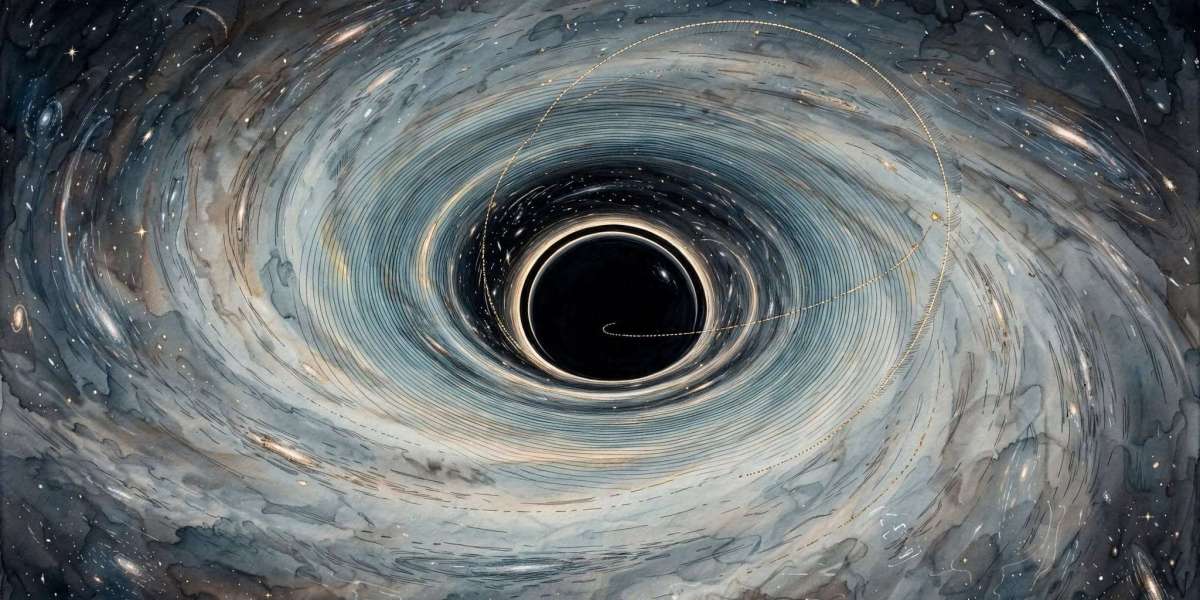
For decades, physicists wondered: If you cool a superfluid even further, does it freeze—or does it keep flowing forever?
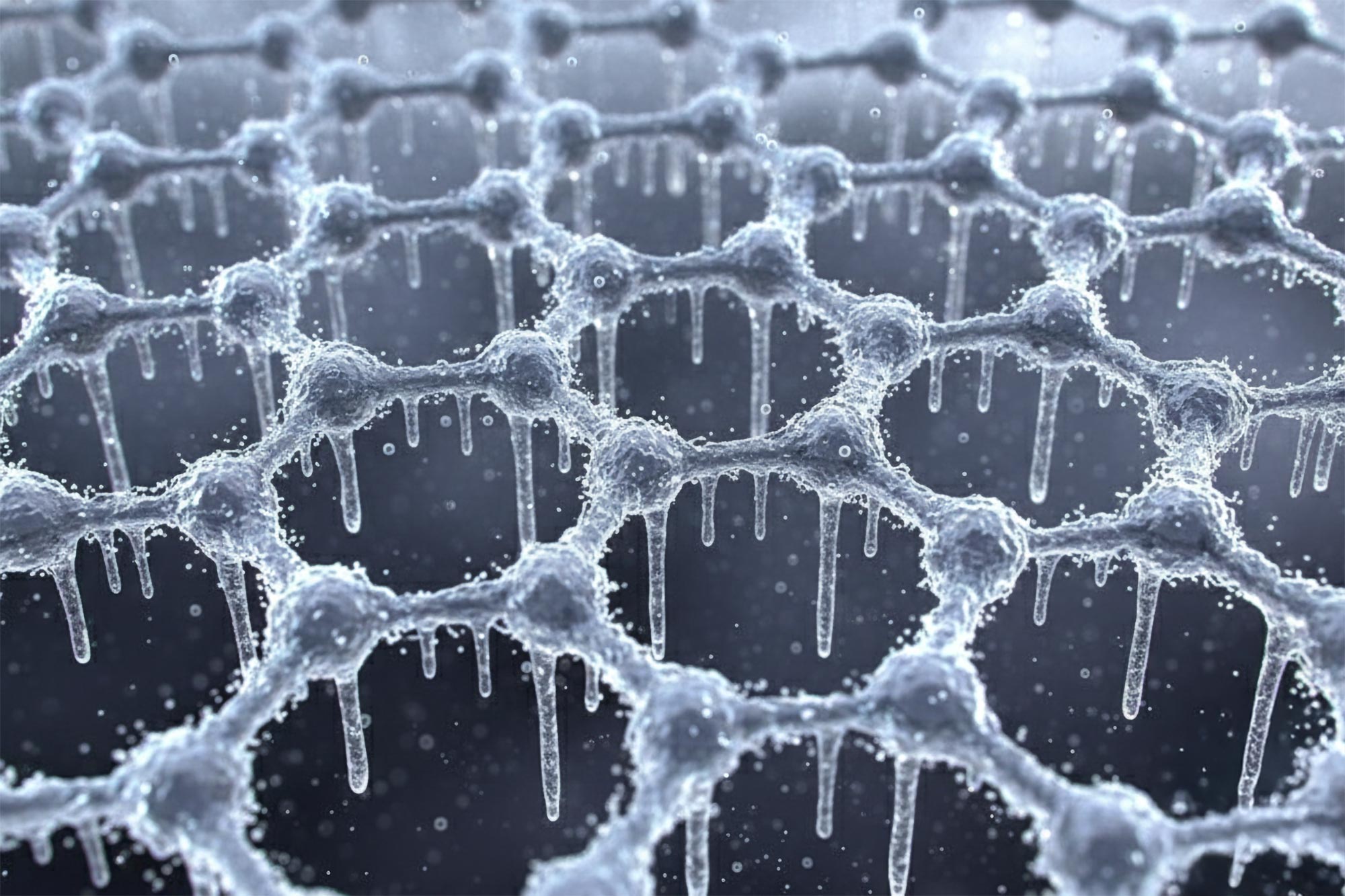
Physicists have long wondered what happens when a superfluid is cooled even further, and now, experiments in bilayer graphene hint at an unexpected answer.
Credit: SciTechDaily.com
image source: scitechdaily.com
Now, researchers led by Cory Dean at Columbia University and Jia Li at University of Texas at Austin may have found the answer.
Working with bilayer graphene—a single-atom-thick sheet of carbon—they observed something unprecedented: a superfluid that suddenly stopped flowing.
advertisement
A Superfluid That Comes to a Halt
According to the study published in Nature, the team created a system of “excitons” inside two stacked layers of graphene.
Excitons are quasiparticles formed when negatively charged electrons bind to positively charged “holes.”
Under a strong magnetic field, these excitons can collectively behave like a superfluid, moving without resistance.
At high exciton density, everything behaved as expected—the system flowed frictionlessly.
But when the density decreased, the flow abruptly stopped.
The material turned into an insulator.
Even more surprising:
When researchers increased the temperature again, the superfluid state reappeared.
This behavior reverses conventional expectations.
Superfluidity is typically considered the lowest-energy, lowest-temperature ground state.
Yet here, the system became insulating at lower temperatures and “melted” back into a flowing superfluid when warmed.
Li described the observation as unprecedented, suggesting that the low-temperature phase may be an unusual exciton solid.
What Is a Supersolid?
A traditional solid has atoms locked into a rigid crystal structure.
A superfluid flows without friction.
A supersolid, in theory, does both: it maintains crystal-like order while retaining quantum flow properties.
For decades, physicists searched for a naturally occurring supersolid.
Helium was once considered the best candidate, but no conclusive transition from superfluid to supersolid was observed.
Some laboratory experiments in atomic, molecular, and optical physics created supersolid-like behavior using laser-generated periodic traps, but these were artificially imposed structures rather than spontaneous phases.
What makes this graphene experiment remarkable is that the ordering appears to emerge from the material itself, not from an externally forced pattern.
However, Dean cautions that whether the observed state fully qualifies as a supersolid remains an open question.
Because the phase becomes insulating, standard transport measurements cannot fully probe its internal structure.
For now, researchers are mapping its boundaries and developing new tools to measure it directly.
advertisement
Why Graphene Changes the Game
Two-dimensional materials like graphene offer extraordinary control.
Scientists can fine-tune temperature, magnetic fields, exciton density, and even the spacing between layers.
This flexibility allowed the team to detect the unexpected relationship between density and phase.
Another major advantage: excitons are thousands of times lighter than helium atoms.
That means similar quantum states could potentially form at much higher temperatures than those required for helium superfluidity.
Currently, the observed excitonic superfluid—and the likely supersolid phase—requires a strong magnetic field in bilayer graphene.
Researchers are now exploring other layered materials that might stabilize these states without magnets and at more practical temperatures.
A Quantum Phase That Rewrites Expectations
Both reports from ScienceDaily and SciTechDaily describe the phenomenon as a superfluid appearing to “freeze” into a solid-like state, though researchers emphasize that more measurements are needed to confirm whether it fully satisfies the definition of a supersolid.
The peer-reviewed study, titled “Observation of a superfluid-to-insulator transition of bilayer excitons,” documents the phase transition but leaves room for interpretation about the precise nature of the insulating phase.
If confirmed as a true supersolid, this discovery would resolve a 50-year quest in condensed matter physics.
Even if it represents a closely related quantum phase rather than a textbook supersolid, it already challenges assumptions about how quantum matter organizes itself at low temperatures.
advertisement
Conclusion: When Quantum Matter Refuses to Follow the Rules
The freezing of a superfluid inside graphene is more than an experimental curiosity—it is a powerful reminder that the quantum world resists simple categorization.
For decades, superfluidity was thought to represent the final stage of cooling in certain systems.
Now, experiments suggest that even this frictionless state can give way to something more structured and potentially more exotic.
Whether this phase ultimately earns the title of “supersolid” or inspires a new category altogether, the discovery opens a fresh frontier in quantum materials research.
Two-dimensional materials are proving to be laboratories for realities that seem impossible in our everyday world.
And as scientists continue to push the boundaries of temperature, density, and magnetic control, we may soon uncover quantum states that today exist only in theory.
The superfluid has frozen—and in doing so, it may have melted decades of assumptions about how matter behaves at the smallest scales.
Key Points Summary
Researchers observed a superfluid-to-insulator transition in bilayer graphene.
The low-temperature phase may represent a long-theorized supersolid.
The discovery challenges traditional ideas about how matter behaves when cooled.
Excitons in 2D materials offer new platforms for exploring exotic quantum states.
advertisement
Frequently Asked Questions (FAQ)
1. What is a superfluid?
A superfluid is a state of matter that flows without friction or energy loss, typically occurring at extremely low temperatures.
2. What is a supersolid?
A supersolid is a theoretical quantum phase that combines crystal-like solid structure with superfluid properties.
3. Why is graphene important in this discovery?
Graphene allows precise control of quantum properties like exciton density and magnetic fields, making it ideal for studying exotic phases.
4. Is this definitively a supersolid?
Not yet. The evidence strongly suggests a supersolid-like phase, but researchers need new measurement tools to confirm its internal structure.
5. Could this discovery have practical applications?
Potentially yes. Understanding controllable superfluids and supersolids could influence future quantum technologies and advanced materials.
Sources
- ScienceDaily – Report on superfluid-to-supersolid transition in graphene
https://www.sciencedaily.com/releases/2026/02/260204121545.htm - SciTechDaily – Coverage of physicists observing a superfluid freeze in graphene
https://scitechdaily.com/physicists-watch-a-superfluid-freeze-revealing-a-strange-new-quantum-state-of-matter/ - Nature – Peer-reviewed study on superfluid-to-insulator transition
https://www.nature.com/articles/s41586-025-09986-w
Thank you !