
article image source: msn.com (Link)
James Webb Telescope Reveals New Secrets of Black Holes: Inside the Circinus Galaxy Discovery
© Space Telescope Science Institute Office of Public Outreach, NASA, ESA, CSA, E. Lopez-Rodriguez
image source: msn.com
♦ Unprecedented infrared images reshape what scientists know about black hole feeding
♦ James Webb delivers the sharpest-ever view of a black hole’s immediate environment
♦ A decades-old mystery about infrared light around black holes may finally be solved
advertisement
Introduction
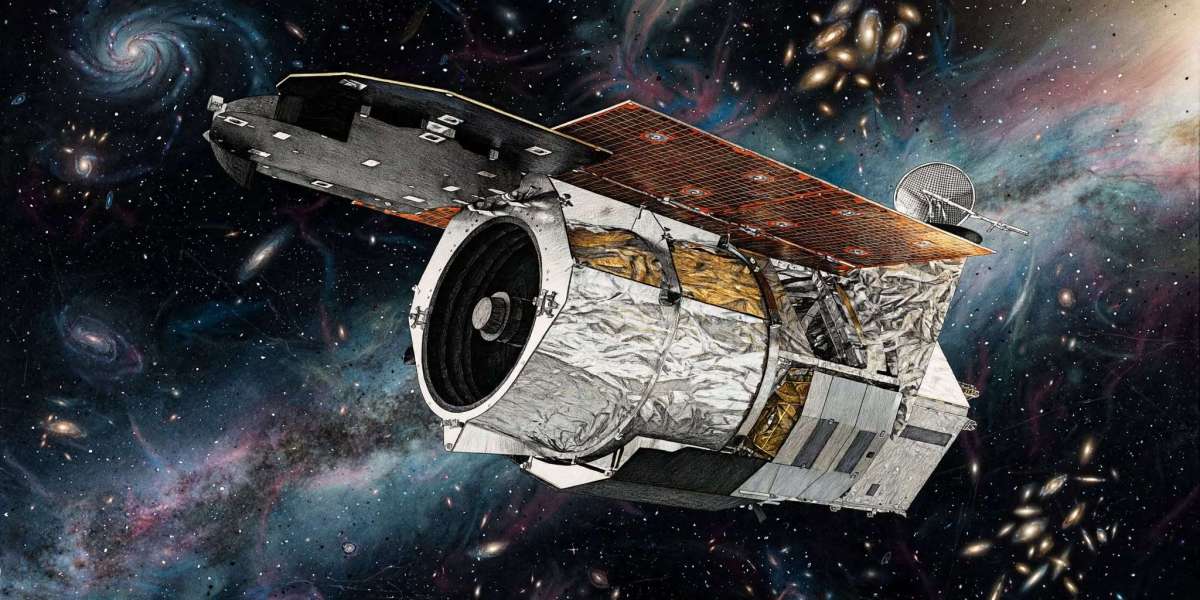
The James Webb Space Telescope is transforming our understanding of the universe, and its latest observations of a supermassive black hole are among its most revealing achievements yet. By peering deep into the heart of the nearby Circinus Galaxy, Webb has uncovered where mysterious infrared light around black holes truly originates. These findings challenge long-standing assumptions and open new paths for studying how black holes grow and influence their host galaxies.
A Closer Look at the Circinus Galaxy Black Hole
REUTERS/Kevin Lamarque/File Photo © Kevin Lamarque/Reuters
image source: msn.com
The Circinus Galaxy lies about 13 million light-years from Earth and hosts an active supermassive black hole at its center. For decades, astronomers detected unusually strong infrared radiation coming from the region surrounding this black hole. Earlier telescopes lacked the resolution needed to pinpoint the source of this glow, leaving scientists to rely on theoretical models.
Most of those models suggested the infrared light came from powerful outflows of superheated material being expelled from the black hole. James Webb’s infrared sensitivity and high resolution have now made it possible to test that assumption directly.
What James Webb Discovered
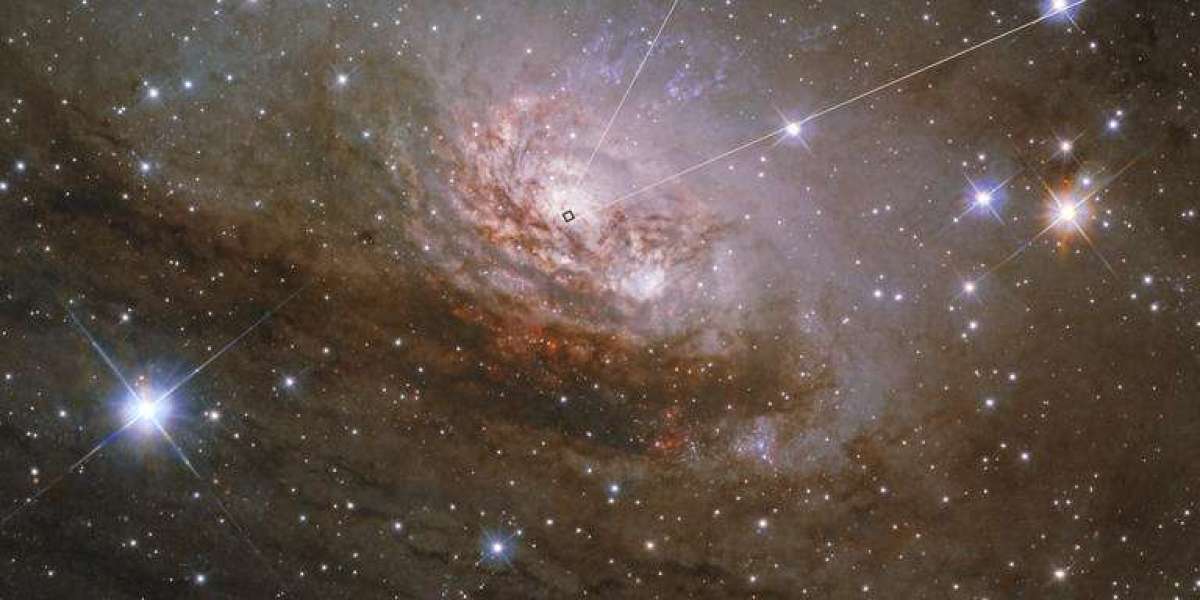
© Space Telescope Science Institute Office of Public Outreach, NASA, ESA, CSA, E. Lopez-Rodriguez
image source: msn.com
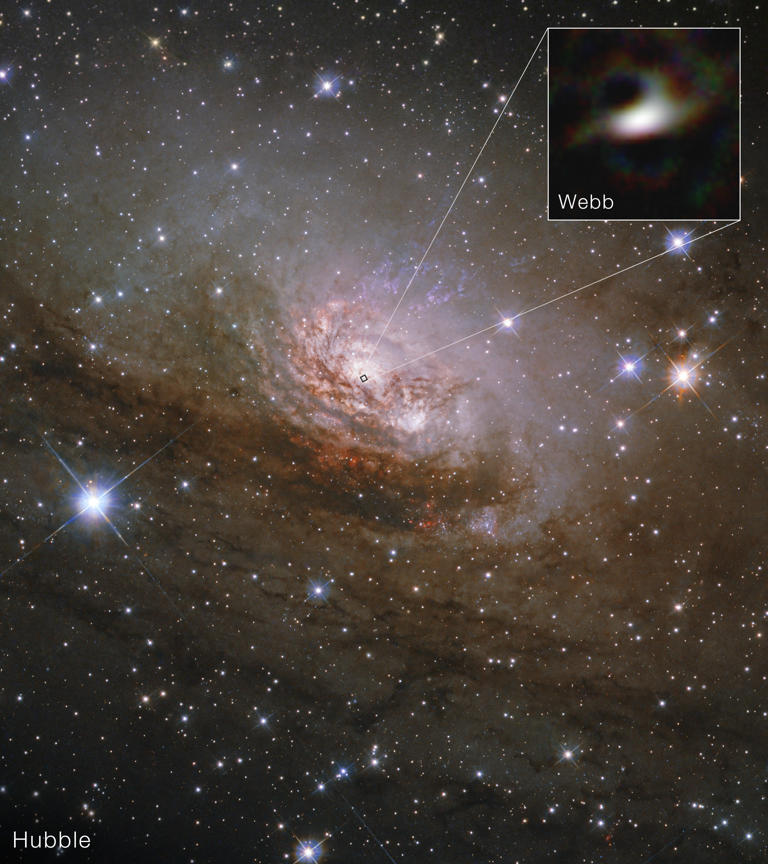
Using its Near-Infrared Imager and Slitless Spectrograph, James Webb captured the sharpest image ever taken of the black hole’s surroundings. The observations revealed that roughly 87% of the infrared emission comes from hot dust extremely close to the black hole, located along the inner surface of a dense, doughnut-shaped structure known as a torus. Less than 1% of the infrared light originates from dusty outflows or winds.
This discovery overturns the long-held belief that infrared excess around active black holes is dominated by outflowing material. Instead, the primary source is dust that is actively feeding the black hole itself.
The Role of Dust, Disks, and Donuts
An illustration of a supermassive black hole spewing an energetic outburst into space
(Image credit: NASA, ESA, CSA, Ralf Crawford (STScI))
image source: livescience.com
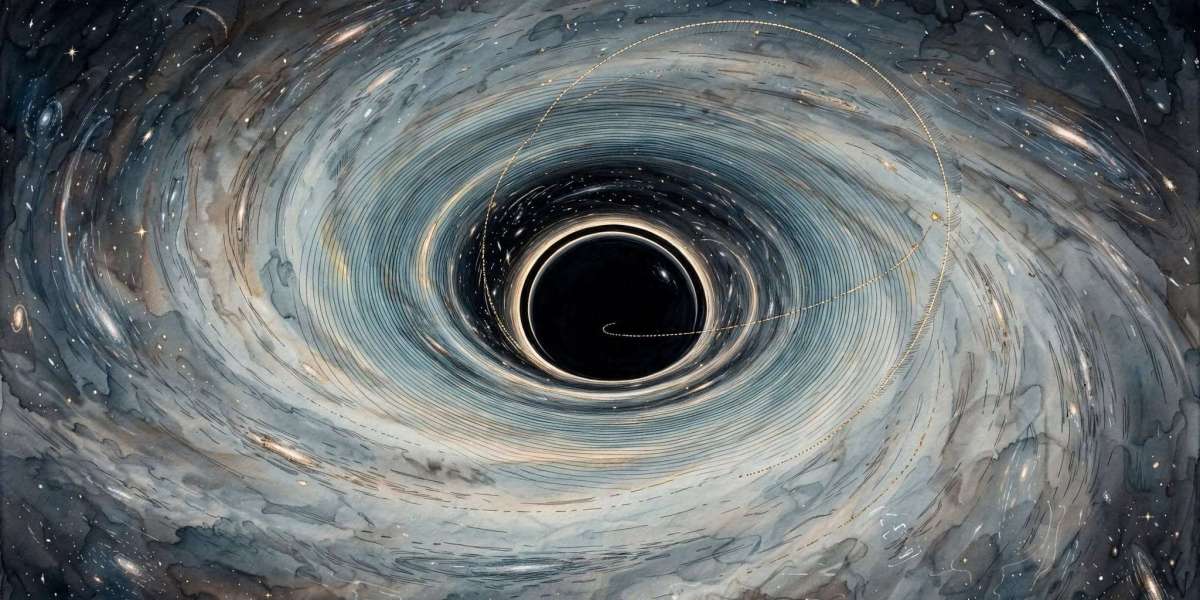
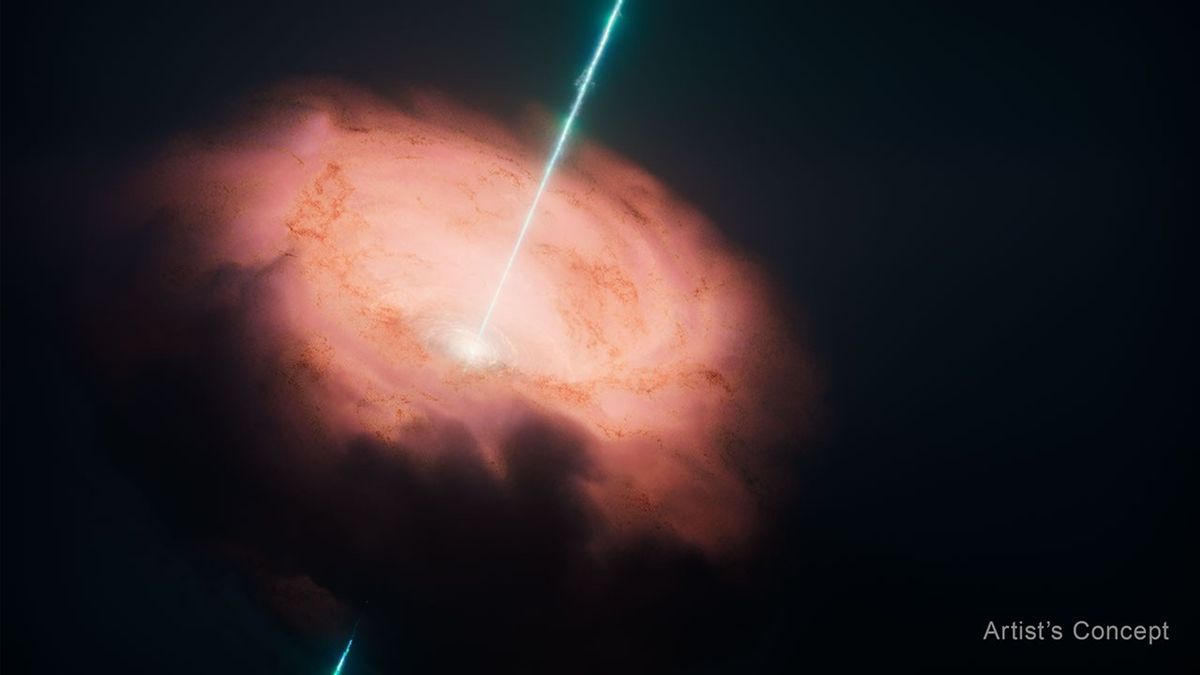
Supermassive black holes do not exist in isolation. As gas and dust fall inward, they form a thick torus that surrounds the black hole. Material drawn from this torus settles into a flatter accretion disk, spiraling inward at extreme speeds. Friction within this disk heats the dust, causing it to emit infrared light.
James Webb’s observations confirm that this inner dusty structure, rather than expelled material, dominates the infrared signature of the Circinus black hole. Any remaining infrared light appears to come from warm dust in the surrounding galaxy, beyond the black hole’s direct influence.
How Webb Achieved Its Sharpest Black Hole Image
One of the keys to this breakthrough is an advanced observing method called aperture masking interferometry. This technique allows Webb to act like a much larger telescope by controlling how light enters its detectors. The result is a dramatic increase in image resolution, effectively doubling Webb’s sharpness.
With this method, astronomers resolved a region only about 33 light-years wide at the galaxy’s center. It marked the first time this high-contrast mode was used to study an object beyond the Milky Way, demonstrating Webb’s ability to explore previously inaccessible cosmic environments.
Jets, Winds, and Black Hole Behavior
While the Circinus discovery highlights the dominance of dusty disks, black holes are still capable of launching powerful jets and winds. Other studies, including long-term observations of black holes within the Milky Way, show that these outflows can switch on and off in complex cycles.
According to some researchers, black holes can alternate between producing high-speed plasma jets and broad winds, suggesting a dynamic balance between feeding and expelling material. The Circinus black hole represents just one stage in a much broader family of active galaxies, and scientists caution against applying a single model universally.
Why This Discovery Matters
Understanding where infrared light comes from is essential for interpreting observations of black holes across the universe. The Circinus findings provide a critical reference point for studying more distant and less accessible galaxies.
By expanding these observations to a larger sample of black holes, astronomers hope to learn how supermassive black holes grow, how they regulate star formation, and how they shape the evolution of galaxies over cosmic time.
Conclusion: A New Era of Black Hole Exploration
James Webb has done more than sharpen our view of a black hole—it has reshaped the story of how these cosmic giants feed and glow. By revealing that hot dust near the black hole, not violent outflows, dominates infrared emission, Webb challenges decades of assumptions and refines the tools astronomers use to study the universe.
As Webb continues to observe more galaxies using these advanced techniques, scientists are poised to unlock deeper insights into the life cycles of black holes and their profound influence on the cosmos. What was once hidden behind dust and distance is now coming into focus, marking a powerful step forward in humanity’s exploration of the universe.
Key Points Summary
James Webb captured the sharpest-ever infrared image of a black hole’s surroundings
Most infrared light comes from hot dust close to the black hole, not from outflows
The discovery reshapes models of black hole feeding and galaxy evolution
advertisement
Frequently Asked Questions (FAQ)
What black hole did James Webb observe?
A supermassive black hole at the center of the Circinus Galaxy, about 13 million light-years away.
Why is infrared light important for studying black holes?
Infrared wavelengths can penetrate dust that blocks visible light, revealing hidden structures around black holes.
Did the black hole produce jets or winds?
Yes, but in this case they contribute very little to the observed infrared emission.
What instrument made this discovery possible?
Webb’s NIRISS instrument using aperture masking interferometry.
Can this method be used on other black holes?
Yes, astronomers plan to apply it to many active galaxies.
Sources
USA TODAY / MSN – News report on James Webb uncovering the origin of infrared emissions around a black hole
https://www.msn.com/en-us/news/technology/nasa-s-james-webb-space-telescope-uncovers-black-hole-secret/ar-AA1UpADmLive Science – Detailed scientific explanation of James Webb’s sharpest-ever black hole image and its implications
https://www.livescience.com/space/astronomy/james-webb-telescope-reveals-sharpest-ever-look-at-the-edge-of-a-black-hole-and-it-could-solve-a-major-galactic-mystery
Thank you !