
The Fundamental Constants of Our Universe: Understanding the Building Blocks of Reality

Key Points Summary
Fundamental Constants: 26 constants that determine the behavior of particles, forces, and the structure of the universe.
Theories: The multiverse and bubble universes suggest that different regions of the universe could have different constants.
Anthropic Principle: Proposes that the constants are fine-tuned for life, but doesn’t offer a concrete explanation.
Unanswered Questions: The true origins of these constants are still speculative, with no definitive explanation yet.
advertisement
The universe we inhabit is governed by a set of fundamental constants—values that are seemingly unchanging and determine everything from the behavior of particles to the structure of space itself. These constants shape the laws of physics and the forces that control the interactions of matter and energy. But how did they come to be the way they are, and why do they take on the specific values we observe?
In this article, we’ll explore the nature of these fundamental constants, the theories surrounding their origins, and the implications of their fine-tuning for the existence of life. We’ll also look at some of the speculative ideas, like the multiverse and cosmic inflation, that attempt to explain why our universe is the way it is.
What Are the Fundamental Constants?
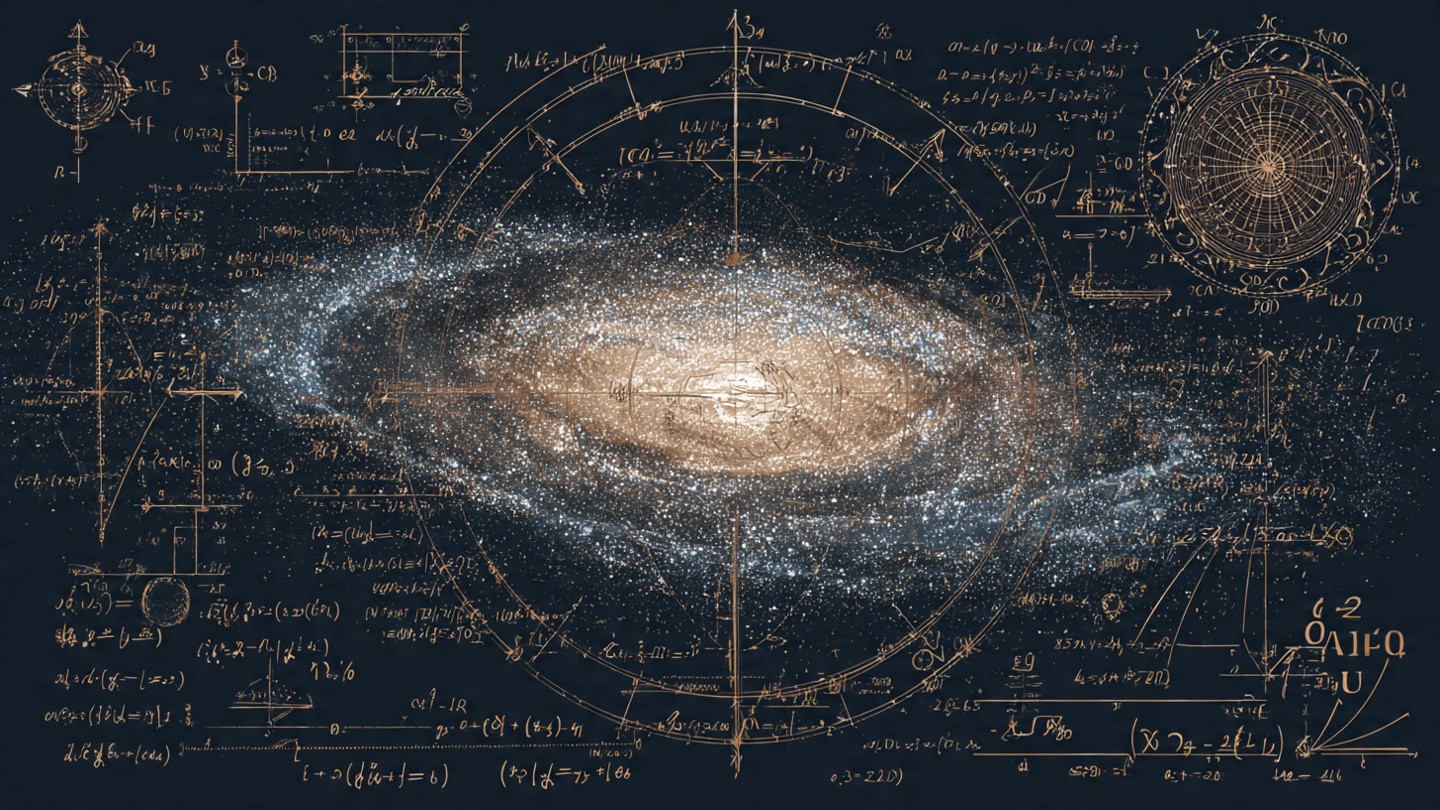
There are 26 known fundamental constants in nature. These constants define the strengths of various forces, the masses of fundamental particles, and other essential properties of our universe. Some of the most important constants include:
The Fine-Structure Constant (α): This constant describes the strength of the electromagnetic force. It plays a crucial role in determining the behavior of atoms and molecules.
Gravitational Constant (G): This constant dictates the strength of gravity, the force that governs the motion of planets, stars, and galaxies.
The Cosmological Constant (Λ): Often associated with dark energy, this constant describes the accelerated expansion of the universe.
The Higgs Boson Mass: This constant is tied to the mass of the Higgs boson, a particle that is fundamental to understanding why other particles have mass.
These constants are essential for the stability of atoms, stars, and galaxies, and they help determine whether life, as we know it, is even possible.

Why Do These Constants Have the Values They Do?
The fundamental constants in our universe are not arbitrary; they are the result of specific physical conditions and laws. However, despite our knowledge of the constants themselves, the reasons why they have the values they do remain a mystery. Theoretical physicists have proposed various explanations, and one of the most intriguing ideas comes from the concept of the multiverse.
The Multiverse and Bubble Universes
One speculative explanation for the values of these constants is the idea of bubble universes arising from cosmic inflation. According to this theory, the rapid expansion of the universe in its early moments (known as inflation) created multiple "bubbles" or "pocket universes." Each bubble could have different values for its fundamental constants. In some universes, the constants would allow for the formation of stars and galaxies, while in others, the conditions would be too extreme for life to exist.
This idea is rooted in string theory, which suggests that there could be multiple "vacua" or states of the universe, each with different properties. When inflation ends, each bubble universe could settle into one of these vacua, resulting in different physical constants.
While this idea provides an interesting perspective, it is speculative and lacks direct empirical evidence. Some physicists argue that this theory is unsatisfying because it doesn’t offer a clear, testable mechanism for how these constants came to be.
The Anthropic Principle: A Solution or a Cop-Out?
An alternative explanation for the fine-tuning of the universe’s constants is the anthropic principle, which suggests that the constants must be the way they are because only in such a universe could intelligent life, like humans, exist. In other words, we find ourselves in a universe that is "just right" for life because if the constants were any different, life would not be possible, and no observers would be around to notice.
While this explanation fits the observable facts, it is often seen as unsatisfactory by many scientists. It doesn’t provide a true explanation for the values of the constants—it merely observes that life exists in a universe where these constants happen to be suitable for life.
The Search for a Deeper Explanation
Despite the speculative theories, most scientists agree that a more fundamental explanation for the values of the fundamental constants is still needed. Some theories, such as Grand Unified Theories (GUTs) and quantum gravity, could one day provide a mechanism that explains the constants and their relationship to the structure of the universe. These theories aim to unify the fundamental forces (strong, weak, electromagnetic, and gravity) and may hold the key to understanding why the constants have the values they do.
However, we currently lack a theory that can fully explain these constants. Until we develop a deeper understanding of the underlying mechanisms that govern the constants, we are left with more questions than answers.
Conclusion: The Fine-Tuning of the Universe and Our Place in It
The fundamental constants of the universe remain one of the greatest mysteries in modern physics. While we can measure their values with remarkable precision, the question of why they take on the specific values we observe is still unanswered. Theories such as the multiverse and the anthropic principle offer interesting possibilities, but they remain speculative without empirical confirmation.
Ultimately, the search for the origins of these constants is an ongoing journey—a journey that may one day provide deeper insights into the nature of reality itself. Whether through a deeper understanding of quantum gravity, string theory, or new experimental breakthroughs, the quest to understand the fundamental constants will continue to shape our view of the universe and our place within it.
advertisement
FAQ
Q: What are the most important fundamental constants in physics?
A: Some key constants include the fine-structure constant, the gravitational constant, the cosmological constant, and the Higgs boson mass.
Q: Why are these constants so important?
A: These constants govern everything from the strength of forces to the masses of particles, determining the structure of the universe and the possibility of life.
Q: What is the multiverse theory?
A: The multiverse theory suggests that our universe is one of many, each with its own set of physical constants. This could explain why our constants allow for life.
Q: How do we know the values of these constants?
A: The values are determined through experiments and observations, not through theoretical calculations. They are measured empirically.
Q: Will we ever understand the origin of these constants?
A: Theories such as quantum gravity and string theory may one day provide answers, but for now, the origins of the constants remain a mystery.
Sources:
Thank you !