
article image source: medicalxpress.com (Link)
Cap-Like OLED Wearable Could Revolutionize Hair Loss Treatment by Replacing Bulky Helmets
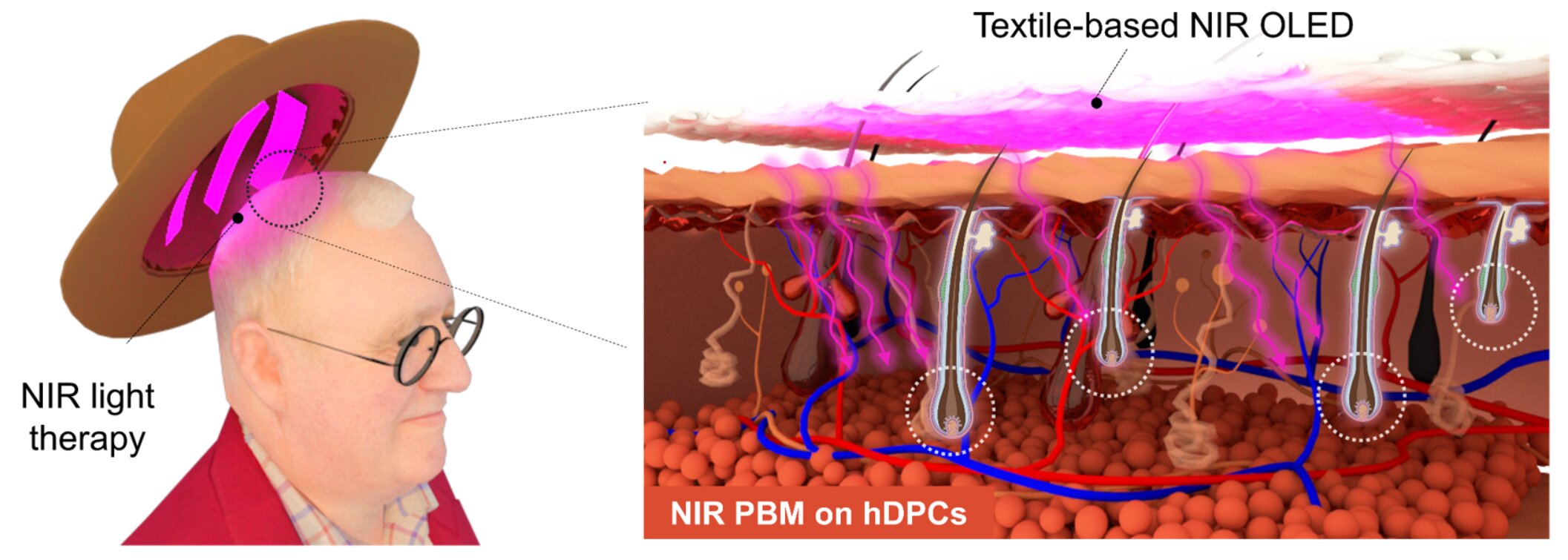
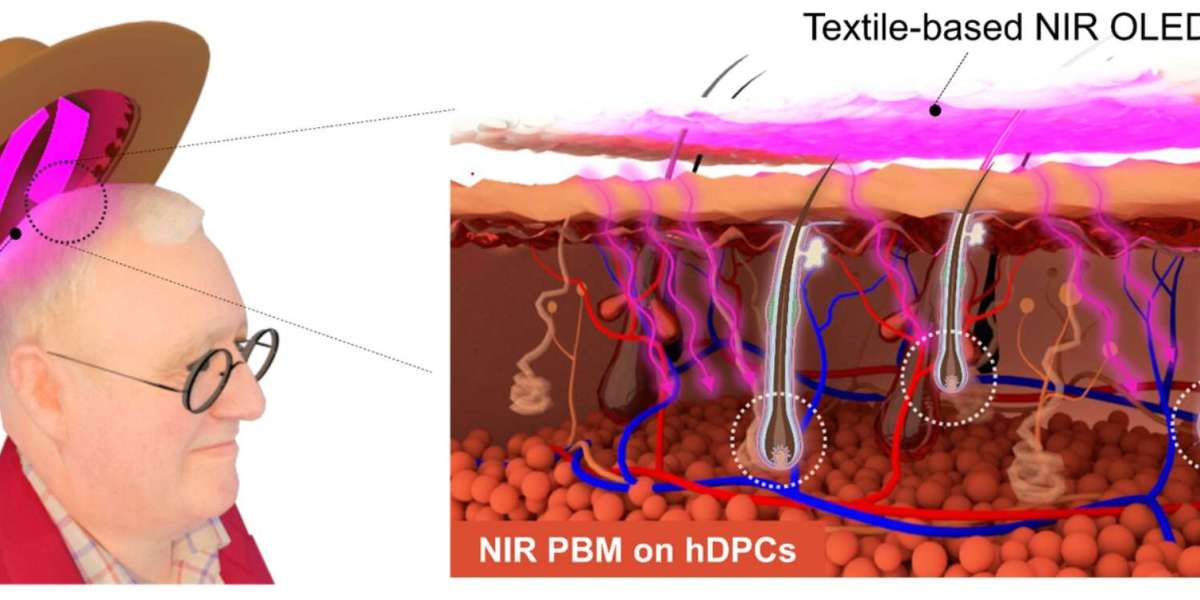
Schematic diagram of phototherapy using a textile-based near-infrared OLED cap.
Credit: The Korea Advanced Institute of Science and Technology (KAIST)
image source: medicalxpress.com
Soft, cap-style OLED device delivers uniform light therapy to the scalp.
Near-infrared OLEDs suppress hair-follicle cell aging by up to 92%.
Offers a safer, noninvasive alternative to drug-based hair-loss treatments.
advertisement
Introduction
A groundbreaking wearable technology may soon transform the way hair loss is treated. Traditional phototherapy devices for hair restoration are often heavy, rigid helmets that limit mobility and consistent scalp coverage. Researchers at the Korea Advanced Institute of Science and Technology (KAIST) and the Hong Kong University of Science and Technology have developed a soft, cap-like device using flexible OLED technology that promises effective, noninvasive hair-loss treatment. This innovation targets hair-follicle cell aging—a key factor in hair loss—while offering a comfortable, everyday wearable alternative.
From Bulky Helmets to Flexible Caps
Current phototherapy methods often rely on LED or laser point sources embedded in rigid helmets. These systems are bulky, mostly usable indoors, and struggle to provide uniform light across the scalp. The new cap-style wearable overcomes these challenges by integrating area-emitting OLEDs into a soft, fabric-like structure. The flexible design naturally conforms to the scalp’s contours, ensuring even light distribution across all hair follicles.
Precise Light Engineering for Hair-Follicle Health
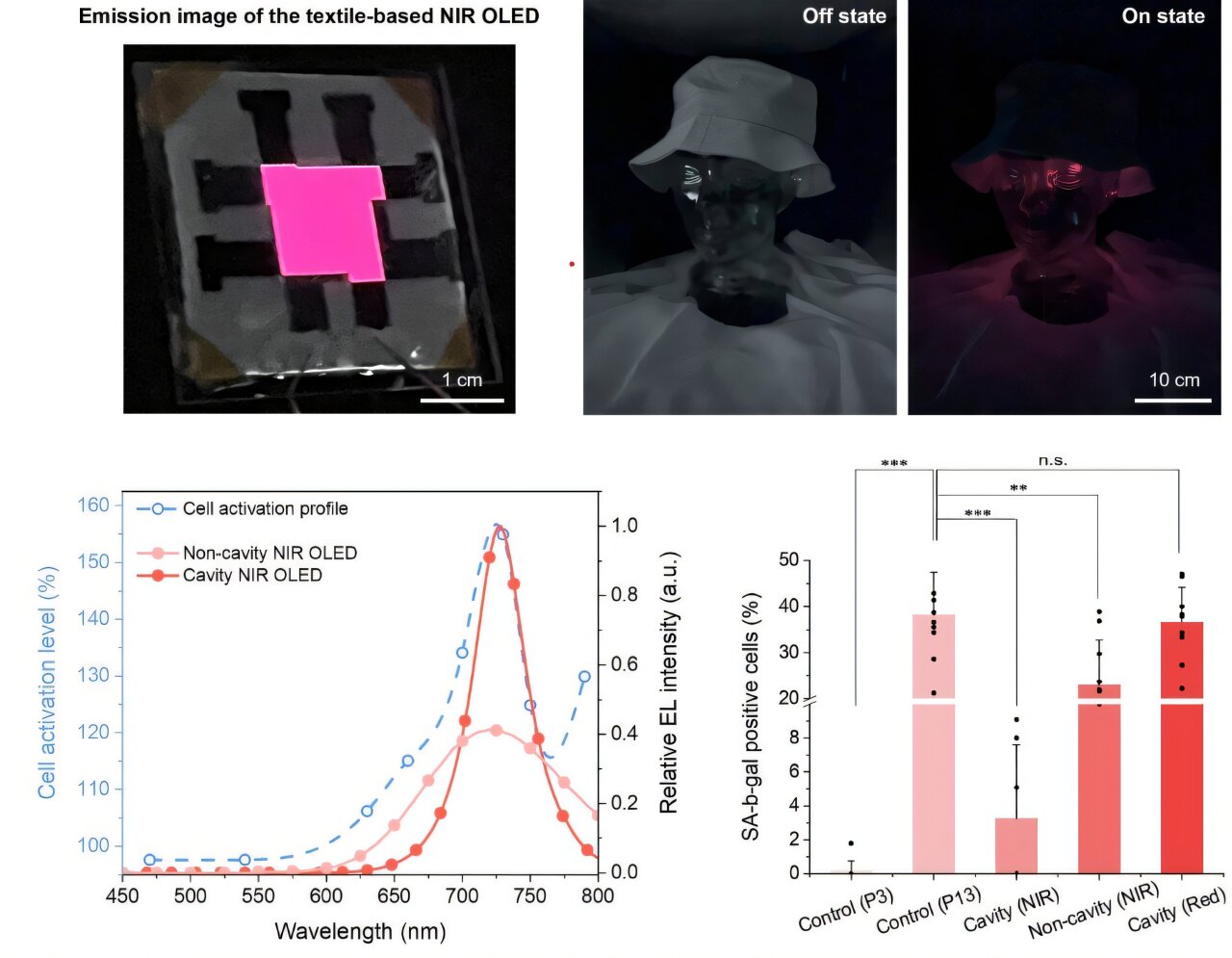
Credit: The Korea Advanced Institute of Science and Technology (KAIST)
image source: medicalxpress.com
The research team fine-tuned the OLEDs to emit near-infrared light in the 730–740 nm range, which is ideal for activating dermal papilla cells—critical regulators of hair growth located at the base of follicles. Laboratory tests using human dermal papilla cells (hDPCs) demonstrated that this NIR OLED irradiation suppressed cell aging by approximately 92%, significantly outperforming conventional red-light therapies. By tailoring the light wavelength, the device not only maximizes therapeutic effects but also provides a safer alternative to long-term drug-based treatments.
advertisement
Looking Ahead: From Lab to Daily Life
The wearable cap represents a potential shift in hair-loss care, combining effective phototherapy with everyday usability. Dr. Eun Hae Cho emphasized that the soft, textile-based OLED design allows the device to be used seamlessly in daily life, while Professor Kyung Cheol Choi highlighted the promise of uniform light stimulation across the entire scalp. The team plans to continue with preclinical studies to verify safety and explore practical applications for real-world treatment.
Conclusion
This innovative cap-like OLED wearable could redefine hair-loss management, offering a noninvasive, safe, and convenient alternative to traditional helmet devices and long-term drug therapies. By merging flexible technology with precision-engineered light therapy, the device has the potential to make hair restoration more effective, accessible, and comfortable for millions of people. As research advances, this breakthrough may usher in a new era of personalized, wearable phototherapy that integrates seamlessly into daily life.
Key Points Summary:
Flexible, textile-based OLED cap replaces rigid phototherapy helmets.
Near-infrared light (730–740 nm) activates hair-follicle dermal papilla cells.
Reduces hair-follicle cell aging by up to 92%.
Provides a noninvasive, drug-free treatment option.
Designed for daily use, delivering uniform scalp coverage.
advertisement
Frequently Asked Questions (FAQ):
How does the OLED wearable cap work?
It uses flexible near-infrared OLEDs to deliver uniform light therapy to hair follicles, suppressing cell aging and promoting hair growth.How effective is the device compared to traditional phototherapy?
Lab studies show up to 92% suppression of hair-follicle cell aging, outperforming conventional red-light therapies.Is it safe to use at home?
The device is noninvasive and designed for daily wear, but ongoing preclinical studies are evaluating long-term safety and effectiveness.Can this replace hair-loss drugs?
It offers a safer alternative to long-term drug treatments, though combining therapies may still be considered under medical advice.When will it be available to the public?
Commercial availability will depend on future clinical trials and regulatory approval.
Sources
Medical Xpress – Overview of KAIST and Hong Kong University OLED wearable for hair loss
https://medicalxpress.com/news/2026-02-cap-oled-wearable-hair-loss.html
Thank you !