
Hubble Captures Light Show Around Rapidly Dying Star: Clearest View Yet of the Egg Nebula
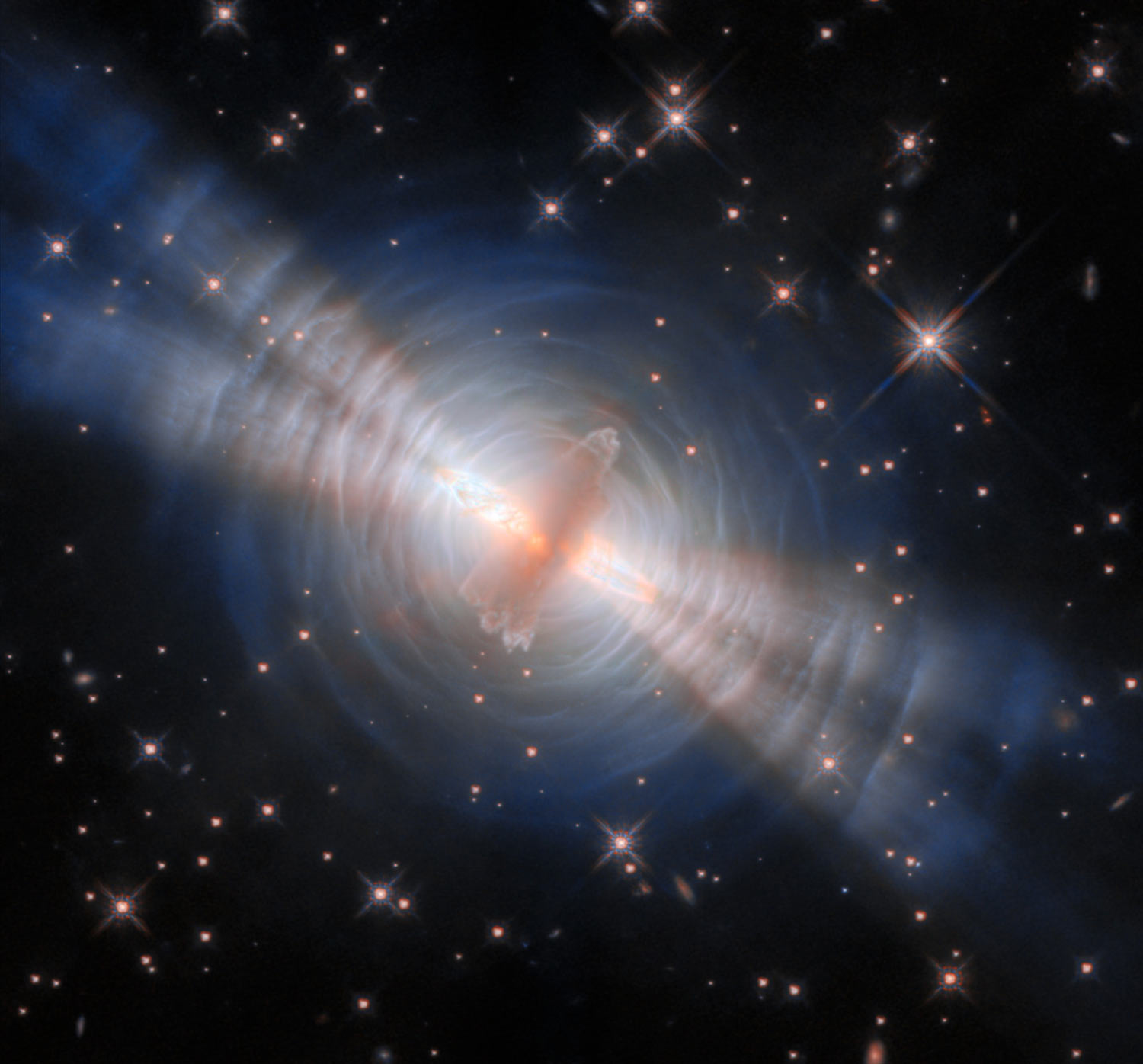
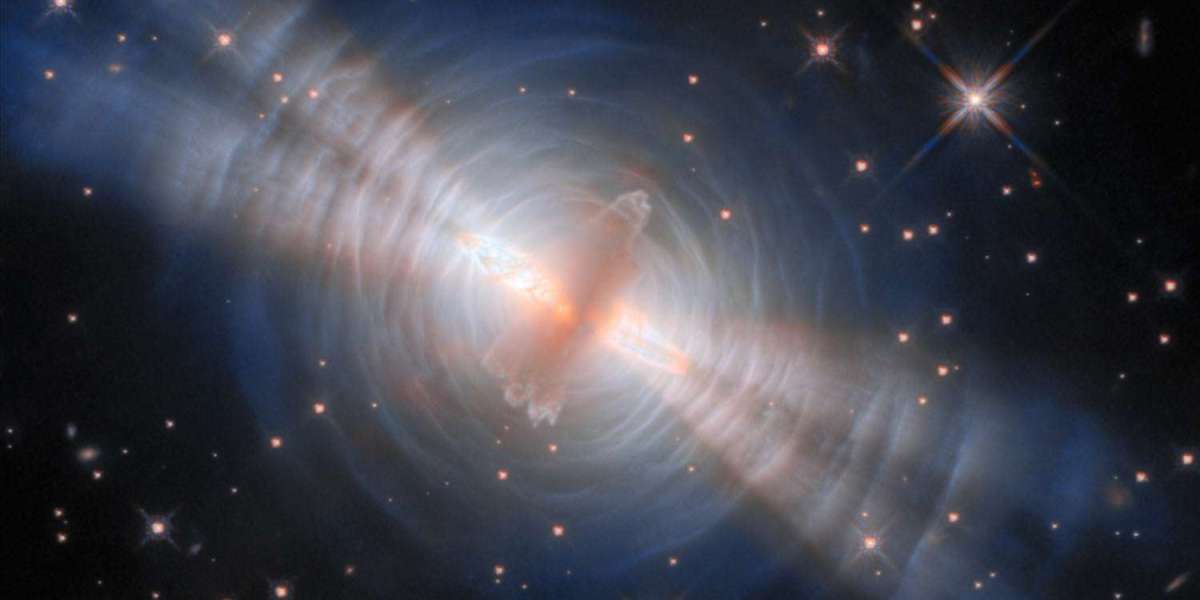
NASA’s Hubble Space Telescope reveals the clearest view yet of the Egg Nebula. This structure of gas and dust was created by a dying, Sun-like star. These newest observations were taken with Hubble’s Wide Field Camera 3.
Credit: NASA, ESA, Bruce Balick (UWashington)
• Hubble reveals the sharpest image ever of the Egg Nebula, a rare pre-planetary nebula 1,000 light-years away.
• Twin beams and glowing arcs expose how a Sun-like star sheds its outer layers in its final stages.
• The cosmic dust released here may one day seed future solar systems—just like ours.
advertisement
A Rare Glimpse into Late-Stage Stellar Evolution
NASA’s Hubble Space Telescope has delivered the clearest view yet of the Egg Nebula, capturing a dramatic cosmic light show around a rapidly dying star.
Located about 1,000 light-years away in the constellation Cygnus, the Egg Nebula—also known as the Cygnus Egg—is considered the first, youngest, and closest pre-planetary nebula ever discovered, according to Hubble astronomers and NASA.
Spanning roughly 0.4 light-years across, the nebula contains a central star hidden behind a dense cloud of dust, resembling a glowing yolk wrapped inside a dark cosmic shell.
Only Hubble’s extraordinary resolution can reveal the intricate interplay of light and shadow sculpted by freshly expelled stardust.
What Makes the Egg Nebula Unique?
The Egg Nebula is currently in a short-lived pre-planetary stage, a transitional phase that lasts only a few thousand years.
This stage occurs before a full planetary nebula forms—despite the name, planetary nebulae have nothing to do with planets. They are glowing shells of gas and dust created when Sun-like stars eject their outer layers.
At this early phase, the Egg Nebula shines by reflecting light from its central star.
That light escapes through a polar “eye” in the surrounding dust and emerges from a dusty disk expelled from the star’s surface just a few hundred years ago.
Scientists say this brief window offers a rare opportunity to test theories of late-stage stellar evolution while the evidence of mass ejection remains fresh.
advertisement
Twin Beams, Concentric Arcs, and Hidden Companions
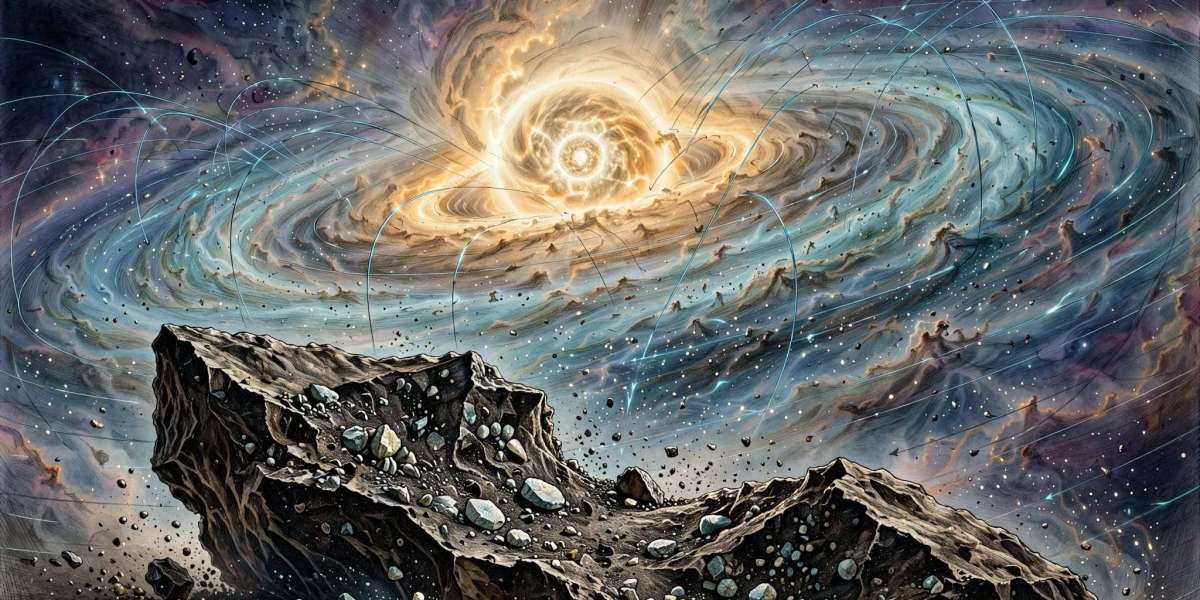
Hubble’s latest image reveals twin beams from the dying star illuminating fast-moving polar lobes.
These lobes pierce through slower, older concentric arcs of gas and dust.
The shapes and motions of these structures suggest gravitational interactions with one or possibly multiple hidden companion stars buried deep within the thick disk of stardust.
Researchers emphasize that the symmetrical patterns are far too orderly to be the result of a violent supernova explosion.
Instead, the arcs, lobes, and central dust cloud likely formed through a coordinated series of poorly understood sputtering events in the carbon-rich core of the aging star.
How Sun-Like Stars Die
Stars like our Sun spend billions of years burning hydrogen and helium.
When that fuel runs low, they begin shedding their outer layers into space.
The exposed core becomes extremely hot and eventually ionizes the surrounding gas, producing the glowing shells seen in planetary nebulae such as the Helix, Stingray, and Butterfly nebulae.
However, the Egg Nebula has not yet reached that stage.
It remains compact and reflective, offering astronomers a detailed look at the transformation process in action.
Hubble’s Continuing Observations
Hubble has observed the Egg Nebula multiple times over the decades.
In 1997, visible and near-infrared instruments provided early detailed views.
In 2003, the Advanced Camera for Surveys revealed the full extent of the surrounding dust ripples.
A 2012 image from the Wide Field Camera 3 zoomed in on the central dust cloud and dramatic gas outflows.
The newly released image combines previous data with additional observations, delivering the most detailed portrait ever captured of this intricate cosmic structure.
Cosmic Dust and the Origins of Solar Systems
The dust expelled by aging stars like the one in the Egg Nebula does not vanish into empty space.
Over time, this material becomes the raw ingredient for new star systems.
Astronomers note that similar processes billions of years ago seeded the material that eventually formed our own solar system and Earth approximately 4.5 billion years ago.
In that sense, the light show unfolding in Cygnus is not just the end of a star’s life—it is also the beginning of future worlds.
advertisement
Conclusion
The Egg Nebula stands as one of the most important natural laboratories for understanding how Sun-like stars end their lives.
Hubble’s latest high-resolution image does more than capture beauty—it reveals the mechanics of stellar transformation, the quiet choreography of dust and gravity, and the cosmic recycling that shapes galaxies.
By studying this rapidly dying star, scientists are not only uncovering the final chapters of stellar evolution, but also tracing the origins of planets, solar systems, and ultimately life itself.
The brilliant arcs and beams shining 1,000 light-years away remind us that in the universe, endings are inseparable from beginnings.
Key Points
The Egg Nebula is the youngest and closest known pre-planetary nebula, located in Cygnus.
Hubble’s latest image combines years of data to provide the clearest view yet.
The nebula offers scientists a rare opportunity to study how Sun-like stars shed material before becoming planetary nebulae.
advertisement
Frequently Asked Questions (FAQ)
What is the Egg Nebula?
The Egg Nebula is a pre-planetary nebula located about 1,000 light-years away in the constellation Cygnus. It represents a short transitional phase in the death of a Sun-like star.
What is a pre-planetary nebula?
It is an early stage that occurs after a star ejects its outer layers but before the gas becomes fully ionized to form a planetary nebula.
Why is it called a planetary nebula if it has nothing to do with planets?
The term dates back to early telescope observations when these objects resembled planetary disks. They are actually shells of gas and dust from dying stars.
Why is Hubble’s image important?
The new image combines multiple observations to provide the most detailed look yet at the Egg Nebula, helping scientists study stellar evolution in real time.
Could our Sun create something similar?
Yes. In about 5 billion years, the Sun is expected to shed its outer layers and form a planetary nebula, though not necessarily identical in shape.
Sources
- Sci.News – Report on Hubble’s clearest view of the Egg Nebula
https://www.sci.news/astronomy/hubble-egg-nebula-14546.html - Phys.org / NASA – Official coverage of Hubble capturing the light show around a rapidly dying star
https://phys.org/news/2026-02-hubble-captures-rapidly-dying-star.html
Thank you !