
Mysterious Human-Like Creatures Shared Indonesian Cave with Early Humans: Unearthing 200,000 Years of History
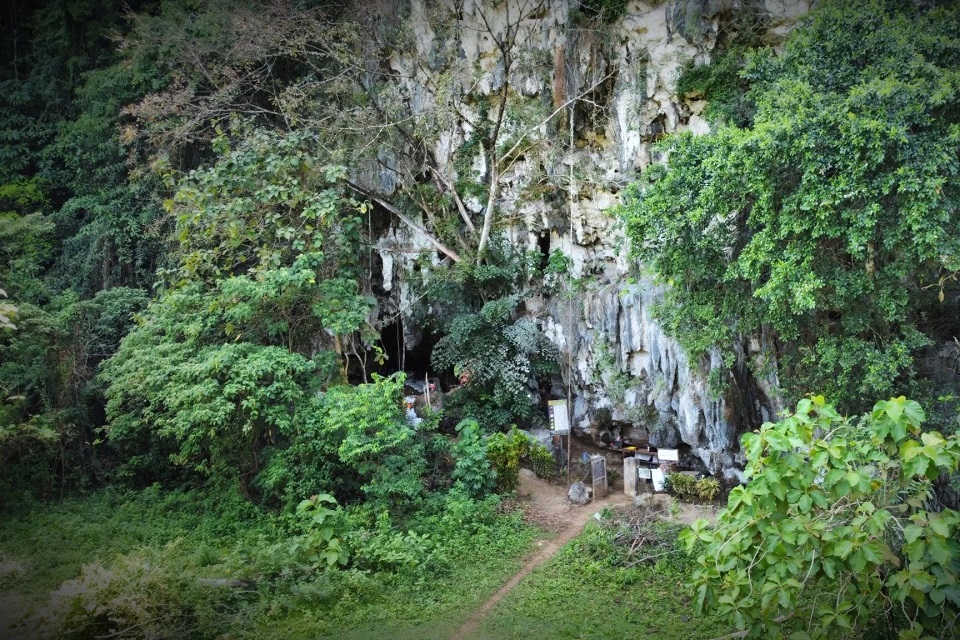
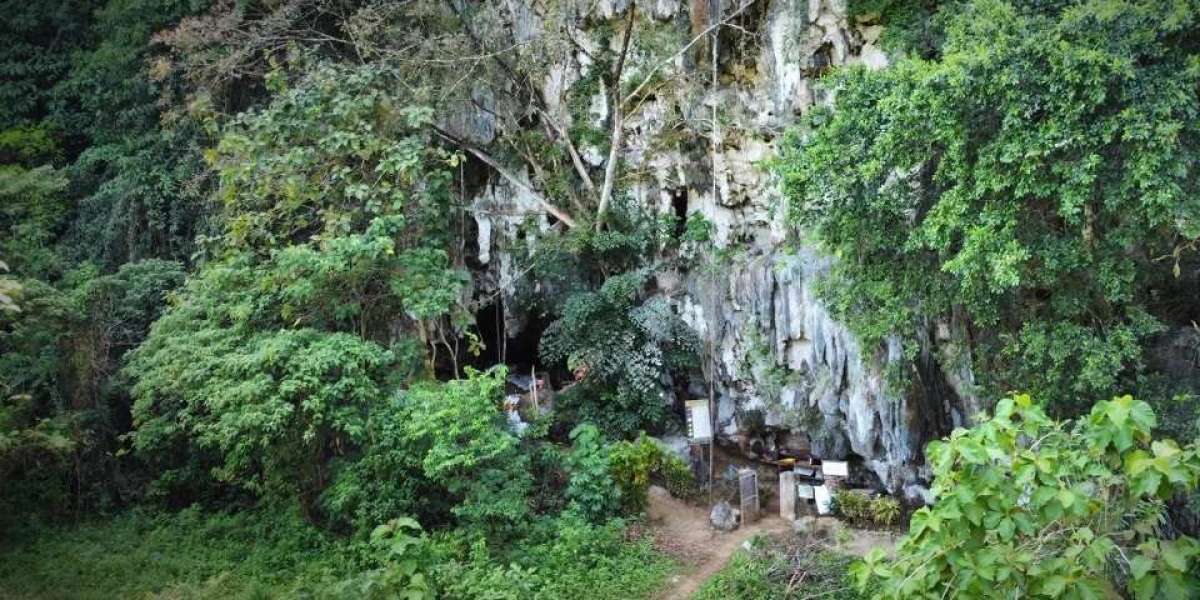
The entrance to Sulawesi's Leang Bulu Bettue cave, a treasure trove for archeologists -Griffith University
image source: newatlas.com
Key Points:
Excavations in Sulawesi reveal possible coexistence of humans and an unknown hominin species.
Advanced hunting tools and symbolic artifacts mark the arrival of modern humans.
Ongoing digs could reshape our understanding of human evolution in Southeast Asia.
Introduction
Deep within the Indonesian island of Sulawesi lies a cave that may rewrite our understanding of human history. Archaeologists have uncovered evidence suggesting that humans and a mysterious, now-extinct hominin species may have shared the same space tens of thousands of years ago. The Leang Bulu Bettue cave, located on the southern side of Sulawesi, offers a rare glimpse into a period spanning more than 200,000 years, potentially capturing a moment when two human species might have overlapped.
advertisement
Sulawesi: A Crucial Crossroads of Human Migration
Sulawesi is the fourth largest island in Indonesia and the 11th largest globally. Strategically positioned between mainland Southeast Asia and the Sahul region—comprising New Guinea and Australia—Sulawesi was a critical waypoint on ancient migration routes. Its caves and archaeological layers have become vital records for researchers attempting to untangle the complexities of human evolution and migration across the region.
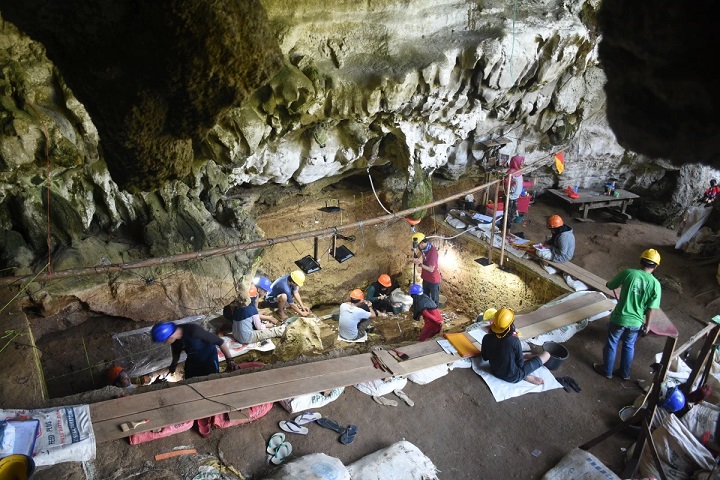
A team working inside the archeological treasure trove that is Leang Bulu Bettue cave - Basran Burhan
image source: newatlas.com
The Leang Bulu Bettue Excavation
Since 2013, international research teams led by Griffith University have been excavating Leang Bulu Bettue. In 2023, they completed a 26-foot (8-meter) deep dig, peeling back layers of history reaching approximately 200,000 years into the past. The excavation revealed a dramatic cultural and technological shift around 40,000 years ago.
Before this period, the cave was occupied by a hominin species whose exact identity remains unknown. Archaeologists uncovered cobble-and-flake tools—primitive stone implements created by flaking river stones into usable instruments such as picks. Intriguingly, these layers also contained monkey bones, suggesting advanced hunting skills previously unexpected from early hominins.
Who Were These Ancient Hominins?
While no fossils of this mysterious hominin have been found, researchers propose several possibilities, including Homo erectus, Denisovans, a dwarfed relative of Homo erectus, or an entirely unidentified human-like species. Regardless of their exact classification, these hominins displayed remarkable adaptability, as evidenced by their hunting and tool-making capabilities.
The Arrival of Modern Humans
Around 40,000 years ago, modern humans arrived on Sulawesi, bringing profound changes. The archaeological record shows more advanced stone tools, jewelry, portable artwork on stone slabs, and a shift in the animals hunted for food. These findings mark the earliest known evidence of symbolic behavior on the island—a hallmark of modern humans.
"This distinct behavioral break may reflect a major demographic and cultural transition, specifically the arrival of our species and the replacement of the earlier hominin population," explained Basran Burhan, lead researcher of the study.
While it is not yet confirmed whether humans and the earlier hominins shared the cave at the same time, Leang Bulu Bettue offers the most promising opportunity to explore this potential overlap. As Adam Brumm of Griffith University notes, "You might go back in time to the point where two human species came face-to-face."
The Future of the Dig
Excavations at Leang Bulu Bettue are ongoing. Researchers believe there could be several more meters of archaeological layers beneath the current depth, holding the potential to reveal even earlier human activity and interactions with mysterious hominins. Each new discovery promises to enrich our understanding of human evolution and migration, not just on Sulawesi but across Southeast Asia and Oceania.
Conclusion
The discoveries in Leang Bulu Bettue remind us that the story of humanity is far more complex than previously imagined. Evidence of advanced tool use, symbolic behavior, and the possible coexistence of multiple human species highlights the adaptability and ingenuity of our ancestors. As archaeologists continue to dig deeper, Sulawesi may yet unveil a fuller picture of how humans evolved, migrated, and interacted with other human-like species—offering insights that could reshape our understanding of who we are and where we come from.
Key Points Summary
Sulawesi’s Leang Bulu Bettue cave contains archaeological evidence dating back over 200,000 years.
A mysterious hominin species may have shared the cave with modern humans around 40,000 years ago.
Advanced tools, symbolic art, and hunting evidence mark the arrival of Homo sapiens.
Ongoing excavations may uncover further insights into early human evolution in Southeast Asia.
advertisement
Frequently Asked Questions (FAQ)
Q: What makes Leang Bulu Bettue cave special?
A: The cave provides archaeological layers dating back over 200,000 years, including evidence of both extinct hominins and modern humans, making it a rare site to study human evolution.
Q: Have any fossils of the extinct hominins been found?
A: No fossils have been recovered yet; researchers are relying on tools and animal remains to study the species.
Q: Could humans and extinct hominins have lived together?
A: It is possible, though not confirmed. The cave offers the best evidence for a potential overlap.
Q: What types of tools were found in the cave?
A: Early hominins used cobble-and-flake tools, while modern humans left behind more advanced implements and symbolic artifacts.
Q: Why is Sulawesi important for human evolution studies?
A: Its position between Southeast Asia and Sahul made it a crucial migration waypoint and a melting pot for different human species.
Sources:
New Atlas – Report on excavation findings in Sulawesi, Indonesia
https://newatlas.com/history/humans-hominins-sulawesi/
Thank you !