Gold and Silver Prices Surge: Records, Risks, and What’s Driving the Rally
A Historic Moment for Precious Metals
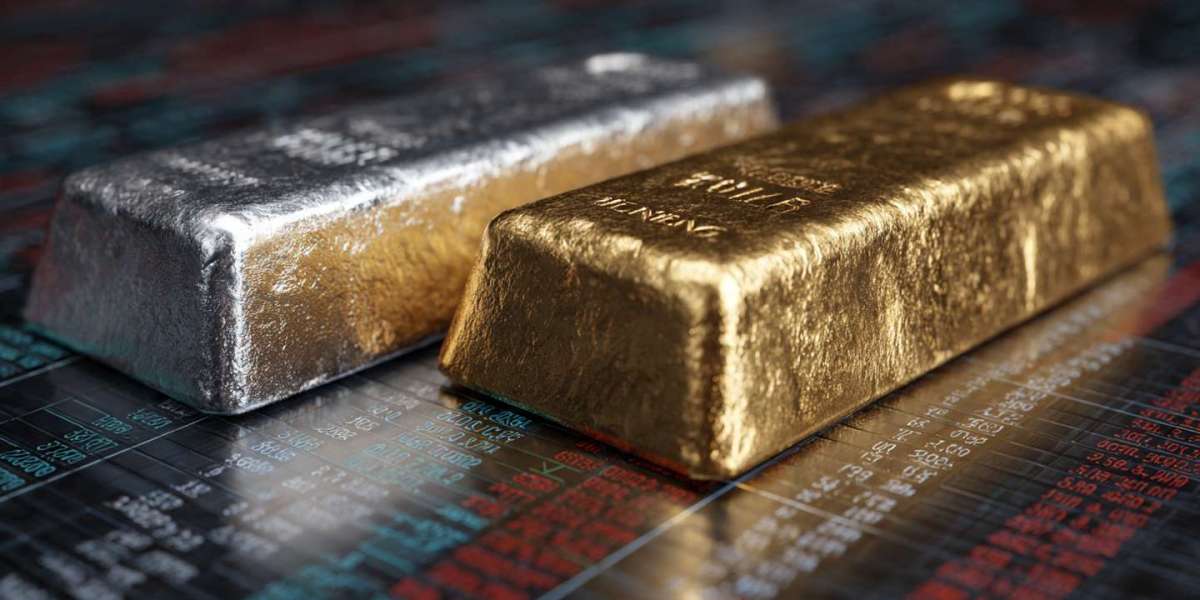
Gold and silver markets are experiencing one of their most remarkable periods in decades. Across multiple financial platforms and market reports published between December 21–22, 2025, both metals reached record or near-record price levels, fueled by a combination of geopolitical uncertainty, expectations of lower interest rates, currency movements, and tightening physical supply—especially for silver.
While exact prices vary slightly depending on timing and data sources, the broader message is clear: precious metals are being repriced as strategic assets rather than short-term trades.
advertisement
Silver Prices Break Records Amid Strong Momentum
Silver emerged as one of the strongest-performing commodities of 2025. According to FXStreet data, silver traded around $68.88 per troy ounce, reflecting a daily rise of nearly 2.5%. Other market trackers reported intraday highs between $69.23 and $69.45, with futures briefly exceeding $69.50.
Despite small discrepancies, all sources agree on the trend: silver has gained roughly 130% to 138% since the start of the year, an extraordinary performance that far outpaces most asset classes.
This surge has also affected the Gold/Silver ratio, which declined toward the 64 level, signaling silver’s growing strength relative to gold.
Gold Joins the Rally With New All-Time Highs
Gold followed a similar upward trajectory. Multiple sources reported spot gold trading between $4,410 and $4,420 per ounce, with futures approaching $4,450. These figures mark a decisive breakout above previous historical peaks.
Unlike silver, gold’s 2025 gains—estimated between 64% and 67%—appear steadier and more structurally driven, supported by central bank accumulation, ETF inflows, and its enduring role as a global reserve asset.
Analysts emphasize that gold is increasingly viewed not just as a hedge against crisis, but as a core portfolio allocation amid long-term economic and policy uncertainty.
advertisement
Why Prices Differ Slightly Across Reports
Price differences across articles stem from:
Different publication times and market sessions
Spot vs. futures pricing
Rapid intraday volatility during record-breaking moves
Rather than contradictions, these variations highlight how quickly gold and silver prices are moving during this phase of the rally.
Safe-Haven Demand Returns—But With New Depth
Geopolitical tensions played a critical role in reviving safe-haven demand. Reports cited renewed uncertainty in the Middle East, U.S.–Venezuela relations, and broader trade concerns as catalysts pushing investors toward physical assets.
However, analysts note that this rally differs from past episodes. Even when headlines temporarily cool, price dips are being treated as buying opportunities, suggesting stronger underlying conviction.
Interest Rates, the Dollar, and Policy Expectations
Markets are increasingly pricing in U.S. interest rate cuts in 2026. Lower rates reduce the opportunity cost of holding non-yielding assets like gold and silver, reinforcing their appeal.
At the same time, a softer U.S. dollar—with the Dollar Index hovering below recent highs—has supported precious metals by improving affordability for non-U.S. investors and encouraging commodity inflows.
advertisement
Silver’s Unique Advantage: Supply Tightness and Industrial Demand
Silver’s rally is not driven by investment demand alone. Several sources emphasize persistent supply deficits, with the market facing multiple consecutive years where demand exceeds production. Some estimates suggest cumulative deficits approaching 820 million ounces, equivalent to nearly a full year of global output.
Industrial demand remains a key pillar:
Solar panels
Electric vehicles
Artificial intelligence data centers
Advanced electronics
The inclusion of silver on the U.S. critical minerals list further elevated its strategic importance, attracting institutional and long-term investors.
Different Views on What Comes Next
While optimism dominates, perspectives diverge on sustainability:
Bullish views see potential for silver to test $70–$75 if green energy and AI demand continue expanding.
More cautious forecasts, including those cited by major banks, suggest average silver prices in 2026 may normalize toward the $50–$65 range.
Some analysts warn that profit-taking could occur after such rapid gains, particularly during thinner year-end liquidity.
Gold, meanwhile, is widely expected to remain supported even if short-term corrections occur, given central bank demand and its position above major psychological levels.
Conclusion: A Structural Shift, Not Just a Price Spike
Gold and silver’s surge is not merely about breaking records—it reflects a deeper shift in how markets price risk, policy, and physical scarcity. Gold clearing the $4,400 zone and silver approaching $70 signal renewed demand for financial insurance in an uncertain world.
The key question now is not whether pullbacks will happen—they will—but whether those pullbacks attract fresh buyers. If interest rate expectations remain supportive, the dollar stays relatively soft, and industrial demand continues to expand, precious metals may remain central to global portfolios well beyond this rally.
In a market searching for stability, gold and silver are no longer reacting to fear alone—they are being chosen with conviction.
Sources
FXStreet – Silver Price Today
https://www.fxstreet.com/news/silver-price-today-silver-rises-according-to-fxstreet-data-202512220930Investing.com – Gold and Silver Hit Record Prices
https://www.investing.com/news/commodities-news/silver-hits-record-high-over-67oz-as-geopolitical-jitters-drive-haven-demand-4418346EBC Financial Group – Gold and Silver Hit All-Time Highs
https://www.ebc.com/forex/gold-and-silver-hit-all-time-highs-as-safe-haven-demand-surgesRed94 – Price of Silver Today Hits Record High
https://www.red94.net/news/18235-price-of-silver-today-hits-record-high-at-69-per-ounce-soars-130-in-2025/
Thank you !