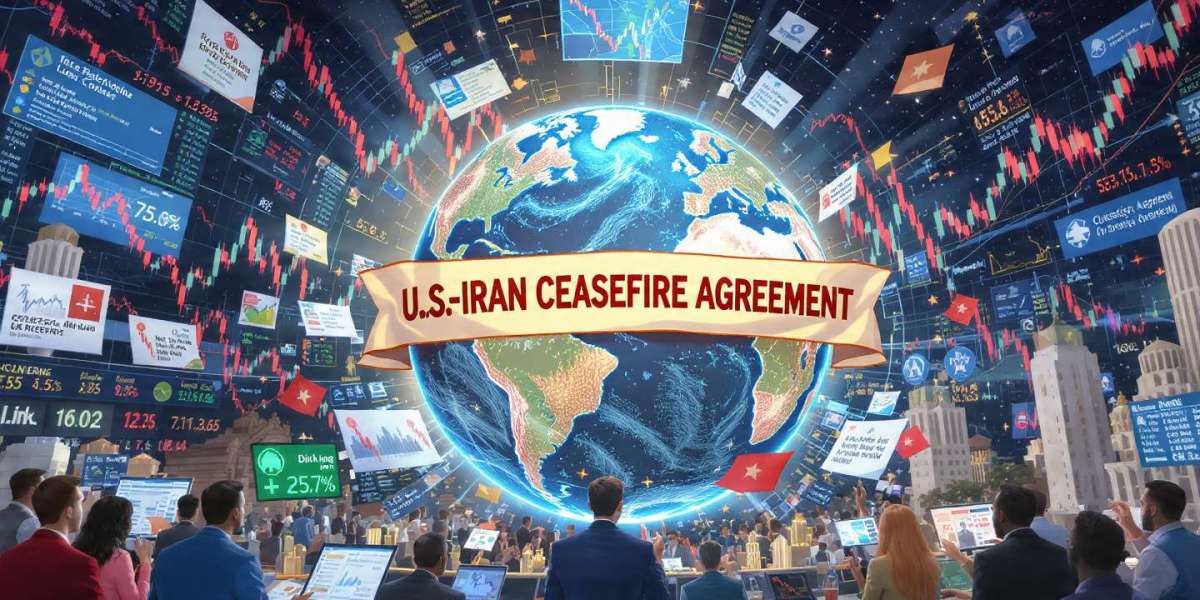

Stock Market Today: How the U.S.–Iran Ceasefire Is Driving Stocks, Volatility & Opportunities
key Investor Takeaways
The U.S.–Iran two-week ceasefire triggered a global stock rally by easing oil and inflation pressures.
Over $100B in systematic selling shaped recent volatility—creating both risks and opportunities.
Markets may rise further if volatility falls—but the rally remains fragile and event-driven.
advertisement
Introduction: Stocks — A Market Driven by Events, Not Just Earnings
Stocks remain one of the most powerful tools for building wealth, but in 2026, market behavior is being shaped as much by geopolitics and macro forces as by company fundamentals.
The recent U.S.–Iran ceasefire agreement, which includes reopening the Strait of Hormuz, is a clear example of how quickly global events can reshape investor sentiment and stock prices. (Reuters)
For investors, understanding these dynamics is no longer optional—it is essential.
What Investors Need to Know About Stocks Today

Stocks represent ownership in companies, but their prices are influenced by a complex mix of factors:
Economic growth and interest rates
Inflation trends
Energy prices (especially oil)
Global conflicts and political decisions
Institutional and algorithmic trading flows
The April 2026 market environment reflects all of these forces interacting at once.
The U.S.–Iran Ceasefire: A Major Catalyst for Stocks

Why the Ceasefire Matters
The agreement between the U.S. and Iran established a temporary two-week ceasefire and reopened the Strait of Hormuz—a critical route for global oil supply. (The Guardian)
This immediately impacted markets:
Global stocks surged 2–5% across major indices (Reuters)
Oil prices plunged up to ~15–19% (The Guardian)
Safe-haven demand (like the dollar) declined
Markets reacted because the ceasefire reduces the risk of energy supply disruptions and inflation spikes.
Investor Insight
This is a classic example of a “relief rally”—when markets rebound sharply after uncertainty is reduced.
However, this type of rally is often headline-driven and temporary, not fundamentally driven.
Oil Prices, Inflation, and Equity Markets

Oil is one of the most important variables for investors.
What Happened
Oil prices dropped sharply after the ceasefire
Energy stocks declined as a result
Travel, banking, and growth stocks benefited (Reuters)
Why It Matters
Lower oil prices:
Reduce inflation pressure
Improve consumer spending
Support corporate margins
Increase the likelihood of interest rate cuts
This explains why stocks rallied broadly across global markets.
Volatility: The Hidden Force Behind Market Swings

Systematic Selling Explained
Recent market weakness was not only due to fundamentals—it was amplified by volatility-linked strategies:
Volatility control funds
Commodity Trading Advisors (CTAs)
Risk-parity strategies
Key data points:
~$108 billion in equities sold since March
~$24 billion sold in a single week
Total assets exceed ~$1 trillion
These strategies:
Sell when volatility rises
Buy when volatility falls
Result: They amplify both crashes and rallies.
Forward-Looking Scenarios for Investors

Bullish Scenario (Volatility Declines):
Potential ~$20 billion inflow into equities
Continued upward momentum
Bearish Scenario (Volatility Rises Again):
Up to ~$48 billion in additional selling
Renewed market instability
Market Sentiment: Opportunity vs. Fragility

Bullish Perspective
Markets may have already bottomed
Inflation pressures are easing
Central banks may cut rates
Cautious Perspective
The ceasefire is temporary and conditional
Geopolitical tensions remain unresolved
Inflation risks (especially commodities) persist
Some analysts emphasize that the rally depends heavily on whether the ceasefire holds and oil flows normalize. (The Guardian)
Key Investor Strategy Takeaways

1. Watch Geopolitics Closely
Events like wars and ceasefires now move markets as much as earnings reports.
2. Monitor Oil and Inflation
Energy prices remain a leading indicator for market direction.
3. Understand Market Structure
Systematic funds and algorithms can drive short-term price action.
4. Stay Flexible but Long-Term Focused
Short-term volatility creates opportunities—but also risks.
Conclusion: Investing in a Headline-Driven Market
The 2026 stock market is a powerful reminder that investing is no longer just about picking good companies—it’s about understanding the broader system.
The U.S.–Iran ceasefire sparked a strong rally, but it also revealed how fragile markets can be when driven by uncertainty.
For investors, success lies in combining:
Awareness of global events
Understanding of market mechanics
Discipline and long-term thinking
Because while headlines may move markets in the short term, strategy and patience still build wealth over time.
Key Points Summary
The U.S.–Iran ceasefire triggered a global stock market rally.
Oil prices dropped sharply, reducing inflation concerns.
Volatility-linked funds sold over $100B in equities recently.
Markets may rise further if volatility stabilizes.
The rally remains fragile due to geopolitical uncertainty.
advertisement
Frequently Asked Questions FAQ
1. Why did stocks rise after the U.S.–Iran ceasefire?
Because the ceasefire reduced geopolitical risk and caused oil prices to fall, easing inflation concerns.
2. What is a relief rally?
A short-term market surge following the reduction of uncertainty or risk.
3. How do oil prices affect stocks?
Lower oil prices support economic growth and reduce inflation, which is generally positive for stocks.
4. What are volatility-linked funds?
Automated investment strategies that adjust stock exposure based on market volatility.
5. Is the current rally sustainable?
It depends on whether volatility stays low and the ceasefire holds.
Sources
TheStreet – Market update on ceasefire impact on stocks
https://www.thestreet.com/latest-news/stock-market-today-apr-8-2026-updatesReuters (via Investing.com) – Volatility-linked funds and equity selling trends
https://www.investing.com/news/stock-market-news/ck-hutchisons-panama-unit-files-arbitration-against-maersk-over-ports-takeover-4601862Bloomberg – Global markets reaction, oil prices, and investor sentiment
https://www.bloomberg.com/news/articles/2026-04-07/stock-market-today-dow-s-p-live-updates
Disclaimer:
This material may contain third-party opinions, none of the data and information on this webpage constitutes investment advice
The content shared in economics articles is solely for research and informational purposes.
We are not a financial advisory service, and the information provided should not be considered investment or trading advice.
Thank you !