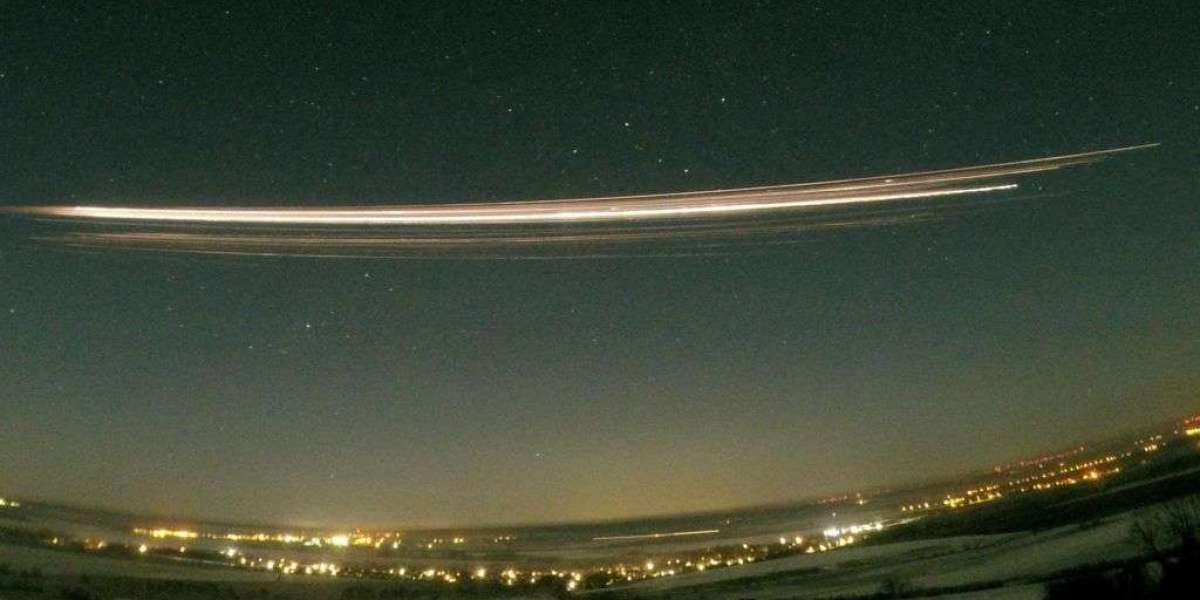

article image source and credits: Gerd Baumgarten - bbc.com (Link)
SpaceX Rocket Fireball Linked to Upper Atmospheric Lithium Pollution, Scientists Warn
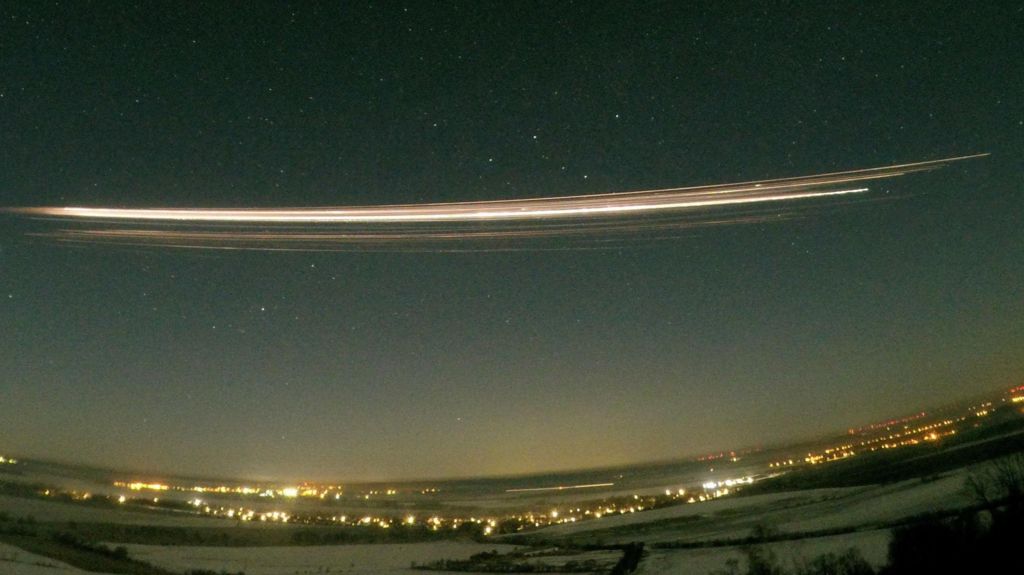
Long exposure photographs showed the Falcon 9 rocket debris over Berlin in 2025
image source and credits: Gerd Baumgarten - bbc.com
A failed Falcon 9 re-entry created a measurable lithium plume 100km above Earth.
Scientists recorded a 10-fold spike in upper atmospheric lithium using laser technology.
Experts warn satellite mega-constellations could dramatically increase space pollution.
advertisement
When a SpaceX Falcon 9 rocket broke apart during re-entry over Europe on February 19, 2025, it created a spectacular fireball visible from Ireland to Germany.
But beyond the dramatic light show, scientists have now confirmed something more concerning: the rocket’s uncontrolled descent released a significant plume of lithium into the upper atmosphere — marking the first time pollution from a specific rocket re-entry has been directly measured at such altitude.
The findings, published in Communications Earth & Environment, provide new insight into a largely overlooked environmental issue: upper atmospheric pollution from space debris.
Researchers from the Leibniz Institute of Atmospheric Physics, led by Prof. Robin Wing and Gerd Baumgarten, had already been investigating space debris pollution when the Falcon 9 upper stage unexpectedly re-entered the atmosphere.
Seeing an opportunity, the team used LIDAR technology — firing laser pulses into the sky to detect reflected signals — and measured a sudden spike in lithium nearly 100 kilometers above Earth.
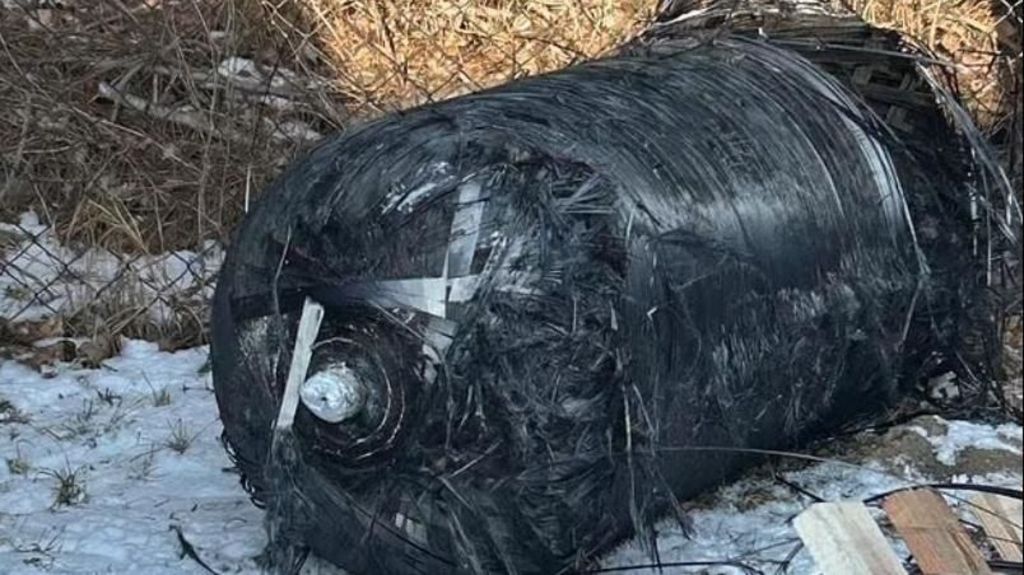
Last year Adam Borucki discovered a piece of debris originating from a Space X rocket
image source and credits: Adam Borucki - bbc.com
The detected lithium concentration was ten times higher than normal levels in this region, known by scientists as part of the mesosphere and lower thermosphere — sometimes nicknamed the “ignorosphere” because of how difficult it is to study.
By tracing the plume west of Ireland, researchers directly linked it to the rocket’s aluminium-lithium body vaporizing during re-entry.
Naturally occurring micrometeors deposit about 50–80 grams of lithium into the atmosphere each day.
In comparison, a single Falcon 9 rocket contains roughly 30 kilograms of lithium — dramatically higher than daily natural inputs.
advertisement
While lithium was the clearest measurable spike, scientists are particularly concerned about aluminium and aluminium oxides, which could interact with the ozone layer.
According to the research team, emissions released at around 75 kilometers altitude may have an impact equivalent to 100,000 times the same emissions at Earth’s surface, due to the sensitive chemistry of the upper atmosphere.
The long-term consequences remain uncertain.
Scientists warn that pollutants at these heights could disrupt atmospheric aerosols, influence climate moderation processes, and potentially contribute to ozone depletion.
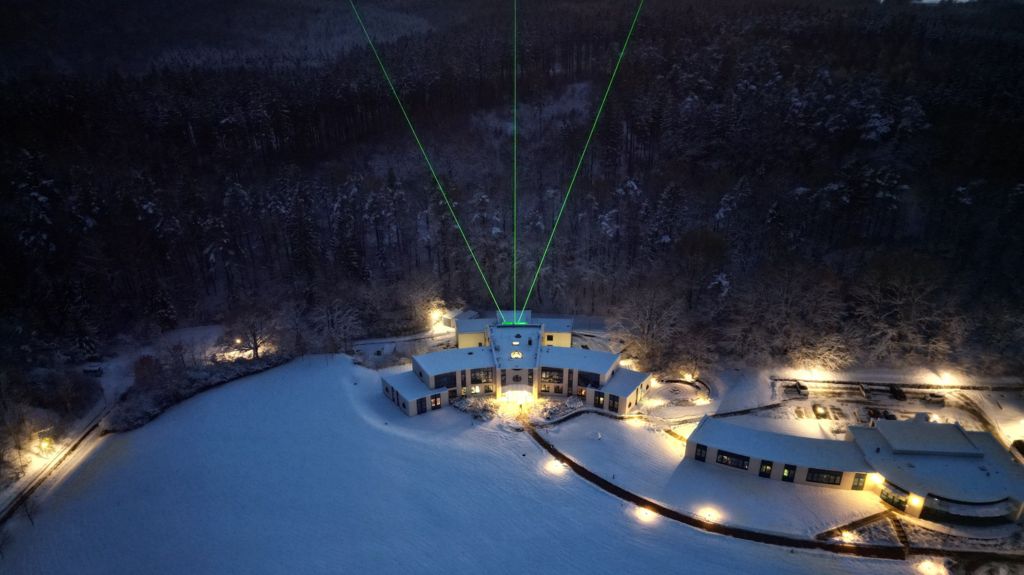
Scientists at the Leibniz Institute of Atmospheric Physics use Lidar lasers to measure the stratosphere and mesophere
image source and credits: Gerd Baumgarten - bbc.com
Eloise Marais, professor of atmospheric chemistry at University College London, described the findings as “really important,” noting there is currently no suitable regulation targeting pollution input into the upper layers of the atmosphere.
Although far above human activity, these layers can influence climate systems and shield life from harmful ultraviolet radiation.
The event also highlights broader concerns about the rapid growth of satellite launches.
There are currently around 14,000 active satellites orbiting Earth, and expansion plans are accelerating.
SpaceX, led by Elon Musk, has applied to launch up to one million additional satellites to support future space-based infrastructure and artificial intelligence systems.
China has also applied to deploy approximately 200,000 satellites.
Earlier research suggests that about 10% of atmospheric aerosols may already be contaminated by space debris.
Meanwhile, nearly 30,000 pieces of debris are believed to be freely orbiting Earth, posing collision risks to spacecraft and even the International Space Station.
advertisement
Some scientists and policy experts argue that existing space treaties were not designed to address emerging issues such as atmospheric contamination, orbital congestion, interference with astronomy, and falling debris.
Calls have been made — including from researchers affiliated with NASA and several universities — for the United Nations to integrate orbital protection into global sustainability goals.
SpaceX did not respond to media requests for comment regarding the study’s findings.
A Turning Point for Space Sustainability
This research may represent a pivotal moment in understanding how humanity’s expansion into space affects Earth’s atmosphere.
For the first time, scientists have demonstrated that rocket re-entry pollution can be measured, traced, and quantified before dispersing.
While one rocket does not constitute a global crisis, researchers describe it as a “harbinger” — an early warning of what could come if satellite mega-constellations multiply without environmental oversight.
The space age has delivered extraordinary benefits, from global communication to climate monitoring.
But as launch numbers rise dramatically, the challenge will be ensuring that innovation does not outpace responsibility.
If monitoring begins now and regulations evolve alongside technology, humanity may still have time to prevent upper atmospheric pollution from becoming the next major environmental crisis.
The fireball over Europe may have lasted only moments — but its scientific impact could shape space policy for decades to come.
Key Points
Scientists directly linked a SpaceX Falcon 9 re-entry to a lithium pollution plume 100km above Earth.
Lithium levels spiked to 10 times normal concentrations in the upper atmosphere.
Experts warn that massive satellite launch plans could significantly increase atmospheric contamination.
advertisement
Frequently Asked Questions (FAQ)
What happened during the SpaceX rocket re-entry?
A Falcon 9 upper stage failed and re-entered Earth’s atmosphere on February 19, 2025, creating a visible fireball over Europe and releasing metallic particles into the upper atmosphere.
What did scientists discover?
Using LIDAR technology, researchers detected a lithium plume nearly 100km above Earth that was ten times higher than normal background levels.
Why is lithium pollution concerning?
Although lithium itself was measured, scientists are more concerned about aluminium oxides from rocket materials, which may interfere with ozone chemistry and climate processes.
Is there regulation for upper atmospheric pollution?
Currently, there is no dedicated global regulatory framework addressing pollution in the mesosphere and lower thermosphere.
Could this become a larger problem?
Possibly. With plans to launch hundreds of thousands — even millions — of new satellites, rocket re-entries are expected to increase significantly.
Sources
- BBC News – Report on SpaceX rocket re-entry and lithium pollution findings
https://www.bbc.com/news/articles/cpd8z4eqlxno - Phys.org – Coverage of first direct measurement of rocket re-entry pollution
https://phys.org/news/2026-02-upper-atmospheric-lithium-pollution-linked.html - Nature – Original peer-reviewed study in Communications Earth & Environment
https://www.nature.com/articles/s43247-025-03154-8
Thank you !