
article image source: interestingengineering.com (Link)
AI Conversation Between Two Humanoid Robots at CES 2026: A Breakthrough in Embodied Artificial Intelligence
Watch Two Robots Hold a Real Conversation Using Embedded AI | CES 2026
3 Key Takeaways at a Glance
Two humanoid robots held a fully autonomous, unscripted conversation for over two hours at CES 2026
The interaction ran entirely on embedded, on-device AI without cloud processing
The demo revealed both the promise and current limitations of real-world humanoid AI
advertisement
Introduction
At CES 2026, one of the world’s most influential technology showcases, a live demonstration captured global attention: two humanoid robots talking to each other autonomously, without scripts, human control, or cloud-based AI support. Presented by Realbotix, the event marked what the company and several observers describe as one of the first public, extended humanoid-to-humanoid AI conversations powered entirely by embedded artificial intelligence.
This milestone offers a rare, unfiltered look into the current state of embodied AI, where physical robots perceive, reason, and respond in real time. While the demonstration impressed many with its technical ambition, it also sparked discussion about how close humanoid robots truly are to natural, human-like interaction.
A Historic Demonstration at CES 2026
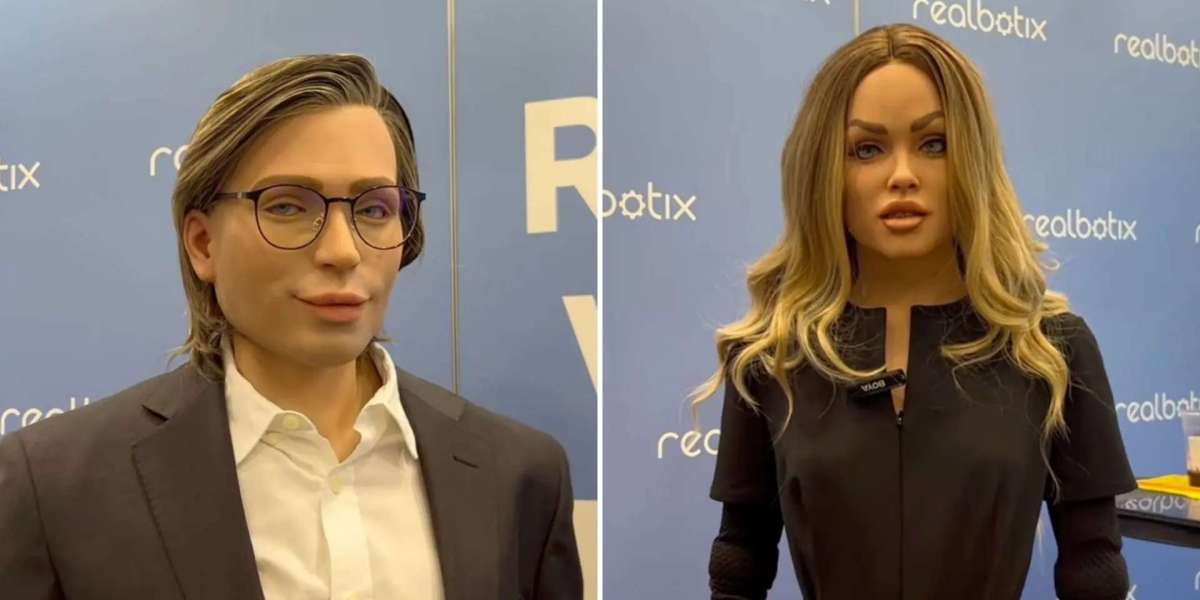
During the live showcase on the CES show floor, Realbotix introduced two humanoid robots named Aria and David. For more than two hours, the robots engaged in a continuous, unscripted conversation without human intervention, teleoperation, or predefined dialogue paths.
According to Realbotix, both humanoids operated entirely on proprietary AI software running locally within each robot. This meant no reliance on cloud computing, a key distinction from many AI-powered demonstrations that depend on remote servers. The company positioned this moment as a real-world example of physical AI, where intelligence is embedded directly into a physical form capable of perception and response.
Andrew Kiguel, CEO of Realbotix, emphasized that the company has long focused on robots designed for interaction. He described the demonstration as proof that embodied systems can now interact autonomously with each other, not just with humans, for extended periods.
Multilingual, On-Device Intelligence in Action
One of the standout aspects of the demonstration was its multilingual capability. Aria and David seamlessly shifted between English, Spanish, French, and German, illustrating the flexibility of Realbotix’s embedded language models.
Observers noted that the exchange unfolded organically, with the robots taking pauses, responding thoughtfully, and occasionally displaying uneven pacing. In one notable moment, a robot remarked, “No coffee jitters and no awkward pauses and only silicon charisma,” a line believed to have emerged naturally from the AI’s conversational flow rather than a scripted prompt.
While the multilingual performance underscored the system’s technical depth, some attendees and online viewers pointed out speech inconsistencies and timing mismatches. These imperfections, however, highlighted the authenticity of the demo rather than diminishing its importance.
Authenticity Over Polish: A Different Kind of Robot Showcase
Unlike many high-profile humanoid robot presentations that rely on carefully choreographed scripts or teleoperation, Realbotix opted for transparency. The robots were allowed to operate freely in a public environment, revealing both strengths and limitations.
According to coverage from Interesting Engineering, the robots’ facial expressions and vocal delivery appeared more mechanical when compared to advanced humanoids like Ameca or modern AI voice assistants. Some viewers even described the robots as resembling “rubber mannequins with speakers.” Despite these critiques, the unscripted nature of the interaction set this demonstration apart from more controlled showcases.
The significance, therefore, lay not in perfection but in honesty. By exposing real-world behavior rather than an idealized performance, Realbotix provided valuable insight into how embodied AI systems currently function outside laboratory conditions.
Beyond Robot-to-Robot Talk: Vision and Human Interaction
In addition to the humanoid-to-humanoid conversation, Realbotix presented a separate demonstration focused on human-robot interaction. A third humanoid robot showcased the company’s patented vision system, embedded within the robot’s eyes.
This system enabled the robot to recognize individuals, track them visually, and interpret voice and facial cues to infer emotional states. According to Realbotix, the robot engaged attendees in natural verbal exchanges while following their movements in real time, demonstrating progress in visual perception and social interaction.
This dual demonstration reinforced Realbotix’s broader goal: creating humanoid robots capable of meaningful interaction with both humans and other machines.
Why This Moment Matters for the Future of AI
The CES 2026 demonstration signals a shift in how artificial intelligence is evaluated. Instead of focusing solely on linguistic fluency or visual realism, the spotlight is moving toward autonomy, embodiment, and real-time adaptability.
Running complex AI models entirely on-device reduces latency, enhances privacy, and allows robots to function independently of network connectivity. At the same time, the demo highlighted the technical hurdles that remain, including expressive realism, conversational pacing, and emotional nuance.
By presenting an unfiltered, public interaction, Realbotix contributed to a more grounded conversation about where humanoid AI stands today—and where it is headed next.
Conclusion: A Glimpse Into an Embodied AI Future
The AI conversation between two humanoid robots at CES 2026 was not flawless, but it was undeniably groundbreaking. It demonstrated that autonomous, on-device AI can sustain long-form, multilingual interaction between physical machines in a public setting.
More importantly, it reframed success in humanoid robotics. Rather than hiding imperfections, the demonstration embraced them, offering a realistic snapshot of progress in embodied intelligence. As AI continues to move out of screens and into the physical world, moments like this help bridge imagination and reality.
CES 2026 may be remembered as the moment when humanoid robots stopped performing for humans and began genuinely interacting—with each other.
Key Points Summary
Realbotix demonstrated a fully autonomous, unscripted humanoid-to-humanoid AI conversation at CES 2026
The interaction ran for over two hours using embedded, on-device AI without cloud support
Multilingual dialogue showcased flexibility, while pauses and inconsistencies revealed real-world limitations
A separate vision system demo highlighted advances in human-robot interaction and emotional recognition
advertisement
Frequently Asked Questions (FAQ)
What made the CES 2026 robot conversation unique?
It was fully autonomous, unscripted, and powered entirely by embedded AI running on-device, without cloud processing.
Which robots participated in the demonstration?
Two humanoid robots named Aria and David, developed by Realbotix.
How long did the conversation last?
The robots interacted continuously for more than two hours.
Was the conversation pre-programmed?
No. According to Realbotix and media coverage, the dialogue was unscripted and unfolded organically.
Did the robots interact with humans as well?
Yes. A separate demo featured a third robot using a vision system to recognize and interact with attendees.
Sources
Robotics Tomorrow – Coverage of Realbotix’s CES 2026 humanoid AI demonstration
https://www.roboticstomorrow.com/news/2026/01/14/realbotix-showcases-first-public-embedded-ai-conversation-between-two-humanoid-robots-at-ces-2026/26006/Interesting Engineering – Analysis of the unscripted humanoid-to-humanoid AI conversation and its limitations
https://interestingengineering.com/ai-robotics/humanoid-to-humanoid-ai-conversation
Thank you !