5 Supplements and Medications You Should Never Take With Milk (And Why)
Key Points:
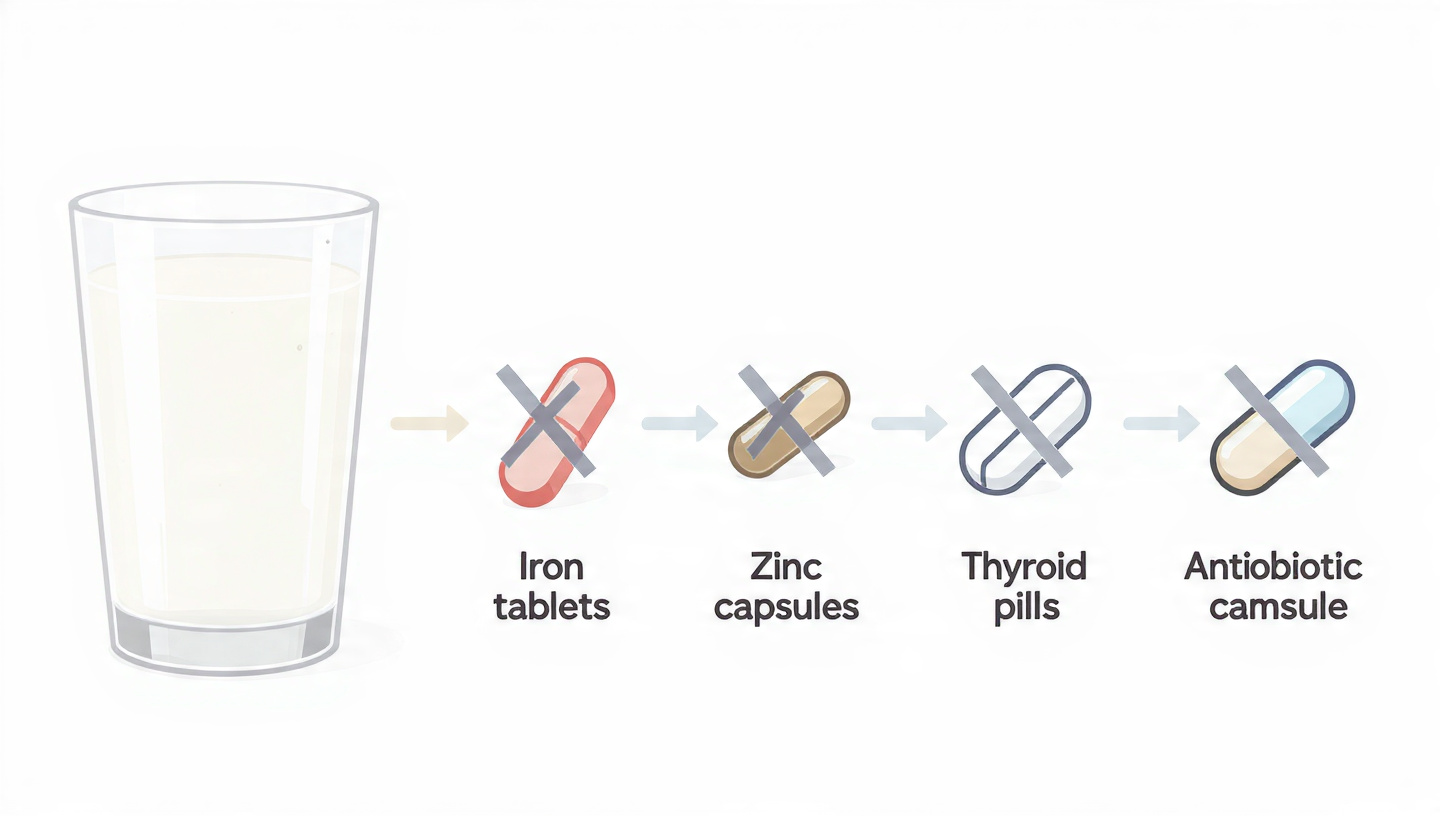
Calcium in milk can reduce absorption of certain medications and supplements.
Iron, zinc, and thyroid medications are particularly affected by dairy.
Timing your intake properly can maximize effectiveness.
Introduction
Milk is often hailed as a nutritious beverage, rich in calcium, protein, and vitamins. But while it’s excellent for bones and general health, milk can interfere with the absorption of some supplements and medications. If you’re taking iron, zinc, thyroid medication, or certain antibiotics, pairing them with milk could reduce their effectiveness. Understanding these interactions can help you optimize your supplement and medication routines while still enjoying dairy.
advertisement
1. Iron Supplements
Iron is essential for producing hemoglobin and preventing anemia, but milk can dramatically reduce how much your body absorbs. Calcium binds to iron in the stomach, and milk’s casein protein further inhibits absorption.
Tips for Safe Iron Intake:
Take iron on an empty stomach for best absorption.
If stomach upset occurs, pair iron with a small amount of food or vitamin C–rich beverages like orange juice.
Wait at least two hours before or after consuming milk or calcium-rich foods.
2. Zinc Supplements
Zinc plays a vital role in immune support, wound healing, and metabolic function. Certain forms, such as zinc sulfate and zinc gluconate, may have reduced absorption when taken with milk. Calcium and casein compete with zinc in the intestines, lowering its effectiveness.
Tips for Safe Zinc Intake:
Take zinc with water or a meal that includes protein or vitamin C.
Avoid pairing zinc supplements with dairy or high-fiber foods.
Always check with a healthcare provider if taking other medications.
3. Magnesium Supplements
Magnesium is important for nerve function, muscle health, and bone strength. Although milk hasn’t been shown to significantly reduce magnesium absorption, calcium and magnesium share intestinal transport pathways, which may slightly decrease uptake.
Tips for Safe Magnesium Intake:
Consider taking magnesium with water rather than milk.
Space magnesium supplements at least 1–2 hours away from calcium-rich foods for optimal absorption.
4. Thyroid Medications (Levothyroxine)
Levothyroxine, commonly prescribed for hypothyroidism, can be affected by milk. Calcium and proteins in dairy bind to the medication, reducing absorption and making it less effective.
Tips for Safe Thyroid Medication Use:
Take levothyroxine on an empty stomach with water.
Wait 30–60 minutes before eating breakfast and at least four hours before consuming milk or other dairy products.
Consult your doctor for a schedule that fits your routine.
5. Certain Antibiotics and Other Medications
Some antibiotics, such as tetracyclines and fluoroquinolones, are particularly sensitive to milk. Calcium binds to the drug molecules, forming compounds your body cannot absorb. Other medications affected include:
Propranolol (beta blocker)
Mercaptopurine (chemotherapy drug)
NSAIDs (anti-inflammatory drugs)
Digoxin (heart medication)
Amiloride and Spironolactone (diuretics)
Omeprazole (proton pump inhibitor)
Ranitidine (GERD medication)
Tips for Safe Medication Use:
Take antibiotics with water, not milk.
Avoid dairy for at least three hours before and after taking other sensitive medications.
Conclusion
While milk is a healthy addition to your diet, timing is everything when it comes to certain supplements and medications. Iron, zinc, magnesium, thyroid medications, and various antibiotics and other drugs can interact with calcium and proteins in milk, reducing their effectiveness. By paying attention to timing and pairing your supplements and medications with water or other foods, you can maximize absorption and ensure your body gets the nutrients and medication benefits it needs. Ultimately, small adjustments in timing can lead to better health outcomes—without giving up your morning latte.
Key Points Summary
Calcium and proteins in milk can bind with certain nutrients and medications.
Iron, zinc, magnesium, thyroid meds, and some antibiotics are most affected.
Taking supplements/medications at the right time improves absorption and effectiveness.
Small changes in timing can optimize health benefits without giving up dairy.
advertisement
Frequently Asked Questions (FAQ)
Q1: Can I drink milk after taking supplements?
A1: It depends on the supplement. For iron and zinc, wait at least two hours. For thyroid medications, wait at least four hours.
Q2: Which medications are most affected by milk?
A2: Antibiotics like tetracyclines and fluoroquinolones, as well as drugs like propranolol, digoxin, and certain diuretics.
Q3: Is magnesium safe to take with milk?
A3: Generally, yes, but spacing magnesium supplements 1–2 hours away from milk may slightly improve absorption.
Q4: Can calcium supplements interfere with other medications?
A4: Yes, calcium can compete with iron, zinc, and some medications for absorption, similar to milk.
Q5: What is the best way to take iron supplements?
A5: Take on an empty stomach with water, or with vitamin C–rich foods to boost absorption, while avoiding milk for at least two hours.
Sources
Verywell Health – Tips on supplements and medications that interact with milk
https://www.verywellhealth.com/supplements-not-to-mix-with-milk-11858880
Thank you !