
The Future of Domestic Robots: How AI is Transforming Homes
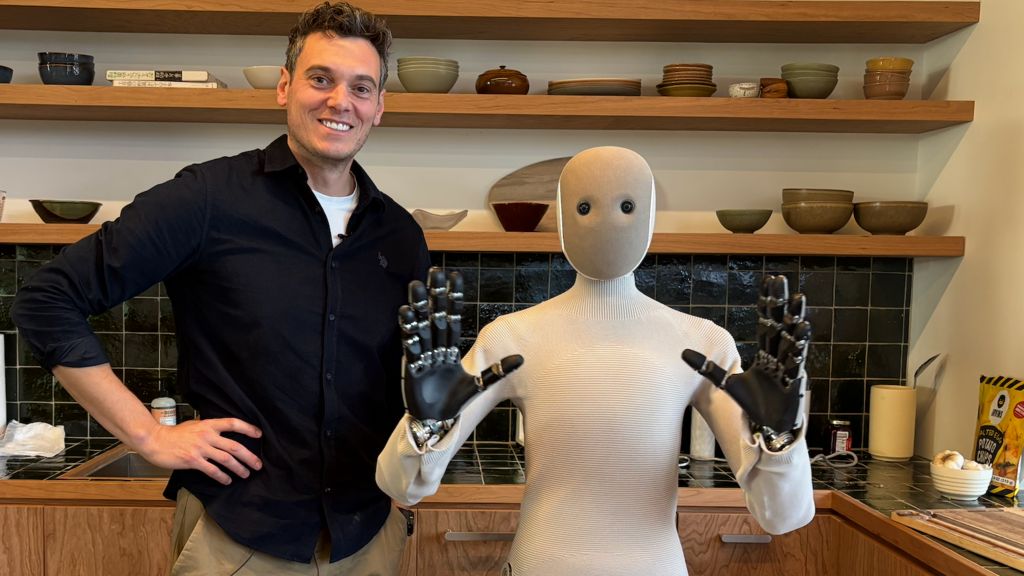
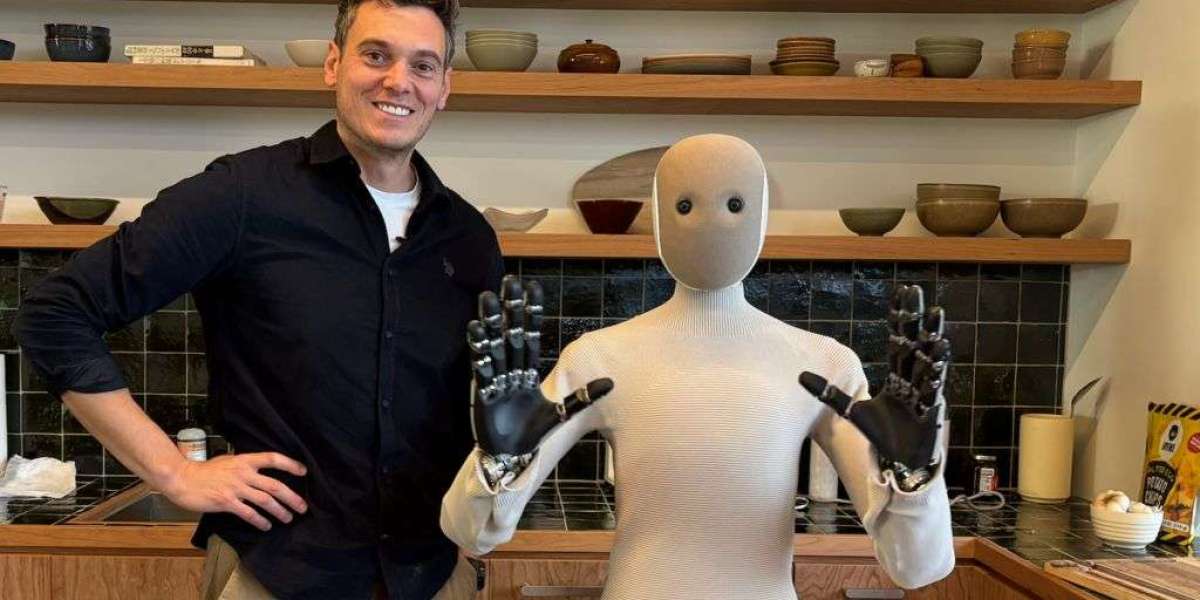
NEO the domestic robot is launching to customers this year
image source: bbc.com
Key Points:
Domestic robots are becoming more capable but often rely on human guidance.
Start-ups are leading innovation in household AI robots, with applications from cleaning to laundry.
Widespread adoption may take years, but the potential for intelligent home assistants is enormous.
advertisement
Introduction
Imagine walking into your home after a long day and being greeted by a robot that folds your laundry, waters your plants, and tidies up the kitchen. This vision, long confined to science fiction, is rapidly moving toward reality. Thanks to advances in artificial intelligence and robotics, companies are developing domestic robots capable of performing multiple household chores. While the technology is still maturing, the race to bring these helpers into everyday homes is accelerating, driven mainly by Silicon Valley start-ups and significant investment from tech visionaries.
The Current State of Domestic Robots
Domestic robots today are increasingly agile, sensitive, and dextrous. Examples like Eggie, NEO, Isaac, and Memo demonstrate what’s possible: Eggie can hang jackets, strip beds, and clean spills, while NEO can water plants and tidy cups, albeit slowly. However, many of these robots still rely on human operators to assist when tasks become too complex.
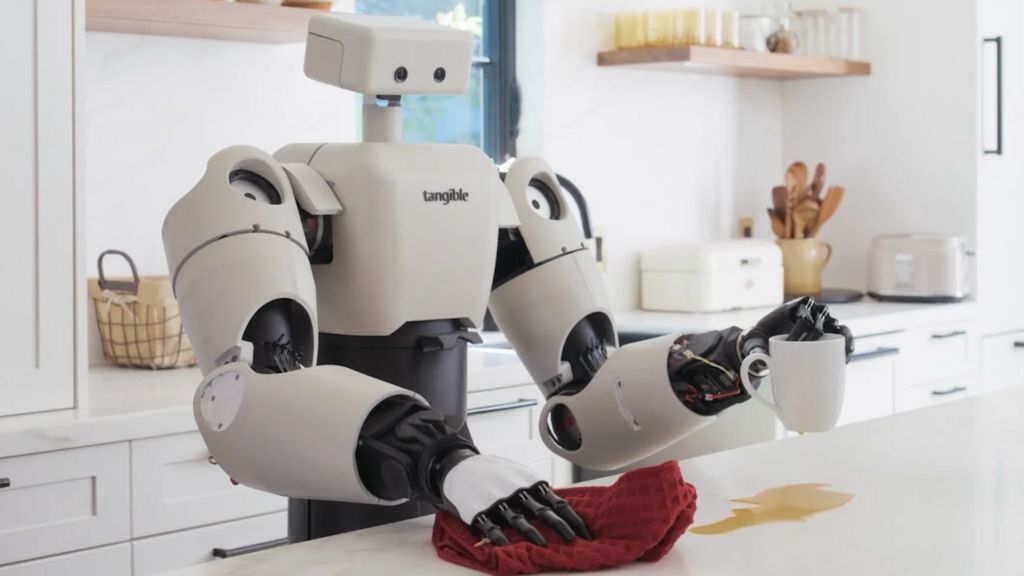
Eggie the robot can slowly do many household chores - but it is controlled by a human
image source: bbc.com
Start-ups like Tangible AI and 1X emphasize that their bots are learning through extensive data collection from real-world home environments. This combination of human input and AI training allows robots to navigate chaotic household spaces—an environment far more unpredictable than a factory floor.
Companies are focused on incremental deployment. For instance, Weave Robotics has machines folding laundry in laundromats, while Sunday AI is developing robots that can make coffee and clear tables autonomously. Physical Intelligence takes a different approach, creating AI systems capable of “breathing intelligence” into any robotic hardware, whether humanoid or appliance-like.
Challenges Facing Household Robots
Despite the excitement, domestic robots face several hurdles:
Autonomy vs. Human Oversight – Many early models operate under partial human control. Fully autonomous performance is still developing.
Cost and Accessibility – Premium robots like NEO may cost $20,000 or $500 per month, limiting early adoption to wealthy households.
Data Collection and Learning – Training robots requires vast amounts of real-world data. Unlike digital AI, physical robots must interact with diverse home layouts and objects.
Market Uncertainty – It may take decades for domestic robots to become truly mainstream. Consumer demand, regulatory hurdles, and technological limitations all play a role.

Operators remotely control NEO using VR headsets and sensors to carry out tasks and train the bot
image source: bbc.com
Some experts, like the International Federation of Robotics, estimate it could take 20 years before domestic robots are widely useful and accepted. China, for instance, is experiencing rapid growth in humanoid robotics, but government authorities have warned of a potential market bubble.
The Promise of AI in Household Robotics
Despite these challenges, the potential benefits are enormous:
Time Savings: Robots can handle repetitive chores, freeing up human time for more meaningful activities.
Assistance for the Elderly and Disabled: Intelligent robots can support independent living.
Enhanced AI Learning: Domestic robots provide unique insights into real-world environments, improving broader AI capabilities.
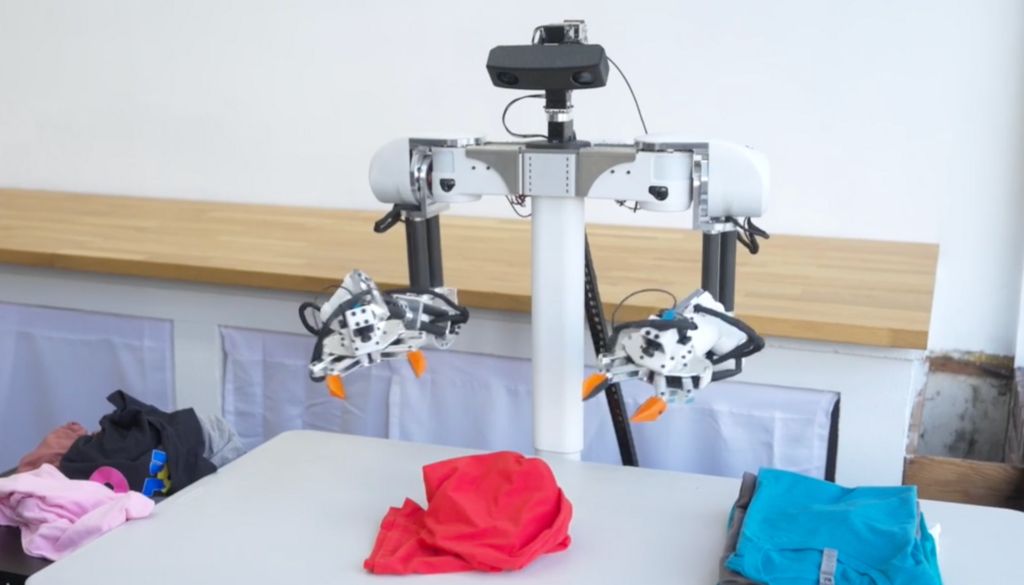
Isaac can fold a T-shirt in 90 seconds but is getting faster
image source: bbc.com
Investors such as Jeff Bezos and OpenAI’s backers see this as a high-growth area. The combination of start-up agility and AI innovation suggests that while robots may initially serve niche markets, they could eventually become a common household companion.
Conclusion
The era of domestic robots is no longer a distant fantasy. While challenges remain—cost, autonomy, and consumer acceptance—the steady progress in AI and robotics offers a glimpse of homes transformed by intelligent helpers. From folding laundry to clearing fragile wine glasses, these machines are gradually learning to navigate the messy, unpredictable spaces we live in. The first adopters may be wealthy and patient, but the lessons learned today are paving the way for future generations of robots that could become as commonplace as smartphones or robotic vacuum cleaners. In essence, domestic robots are not just machines; they represent a profound shift in how humans and AI will share and improve everyday life.
Key Points Summary
Domestic robots are emerging as intelligent home assistants.
Many rely on partial human operation but are becoming increasingly autonomous.
Start-ups are driving innovation with AI-driven household robots.
High cost and market uncertainty are early adoption barriers.
Long-term potential includes time-saving, accessibility, and enhanced AI learning.
advertisement
Frequently Asked Questions (FAQ)
Q: What tasks can domestic robots perform today?
A: Robots like Eggie and NEO can fold laundry, clean surfaces, water plants, and tidy dishes, though many still need occasional human assistance.
Q: Are domestic robots fully autonomous?
A: Not yet. Many rely on human operators when tasks become complex, though AI improvements are gradually increasing autonomy.
Q: How much do domestic robots cost?
A: Prices vary. Some advanced models like NEO may cost around $20,000 or $500/month for early adopters.
Q: When will domestic robots become mainstream?
A: Experts estimate it could take 20 years for widespread adoption, though early niche markets are already forming.
Q: Who is leading innovation in domestic robots?
A: Start-ups in Silicon Valley, such as Tangible AI, 1X, Weave Robotics, and Sunday AI, are currently pioneering development, with backing from major investors like Jeff Bezos.
Sources:
BBC – Overview of domestic robots like Eggie and NEO, and the challenges of real-world deployment
https://www.bbc.com/news/articles/clyg63e3mq4o
Thank you !