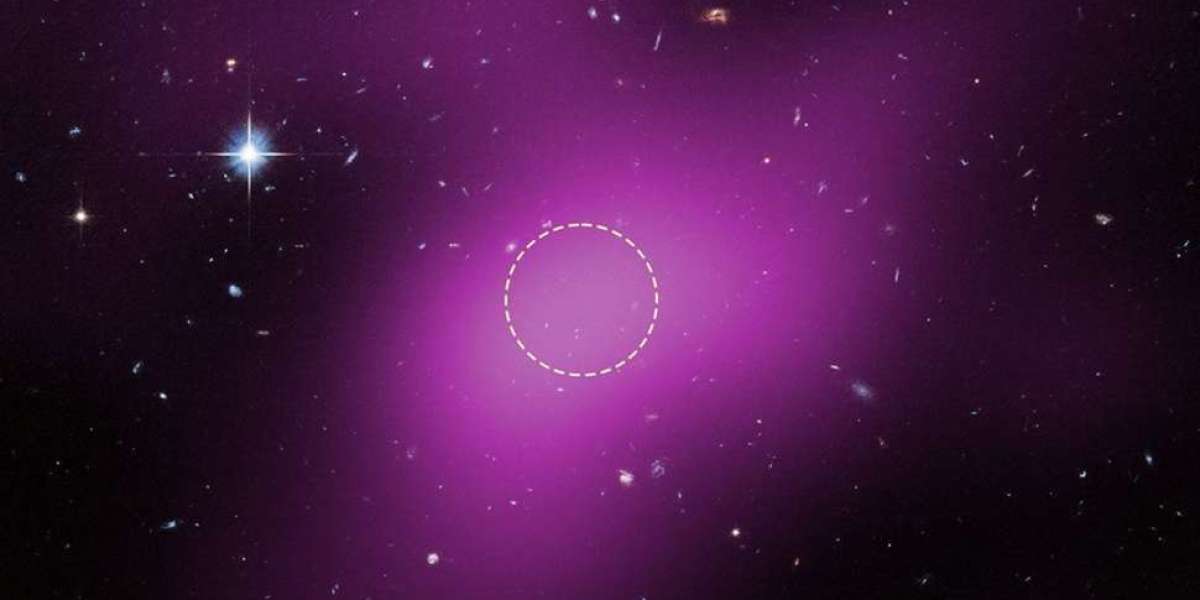

article image source: space.com (Link)
Hubble Space Telescope Reveals “Cloud 9”: A Dark Matter Discovery That Redefines Galaxy Formation
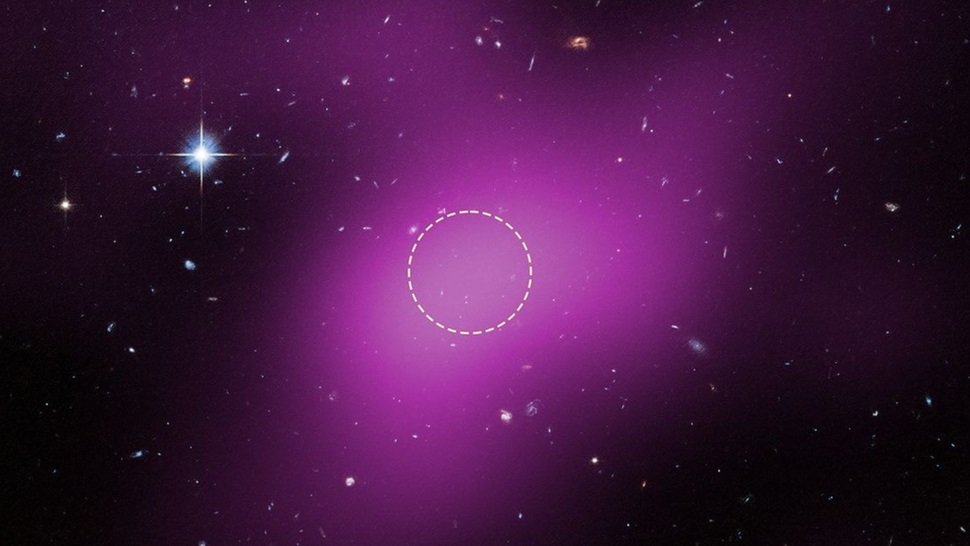
The location of Cloud 9, a "failed galaxy" packed with gas and dark matter but absent of stars
(Image credit: NASA, ESA, VLA, Gagandeep Anand (STScI), Alejandro Benitez-Llambay (University of Milano-Bicocca);
Image Processing: Joseph DePasquale (STScI))
image source: space.com
Key Points
Cloud 9 is a newly discovered dark matter–dominated object with no stars
It is located near the spiral galaxy Messier 94
The object confirms long-standing theories about failed galaxy formation
Hubble’s advanced imaging was essential to the discovery
Cloud 9 offers a rare opportunity to study dark matter directly
advertisement
Introduction
The Hubble Space Telescope has once again transformed our understanding of the universe. In a groundbreaking discovery, astronomers using Hubble identified a strange and fascinating cosmic object known as Cloud 9, a massive cloud dominated by dark matter and gas but containing no stars. This rare find sheds new light on how galaxies may form—and sometimes fail to form—making it one of the most intriguing astronomical discoveries in recent years.
What Is Cloud 9?
Cloud 9 is a newly identified type of cosmic object located about 14 million light-years from Earth, near the outer regions of the spiral galaxy Messier 94 (M94). Unlike typical galaxies or star-forming clouds, Cloud 9 contains vast amounts of dark matter and hydrogen gas but shows no evidence of stars.
Scientists classify Cloud 9 as a Reionization-Limited Hydrogen I Cloud, or RELHIC. These objects were predicted by theory decades ago but had never been directly observed until Hubble’s high sensitivity made it possible.
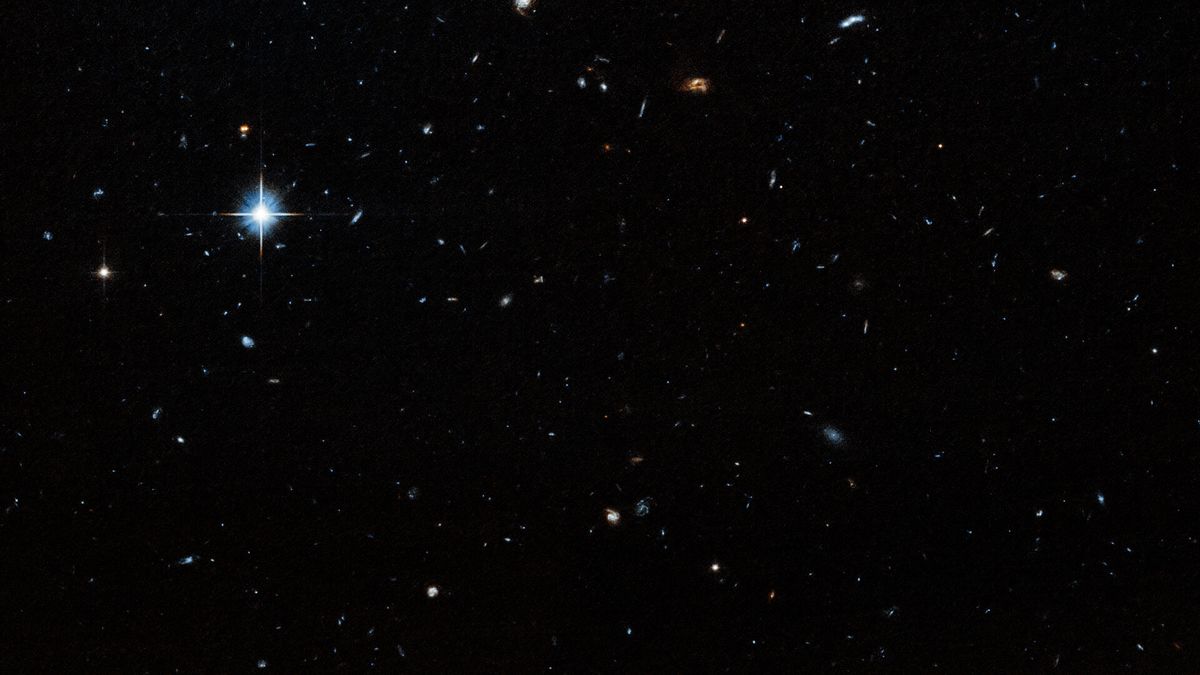
An image of the Cloud 9 object taken by the Hubble Space Telescope.
(Image credit: NASA, ESA. G. Anand (STScI), and A. Benitez-Llambay (Univ. of Milan-Bicocca); Image processing: J. DePasquale (STScI))
image source: space.com
Why the Discovery Matters
Dark matter is believed to make up about 85 percent of all matter in the universe, yet it cannot be observed directly because it does not emit or reflect light. Its presence is inferred only through gravitational effects on visible matter.
Cloud 9 provides astronomers with a rare opportunity to study a structure where dark matter dominates almost entirely. According to Andrew Fox of the Space Telescope Science Institute, this object offers a direct window into the “dark universe,” allowing researchers to observe how dark matter behaves when it is not masked by bright stars.
A Failed Galaxy in the Making
In most cases, when hydrogen gas gathers inside a dark matter halo, star formation begins. Cloud 9 breaks that rule. Although hydrogen gas has accumulated within it, the cloud lacks the density required to ignite star birth.
Alejandro Benitez-Llambay, the lead researcher on the project, describes Cloud 9 as a failed galaxy. Rather than being a disappointment, this failure is scientifically valuable. It confirms long-standing theories suggesting that some early galaxy building blocks never evolved into star-filled systems.
How Hubble Made the Discovery Possible
Before the Hubble Space Telescope, objects like Cloud 9 could easily be mistaken for faint dwarf galaxies hidden beyond the reach of ground-based telescopes. Hubble’s Advanced Camera for Surveys allowed astronomers to look deep enough to confirm that no stars exist within the cloud.
This capability ruled out alternative explanations and confirmed that Cloud 9 is not simply a dim galaxy, but something fundamentally different.
The Structure and Mass of Cloud 9
Cloud 9 is compact, spherical, and unlike the hydrogen clouds found around the Milky Way. Its core of neutral hydrogen spans roughly 4,900 light-years and has a mass about one million times that of the Sun. In contrast, the cloud’s dark matter halo is estimated to weigh around five billion solar masses.
This dramatic imbalance highlights how dominant dark matter is in shaping cosmic structures.
Could Cloud 9 Become a Galaxy One Day?
Researchers believe Cloud 9 could still evolve into a star-forming galaxy if it accumulates enough hydrogen gas—potentially several billion solar masses. Until then, its starless state makes it an ideal natural laboratory for studying dark matter without interference from stellar light.
Astronomers are now looking to future sky surveys to identify more RELHICs, suggesting that Cloud 9 may be just the first of many “abandoned houses” scattered throughout the nearby universe.
Conclusion: A New Chapter in Understanding the Universe
The discovery of Cloud 9 underscores the enduring power of the Hubble Space Telescope to challenge assumptions and open new frontiers in astronomy. By revealing a dark matter-dominated object frozen in cosmic time, Hubble has given scientists a rare glimpse into the universe’s earliest building blocks.
As researchers continue searching for similar objects, discoveries like Cloud 9 may ultimately reshape how we understand galaxy formation, dark matter, and the invisible framework that holds the universe together. Even after decades in orbit, Hubble continues to prove that the cosmos still has many secrets waiting to be uncovered.
advertisement
FAQ
What is the Hubble Space Telescope?
The Hubble Space Telescope is a space-based observatory launched in 1990 that captures high-resolution images and data across visible and ultraviolet wavelengths.
Why is Cloud 9 important?
Cloud 9 provides direct observational evidence of a dark matter-dominated structure without stars, validating theoretical models of galaxy formation.
What is dark matter?
Dark matter is an invisible form of matter that does not emit light but influences the universe through gravity.
Is Cloud 9 a galaxy?
Not yet. Scientists consider it a failed or stalled galaxy that never formed stars.
Could more objects like Cloud 9 exist?
Yes. Astronomers believe many similar objects may exist and are now searching for them in upcoming surveys.
Sources
Space.com – Report on Hubble’s discovery of a dark matter–dominated cosmic object
https://www.space.com/astronomy/stars/hubble-telescope-discovers-a-new-type-of-cosmic-object-and-astronomers-are-on-cloud-9
Thank you !