
How Cell Membranes Might Generate Their Own Electricity: A Hidden Power Source in Our Cells
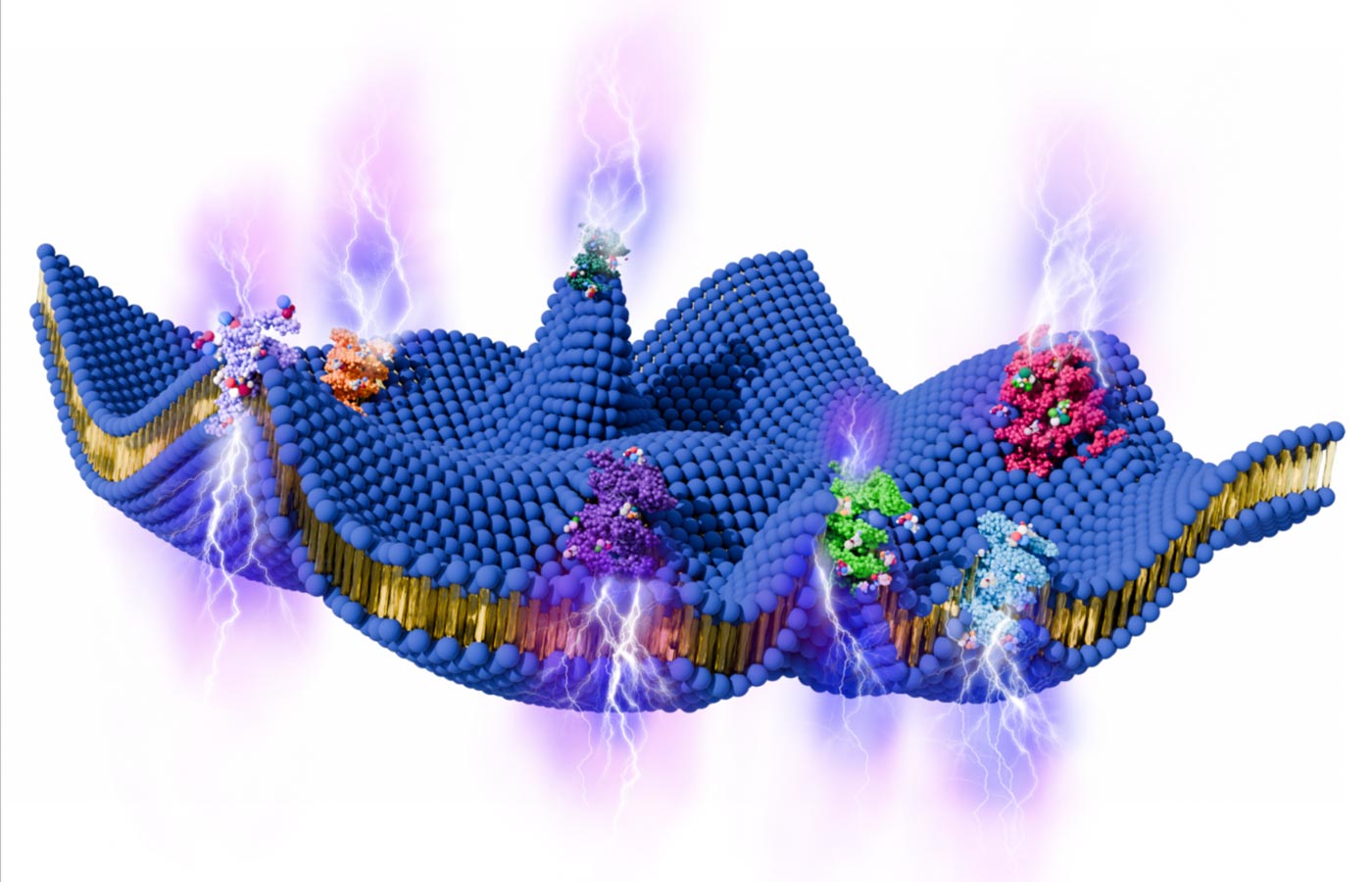
image source: scitechdaily.com
Key Points Summary
Cell membranes are constantly moving due to protein activity and ATP breakdown.
Flexoelectricity allows these movements to generate measurable voltages up to 90 millivolts.
Electrical signals from membranes can influence ion transport and cellular communication.
Coordinated activity across cells may impact tissues and organ function.
Discoveries could inspire bio-inspired materials, energy harvesting, and AI systems.
advertisement
Introduction
Recent research suggests that our cells may be quietly generating their own electrical power. While we usually think of electricity as something humans create with batteries or wires, tiny ripples in the cell membranes that surround every living cell could act like natural power generators. These discoveries, led by researchers from the University of Houston, Rutgers University, and PNAS Nexus, reveal a potential hidden source of energy that might help explain how cells communicate, move ions, and perform essential biological tasks.
Cell Membranes Are Always in Motion
Every cell is surrounded by a thin, flexible membrane that separates its interior from the outside environment. Scientists have discovered that these membranes are never completely still. The constant motion comes from the activities inside the cell, such as proteins shifting shape and the breakdown of adenosine triphosphate (ATP), the molecule that carries energy for cellular processes.
These microscopic motions cause the membranes to bend, ripple, and fluctuate. While these movements may seem minor, researchers now suggest they could produce measurable electrical effects. This is due to a phenomenon called flexoelectricity, where deformation in a material generates an electrical charge.
Flexoelectricity: Turning Motion into Voltage
Flexoelectricity is central to understanding how cells might generate electricity. When a membrane bends or flexes, it can create a voltage difference between different parts of the membrane. Calculations show that this could produce up to 90 millivolts, roughly the same voltage that neurons use to fire electrical signals in the brain.
Because the membranes are constantly moving on a millisecond timescale, the resulting voltage changes are fast enough to influence processes like nerve signaling, muscle movement, and sensory perception.
Moving Ions Against Their Gradient
Voltage is just one part of the story. The electrical fluctuations caused by membrane motion could actively move ions, the charged particles that are essential for cell signaling and maintaining cellular balance. Remarkably, these motions might even push ions against their natural direction, an effect influenced by the elastic and dielectric properties of the membrane. This mechanism could provide cells with a previously unknown way to regulate internal and external chemical flows.
From Single Cells to Whole Tissues
Researchers emphasize that this electrical activity is not limited to individual cells. Coordinated membrane motions across multiple cells could create larger-scale electrical patterns within tissues. This insight could help explain complex biological phenomena, including coordinated nerve signals and sensory processing.
Additionally, understanding these principles could inspire bio-inspired technologies. Engineers and material scientists may develop new materials or artificial networks that mimic the natural electrical behavior of cells.
Implications for Science and Technology
The discovery that cell membranes can generate electricity opens exciting possibilities. It not only deepens our understanding of fundamental biology but could also inform future research in:
Energy harvesting in biological systems
Brain function and neuronal communication
Development of synthetic materials and artificial intelligence systems inspired by natural processes
Both studies suggest that living cells are far from passive—they actively generate and manage electrical energy in ways we are only beginning to understand.
Conclusion
The idea that our cells might act as tiny power generators challenges long-held assumptions about how life operates at a microscopic level. From powering ion movement to coordinating tissue activity, this hidden energy source could reshape our understanding of biology and inspire innovations in technology. As researchers continue to explore flexoelectricity in living systems, we may uncover more ways in which nature has quietly harnessed electricity to sustain life. The potential applications—from medical research to bio-inspired engineering—highlight the elegance and ingenuity embedded in every living cell.
advertisement
FAQ
Q1: What is flexoelectricity in cells?
A1: Flexoelectricity is the ability of a material, like a cell membrane, to generate an electrical charge when it bends or flexes.
Q2: How much electricity can a cell membrane produce?
A2: Studies suggest up to 90 millivolts, similar to the voltage used by neurons for signaling.
Q3: Does this mean cells can replace batteries?
A3: Not yet—this is a natural process within cells, but understanding it could inspire bio-inspired energy technologies.
Q4: How does membrane electricity affect ion transport?
A4: Electrical fluctuations can move ions across membranes, sometimes even against their natural gradient, influencing cell signaling and balance.
Q5: Could this discovery impact medicine or technology?
A5: Yes. It may improve our understanding of brain function, tissue coordination, and lead to innovations in bio-inspired materials and AI.
Sources:
ScienceAlert – Overview of the hidden electrical potential in cell membranes and its implications for biology and technology
https://www.sciencealert.com/a-hidden-source-of-power-may-have-been-discovered-surrounding-our-cellsSciTechDaily – Explanation of how cell membranes act as tiny power generators through flexoelectricity
https://scitechdaily.com/cell-membranes-may-act-like-tiny-power-generators/
Thank you !