
Are Our Fingerprints Truly Unique? Rethinking a Century-Old Belief
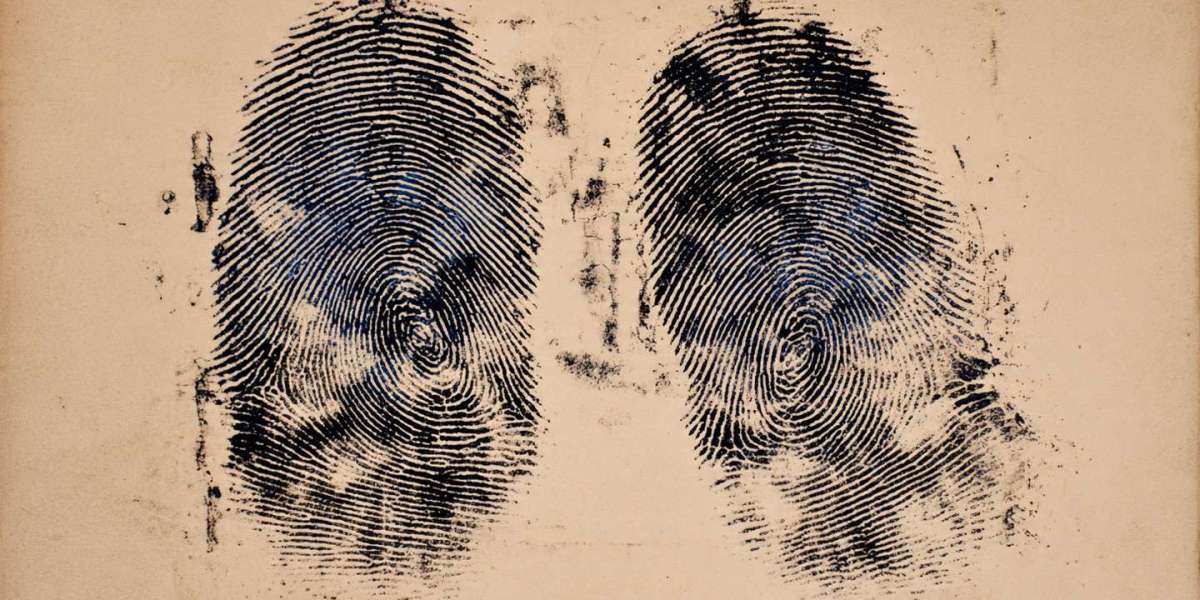
Key Points
Fingerprints have been trusted for identification for over 100 years
AI can detect fingerprint similarities across different fingers of the same person
Traditional minutiae play a smaller role than previously believed
New methods could improve investigations and reduce wrongful convictions
The findings spark debate but open doors for forensic innovation
advertisement
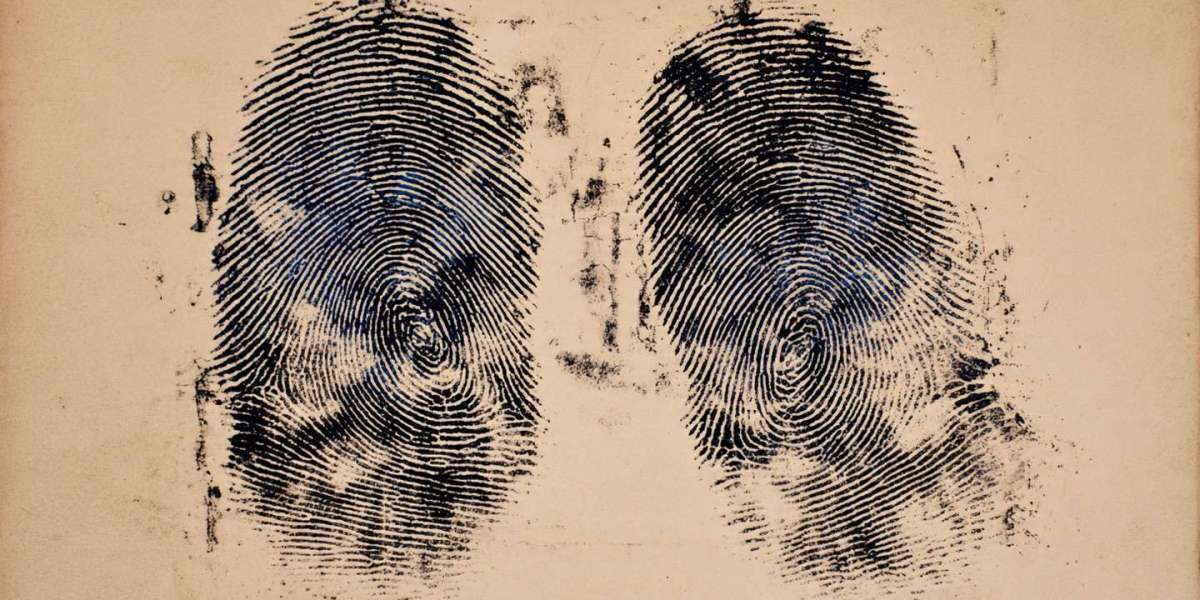
For more than a hundred years, fingerprints have been treated as an unquestionable symbol of human uniqueness. From crime scenes to courtrooms, this belief has shaped modern forensic science and influenced countless legal decisions. But recent advances in artificial intelligence are challenging this long-standing assumption, suggesting that fingerprints may be less isolated and more interconnected than we once believed.
Rather than undermining forensic science, this new perspective could mark the beginning of a smarter, more precise era—one where technology uncovers patterns invisible to the human eye.
The Historical Assumption of Absolute Uniqueness
Fingerprint identification has been a cornerstone of criminal investigations since the early 20th century. The foundational principle is simple: no two fingerprints are alike, not even among the ten fingers of a single individual. This idea has supported everything from suspect identification to courtroom testimony.
Traditional fingerprint analysis focuses on minutiae—tiny ridge endings and bifurcations that analysts manually compare. Over time, this method became deeply embedded in forensic practice, rarely questioned and widely accepted as definitive proof of identity.
advertisement
How Artificial Intelligence Challenged a Long-Held Rule
A peer-reviewed study published in Science Advances introduced a new way of examining fingerprints using deep learning. Researchers from Columbia University and the University at Buffalo trained an AI system on more than 60,000 fingerprint images drawn from major public databases.
Instead of analyzing minutiae, the AI focused on larger structural features such as ridge orientation, curvature, spirals, and angles—patterns that are extremely difficult for humans to assess consistently. Using contrastive learning, the system compared pairs of fingerprints to determine whether they belonged to the same individual, even when taken from different fingers.
The result surprised even the researchers: the model achieved 77% accuracy in identifying fingerprints from different fingers of the same person. When multiple fingerprint samples were analyzed together, accuracy rose dramatically, with confidence levels exceeding 99.99% in distinguishing prints from the same individual versus different individuals.

This Panel shows how scientists use twin neural networks to analyze fingerprints and discover the similarity of crossed fingers. Credit: Science Advances
image source: indiandefencereview.com
What the AI Is Actually Revealing
Importantly, these findings do not claim that fingerprints are identical across fingers or between people. Instead, they suggest that fingerprints may contain shared geometric patterns unique to each individual—patterns that traditional forensic methods were never designed to detect.
According to the studies, ridge orientation near the center of the fingerprint plays a critical role in these cross-finger similarities, while minutiae contribute very little to this type of matching. This challenges the idea that minutiae alone are sufficient for all identification tasks.
advertisement
Potential Benefits for Forensic Investigations
From an investigative standpoint, the implications are significant. The AI system demonstrated an ability to dramatically reduce suspect pools. In simulated scenarios involving thousands of potential matches, the model narrowed candidate lists by more than 90%, even when fingerprints came from different fingers.
This capability could prove especially valuable in cases involving:
Partial or smudged fingerprints
Prints collected under poor conditions
Multiple crime scenes with uncertain finger origin
Rather than replacing human analysts, the technology is positioned as a support tool—one that strengthens investigations by revealing connections that might otherwise remain hidden.
Skepticism and Scientific Resistance
Not everyone has welcomed these findings. Some forensic experts initially rejected the research outright, arguing that fingerprint uniqueness is a settled fact. This resistance highlights a broader tension between traditional forensic practices and data-driven scientific revision.
However, proponents of the research emphasize that science evolves through questioning assumptions. The researchers are not calling for fingerprint evidence to be discarded, but rather re-examined and enhanced using modern analytical tools.
advertisement
Accuracy, Fairness, and Ethical Considerations
The AI model was tested across multiple demographic groups, including different genders and racial backgrounds. While overall accuracy remained consistent, performance improved when training and testing datasets were demographically aligned. This underscores the importance of large, diverse datasets before any real-world forensic deployment.
Researchers also took steps to eliminate bias by separating training and testing subjects, using different sensors, and incorporating both real and synthetic fingerprint data to improve generalization.
Conclusion: A New Chapter, Not the End of Fingerprints
The idea that fingerprints might share hidden similarities does not weaken forensic science—it strengthens it. These discoveries invite us to move beyond rigid assumptions and embrace a future where human expertise and artificial intelligence work together.
Fingerprints may still be uniquely ours, but uniqueness itself may be more nuanced than once believed. By acknowledging complexity rather than denying it, forensic science can become more accurate, more transparent, and ultimately more just. Sometimes, progress begins not by discarding old tools, but by learning to see them in an entirely new way.
FAQ
Are fingerprints no longer unique?
Fingerprints are still unique between individuals, but AI research suggests that different fingers of the same person may share hidden structural patterns.
Does this mean fingerprint evidence is unreliable?
No. The research suggests fingerprint analysis can be improved, not discarded, by combining traditional methods with AI.
Will AI replace human forensic analysts?
No. AI is designed to assist analysts by identifying patterns humans cannot easily see.
Can this technology help solve cold cases?
Yes. By linking partial or unclear fingerprints, AI could reopen investigations that previously lacked enough evidence.
Is this technology being used in courts yet?
Not currently. Researchers stress the need for further validation, ethical review, and dataset expansion before real-world deployment.
Sources
Leravi – New AI discovery claims fingerprints aren’t truly unique
https://www.leravi.org/new-ai-discovery-claims-fingerprints-arent-truly-unique-and-it-could-rewrite-forensic-science-16521/Indian Defence Review – Artificial Intelligence Proves That Fingerprints Are Not Unique
https://indiandefencereview.com/ai-proves-fingerprints-are-not-unique/
Thank you !