
May Full Moon 2026: Flower Moon, Micromoon, Blue Moon & Viewing Guide
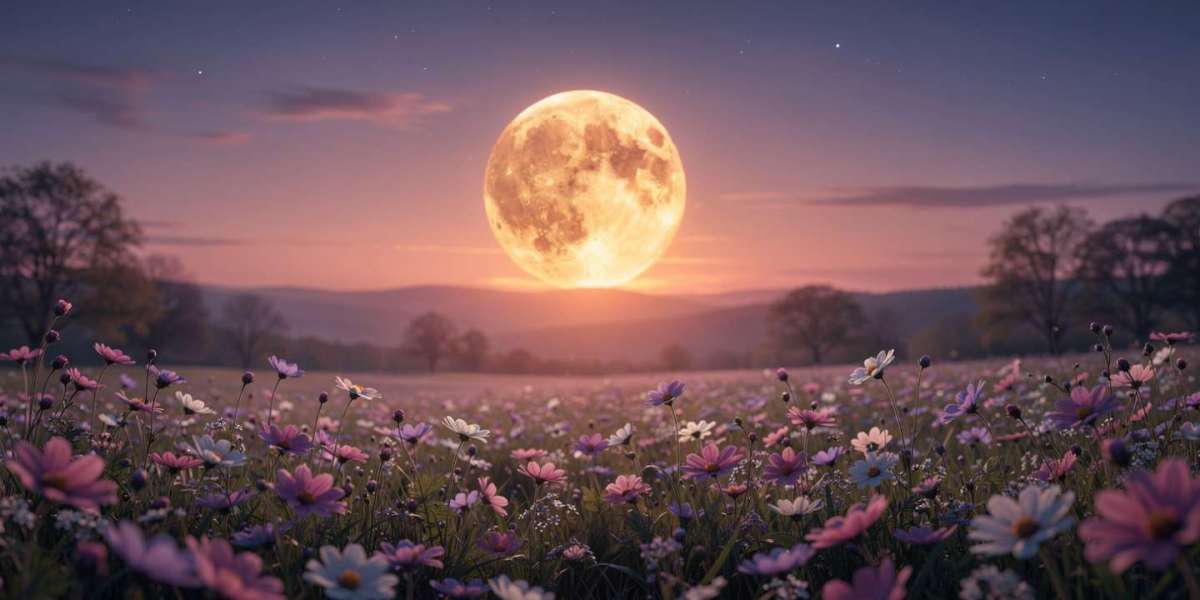
♦ May’s Flower Moon peaks during spring bloom season
♦ A rare micromoon makes it appear slightly smaller and dimmer
♦ May 2026 features two full moons, including a rare Blue Moon
advertisement
May’s full moon, widely known as the Flower Moon, is one of the most captivating celestial events of the year, blending seasonal symbolism with fascinating astronomical phenomena, and in 2026 it becomes even more special as it coincides with a micromoon and sets the stage for a rare second full moon within the same month, often called a Blue Moon, making it an exceptional opportunity for skywatchers and astronomy enthusiasts alike to observe and appreciate the night sky in greater depth.
The Flower Moon earns its name from the abundance of blooming flowers across the Northern Hemisphere during late spring, reflecting a long tradition of naming full moons after seasonal changes in nature, with additional names such as the Planting Moon, Milk Moon, Hare Moon, Budding Moon, Egg Laying Moon, Mothers’ Moon, Bright Moon, and Grass Moon also used across cultures, while the Anishinaabe people of the Great Lakes region referred to it as Nimebine Giizis or “Sucker Moon,” emphasizing the rich cultural heritage tied to lunar observation.
Even though these names do not indicate any physical change in the moon’s appearance, it remains largely the same in color and size regardless of its nickname, though atmospheric and visual effects can alter how it appears to us on Earth.
The Flower Moon reaches full illumination at approximately 1:23–1:24 p.m. EDT (1723–1724 GMT) on May 1, 2026, when it is positioned opposite the sun, allowing its Earth-facing side to be completely lit, and while this peak occurs during daylight hours in some regions, the moon will appear fully illuminated during the nights surrounding this moment, particularly on Thursday, Friday, and Saturday, offering multiple opportunities for observation.
It rises shortly after sunset in the southeastern sky while the sun sets in the northwest, following a path that mirrors the sun’s trajectory but remains relatively low in the sky due to the season, requiring a clear southern horizon for optimal viewing as it arcs across the sky and sets in the southwest by dawn.
For those planning to watch, moonrise times vary globally, with notable examples including 20:16 in New York City, 20:48 in Toronto, 20:03 in Los Angeles, 20:46 in London, 21:21 in Edinburgh, 20:59 in Cardiff, 21:27 in Belfast, 21:19 in Dublin, 21:24 in Paris, 20:53 in Berlin, 21:20 in Madrid, 16:39 in Sydney, 18:42 in Dubai, 18:46 in Singapore, and 18:48 in New Delhi, illustrating how the experience differs depending on location, yet remains universally accessible.
One of the most intriguing aspects of the 2026 Flower Moon is that it is classified as a micromoon, meaning it occurs when the moon is near apogee, its farthest point from Earth in its slightly elliptical orbit, at a distance of about 250,000 miles (402,000 kilometers), roughly 5% farther than average, causing it to appear slightly smaller and dimmer than usual, with an apparent size of around 29.72 arcminutes compared to the average 31 arcminutes, though this difference is subtle and often difficult to detect without precise measurement.
Despite its smaller size, the Flower Moon can appear strikingly large when near the horizon due to the well-known Moon illusion, an optical effect that makes the moon seem bigger when viewed alongside foreground objects like trees or buildings, a phenomenon that remains not fully understood but is thought to be linked to how the human brain perceives the sky as a flattened dome or compares the moon to nearby objects, enhancing its apparent size.
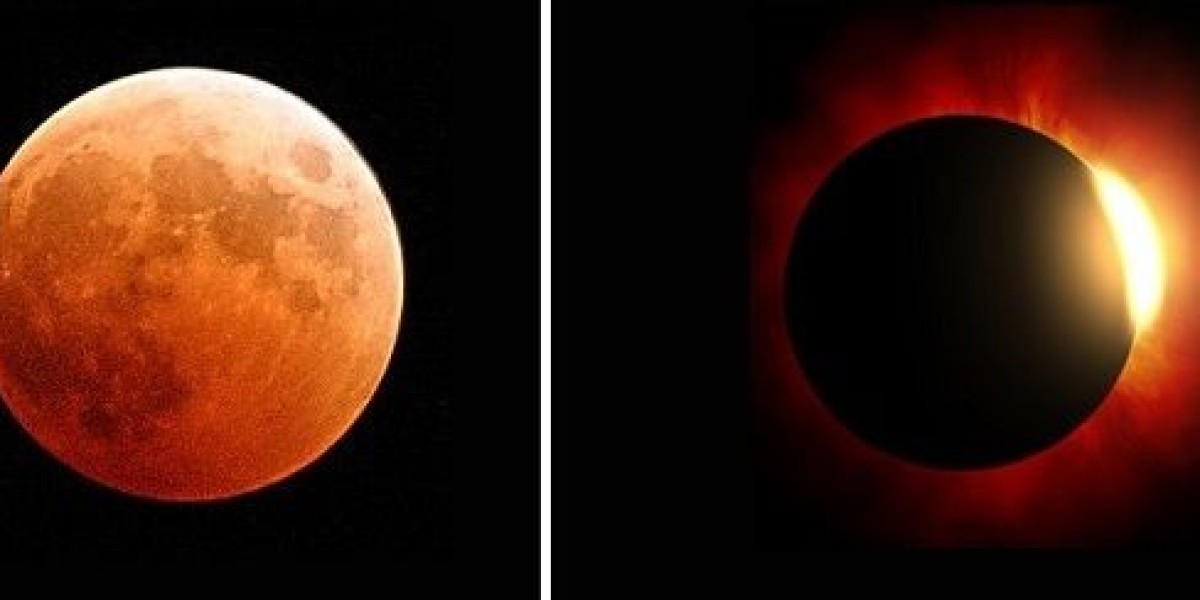
As it rises, the moon may also take on a warm orange or reddish hue caused by Rayleigh scattering, the same atmospheric effect that gives sunsets their colors, as shorter wavelengths of light are scattered while longer red wavelengths pass through, creating a visually stunning display that gradually transitions to a bright white glow as the moon climbs higher in the sky.
During this time, observers may also notice a lunar halo, a circular ring of light approximately 22 degrees in diameter formed by the refraction of moonlight through hexagonal ice crystals in high-altitude cirrus clouds, adding another layer of beauty and intrigue to the viewing experience.
While the bright illumination of the full moon can wash out fainter stars, several prominent celestial objects remain visible, including Spica and Arcturus shining above the moon, Venus and Jupiter glowing near the western horizon at sunset, and Castor and Pollux higher in the constellation Gemini, with Antares, the brightest star in Scorpius, potentially visible near the moon in the early morning hours, though its low position in the Northern Hemisphere can make it challenging to spot.
For those interested in observing more closely, binoculars or a telescope can reveal lunar features such as craters, rays, and even historic Apollo landing sites, though the full moon phase tends to flatten surface details due to the lack of shadows, while photography enthusiasts can capture stunning images using digital cameras or smartphones, particularly when the moon is low on the horizon and framed by landscape elements.
Beyond its visual appeal, the Flower Moon of May 2026 holds additional significance as it marks the first of two full moons in the same calendar month, with a second full moon occurring on May 31, commonly referred to as a Blue Moon, a term that in popular usage describes the second full moon within a single calendar month, though astronomically it can also refer to the third full moon in a season containing four full moons, highlighting a distinction between traditional and scientific definitions.
According to available data, such events occur roughly every 2.5 years, with only about 6% of full moons classified as Blue Moons, making this occurrence relatively rare and noteworthy, especially as the second full moon of May 2026 will also be a micromoon and the most distant full moon of the year.
With the Flower Moon rising on a Friday night and remaining visible through the weekend, skywatchers have ample opportunity to enjoy the spectacle, whether by simply observing with the naked eye, sketching its appearance, or capturing photographs.
Ultimately, May’s full moon serves as a reminder of the intricate interplay between celestial mechanics, atmospheric science, and human perception, offering both scientific insight and aesthetic wonder, encouraging us to pause, look upward, and reconnect with the rhythms of the natural world, where even subtle differences in distance, light, and perspective can transform a familiar sight into an unforgettable experience, making the Flower Moon not just an astronomical event, but a shared moment of curiosity and appreciation that spans cultures, continents, and generations.
Key Points
May’s Flower Moon symbolizes peak spring bloom and cultural traditions worldwide
The 2026 full moon is a micromoon, appearing slightly smaller and dimmer
A rare second full moon (Blue Moon) occurs on May 31, making this month special
Best viewed just after sunset in the southeastern sky
Optical effects like the Moon illusion and orange coloring enhance its beauty
advertisement
Frequently Asked Questions (FAQ)
1. Why is it called the Flower Moon?
It’s named after the abundance of flowers blooming in May across the Northern Hemisphere.
2. What is a micromoon?
A micromoon occurs when the full moon is at its farthest point from Earth, making it appear slightly smaller and dimmer.
3. Will the Flower Moon look different in color?
Not inherently, but it may appear orange or red near the horizon due to atmospheric effects.
4. What is a Blue Moon?
Commonly, it’s the second full moon in a calendar month, though astronomically it can also refer to the third full moon in a season with four full moons.
5. When is the best time to see the Flower Moon?
Just after sunset as it rises in the southeastern sky.
6. Can I see it without a telescope?
Yes, it’s easily visible with the naked eye, though binoculars can enhance details.
7. Why does the moon look bigger near the horizon?
This is due to the Moon illusion, a visual perception effect.
Sources
- BBC Sky at Night Magazine – Flower Moon 2026 viewing guide and facts
https://www.skyatnightmagazine.com/news/flower-moon-2026 - Space.com – Micromoon explanation and skywatching details
https://www.space.com/stargazing/mays-full-flower-moon-rises-tonight-heres-what-to-expect-from-the-micromoon - Live Science – Flower micromoon details and Blue Moon insights
https://www.livescience.com/space/the-moon/full-moon-alert-mays-flower-micromoon-will-look-extra-small-tonight-with-a-rare-blue-moon-following
Thank you !