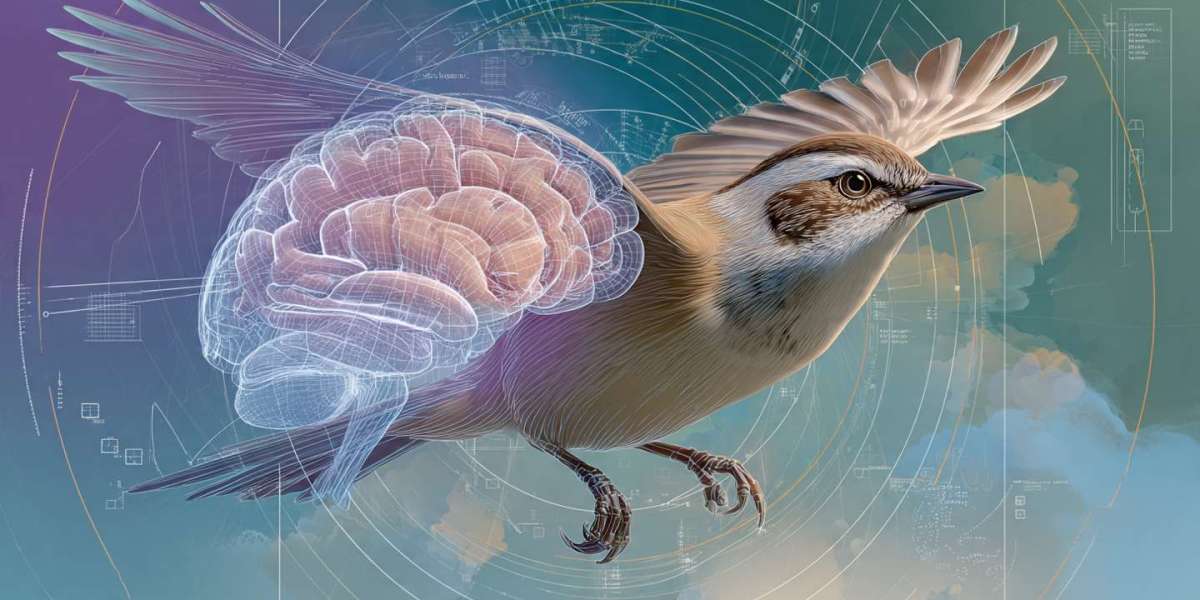

Migratory Blackcap Bird Brain Mapped in 3D for the First Time: A Breakthrough in Digital Brain Atlases and Bird Navigation Research
♦ Key Highlights
Scientists created the first high-resolution 3D brain atlas of a migratory bird, the Eurasian blackcap
The open-source atlas enables global collaboration and accelerates neuroscience research
Discovery of a new brain connection linked to magnetic navigation and decision-making
advertisement
A major scientific breakthrough has been achieved with the first-ever high-resolution 3D brain atlas of the migratory Eurasian blackcap (Sylvia atricapilla), marking a turning point in neuroscience and animal navigation research, as scientists from the Sainsbury Wellcome Center at UCL and the University of Oldenburg successfully mapped the bird’s brain using advanced imaging technologies and open-source tools, with their findings published in Current Biology on April 20, 2026, introducing a powerful new framework for building digital brain atlases across species and enabling researchers worldwide to better understand brain structure, function, and evolution while fostering collaboration and consistency in data interpretation.
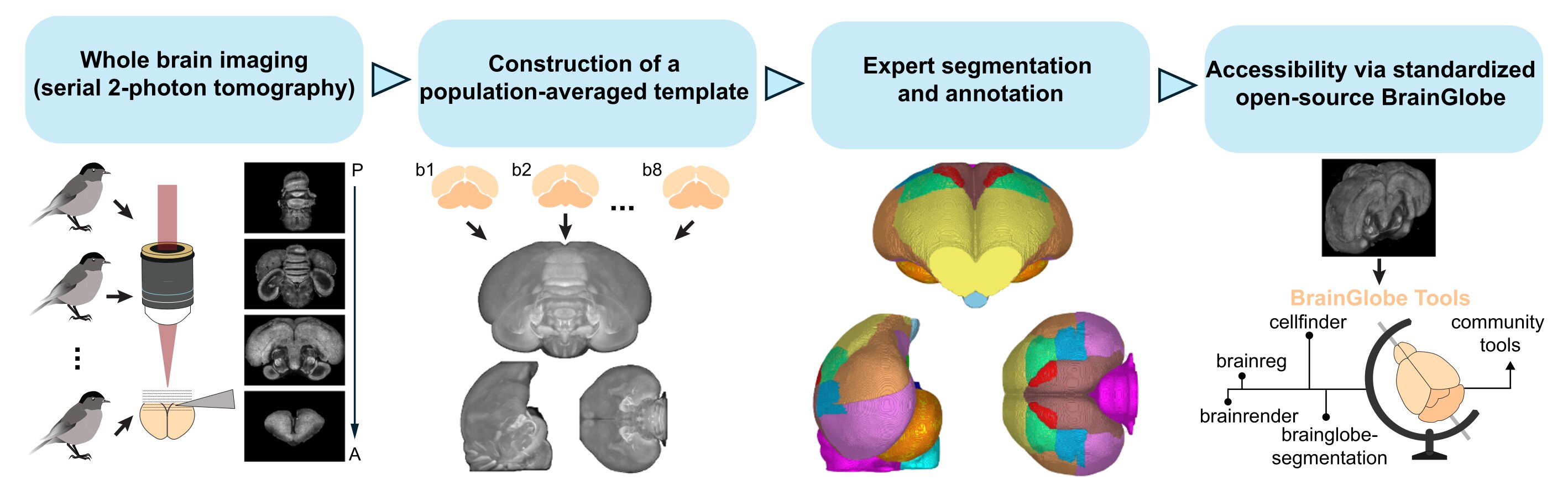
Overview of the approach for creating a 3D bird brain atlas for the night-migratory Eurasian blackcap (Sylvia atricapilla).
Credit: bioRxiv (2025). DOI: 10.1101/2025.03.04.641293
Brain atlases—defined as detailed, digital, three-dimensional representations of brain anatomy—allow scientists to align experimental data into a shared coordinate system, making it easier to compare results across studies and disciplines and ultimately advancing research into cognition, learning, and memory, as highlighted by lead author Dr. Simon Weiler, who emphasized that such open-source atlases create a universal scientific “language” for studying the brain, while also paving the way for future atlases, including an ongoing project focused on the zebra finch (Taeniopygia guttata), a species widely used in vocal learning research.
Blackcap brain atlas, viewed coronally. Credit: Sainsbury Wellcome Centre, UCL
Beyond its technological importance, the Eurasian blackcap atlas provides new biological insights into one of nature’s most fascinating abilities—long-distance migration guided by Earth’s magnetic field, as birds are capable of traveling thousands of miles with remarkable precision, and the study reveals for the first time a direct neural connection between magnetosensitive brain regions and the nidopallium caudolaterale, a decision-making center comparable to the mammalian prefrontal cortex, offering crucial evidence for how birds process magnetic information to guide navigation, a discovery described by Professor Henrik Mouritsen as a long-awaited tool that will significantly improve research consistency and accelerate understanding of the neural mechanisms underlying migration and magnetoreception.
The atlas itself was constructed using serial two-photon (STP) tomography to scan eight male blackcap brains at extremely fine resolution, producing voxel-sized images measuring 2 x 2 x 5 micrometers, which were then aligned, averaged, and manually annotated to produce a representative brain model containing 44 distinct regions, including major brain compartments, shared avian anatomical structures, song system regions, and sensory areas linked to magnetic field detection.
Importantly, the atlas has been integrated into the BrainGlobe platform, where researchers can perform automatic registration, cell detection, and object mapping, even using historical brain samples preserved on glass slides, demonstrating the versatility and long-term value of the approach, as noted by Dr. Adam Tyson, who explained that the goal of the BrainGlobe initiative is to democratize computational neuroanatomy by making all tools and pipelines open-source and accessible, allowing scientists everywhere to rapidly generate new atlases using not only STP tomography but also other imaging techniques such as light-sheet microscopy.
Future developments are expected to include enhanced labeling methods that identify specific genes and proteins to further refine brain region classification, ensuring that the atlas continues to evolve as new data emerges, while funding for this research was provided by major organizations including the Gatsby Charitable Foundation, Wellcome, the Alexander von Humboldt Foundation, the Chan Zuckerberg Initiative DAF, the European Research Council, and the Deutsche Forschungsgemeinschaft.
Collectively, this project not only advances our understanding of bird brains but also sets the stage for a new era in neuroscience where open, high-resolution, and collaborative digital atlases transform how scientists study brains across the animal kingdom, ultimately bridging gaps between disciplines and unlocking deeper insights into how complex behaviors—from navigation to decision-making—are encoded in neural circuits, making this achievement both a technological milestone and a gateway to future discoveries that could reshape our understanding of intelligence, adaptation, and life itself.
Conclusion
The creation of the first 3D brain atlas of a migratory bird is more than a technical achievement—it represents a shift toward a more connected and collaborative future in neuroscience, where open data and shared tools empower scientists worldwide to explore the brain with unprecedented precision and unity, and by revealing new neural pathways linked to navigation and decision-making, this research not only deepens our understanding of how birds traverse the globe but also offers broader insights into brain function across species, inspiring a new generation of discoveries that could redefine how we study cognition, behavior, and the biological mechanisms that guide life on Earth
Key Points
First 3D digital brain atlas created for a migratory bird species
Reveals new neural link between magnetoreception and decision-making
Open-source BrainGlobe platform enables global research collaboration
Built using high-resolution serial two-photon tomography
Atlas includes 44 annotated brain regions
Supports studies in navigation, cognition, and migration
Works with both new and historical brain samples
Future atlases planned for other species like zebra finch
Open tools aim to democratize neuroscience research
Backed by major international scientific funding organizations
advertisement
Frequently Asked Questions (FAQ)
What is a brain atlas?
A brain atlas is a detailed 3D digital map of brain structures that helps researchers study and compare brain data across experiments
Why is the Eurasian blackcap important?
It is a migratory bird known for navigating long distances using Earth’s magnetic field, making it ideal for studying navigation and magnetoreception
What is magnetoreception?
It is the ability of organisms to detect Earth’s magnetic field and use it for orientation and navigation
What technology was used to create the atlas?
Scientists used serial two-photon tomography to generate high-resolution images of entire brains
What is BrainGlobe?
BrainGlobe is an open-source platform that allows researchers to create, share, and analyze digital brain atlases
How does this help science?
It improves collaboration, data consistency, and accelerates discoveries in neuroscience, behavior, and cognition
Can this method be used for other species?
Yes, the open-source pipeline allows scientists to create similar atlases for virtually any species
Sources
- Phys.org – Report on the first 3D brain atlas of the Eurasian blackcap
https://phys.org/news/2026-04-migratory-blackcap-bird-brain-era.html - EurekAlert – Press release on mapping the migratory bird brain and its implications
https://www.eurekalert.org/news-releases/1124203
Thank you !