
Scientists Built a Computer Without Electricity: How Spring-Powered Mechanical Computing Could Change the Future
⚡ A working computer made entirely of springs and steel — no electricity required
Uses “mechanical memory” instead of silicon chips or digital storage
Could revolutionize computing in extreme environments and smart materials
advertisement
In a breakthrough that challenges everything we think we know about modern technology, scientists have created a fully functional computer that operates without electricity, batteries, or even a microchip.
This remarkable innovation, developed by researchers from St. Olaf College and Syracuse University and published in Nature Communications, relies entirely on mechanical components like springs, steel bars, and physical motion to process information.

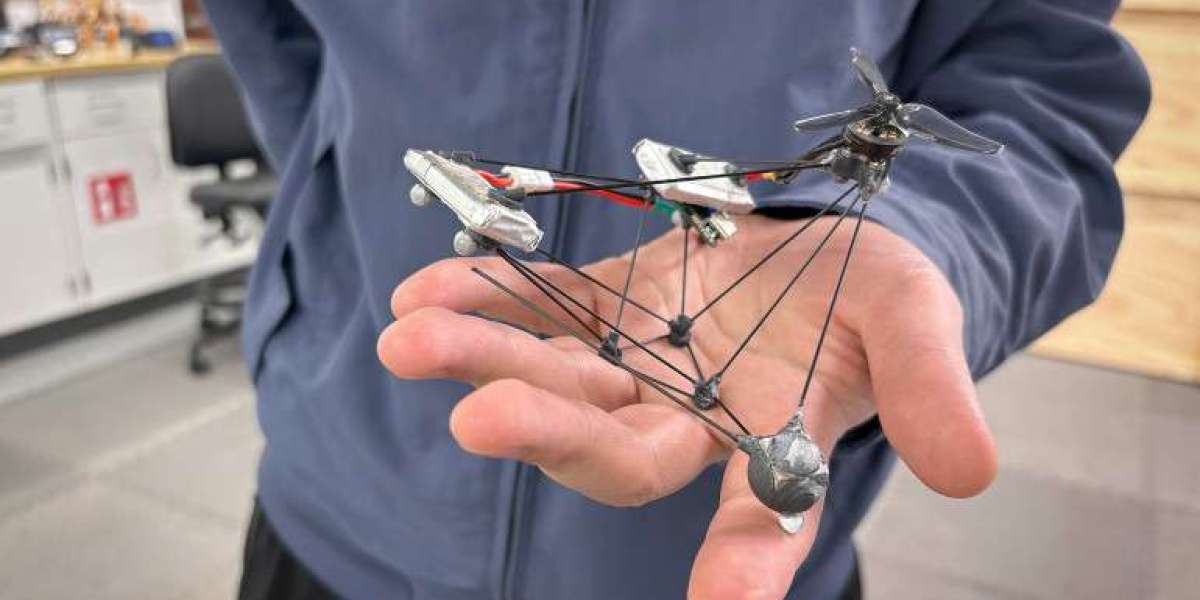
Developed by Associate Professor Paulsen’s team, this mechanical computer can count to three.
(CREDIT: St. Olaf College)
Unlike traditional computers that depend on electronic signals and silicon chips, this new system harnesses the natural “memory” found in physical materials. The idea may sound unconventional, but it opens the door to a radically different kind of computing—one that could thrive in environments where electronics fail.
At the core of this invention is a simple yet powerful concept: materials can remember. Just as rubber retains information about how it has been stretched or compressed, the researchers explored whether this property could be used not only to store information but also to compute it. This led to the creation of a mechanical computing platform built from steel springs and rigid bars that can perform logic and memory tasks purely through motion and force.
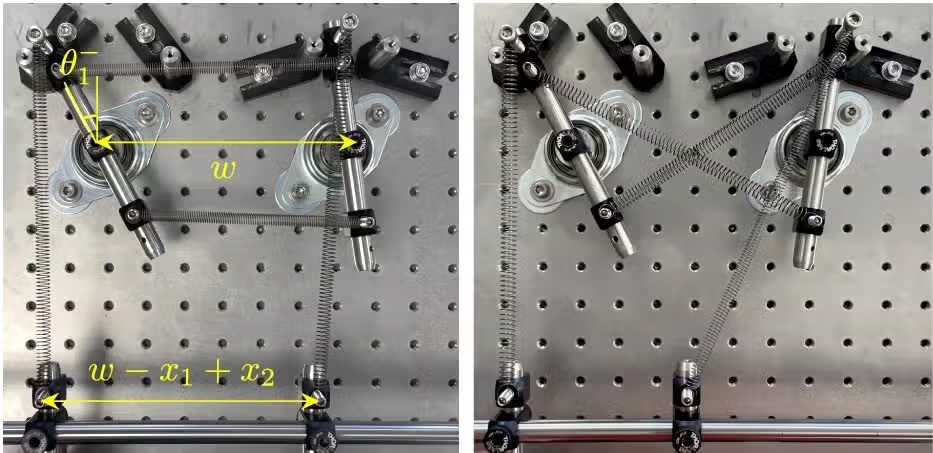
Experimental realizations with cooperative (left) and frustrated interactions (right).
(CREDIT: Nature Communications)
The team constructed three distinct mechanical computers to demonstrate the concept. One device acts as a counter, tracking how many times it has been pulled back and forth. Another functions as a logic gate, distinguishing whether it has been pushed an odd or even number of times. A third machine can “remember” the strength of a force applied to it, effectively storing information about whether the input was medium or large. These examples show that even simple mechanical systems can carry out meaningful computational tasks without any electrical input.
The secret behind this system lies in components called hysterons—bistable mechanical units made from pivoting bars and springs. Each hysteron can snap between two stable states when a certain force threshold is reached, and crucially, its current state depends on its past. This phenomenon, known as hysteresis, allows the system to store memory. By linking multiple hysterons together with springs, researchers created networks capable of complex interactions, including cooperative behavior, “frustrated” states where elements compete, and even non-reciprocal interactions where one component influences another more strongly than it is influenced in return.
This design represents a significant departure from historical mechanical computers, such as the gear-based calculators used during World War II. Those machines were built for precise numerical calculations using fixed mechanisms, whereas this new system is designed to mimic the complex, dynamic behavior found in real-world materials like crumpled paper or amorphous solids. Rather than improving calculation speed, the goal is to embed computation directly into physical matter, enabling materials to sense, decide, and respond to their environment.
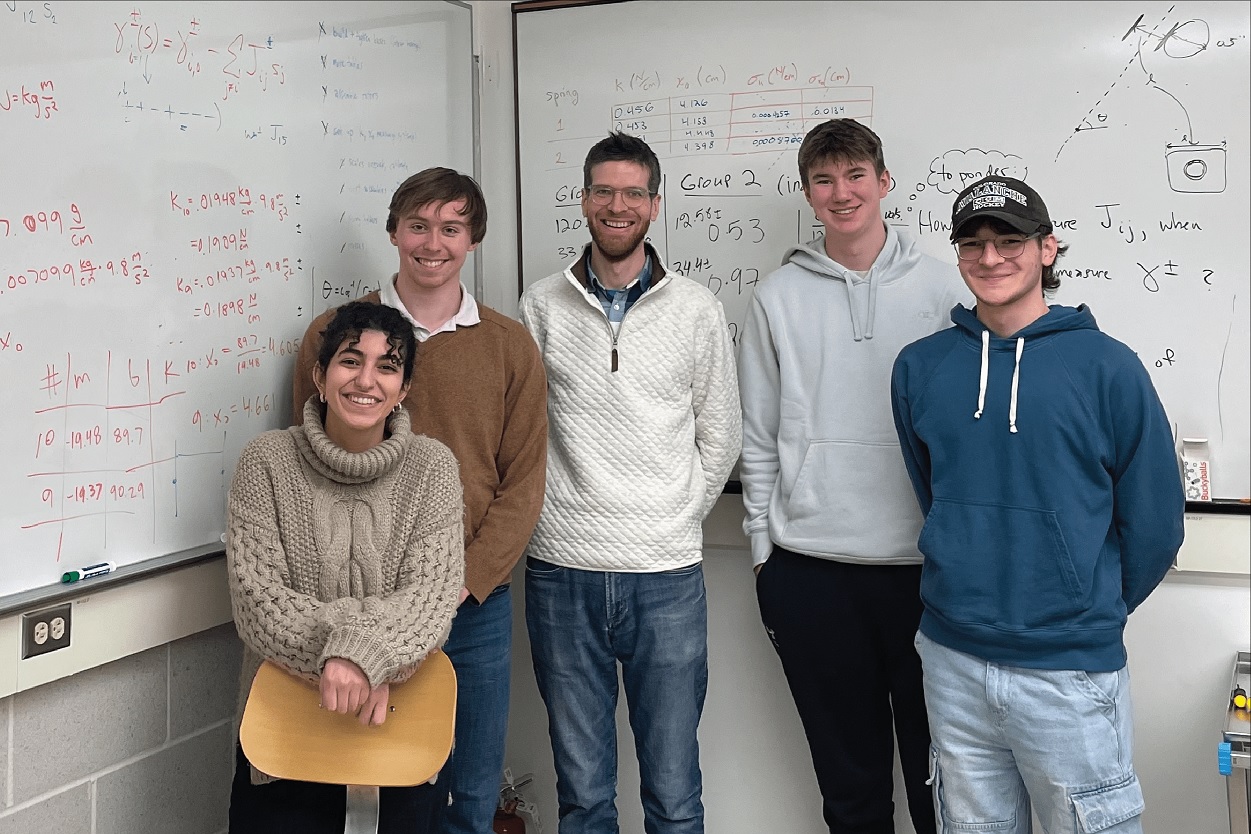
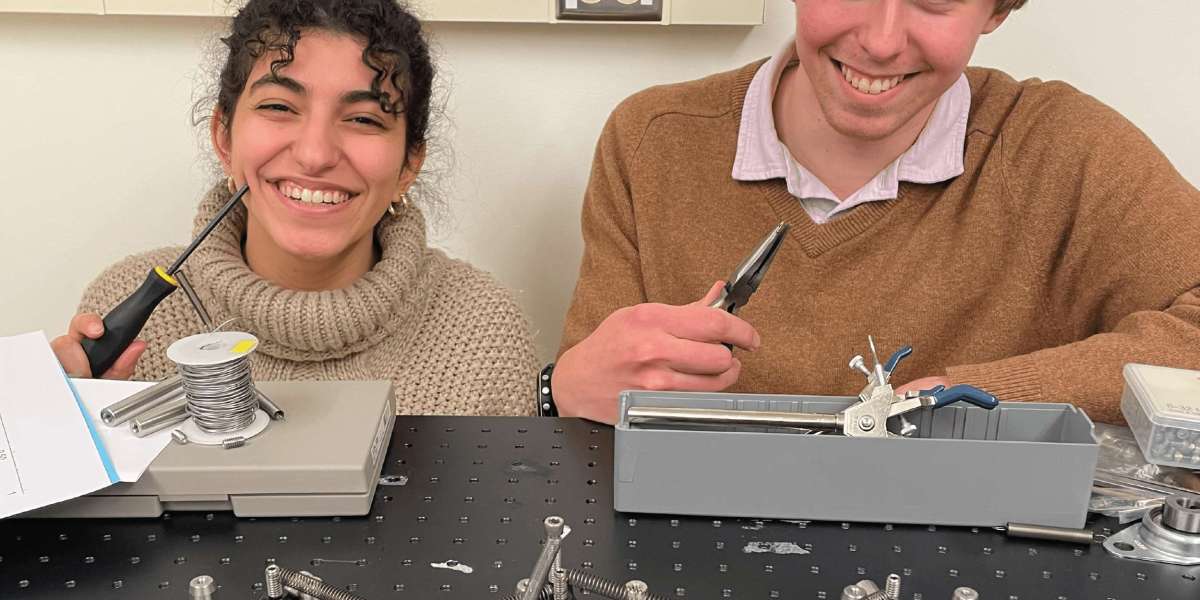
Led by Professor Paulsen (center), the St. Olaf undergraduate research team was composed of Faten Abu Al Ardat ’27, Harry Maakestad ’26, Alex Walk ’28, and Jack Feider ’26.
(CREDIT: St. Olaf College)
Another key advantage of this approach is durability. Traditional silicon-based electronics are highly sensitive to extreme conditions—they can melt under high temperatures, malfunction in radiation-heavy environments, or degrade in corrosive chemicals. In contrast, these mechanical computers draw energy directly from physical force, such as pushing or pulling, making them highly resilient. This opens up potential applications in harsh environments, including inside jet engines, industrial systems, or even space exploration missions where conventional electronics may fail.
The implications extend beyond industrial uses. Researchers suggest that this technology could lead to the development of “smart materials” capable of responding to their surroundings without requiring external power. For example, prosthetic limbs could become more responsive to touch and pressure, or entire rooms could adapt dynamically to human interaction through embedded mechanical intelligence.
However, the researchers emphasize that this technology is still in its early stages. While the current devices successfully demonstrate counting, logic operations, and memory storage, scaling up these systems into more complex computing networks remains a significant challenge. Building even a small four-unit system required careful, iterative adjustments to spring positions and geometry—a process the researchers likened to supervised learning. Future work will focus on understanding the limits of these systems and exploring how multiple mechanical units can interact to form larger, more sophisticated networks.
Despite these challenges, the research provides a compelling proof of concept that computation does not have to rely on electricity. Instead, it can emerge from the physical properties of materials themselves.
Conclusion
This spring-powered computer represents more than just a scientific curiosity—it signals a shift in how we define computation itself. By demonstrating that logic, memory, and decision-making can arise from mechanical interactions rather than electronic circuits, researchers are laying the groundwork for a new generation of resilient, energy-independent technologies. While it may never replace the speed and efficiency of modern silicon chips, its true value lies in expanding the possibilities of where and how computing can exist. From extreme environments to everyday materials that think and adapt, this innovation hints at a future where intelligence is not confined to devices, but embedded directly into the physical world around us.
Key Points
Scientists created a fully functional computer that runs without electricity using mechanical components.
The system uses “mechanical memory” through springs and hysteresis to perform logic and store information.
It could operate in extreme environments where traditional electronics fail.
The technology may lead to smart materials that can sense and respond to their surroundings.
Current limitations include scalability and complexity, but research is ongoing.
Concise Key Points
No electricity, no chips—just physics doing the computing
Uses springs and motion to store memory and perform logic
Could power future smart materials and extreme-environment tech
advertisement
Frequently Asked Questions (FAQ)
1. How can a computer work without electricity?
It uses mechanical motion and physical forces instead of electrical signals. Springs and bars store and process information through movement and position changes.
2. What is “mechanical memory”?
Mechanical memory refers to a material’s ability to “remember” past states, such as how much it has been stretched or compressed, and use that information later.
3. What are hysterons?
Hysterons are bistable mechanical units that can switch between two states depending on applied force, allowing them to store and process information.
4. Can this replace modern computers?
No, it’s not designed to replace electronic computers but to complement them in environments where electronics fail or are unnecessary.
5. What are the real-world applications?
Potential uses include smart materials, prosthetics, industrial sensors, and systems operating in extreme environments like space or high heat.
Sources
St. Olaf College – Original research announcement and findings
https://wp.stolaf.edu/news/from-springs-and-bolts-st-olaf-researchers-built-a-computer-that-doesnt-require-electricityInteresting Engineering – Overview of the spring-powered computer and applications
https://interestingengineering.com/innovation/battery-free-computer-using-mechanical-springsZME Science – Deep explanation of hysterons and mechanical computing principles
https://www.zmescience.com/science/news-science/spring-computer-no-electricity/The Brighter Side – Detailed breakdown of design, behavior, and implications
https://www.thebrighterside.news/post/scientists-just-built-a-computer-that-doesnt-require-electricity/
Thank you !