
Blue Origin New Glenn Launch 2026: First Booster Reuse Marks Major Spaceflight Breakthrough
Live: Blue Origin launches its third New Glenn rocket carrying BlueBird 7 satellite - Spaceflight Now
First-ever reuse of a New Glenn booster on its third mission
BlueBird 7 satellite aims to deliver space-based cellular broadband worldwide
Blue Origin moves closer to competing with SpaceX in reusable rocket technology
advertisement
The latest Blue Origin launch has captured global attention as the company prepares its third New Glenn mission, marking a significant step forward in reusable rocket technology and commercial space expansion. Scheduled for April 19, 2026, from Cape Canaveral Space Force Station, this mission combines technological innovation with ambitious goals for global connectivity, making it one of the most anticipated space events of the year.
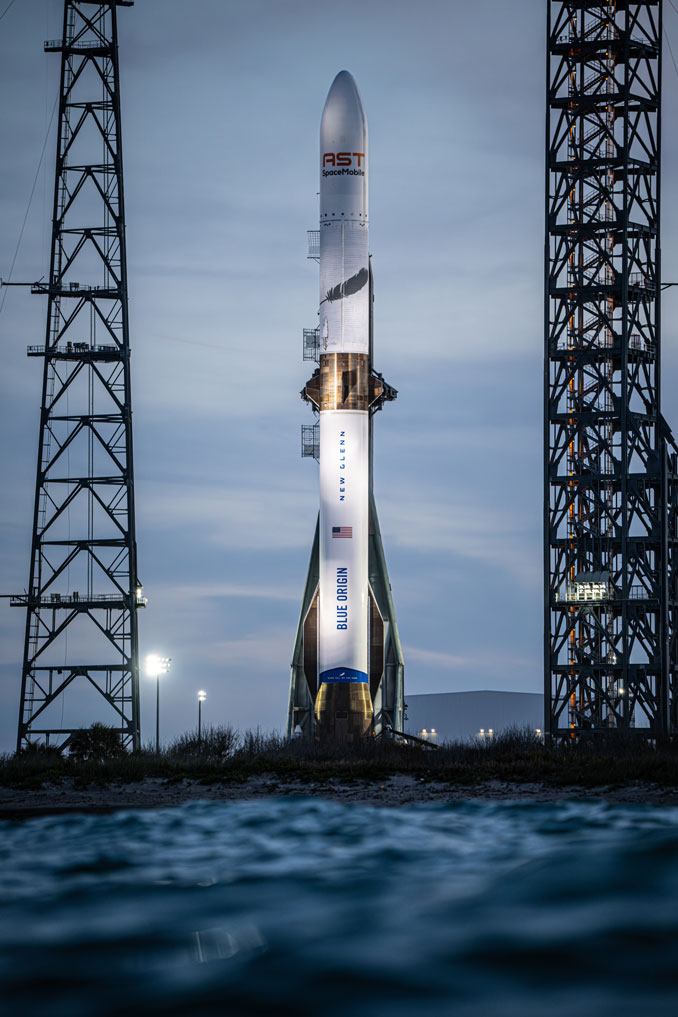
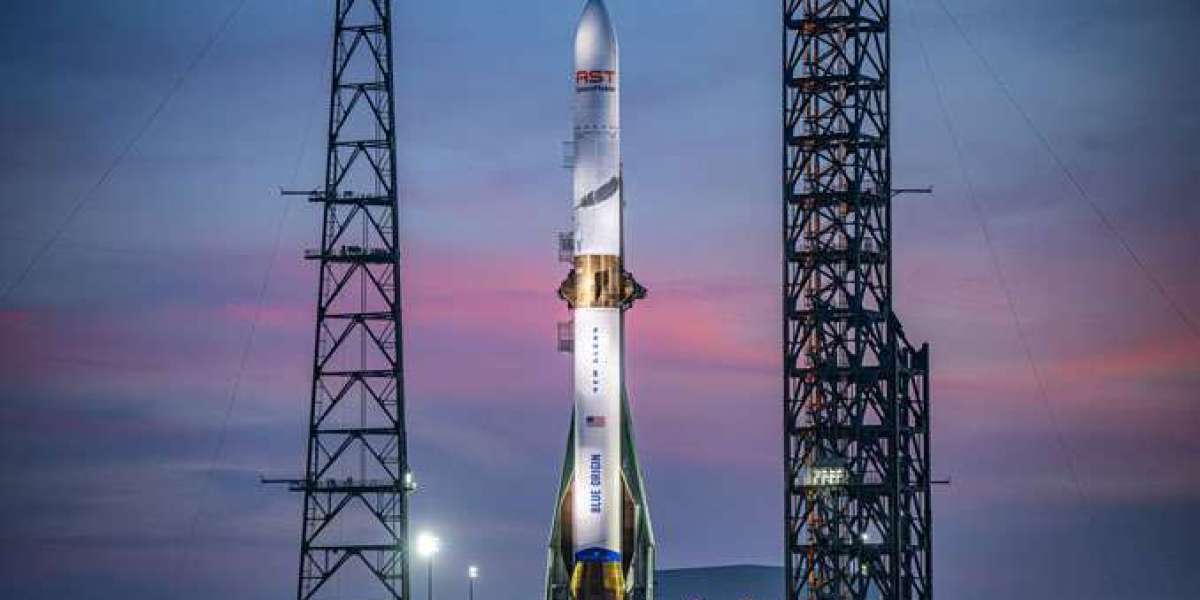
New Glenn stands 321 feet tall at its seaside pad at Launch Complex 36 at Cape Canaveral Space Force Base on Florida’s Space Coast. Image: Michael Cain/Spaceflight Now. Source: spaceflightnow.com
Blue Origin is preparing to launch its third New Glenn rocket, known as NG-3, in the early morning hours of April 19, 2026, from Launch Complex 36 at Cape Canaveral Space Force Station, with liftoff targeted at 6:45 a.m. EDT within a two-hour window extending to 8:45 a.m., and favorable weather conditions offering a 90% chance of launch success.
The massive 321-foot rocket—taller than a football field—will ascend toward the east-southeast just before sunrise to deliver AST SpaceMobile’s BlueBird 7 satellite into low Earth orbit, a payload designed to support next-generation space-based cellular broadband for both commercial and government users.
This satellite is part of a broader constellation expected to deploy between 45 and 60 satellites by the end of the year, each featuring enormous antenna and solar arrays spanning approximately 2,400 square feet and capable of enabling direct-to-phone connectivity with speeds up to 120 Mbps through partnerships such as AST SpaceMobile’s collaboration with AT&T, placing it in competition with systems like SpaceX’s Starlink network partnered with T-Mobile.
Beyond the payload, the mission’s defining feature is the attempted reuse of the first-stage booster named “Never Tell Me the Odds,” which previously flew in November 2025 during NASA’s ESCAPADE mission to Mars and successfully landed on Blue Origin’s ocean-based recovery vessel “Jacklyn.”
With this mission, Blue Origin aims to become only the second company after SpaceX to reuse an orbital-class rocket booster, highlighting the growing importance of reusability in reducing launch costs and increasing flight frequency.
However, the company has taken a cautious approach by replacing all seven engines on the refurbished booster and testing upgrades such as a thermal protection system on one engine nozzle, rather than immediately reusing the original engines, signaling a gradual path toward full reusability.
Blue Origin has stated that its boosters are being designed to support up to 25 flights, although it remains unclear whether the same engines will be reused for that entire lifespan.
During the mission, after propelling the second stage and payload above Earth’s atmosphere, the booster will separate and begin its descent back toward the Atlantic Ocean, relighting its engines to slow to near zero velocity before attempting a precise vertical landing on the “Jacklyn” platform, a maneuver similar to SpaceX’s Falcon 9 operations.
Currently, Blue Origin relies on offshore landing platforms and has not yet announced plans for onshore landing pads, unlike its competitor.
Despite taking more than a decade to develop the New Glenn rocket before its first flight, the company’s rapid move to attempt booster reuse by its third mission demonstrates its intent to compete aggressively in the heavy-lift launch market and secure both government and commercial contracts.
Some reports present slight differences regarding the classification of the BlueBird 7 satellite, identifying it as either the second or third Block 2 satellite in AST SpaceMobile’s constellation, but all sources agree on its critical role in building a global communications network.
Looking ahead, future New Glenn missions are expected to carry up to eight of these satellites at once, with ambitions to reuse boosters as frequently as every 30 days, signaling a major step toward scalable, cost-effective space operations.
Conclusion
The Blue Origin NG-3 launch represents more than just another rocket liftoff—it signals a turning point in the evolution of reusable spaceflight and global communication systems. By attempting booster reuse so early in its New Glenn program, Blue Origin demonstrates a clear commitment to innovation, cost efficiency, and competitiveness in a rapidly advancing industry. At the same time, the deployment of BlueBird 7 highlights how space technology is increasingly intertwined with everyday life, promising a future where connectivity reaches even the most remote corners of the planet. As reusable rockets become the norm and satellite networks expand, missions like this one are shaping a new era in which space is not just a frontier, but an essential part of global infrastructure and human progress.
Key Points
Blue Origin launched its third New Glenn rocket (NG-3) on April 19, 2026.
The mission marks the first reuse attempt of a New Glenn booster.
BlueBird 7 satellite aims to deliver global space-based cellular internet.
Booster “Never Tell Me the Odds” previously flew in November 2025.
Landing attempt will take place on the offshore platform “Jacklyn.”
Blue Origin aims for boosters to support up to 25 flights.
Satellite constellation could reach 45–60 units by the end of 2026.
New Glenn may eventually launch up to eight satellites per mission.
Reusability is key to reducing costs and increasing launch frequency.
Blue Origin is positioning itself as a major competitor to SpaceX.
advertisement
Frequently Asked Questions (FAQ)
1. What is the Blue Origin New Glenn rocket?
New Glenn is a heavy-lift orbital rocket developed by Blue Origin for commercial, government, and scientific missions.
2. What is special about the NG-3 mission?
It is the first mission where Blue Origin attempts to reuse a previously flown booster.
3. What is BlueBird 7?
BlueBird 7 is a satellite built by AST SpaceMobile to provide space-based cellular broadband directly to phones.
4. When did the launch take place?
The launch was scheduled for April 19, 2026, with a window between 6:45 a.m. and 8:45 a.m. EDT.
5. Where was the rocket launched from?
Cape Canaveral Space Force Station in Florida, specifically Launch Complex 36.
6. How does booster reuse work?
After stage separation, the booster returns to Earth and lands vertically on a platform for refurbishment and reuse.
7. Why is reusability important?
It significantly reduces launch costs and allows for more frequent missions.
8. How many times can a New Glenn booster be reused?
Blue Origin aims for up to 25 flights per booster, though details are still being tested.
Sources
Spaceflight Now – Details on NG-3 launch, booster reuse, and satellite mission
https://spaceflightnow.com/2026/04/19/third-flight-of-blue-origins-new-glenn-rocket-to-feature-1st-reuse-of-booster/Space Explored – Insights on booster reuse and competition with SpaceX
https://spaceexplored.com/2026/04/18/blue-origin-looking-to-complete-booster-reuse-on-its-third-mission-tomorrow/Florida Today – Launch timing, rocket specifications, and weather conditions
https://www.floridatoday.com/story/tech/science/space/2026/04/18/blue-origin-launch-day-heres-information-todays-new-glenn-rocket-launch-from-cape-canaveral-florida--live/89676047007/
Thank you !