
Why Students Forget: The Science of Memory, Forgetting Curve & Effective Learning Strategies That Make Knowledge Stick
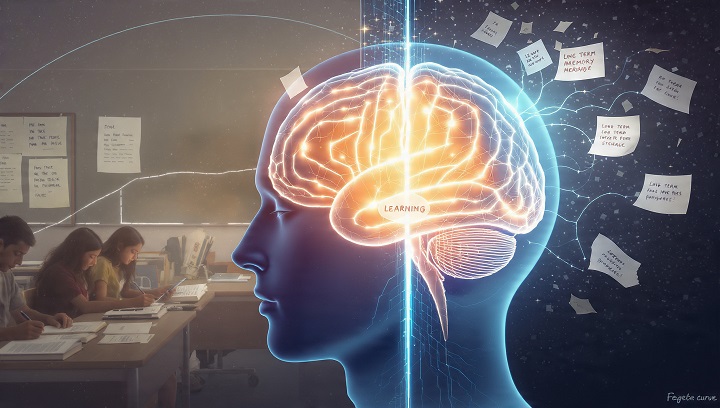
Key Points
Students forget quickly because the brain is naturally designed to prioritize and filter information, not store everything permanently
What students think about during learning determines what they remember long-term (“memory is the residue of thought”)
Research-backed strategies like spaced retrieval, interleaving, and active recall significantly improve retention
advertisement
Introduction
Why do students forget lessons so quickly—even when they seem to understand them in class?
Modern cognitive science and neuroscience show that forgetting is not a failure of learning, but a natural feature of how the brain works. From the Ebbinghaus Forgetting Curve to the principle that memory is the residue of thought, research reveals that retention depends less on exposure and more on how information is processed, revisited, and connected.
Understanding how memory works can transform teaching and studying strategies, helping learners move from short-term recall to long-lasting understanding.
Why Forgetting Is a Natural Brain Function

For a long time, forgetting was seen as a flaw in memory. However, neuroscience suggests something more surprising: forgetting is an adaptive process.
According to research by neurobiologists Blake Richards and Paul Frankland, forgetting may actually help the brain function more efficiently by filtering out unnecessary information and prioritizing what is useful for decision-making. In this sense, memory is not just storage—it is a system for optimizing thought in a constantly changing environment.
In other words, the brain does not aim to remember everything. It aims to remember what matters.
The Ebbinghaus Forgetting Curve: Why Retention Drops Fast

One of the most influential discoveries in memory research is the Ebbinghaus Forgetting Curve, which shows how quickly information fades without reinforcement.
Early experiments suggest:
Around 56% of new information is forgotten within one hour
About 66% is lost within a day
Up to 75% may disappear within six days without review
This rapid decline explains why students often feel like they “knew it yesterday but forgot it today.” Without reinforcement, neural connections weaken and fade.
Working Memory Limits: Why Students Get Overloaded
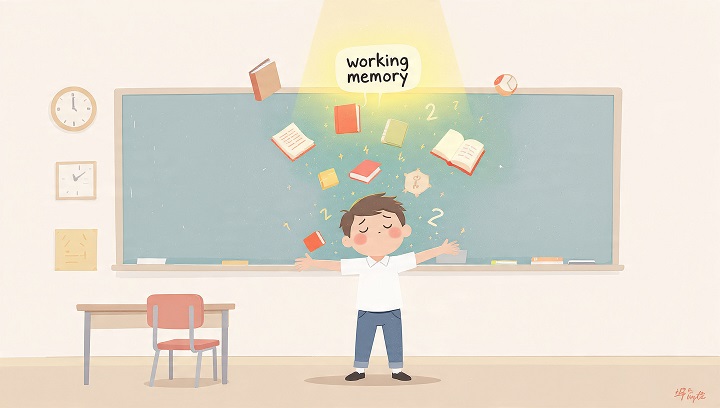
Another key factor in forgetting is the limitation of working memory, the brain’s short-term processing system.
Research shows working memory can typically hold only about 4–5 pieces of information at once. When too much new information is introduced at once, the brain becomes overloaded, and details are quickly lost.
For example, everyday experiences like forgetting items at a supermarket highlight how easily working memory can fail when it is stretched beyond capacity.
This limitation also explains why students may struggle when lessons are dense, fast-paced, or not structured in manageable chunks.
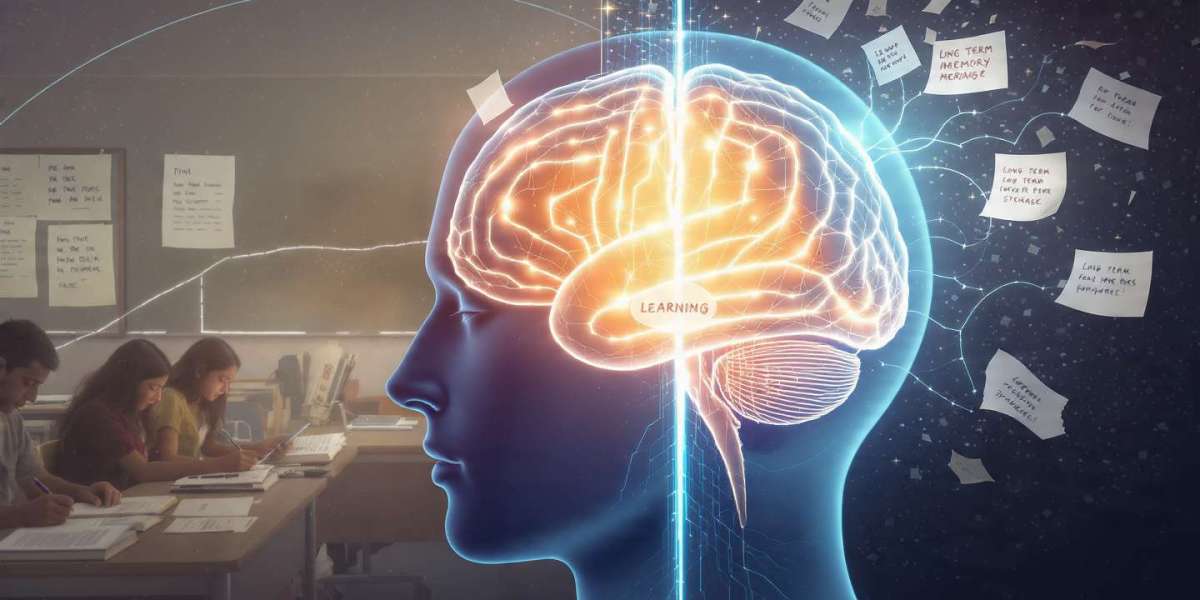
Memory Is the Residue of Thought

Cognitive scientist Daniel T. Willingham introduces a powerful principle:
“Memory is the residue of thought.”
This means students remember what they actively think about—not what teachers intend them to think about.
For example, if students spend more time focusing on drawing visuals than understanding a story’s structure, they will remember the drawing process rather than the lesson content.
Similarly, emotional reactions or attention-grabbing activities may capture interest but do not guarantee learning unless they guide thinking toward meaning.
The implication is simple but powerful:
What students think about during learning determines what they will remember later.
Why Repetition Alone Is Not Enough
Many assume that repetition guarantees learning. However, research shows repetition without meaningful engagement is often ineffective.
Even frequently encountered information—like the appearance of a coin—can be poorly remembered if it is never actively processed in a meaningful way.
The key is not just repetition, but intentional, meaningful recall and connection-building.
How Memory Becomes Strong: Synaptic Connections
Memory strengthens through a process called synaptic plasticity, where neural connections become stronger when activated repeatedly.
Key principles:
Frequently used neural pathways become stronger and more efficient
Unused pathways weaken over time (sometimes referred to as neural pruning)
Deep learning happens when new information connects to existing knowledge networks
This is why meaningful, connected learning lasts longer than isolated memorization.
Evidence-Based Strategies That Improve Student Memory
Research from cognitive science and classroom studies highlights several highly effective learning strategies:
1. Spaced Retrieval Practice
Reviewing material over increasing time intervals strengthens memory and slows forgetting. Revisiting content after days or weeks forces the brain to rebuild neural pathways, making learning more durable.
2. Frequent Low-Stakes Testing
Short quizzes or practice tests improve long-term retention by actively recalling information rather than passively reviewing it. Testing itself becomes a learning tool.
3. Interleaving Topics
Mixing different types of problems or concepts helps students learn when to apply specific strategies, improving flexible understanding instead of memorizing patterns.
4. Peer-to-Peer Explanation
Explaining concepts to others strengthens understanding because it forces students to retrieve and reorganize knowledge in their own words.
5. Combining Visual and Verbal Learning
Using both images and text creates multiple memory pathways, making information easier to retrieve later.
The Role of Story Structure in Memory

Humans are naturally wired to remember stories.
Lessons structured around:
causality
conflict
complications
character
are easier to understand and retain because they mirror how the brain organizes meaningful events. Stories help students predict, connect, and remember information more effectively than disconnected facts.
Teaching and Learning Implications
To improve memory retention, educators and learners should focus less on what is taught and more on what is mentally processed during learning.
Effective teaching design includes:
Ensuring students think about meaning, not surface features
Avoiding distractions that shift focus away from learning goals
Designing tasks that guide thinking toward core concepts
Structuring lessons so key ideas are revisited over time
Ultimately, improving memory is not about working harder—it is about thinking more deliberately.
Conclusion
Forgetting is not a failure of the human brain—it is part of how it efficiently manages information. But while forgetting is natural, it is not uncontrollable.
When learning is designed around how memory actually works—through meaningful thinking, spaced retrieval, and structured reinforcement—knowledge becomes durable rather than temporary.
The most important takeaway is simple yet powerful:
Students remember what they think about, and what they revisit becomes what they keep.
By aligning teaching strategies with the science of memory, educators can help students move beyond short-term performance and toward lasting understanding that extends far beyond the classroom.
advertisement
Frequently Asked Questions (FAQ)
1. Why do students forget what they learn so quickly?
Because the brain prioritizes important information and discards unused or unreinforced knowledge, especially without repetition or meaningful engagement.
2. What is the forgetting curve?
It is a model showing how memory fades over time without reinforcement, with the steepest decline occurring soon after learning.
3. How can students improve memory retention?
Using spaced repetition, active recall, interleaving practice, and explaining concepts to others significantly improves retention.
4. Does repetition help learning?
Yes, but only when combined with meaningful thinking and active retrieval—not passive rereading.
5. What is working memory?
It is the brain’s short-term storage system, typically able to hold about 4–5 items at once before information is lost or overwritten.
6. Why is thinking important for memory?
Because memory is shaped by what the brain actively processes—what you think about becomes what you remember.
Sources
- Edutopia – Research-based explanation of why students forget and teaching strategies to improve retention
https://www.edutopia.org/article/why-students-forget-and-what-you-can-do-about-it/ - American Federation of Teachers (AFT) – Cognitive science insights on memory, attention, and learning (“memory is the residue of thought”)
https://www.aft.org/ae/summer2021/willingham - Far Hills Country Day School – Educational neuroscience perspective on working memory, forgetting curve, and retrieval practice
https://www.fhcds.org/post/~board/educational-neuroscience/post/the-art-of-forgettingand-the-science-behind-it/
Thank you !