
article image credits and source:
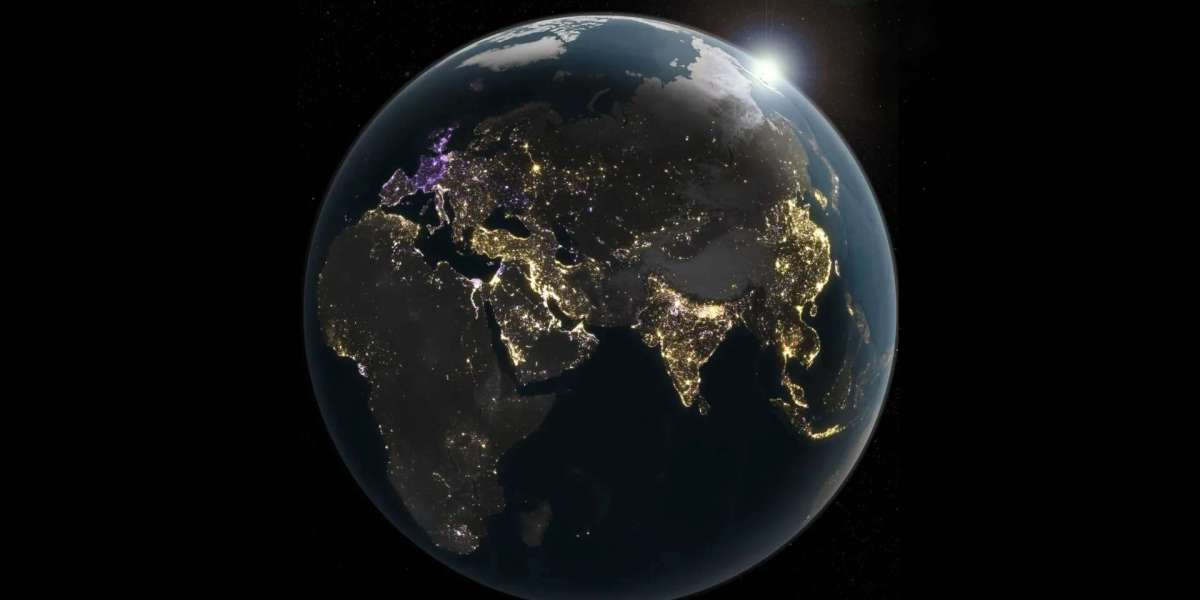
Credit: Michala Garrison/NASA Earth Observatory
source: sciencedaily.com (Link)
Global Night Lights Rising: Why Earth Is Getting Brighter at Night While Some Regions Go Dark
The Earth is growing darker, reflecting less and less sunlight - AP Archive
⚡ Key Insights:
- Global nighttime brightness increased by 16% between 2014 and 2022, but unevenly.
- Rapid development is lighting up emerging regions, while Europe is deliberately dimming.
- Conflicts and crises are causing sudden darkness in vulnerable countries.
advertisement
Introduction
The world is glowing brighter after sunset—but not everywhere, and not for the same reasons.
Recent high-resolution satellite data reveals a complex and rapidly changing global “nightscape,” where artificial lighting is expanding in some regions while shrinking in others.
This shift reflects deeper global dynamics, including urbanization, energy access, environmental policy, and even war.
A Planet That Shines Brighter Each Year
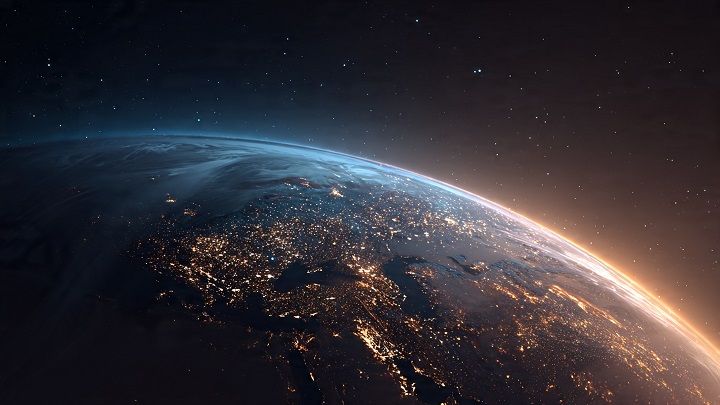
Satellite observations show that Earth’s nights are becoming steadily brighter overall.
Between 2014 and 2022, global nighttime lighting increased by approximately 16%, with an average annual rise of about 2%.
However, this growth is far from uniform.
According to the research, regions experiencing increased lighting saw emissions rise by as much as 34%, while other areas recorded an 18% decline, balancing the global average.
This reveals a key insight: the Earth’s nighttime brightness is not simply increasing—it is constantly shifting.
Bright Spots: Urban Growth and Expanding Energy Access
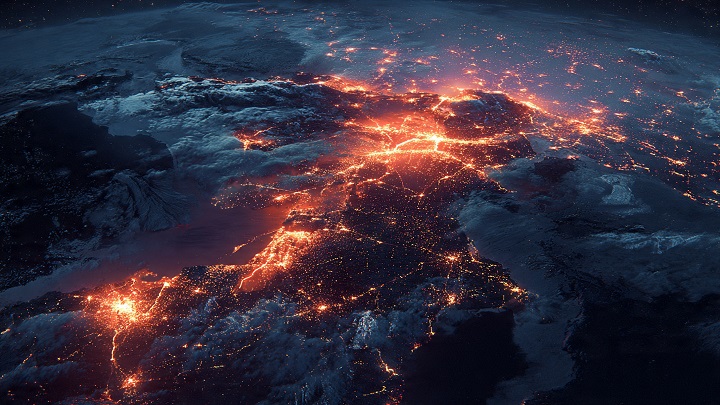
The strongest increases in nighttime lighting are occurring in rapidly developing regions.
Countries in sub-Saharan Africa and Southeast Asia are experiencing dramatic brightening, led by nations such as Somalia, Burundi, Cambodia, Ghana, Guinea, and Rwanda.
This surge is driven by:
Rapid urbanization
Expanding infrastructure
Increased access to electricity in rural areas
These changes mark a major transformation, as regions that were once largely dark are now becoming integrated into the global energy network.
Major global economies also contribute significantly to nighttime brightness.
The United States ranks as the brightest country overall, followed by China, India, Canada, and Brazil.
Dark Zones: Conflict, Crisis, and Collapse

While some regions shine brighter, others are fading into darkness—often abruptly.
Countries such as Lebanon, Ukraine, Yemen, and Afghanistan have experienced sharp declines in nighttime lighting due to armed conflicts and infrastructure damage.
For example, satellite data shows a dramatic drop in light levels in Ukraine following the escalation of war in 2022.
Elsewhere, prolonged economic instability has had similar effects.
In nations like Haiti and Venezuela, unreliable energy systems and financial crises have led to sustained dimming.
These patterns highlight how nighttime light can serve as a powerful indicator of human hardship and instability.
Europe’s Unique Approach: Deliberate Dimming

In contrast to crisis-driven darkness, Europe presents a different story—intentional dimming.
Across the continent, nighttime lighting decreased by about 4%, driven by:
Energy conservation policies
Transition to energy-efficient LED lighting
Efforts to reduce light pollution
France stands out as a global leader in this movement.
Many cities have adopted policies to switch off streetlights after midnight when activity is minimal, leading to a significant reduction in brightness—up to 33% in some areas.
This structured dimming reflects a growing awareness of environmental sustainability and the ecological impact of artificial light.
A Complex Pattern in the United States
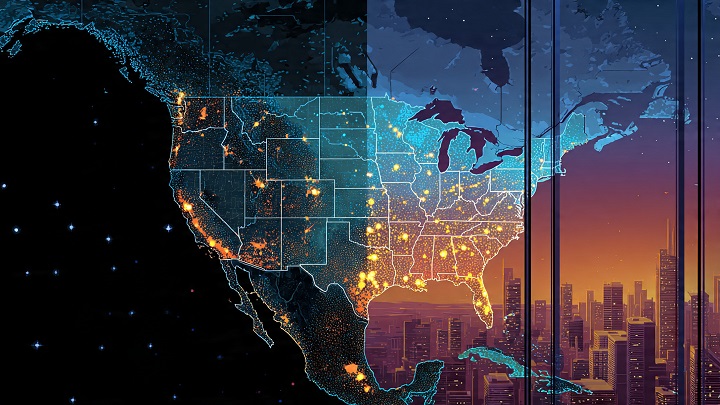
The United States offers a microcosm of global lighting trends.
While the country experienced an overall 6% increase in brightness, regional variations tell a more nuanced story.
The West Coast has become brighter, driven by population growth and strong economic activity
Parts of the East Coast and Midwest have dimmed due to industrial decline and urban population shifts
Cities like Washington, D.C., and Chicago have implemented energy-efficient lighting systems
This mix of growth and decline highlights how economic and demographic changes shape nighttime illumination.
How Scientists Track Light from Space
The study is based on data from the Visible Infrared Imaging Radiometer Suite (VIIRS) Day/Night Band, mounted on satellites such as Suomi NPP, NOAA-20, and NOAA-21.
These satellites scan nearly the entire planet each night, capturing images between 1:00 a.m. and 4:00 a.m., with each pixel representing about 0.5 square kilometers.
Unlike earlier studies that relied on monthly or annual averages, this research uses daily high-resolution data, offering a much more precise and dynamic view of global lighting changes.
A new analytical method also accounts for viewing angles, improving accuracy by recognizing how different landscapes reflect light.
Why Nighttime Light Matters

Artificial lighting is more than a symbol of development—it has real consequences.
Environmental Impact
Light pollution disrupts ecosystems, affecting nocturnal animals, migration patterns, and plant cycles.
Human Health
Excessive nighttime light interferes with circadian rhythms, potentially impacting sleep and overall health.
Energy Consumption
Lighting is a major consumer of electricity, making it a key factor in energy policy and sustainability efforts.
Conflicting Perspectives and Interpretations
While both sources agree on the overall increase in global brightness, they highlight different nuances:
One emphasizes the volatility and constant shifting of Earth’s nightscape
The other underscores the annual growth trend of about 2%, suggesting steady expansion
Additionally, while satellite data shows a decline in Europe’s brightness, researchers note that this may not fully match human perception, as satellites detect light differently than the human eye.
These perspectives together provide a more complete understanding of the phenomenon.
The Future of Monitoring Earth at Night

Scientists are already looking ahead.
Efforts are underway to develop a next-generation satellite under the European Space Agency’s Earth Explorer 13 mission.
This system aims to:
Detect fainter light sources
Provide higher-resolution data
Improve understanding of global lighting trends
Such advancements could help policymakers better manage energy use and reduce environmental harm.
Conclusion
The brightening of Earth at night tells a powerful story about humanity.
It reflects progress—cities growing, infrastructure expanding, and electricity reaching new communities.
But it also reveals inequality, conflict, and environmental challenges.
Some regions glow with opportunity, while others fall into darkness due to crisis or conscious choice.
Understanding these patterns is essential, not just for scientists, but for shaping a sustainable future.
By balancing development with responsible lighting, the world has the opportunity to remain illuminated—without losing the night sky, ecosystems, and natural rhythms that sustain life.
Key Points Summary
Global nighttime lighting increased by 16% from 2014 to 2022.
Growth is uneven, with rapid brightening in developing regions.
Conflict and economic instability are causing sudden darkness in some countries.
Europe is intentionally reducing light to save energy and limit pollution.
Advanced satellite data reveals more detailed and dynamic changes than ever before.
advertisement
Frequently Asked Questions (FAQ)
1. Why is Earth getting brighter at night?
Mainly due to urbanization, infrastructure growth, and increased access to electricity worldwide.
2. Which regions are getting brighter the fastest?
Sub-Saharan Africa and Southeast Asia are experiencing the most rapid increases.
3. Why are some places getting darker?
Darkness can result from conflict, economic crises, power failures, or deliberate energy-saving policies.
4. Why is Europe reducing nighttime lighting?
To conserve energy, adopt efficient technologies, and reduce light pollution.
5. How do scientists measure nighttime light?
Using satellite instruments like VIIRS, which capture high-resolution images of Earth at night.
6. Does light pollution affect humans?
Yes, it can disrupt sleep cycles and negatively impact overall health.
7. What is being done to improve monitoring?
New satellite missions, such as ESA’s Earth Explorer 13, are being developed for better accuracy.
Sources
Reuters – Satellite data analysis on global nighttime brightening and regional variations
https://www.reuters.com/science/satellite-data-shows-earth-is-getting-ever-brighter-night-2026-04-08/ScienceDaily – Study summary on global night light trends and satellite technology
https://www.sciencedaily.com/releases/2026/04/260409101057.htmNature / Ruhr-University Bochum – Original scientific study on global nighttime lighting changes
https://www.nature.com/articles/s41586-026-10260-w
Thank you !