
Birds That Thrive on Sugar: The Surprising Genetic Secret Behind Nectar-Loving Species

Key Points:
Some birds survive on sugary diets without harm thanks to unique genetic adaptations.
The MLXIPL gene plays a central role in processing extreme sugar intake.
Evolution found similar solutions across continents in unrelated bird species.
advertisement
How Birds Drink Sugar Without Getting Sick

Imagine a tiny hummingbird sipping nectar all day. In humans, consuming that much sugar would lead to obesity, diabetes, and heart problems—but some birds flourish on sugar-rich diets without harm. Scientists have long wondered how this is possible.
Recent research from the Max Planck Institute for Biological Intelligence uncovers a fascinating answer: certain birds have evolved genetic strategies that allow them to process huge amounts of sugar safely. This discovery reveals not only the power of natural selection but also potential insights for human health.
Birds That Depend on Sugar
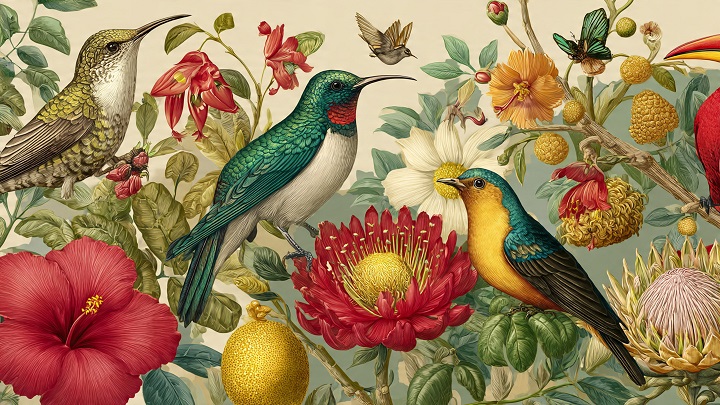
While most birds avoid sugar-heavy foods, species like hummingbirds in the Americas, sunbirds in Africa and Asia, honeyeaters in Australia, and some parrots rely almost entirely on nectar or sweet fruits. These birds have specialized feeding behaviors: hummingbirds hover to sip nectar, and honeyeaters use brush-tipped tongues to extract sweet liquids.
Their diets challenge the body: sugar-rich nectar contains both high sugar content and large volumes of water. Birds must regulate blood pressure, kidney function, and heart rhythm to survive these extreme conditions.
advertisement
Evolution Across Continents
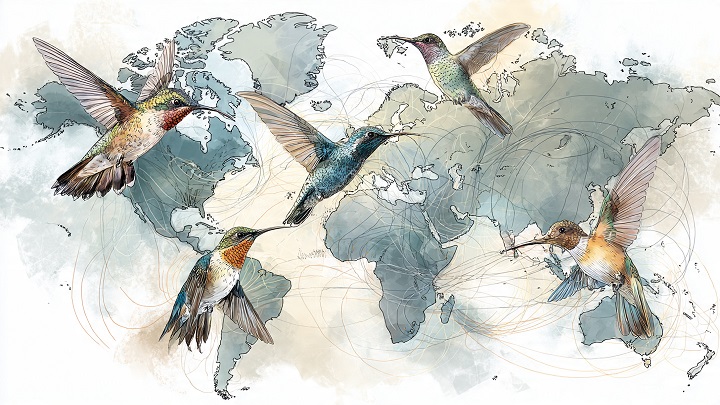
Interestingly, sugar-feeding birds evolved independently on different continents. Researchers compared the DNA of nectar-feeding birds with close relatives that avoid sugar. While some genetic changes were unique to specific bird groups, others—most notably in the MLXIPL gene—appeared repeatedly across species.
The MLXIPL gene controls how cells process sugar and convert it into energy. Laboratory tests show that hummingbirds’ MLXIPL is far more active than that of swifts, which do not feed on nectar. This repeated genetic adaptation demonstrates evolution’s ability to find similar solutions to similar challenges across species and continents.
The Genetic Strategy Behind Sugar Survival
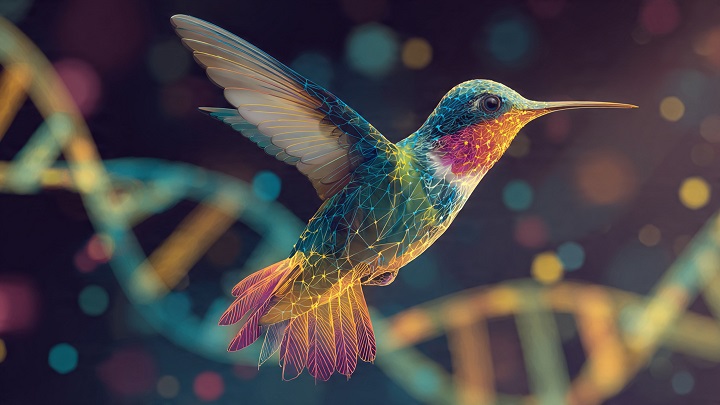
These birds’ bodies have fine-tuned mechanisms to manage enormous sugar intake:
MLXIPL gene – boosts sugar metabolism in cells.
Heart, kidney, and blood vessel adaptations – maintain proper blood pressure and salt balance.
Ion transport and fluid regulation genes – remove excess water without disrupting electrolyte balance.
Together, these adaptations allow birds to turn a potentially dangerous diet into a powerful energy source.
advertisement
Lessons for Humans

Humans share the MLXIPL gene, which plays a vital role in sugar metabolism. Understanding how birds adapted to high-sugar diets could inspire new approaches to managing human metabolic conditions like diabetes and obesity. Researchers hope studying these birds will shed light on improving sugar processing and overall metabolic health in humans.
Conclusion: Small Birds, Big Insights

What appears as a simple sip of nectar is actually the result of millions of years of evolutionary fine-tuning. Sugar-feeding birds showcase nature’s ability to craft elegant solutions to extreme dietary challenges. Their survival story offers a window into metabolism, physiology, and the potential for scientific breakthroughs in human health. Evolution, it seems, has a sweet strategy worth studying.
Key Points Summary
Nectar-feeding birds survive extreme sugar diets through unique genetic adaptations.
The MLXIPL gene is crucial for metabolizing large amounts of sugar.
Evolution repeated similar solutions in unrelated bird species across continents.
Heart, kidney, and fluid regulation adaptations support sugar metabolism.
Insights from these birds may inform human metabolic health research.
advertisement
Frequently Asked Questions (FAQ)
Q: Which birds primarily feed on sugar-rich diets?
A: Hummingbirds (Americas), sunbirds (Africa & Asia), honeyeaters (Australia), and some parrots rely mainly on nectar or fruit.
Q: Why is a sugar-rich diet dangerous for most animals?
A: High sugar intake can lead to obesity, diabetes, heart problems, and kidney stress in animals that lack genetic adaptations.
Q: What is the MLXIPL gene?
A: MLXIPL controls how cells process sugar into energy. In nectar-feeding birds, this gene is highly active, enabling them to metabolize extreme sugar safely.
Q: Did all sugar-feeding birds evolve the same genetic changes?
A: Not entirely. Some genetic changes are unique to specific species, but the MLXIPL gene adaptation appears repeatedly across independent bird lineages.
Q: Can humans benefit from this research?
A: Possibly. Understanding how birds process sugar efficiently may provide insights into managing human metabolic diseases like diabetes and obesity.
Sources
Earth.com – Birds that live on sugar share a surprising genetic strategy
https://www.earth.com/news/birds-that-live-on-sugar-share-a-surprising-genetic-strategy/Science – Study on sugar metabolism genes in birds
https://www.science.org/doi/10.1126/science.adt1522
Thank you !