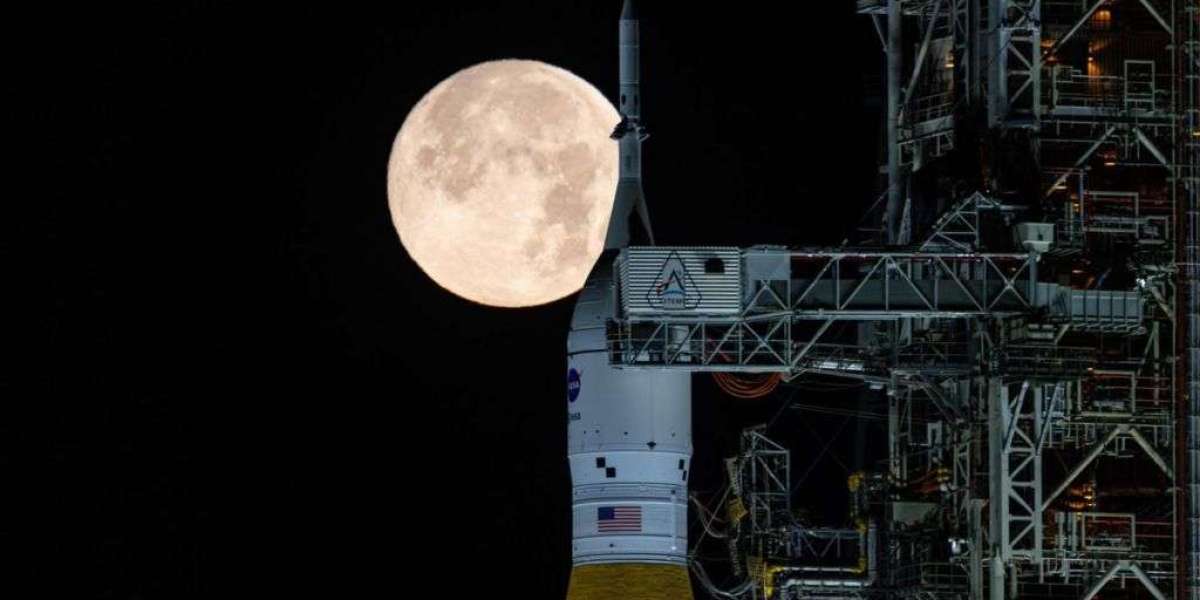

article image source: bbc.com (Link)
NASA Moon Missions 2026: Artemis Program Updates and Plans for Lunar Landings
NASA announces changes to Artemis program - FOX 35 Orlando
Key Points:
Artemis III will test lunar lander docking in low-Earth orbit in 2027.
Actual Moon landing is now scheduled for Artemis IV in 2028.
SpaceX and Blue Origin are developing the lunar landers under NASA contracts.
advertisement
Introduction
NASA, the United States’ premier space agency, is reshaping its roadmap for returning astronauts to the Moon. After decades since the last Moon landing, the Artemis program aims to establish sustainable lunar exploration, with multiple crewed missions and advanced spacecraft technology. Recent updates signal significant changes, including an additional preparatory flight and adjustments to spacecraft and lander development timelines.
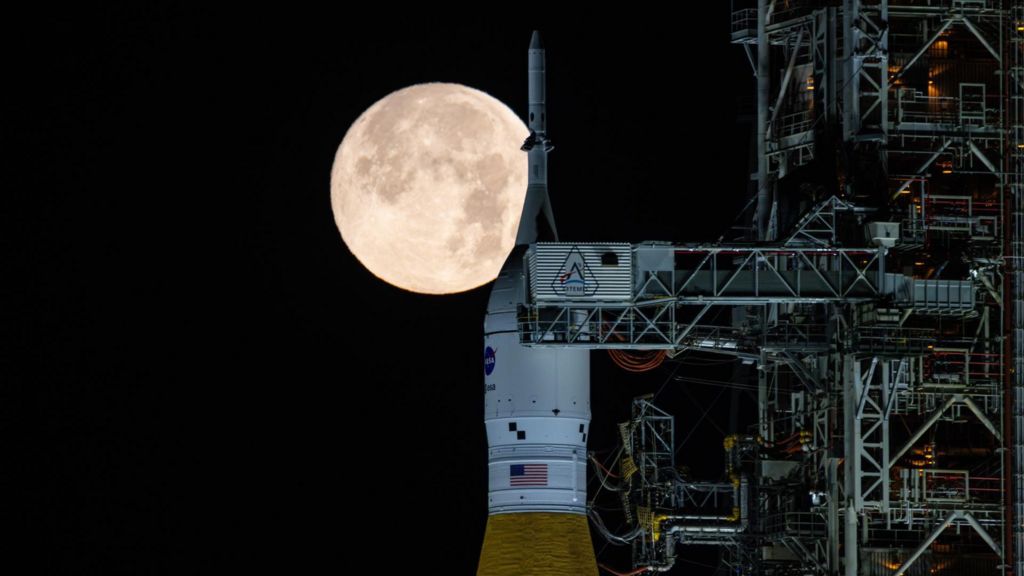
The Artemis missions will return humans to the Moon for the first time in 50 years
Credit: NASA
image source: bbc.com
Changes to the Artemis Program
Originally, Artemis II was planned as a crewed lunar flyby in 2026–2027, followed by Artemis III attempting a Moon landing in 2028. NASA has now restructured the sequence:
Artemis III will become a low-Earth orbit mission in 2027 to test docking procedures between the Orion capsule and lunar lander prototypes.
Artemis IV and V are slated for actual lunar landings in 2028, with the possibility of two missions that year.
NASA Administrator Jared Isaacman emphasized that this new approach reduces risks by allowing astronauts to test integrated systems in orbit rather than on the Moon directly. The decision is inspired by historical space programs, likened to the Mercury and Gemini missions before Apollo 11.
Artemis II Update
Artemis II will carry four astronauts on a flyby around the Moon but will not land. Initially scheduled for March 2026, its launch was delayed to April due to helium leaks in the Space Launch System (SLS) rocket. Repairs are ongoing at the Kennedy Space Center in Florida. This mission will help validate spacecraft systems ahead of Artemis III’s low-Earth orbit test.

Four astronauts will head around the Moon for the Artemis II mission
Credit: NASA
image source: bbc.com
Lunar Lander Development
A crucial element of lunar missions is the Human Landing System (HLS), contracted to private companies:
SpaceX is developing a Starship-based lander designed to transport astronauts from lunar orbit to the Moon. Delays in Starship’s testing have prompted NASA to request a streamlined plan.
Blue Origin, led by Jeff Bezos, is creating a traditional Apollo-style lander. Test flights have not yet occurred.
NASA may use one or both landers for Artemis III’s orbital docking mission, but oversight reports have expressed skepticism about the timeline due to ongoing technical challenges.
Rocket Upgrades and Funding
NASA is also revising the SLS rocket approach. Plans for the more powerful Block 1b version have been shelved to reduce complexity and costs, which were projected to reach $5.7 billion by 2028. Instead, the agency will focus on standardizing the SLS for reliability. Boeing remains a key contractor, supporting the Space Launch System and Artemis goals.
International Lunar Competition
NASA faces growing competition from China, which aims for a Moon landing by 2030. Both nations are targeting the lunar south pole, where water ice and potential base locations are strategically important. This global race underscores the urgency for timely Artemis missions.
Conclusion
NASA’s updated Artemis program represents a calculated and cautious approach to returning humans to the Moon. By introducing a preparatory low-Earth orbit docking mission, the agency mitigates risk and enhances astronaut safety. While technical and timeline challenges remain, the collaboration with private aerospace companies and international monitoring emphasizes a new era of space exploration. As NASA continues to refine spacecraft, rockets, and lunar landers, the vision of humans walking on the Moon again—and laying the groundwork for sustainable exploration—is closer than ever.
Key Points Summary
Artemis III will be a 2027 orbital test with lunar landers.
Artemis IV (and possibly V) aim for lunar landings in 2028.
Artemis II delayed to April 2026 due to SLS technical issues.
SpaceX and Blue Origin are developing lunar landers under NASA contracts.
NASA’s SLS rocket will be standardized instead of upgraded to Block 1b.
Lunar south pole targeted for exploration, alongside international competition.
advertisement
Frequently Asked Questions (FAQ)
Q: When will humans return to the Moon under Artemis?
A: The first crewed lunar landing is scheduled for Artemis IV in 2028, with Artemis III serving as an orbital test in 2027.
Q: Which companies are building the lunar landers?
A: SpaceX (Starship-based) and Blue Origin (Apollo-style) are contracted under NASA’s Human Landing System program.
Q: What is the Artemis II mission?
A: Artemis II will carry four astronauts on a flyby around the Moon in April 2026, validating spacecraft systems without landing.
Q: Why was the Artemis III mission changed?
A: NASA added a low-Earth orbit docking mission to reduce risks and test integrated systems before attempting a Moon landing.
Q: Are there any international competitors to NASA?
A: China is targeting a Moon landing by 2030, with both nations eyeing the lunar south pole for exploration and potential bases.
Sources
BBC – Updates on NASA’s Artemis Moon missions and changes to launch schedule
https://www.bbc.com/news/articles/c6270030neyoCNN – In-depth report on NASA’s revised lunar landing roadmap and Artemis III adjustments
https://edition.cnn.com/2026/02/27/science/nasa-moon-landing-artemis-schedule
Thank you !