
Honeybee-Inspired Drone Navigation Breakthrough Could Revolutionize Autonomous Robotics
Bee-Nav: Efficient robot navigation inspired by honeybee learning flights - MAVLab TU Delft
Key Points Summary
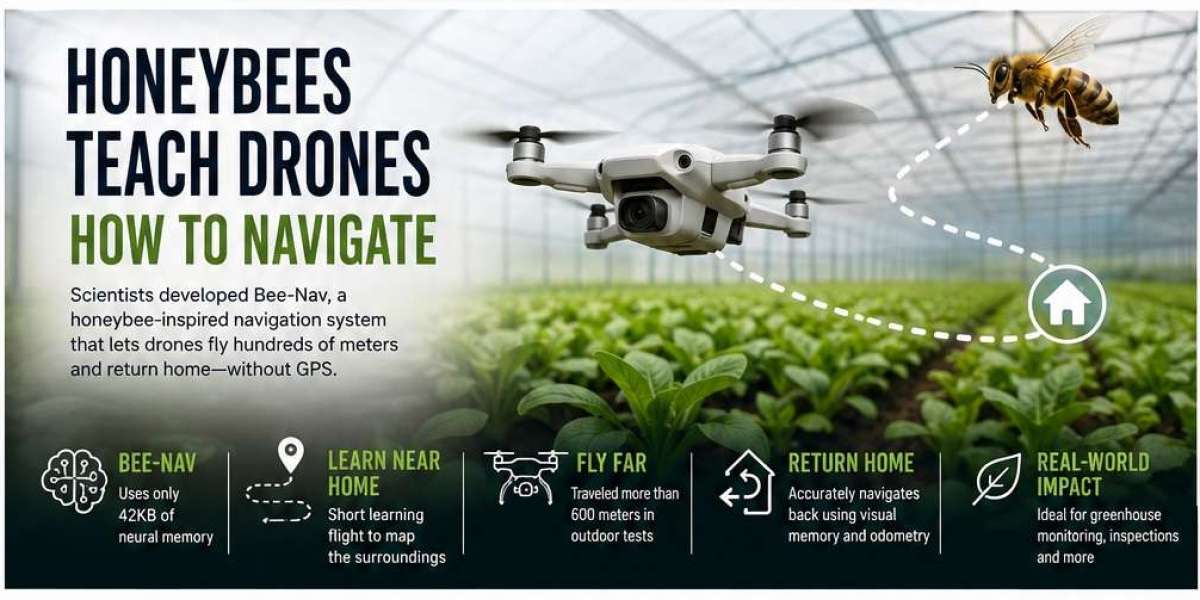
Scientists developed a drone navigation system inspired by honeybees that uses only 42 kilobytes of neural memory.
The Bee-Nav system allows lightweight drones to travel hundreds of meters and successfully return home without GPS.
Researchers believe this breakthrough could transform greenhouse monitoring, autonomous robotics, and bio-inspired AI technology.
advertisement
Honeybees may soon become the unlikely teachers of the next generation of autonomous drones. Researchers from the Netherlands and Germany have developed a groundbreaking navigation system inspired by how honeybees find their way home, potentially solving one of the biggest challenges in modern robotics: enabling small drones to navigate efficiently without requiring massive computing power or GPS systems. The project, called “Bee-Nav,” was led by scientists from Delft University of Technology, Wageningen University, and Carl von Ossietzky University of Oldenburg, and the results were published in the journal Nature.
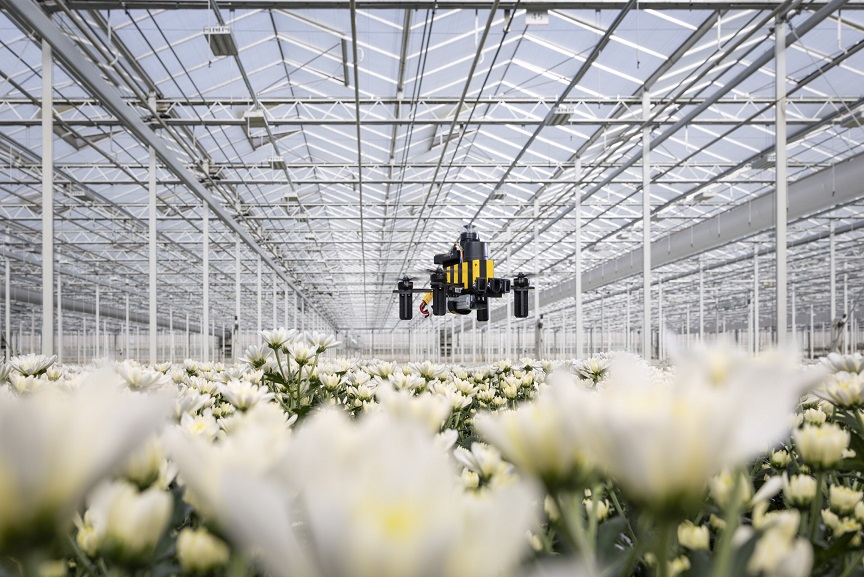
Bee-Nav drone in a flower greenhouse. Drones in greenhouses can help monitor the crop, increasing agricultural yield and reducing waste.
Credit: Delft University of Technology - Micro Aerial Vehicles Lab
image source: techxplore.com
The innovation comes at a time when drones are increasingly expected to play important roles in society, from inspecting industrial sites and delivering packages to monitoring crops inside greenhouses. However, current autonomous drone systems typically rely on detailed digital maps and advanced navigation algorithms that demand significant processing power, large memory capacity, and high energy consumption. This makes many drones heavier, more expensive, and less efficient. The Bee-Nav system attempts to overcome these limitations by copying strategies used by honeybees, insects with tiny brains that nevertheless travel long distances and still manage to return home accurately.
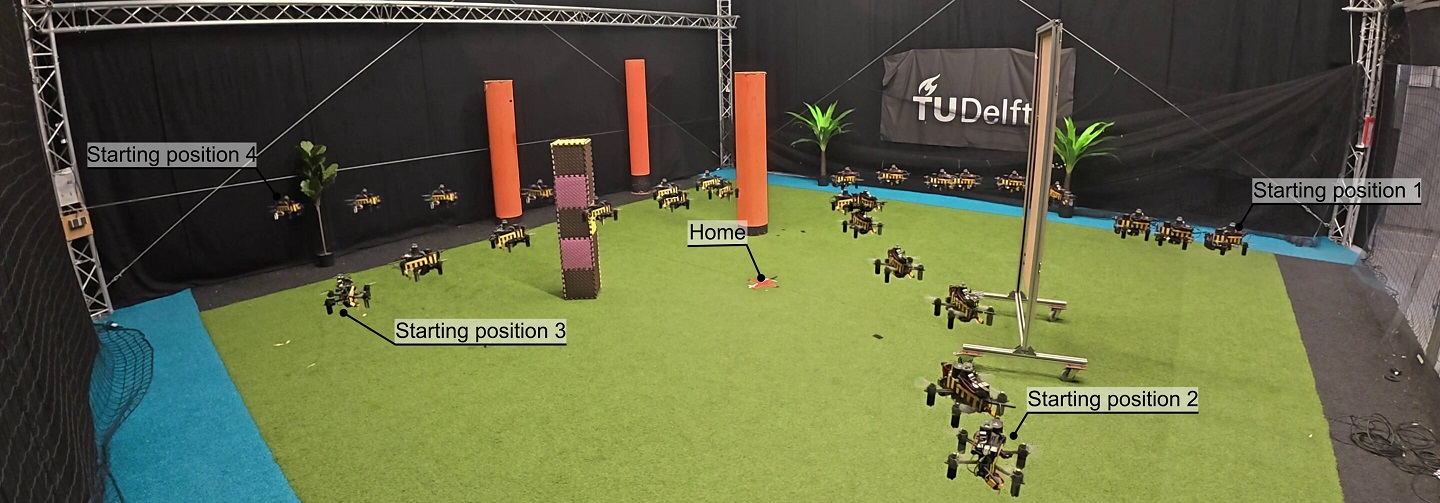
Timelapse of Bee-Nav drone in Delft University of Technology's CyberZoo.
Credit: Delft University of Technology - Micro Aerial Vehicles Lab
image source: techxplore.com
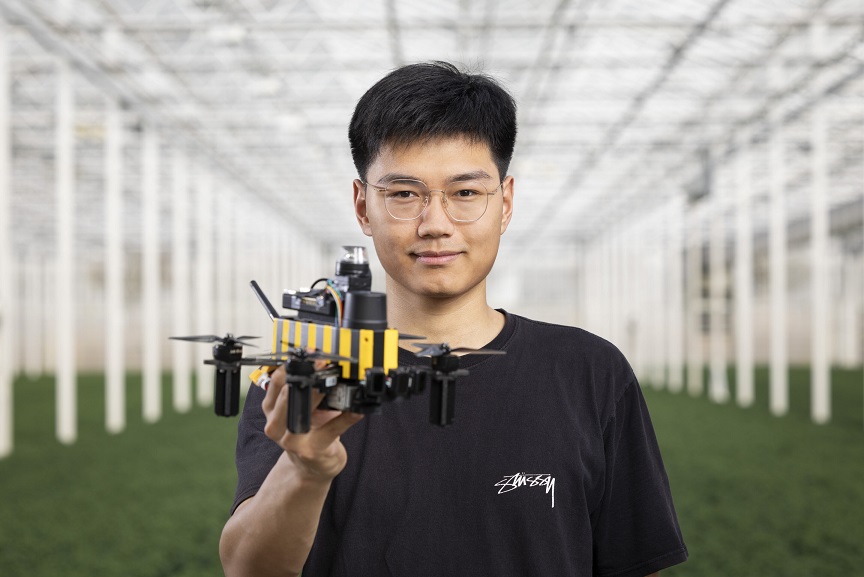
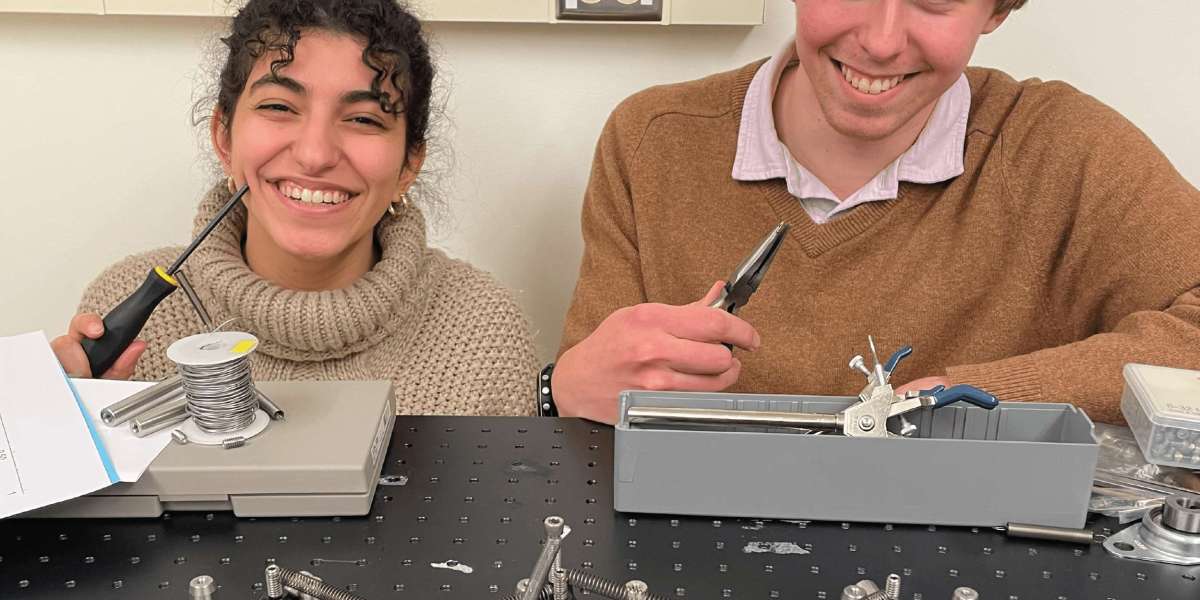
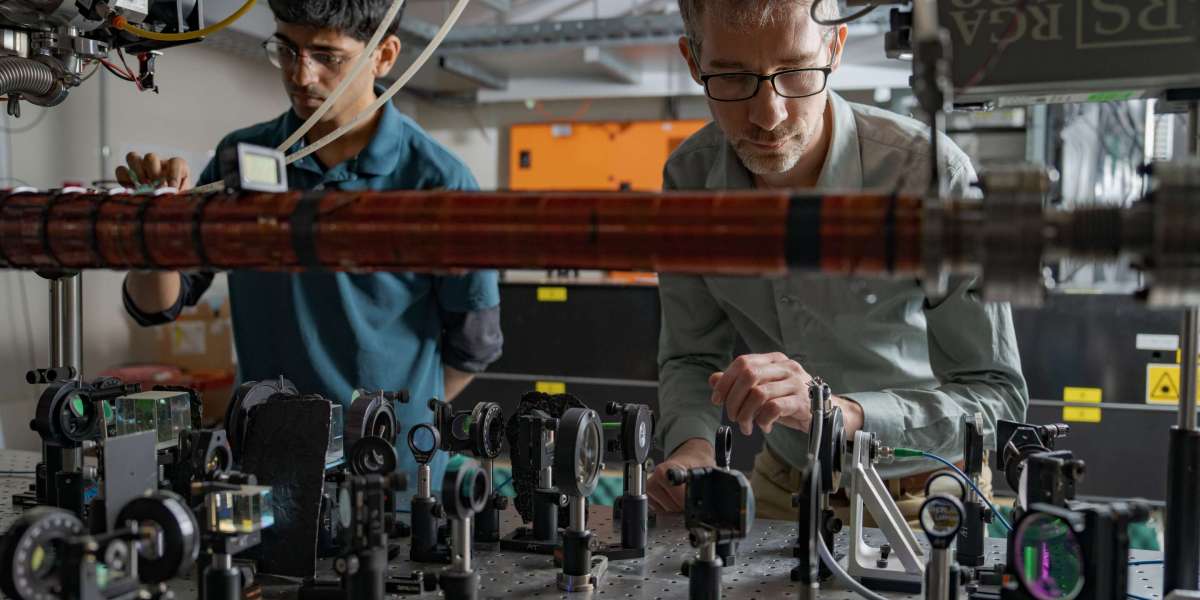
Delft University of Technology Ph.D. candidate Dequan Ou with the Bee-Nav drone.
Credit: Delft University of Technology - Micro Aerial Vehicles Lab
image source: techxplore.com
Scientists have long been fascinated by the navigational abilities of honeybees. Despite having extremely small nervous systems, bees can fly along complex routes and later return directly to their hive. Researchers understand that bees partly rely on a process called odometry, which estimates movement distance and direction using visual motion cues. This method is somewhat similar to counting steps while walking. Yet odometry alone is not reliable over long distances because errors gradually accumulate over time. To compensate, insects also use visual memory, remembering what their environment looks like near important locations such as their hive.
While insect odometry has already been studied in detail, scientists had struggled to understand how bees combine it with visual memory in a way that could be applied to robotics. The Bee-Nav research aimed to bridge this gap. The scientists focused on a behavior observed in honeybees during their first flights outside the hive. Bees initially perform short “learning flights” around their home area, memorizing visual features of the environment before later venturing much farther away. The researchers designed their robot navigation strategy to imitate this process.
During its initial learning phase, the Bee-Nav drone performs a short flight close to its home location while collecting panoramic images of the surrounding environment. A compact neural network then learns to interpret these visual cues in order to estimate both the direction and distance back home. Interestingly, the neural network was trained using odometry estimates even though those measurements naturally become less accurate over time. Researchers wanted to determine whether the drone could still successfully learn how to return home despite the growing drift errors.
The results exceeded expectations. Even with imperfect odometry data, the drones successfully learned visual homing strategies. In indoor tests conducted inside the “Cyberzoo,” the robots used a neural network of only 3.4 kilobytes to process panoramic images and estimate how to move toward home. The system could also estimate how far away the home location was, allowing the robot to travel faster when farther away and slow down as it approached its destination. In every indoor test flight, the drones successfully returned home.
The research team later expanded the experiments into larger indoor and outdoor environments. One particularly impressive outdoor test took place at Unmanned Valley in Valkenburg, a Dutch drone research field-lab. There, the drone traveled more than 600 meters away before successfully navigating back using a neural network requiring only 42 kilobytes of memory. This extremely small memory requirement demonstrates how efficient the Bee-Nav approach is compared to conventional navigation systems that typically require far more computing resources.
However, the researchers also discovered challenges that still need to be solved before Bee-Nav can become widely used in real-world applications. While indoor tests achieved near-perfect results, outdoor performance dropped to approximately 70% success under windy conditions. Wind caused the drone to tilt during flight, which distorted the captured images and made navigation more difficult. According to the researchers, improving robustness under challenging environmental conditions will be one of the next major goals for the project.
The scientists believe Bee-Nav could eventually play an important role in greenhouse agriculture. Lightweight drones equipped with this technology could safely monitor crops, identify diseases, and detect pests early without posing risks to nearby workers. Such drones would help farmers improve crop yields while reducing waste and limiting the need for heavy robotic systems. Because Bee-Nav requires very little memory and processing power, it is especially suitable for small, lightweight aerial robots that need to operate efficiently for long periods.
Beyond its technological importance, the study also offers new scientific insights into how honeybees themselves navigate. By recreating bee-like learning behavior in robots, researchers gained a deeper understanding of how visual memory and movement estimation may work together inside insect brains. This combination of biology and artificial intelligence highlights the growing field of bio-inspired robotics, where engineers look to nature for elegant solutions to difficult technological problems.
The Bee-Nav project demonstrates that some of the most advanced engineering breakthroughs may come not from building more powerful machines, but from studying the remarkable efficiency of living creatures. Honeybees, despite their tiny brains, have evolved navigation abilities that outperform many modern robotic systems in terms of efficiency and energy use. By learning from nature, scientists are opening the door to a future where autonomous drones become lighter, smarter, safer, and more sustainable. As researchers continue refining the system, honeybee-inspired navigation could eventually reshape industries ranging from agriculture and logistics to environmental monitoring and autonomous exploration.
Key Points
Bee-Nav is a drone navigation system inspired by honeybee learning flights.
The system enables autonomous navigation using extremely small neural networks.
Drones can return home without GPS or detailed environmental maps.
Researchers successfully tested the technology indoors and outdoors.
Outdoor flights exceeded 600 meters while using only 42KB of memory.
Windy conditions remain a challenge for the system.
Bee-Nav could transform greenhouse monitoring and lightweight robotics.
The research also improves scientific understanding of insect navigation.
advertisement
Frequently Asked Questions (FAQ)
What is Bee-Nav?
Bee-Nav is a drone navigation system inspired by the way honeybees learn and remember their environment in order to return home.
Who developed the Bee-Nav system?
The project was developed by scientists from Delft University of Technology, Wageningen University, and Carl von Ossietzky University of Oldenburg.
How does Bee-Nav work?
The drone first performs a short learning flight near its home location while capturing panoramic images. A neural network then uses those images to estimate direction and distance back home.
Why is Bee-Nav important?
The system dramatically reduces the computing power and memory needed for autonomous drone navigation, making drones lighter and more energy efficient.
Does Bee-Nav require GPS?
No. The navigation strategy is specifically designed to work even in environments where GPS is unavailable.
How much memory does the system use?
In outdoor tests, the Bee-Nav drone successfully navigated using a neural network requiring only 42 kilobytes of memory.
What are the possible applications of Bee-Nav?
Potential applications include greenhouse crop monitoring, industrial inspections, package delivery, environmental monitoring, and lightweight autonomous robotics.
What challenges remain?
Windy outdoor conditions can reduce navigation accuracy because drone tilting affects image quality. Researchers are working on improving system robustness.
Sources
- Tech Xplore – Report on honeybee-inspired drone navigation research
https://techxplore.com/news/2026-05-honeybees-drones.html - Nature – Original scientific publication on Bee-Nav navigation strategy
https://www.nature.com/articles/s41586-026-10461-3
Thank you !